The best patio shade alternative for most homeowners is a retractable awning or a shade sail for quick, affordable coverage, and a louvered pergola roof if you want something that handles rain, adjusts to any sun angle, and looks like a permanent upgrade. But which one is actually right for your patio depends on four things: how many hours of direct sun you get, whether you need rain coverage or just UV blocking, how much wind your yard sees, and what you're willing to spend. This guide walks you through every real option, what each one costs, and how to pick the right one for your specific setup. If you're still comparing the different kinds of coverage, the best patio options balance sun control, rain protection, wind tolerance, and how much maintenance you want.
Patio Shade Alternatives: Best Options by Sun, Privacy, Budget
First: Figure Out What Kind of Shade You Actually Need
Before you spend any money, spend ten minutes watching your patio. The biggest mistake homeowners make is buying the wrong shade solution because they didn't define the actual problem first. There's a big difference between needing UV protection for a couple of afternoon hours versus needing full overhead coverage from 10am to 6pm, and an even bigger difference if rain protection is part of the equation.
Ask yourself these questions: Which direction does your patio face, and when does the sun hit it hardest? Is it a glare problem (low-angle morning or evening sun) or a direct overhead heat problem (midday)? Do you need privacy from neighbors or just overhead coverage? And finally, does your area get afternoon thunderstorms or high wind events? If you're in Texas or Arizona, heat and UV are the primary enemies. If you're in the Midwest or Southeast, you also need to plan around summer storms.
- Sun angle and peak hours: Track shade movement for a full day, or use a sun-angle app. A south-facing patio needs overhead coverage by 11am. A west-facing patio may only need afternoon shade starting around 2pm.
- UV vs. heat: Shade cloth and sails block UV but still allow some radiant heat through. A solid roof (aluminum, polycarbonate, or louvered system) blocks both.
- Rain coverage: Fabric shade sails and most shade cloth are not waterproof. If you want to stay outside during rain, you need a water-shedding or waterproof structure.
- Privacy: If neighbors can see into your patio, vertical solutions like outdoor curtains, lattice panels, or a cabana with side walls may matter as much as overhead coverage.
- Coverage hours needed: A small cantilever umbrella is fine for 2-3 hours of shade. A 10-hour outdoor lifestyle in hot weather needs a fixed or semi-fixed structure.
DIY-Friendly Options vs. Permanent Structures: What's Easiest to Start With
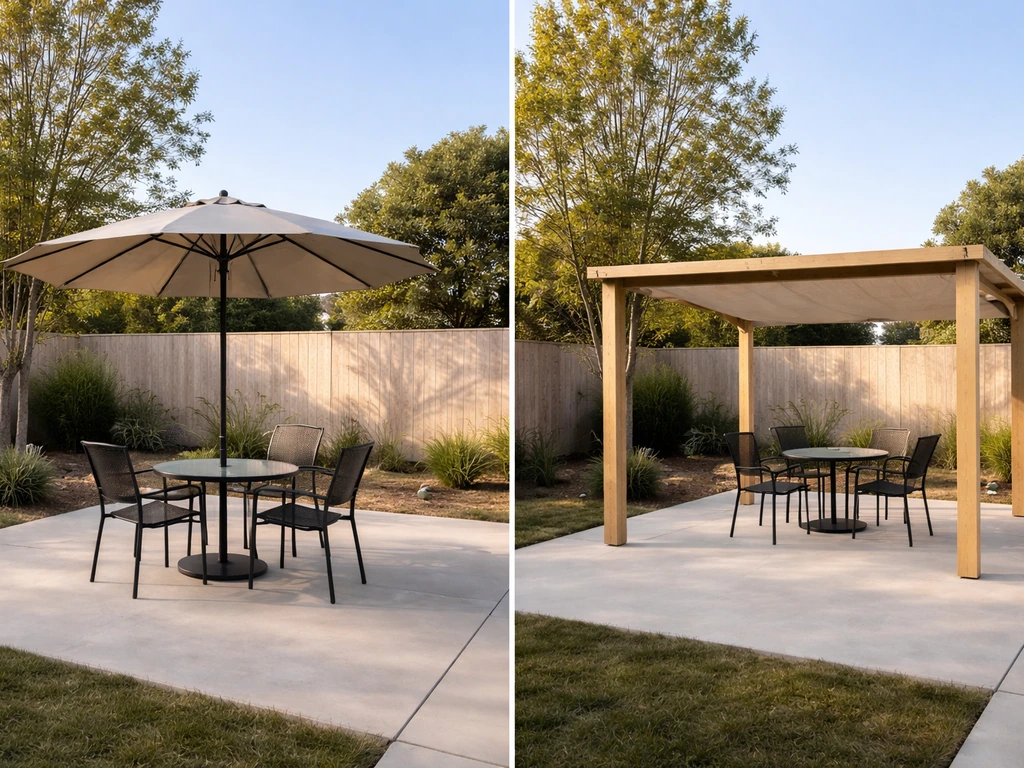
If you need shade this weekend and don't want a big project, start with a large market umbrella (9–11 ft), a freestanding shade sail mounted to anchor poles, or outdoor curtain panels hung from a pergola or tension wire. These are the genuinely DIY-friendly options that you can have up in an afternoon with basic tools, no permits, and minimal anchoring. For budget-conscious homeowners who are also exploring broader outdoor patio alternatives, these low-commitment options are often the right first step.
Once you move into retractable awnings, fixed awnings, or shade sails with poured concrete footings, you're in semi-permanent territory. These aren't necessarily contractor-required, but they do need real planning, correct anchor substrate, and often a building permit depending on your municipality. Pergolas, louvered roofs, and cabanas are firmly in the contractor category for most homeowners, not because the builds are impossible to DIY, but because structural loads, wind rating, and footing depth requirements make mistakes genuinely dangerous.
| Option | DIY Friendly? | Time to Install | Permit Likely? |
|---|---|---|---|
| Large patio umbrella | Yes | Under 1 hour | No |
| Freestanding shade sail (to poles) | Moderate | Half day to full day | Sometimes |
| Shade sail (wall/post anchored) | Moderate | Full day+ | Often yes |
| Outdoor curtains/partitions | Yes | 1–3 hours | No |
| Retractable awning (wall-mounted) | Moderate to hard | Half day to full day | Often yes |
| Fixed aluminum awning | Hard | Full day+ | Yes |
| Attached pergola | Hard | Weekend to multi-day | Yes |
| Louvered/tilt roof system | Contractor recommended | Multi-day | Yes |
| Freestanding cabana | Moderate (kit) | 1–2 days | Sometimes |
| Trees, vines, planters | Yes | Ongoing growth | No |
Fixed and Semi-Fixed Shade Options
Retractable Awnings
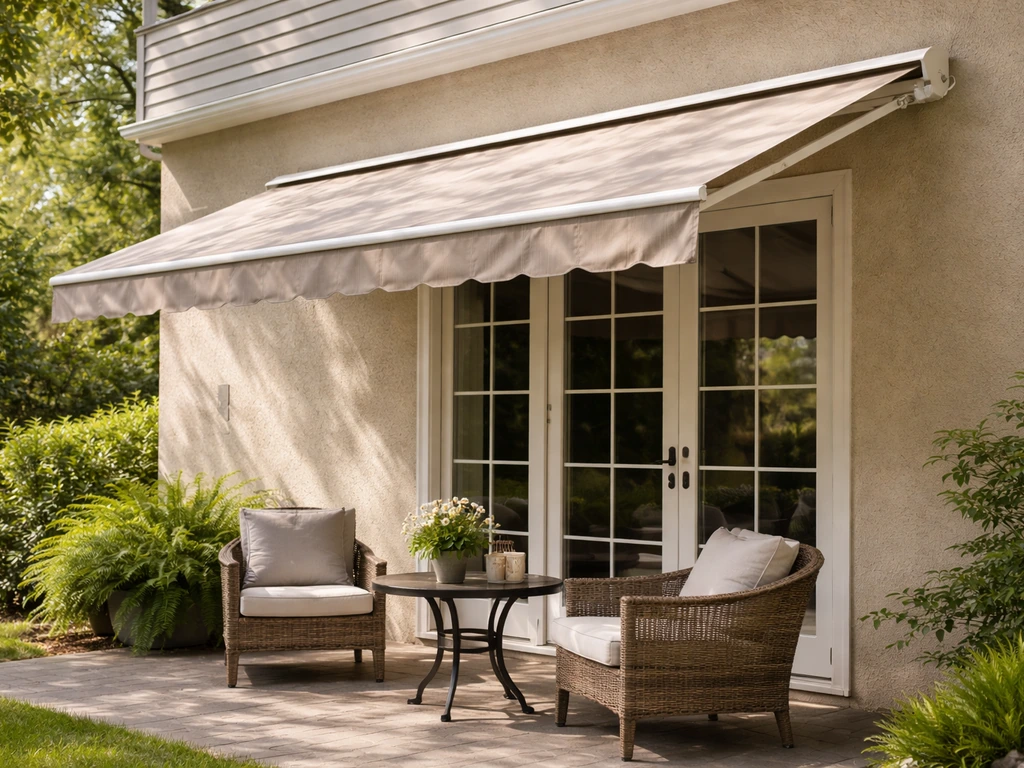
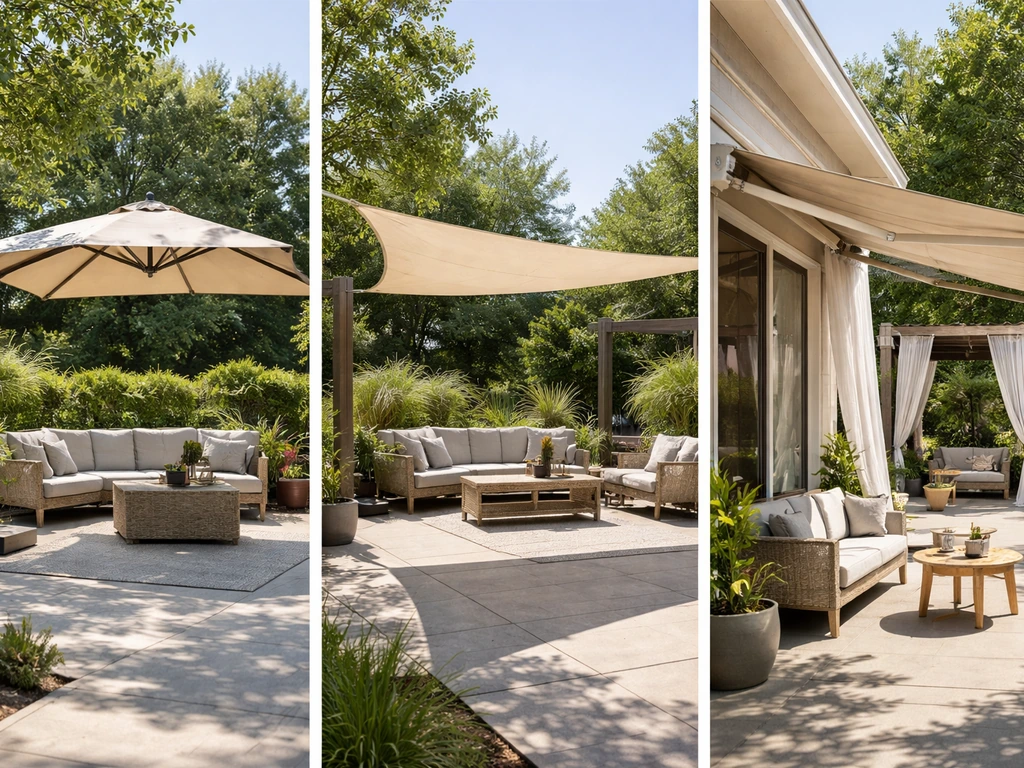
A wall-mounted retractable awning is one of the most popular patio shade alternatives for a reason: it gives you on-demand coverage, folds away when you don't need it, and protects itself during storms when you retract it before high winds hit. The key word there is 'when you retract it.' Retractable awnings are not storm-proof when extended. Most manufacturers recommend retracting at gusts above 25–35 mph, and leaving one deployed in a storm is the primary way they get destroyed. If you're not home often or want something you don't have to manage, a motorized awning with a wind sensor is worth the upgrade.
Installed costs run roughly $6–$30 per square foot depending on fabric, frame material, and whether you go manual or motorized. A full project (say, a 12x10 awning on a typical home) often lands in the $5,000–$8,500 range installed. Labor alone is typically $50–$150 per hour depending on your region. Wall mounting requires a solid substrate: wood framing or masonry, not just drywall or vinyl siding. Get that confirmed before you order.
Shade Sails
Shade sails look great and provide solid UV protection. High-quality options from brands like Coolaroo blank" rel="noopener noreferrer">block 90–95% of UV rays. But shade sails come with more installation nuance than most people expect. The biggest mistakes are installing them too flat (which causes water to pool and creates a feedback loop of sagging, stress, and eventual tearing at the corners), using inadequate anchor hardware, or anchoring into a substrate that can't handle the tension loads. Anchor hardware failures are actually more common than fabric failures when shade sails come down in wind.
If you're anchoring to posts you're installing yourself, plan on footings at least 36 inches deep and 30 inches square in concrete, and size up from a 4x4 post to a 6x6 or steel post for anything larger than a small sail. The sail needs to be tensioned at an angle, not flat, so that rain runs off rather than pools. Wind ratings on shade-sail fabric are typically 30–40 mph at the material level, but actual wind performance depends almost entirely on how well the anchors and footings hold. In high-wind regions, have a licensed installer review your plan or pull a permit so a structural check is part of the process.
Large Patio Umbrellas
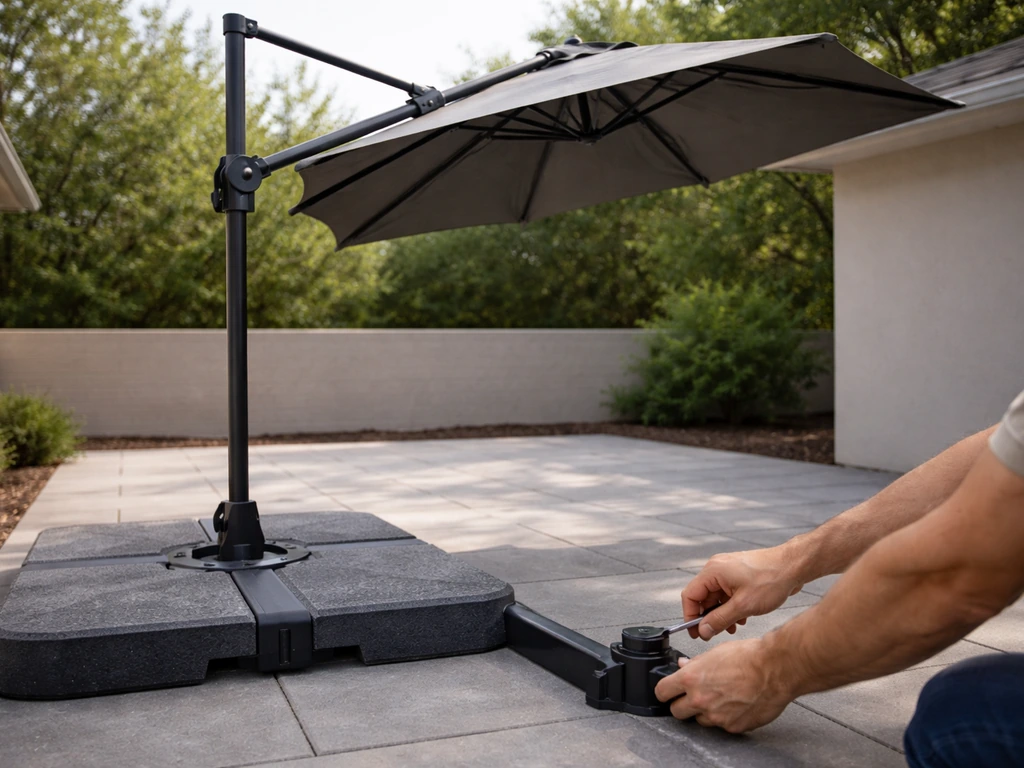
A 9–11 foot market umbrella or a large offset (cantilever) umbrella is the simplest entry point. An offset umbrella with a weighted base gives you flexible positioning without needing a center table hole, which works well on sectional furniture setups. These are not wind-stable structures. Close them any time winds pick up above about 15–20 mph, and bring them in before storms. Aluminum frames with Sunbrella-type acrylic fabric hold up best to UV and moisture over time. Expect to replace cheaper polyester canopies within 1–2 seasons in hot, sunny climates.
Outdoor Curtains and Privacy Partitions
Outdoor curtains are underrated as a shade and privacy combo. Hung from a pergola, tension cable, or curtain rod mounted between posts, they add vertical coverage that keeps low-angle sun out and creates a more enclosed, comfortable feel. They're not a substitute for overhead coverage, but layered with a shade sail or pergola, they solve both the glare and privacy problems at once. The wind issue is real: outdoor curtains need weighted bottoms or tie-backs to keep them from flapping and eventually pulling out grommets. Install on calm days and plan to secure or remove panels before any serious wind event. This is also a natural alternative to consider if you've been looking at alternatives to patio blinds, since curtains are generally more flexible and visually softer. Curtains can be one of the practical alternatives to patio blinds when you want more flexibility without losing privacy.
Structure-Based Shade Options
Pergolas (Attached and Freestanding)
A traditional pergola with open rafters doesn't provide full shade, but it's a solid structural base you can layer. Add a shade sail or shade cloth panel over the top, hang curtains on the sides, or train vines to grow across it over time. An attached pergola connects to your home's ledger board and needs a structural connection that meets your local building code, so a permit is almost always required. Freestanding pergolas need their own footings sized for wind load. If you're planning a pergola primarily for shade, budget for the additional shade layer from the start rather than treating it as an afterthought.
Louvered and Tilt Roof Systems
A motorized louvered pergola roof is the premium option that genuinely solves most shade problems at once. Louvers rotate from fully open to fully closed (typically 0 to 160 degrees), so you can control sunlight, airflow, and rain protection from your phone or a wall panel. Engineered systems from brands like Azenco carry high wind ratings (some rated to 110 mph for the system, not just the fabric), and they're designed with drainage channels in the frame so rain exits cleanly. The tradeoff is cost: expect to pay significantly more than a shade sail or awning, and professional installation is non-negotiable for most systems. But if you use your patio heavily and want something that works year-round without managing it every time a cloud rolls in, a louvered system is hard to beat.
Cabanas
A cabana, whether a prefab kit or custom-built, gives you a freestanding structure with a solid roof, side walls, and often a curtained front. They're great for pool areas or anywhere you want a defined outdoor room with privacy on multiple sides. Prefab canvas or aluminum cabana kits are a middle-ground DIY option, though they still need proper anchoring to resist wind lift. Custom-built cabanas with permanent roofing are a contractor project and require permits. Think of a cabana as a very functional shade option that doubles as furniture storage or a changing area if the layout allows.
Natural and Living Shade Options
Trees, climbing vines, and living walls are legitimate long-term shade strategies, but they need honest expectations about timelines and maintenance. A newly planted shade tree will take 5–10 years to provide meaningful canopy coverage. Fast-growing species like silver maple or red maple close that gap somewhat, but they also come with root systems that can eventually damage nearby hardscaping. If you're planning a patio renovation now and thinking about a garden patio alternative with a natural feel, plant the tree first and use a temporary shade option while you wait. If you are after garden patio alternatives with faster results, consider temporary shade options like umbrellas or retractable awnings while your trees grow.
Climbing vines on a pergola are a faster natural shade solution. Wisteria, trumpet vine, and Virginia creeper can cover a pergola structure in 2–3 growing seasons and create a dense, beautiful canopy. The maintenance cost is real, though: vines need seasonal pruning, they can get heavy enough to stress the structure, and some species (especially wisteria) are aggressive spreaders that need ongoing management. For a cleaner look with faster results, a living wall or green wall system using modular panel plantings can be installed pre-grown and provides privacy plus some cooling effect, but it requires maintenance visits every 1–2 weeks to keep plants healthy.
Large planters with tall ornamental grasses or banana plants can also block low-angle sun on smaller patios and add privacy along a fence line. These are inexpensive, movable, and require no permits. They're not a replacement for overhead coverage, but as part of a layered shade strategy they make a real difference in comfort. Outdoor patio alternatives like layered shade strategies can boost comfort without covering every inch overhead.
Real Costs, Installation, Maintenance, and Wind and Rain Performance
| Option | Typical Installed Cost | Maintenance | Rain Protection | Wind Risk |
|---|---|---|---|---|
| Patio umbrella (large) | $100–$600 | Low (store seasonally) | None | High – close in wind |
| Shade sail (DIY poles) | $200–$800 materials | Low-moderate | None (UV only) | Moderate – good anchors needed |
| Retractable awning | $5,000–$8,500 installed | Low-moderate (retract in storms) | Partial | Retract above ~25–35 mph |
| Fixed aluminum awning | $1,500–$4,000+ | Low | Yes | Good if installed to code |
| Outdoor curtains | $50–$400 | Low (seasonal removal) | None | Secure/remove in wind |
| Attached pergola (open) | $3,000–$15,000+ | Moderate | None without cover | Good if engineered properly |
| Louvered roof system | $10,000–$40,000+ | Low (engineered) | Yes (closed position) | High-rated systems to 110 mph |
| Cabana (prefab kit) | $500–$5,000 | Moderate | Partial | Anchor well; moderate risk |
| Trees / vines | $50–$500+ | Ongoing pruning | Minimal | Low risk to structure |
| Living wall (modular) | $1,000–$8,000+ | High (biweekly care) | None | Low |
When it comes to materials, look for UV-stabilized fabrics with a density rating that matches your coverage goal. Coolaroo's shade cloth, for example, comes in tiers rated at 90% or 95% UV block. For hardware, stainless steel or hot-dipped galvanized fasteners resist rust in humid climates. Aluminum frames outlast powder-coated steel in coastal environments. For any fabric product, check whether it's UV-resistant as a material property or just UV-blocking in use, since these affect how fast the fabric itself degrades over time.
Rain is where many homeowners get surprised. Shade cloth and most shade sails are breathable and not waterproof. Some canopy products are marketed as 100% waterproof, and there's a real difference between those and the UV-only breathable versions. If staying dry during rain matters to you, confirm waterproofing before buying, not after. Fixed aluminum awnings and louvered roofs (in closed position) provide genuine rain coverage. Retractable fabric awnings may shed light rain when extended but are not designed to handle heavy downpours.
How to Measure Your Patio and Choose the Right Option Today
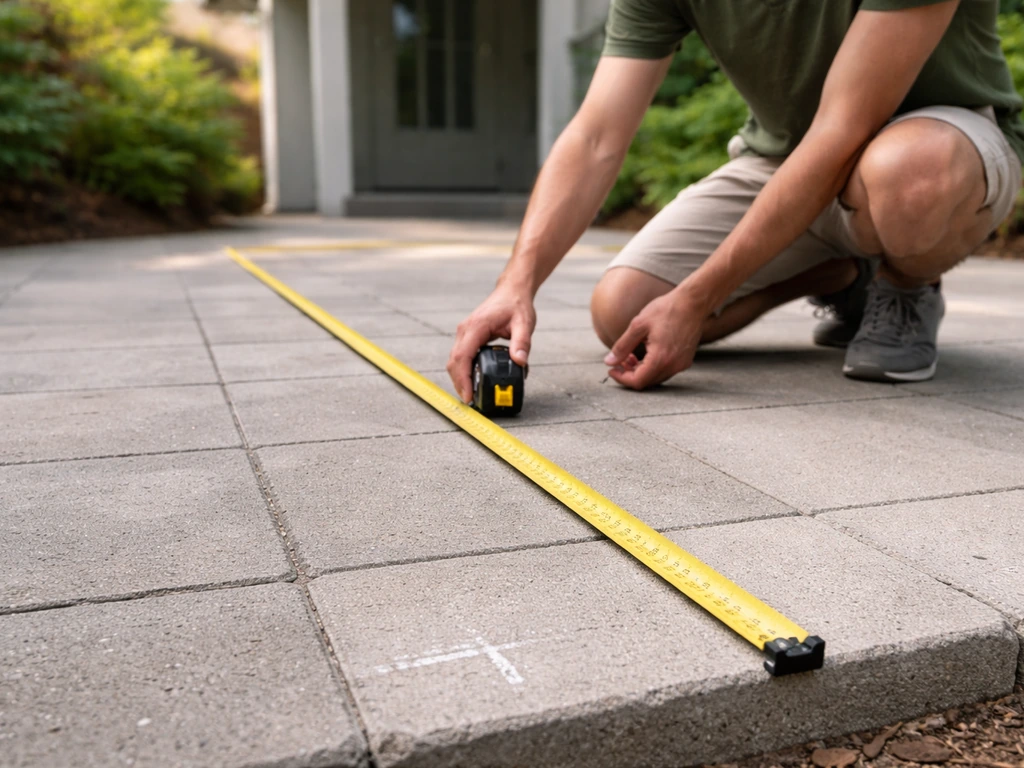
Grab a tape measure and spend five minutes before you do anything else. Measure the full patio dimensions (length and width), then identify the usable shade zone: the area where you actually sit or entertain. For overhead coverage, you want your shade structure to extend at least 2–3 feet beyond the furniture footprint on the sun-facing sides to account for sun angle. A 12x14 seating area typically needs a 14x16 or larger shade structure for meaningful coverage in afternoon sun.
- Measure your patio: Get the full length, width, and note any obstructions (doors, windows, HVAC units, downspouts).
- Identify anchor points: Do you have a solid wall for a wall-mount awning? Existing pergola posts? Open ground for new posts? Your answer narrows the options significantly.
- Map sun movement: Use a sun-tracking app (SunSeeker or Sun Surveyor work well) to see where peak sun hits your patio and at what hours. This tells you whether you need overhead coverage, west-side blocking, or both.
- Check wind exposure: Is your yard open or protected by fencing and buildings? Open yards in wind-prone regions (Great Plains, coastal areas) push you toward engineered fixed structures rather than fabric options.
- Define your rain needs: Do you want to stay outside during light rain? If yes, only waterproof or solid-roof options qualify.
- Set your budget range: Under $500 means umbrella or basic shade sail. $1,000–$5,000 opens awnings and pergola accessories. $5,000+ gets you into retractable awnings, pergolas, or louvered systems.
- Check permit requirements: Call or check your municipality's website before buying anything that attaches to your home or requires new footings. A permit isn't a reason to avoid a project, but skipping one can cause problems at resale.
- Choose mounting strategy: Wall-mount for awnings (requires solid ledger), in-ground posts with concrete footings for shade sails or freestanding pergolas, or freestanding weighted base for umbrellas and some cabanas.
- Match materials to climate: Hot, dry climates: prioritize UV-rated fabric and heat-reflective colors. Humid or coastal: prioritize rust-proof hardware and mold-resistant fabric. High-wind regions: prioritize engineered structures with verified wind ratings and strong footings.
- Pick your commitment level: If you want flexibility to change things in 2–3 years, go with a semi-permanent option. If this is your forever patio, invest in something permanent and engineered properly.
Which Option Makes Sense for Your Situation
Here's the honest summary. If you need shade fast and cheaply, a large offset umbrella or a basic shade sail between two posts will work for most average patios. If you want something that stays up, looks finished, and handles rain without you managing it, a retractable motorized awning or a louvered roof system is worth the investment. If you are comparing alternative patio materials for comfort and style, start by matching the material to your sun, wind, and rain needs. If you care most about creating a complete outdoor room with privacy and weather protection, a pergola with curtains, a shade cover, and some planted perimeter is the most satisfying long-term option, even if it takes a season or two to fully come together.
Whatever you choose, get the anchoring right. More shade-structure failures come from bad footings, wrong hardware, or inadequate substrate than from product quality. A well-anchored $400 shade sail will outlast a poorly anchored $2,000 one. inexpensive patio alternatives. And if you're ever in doubt about load paths, footing depth, or wind exposure in your specific yard, it costs very little to have a local contractor or structural engineer give your plan a 20-minute review before you pour concrete. That conversation has saved a lot of people from expensive mistakes.
FAQ
How do I tell if I need UV-only shade or real waterproof rain coverage?
Start by checking whether you mean “cooler” comfort or “stay dry.” UV-only shade cloth and most shade sails are breathable, they reduce heat and glare but they let rain through or allow misting. If you want protection during light to moderate rain, choose closed fixed aluminum awnings or a louvered roof, and confirm what the product does when it is extended or in closed position (retractables are not designed for heavy downpours while deployed).
What wind speed should I plan for if I live in a windy area?
Use two thresholds: the product rating (usually based on fabric or system test conditions) and your real-world wind exposure (open yard vs sheltered patio). For retractable awnings, follow the manufacturer’s retract-at gust guidance and consider adding automation with a wind sensor if you are away. For shade sails, poor footings are often the failure point, so treat anchor and footing design as the primary risk, not just the sail’s stated material rating.
Can I install a shade sail without a contractor if I’m anchoring to my deck or patio slab?
Avoid assuming the slab or deck framing can handle tension loads. Deck boards, typical railing posts, and some patio pavers are not designed for sustained uplift and corner torque. If you are anchoring to masonry or a poured slab, verify thickness and reinforcement, and use engineered anchor hardware, otherwise plan for freestanding posts with properly sized concrete footings.
How much extra size do I need for the shade structure beyond my seating area?
Beyond the furniture footprint, plan for sun angle movement and worst-case positioning. A common rule is extending 2 to 3 feet past the seating zone on the sun-facing sides, and sizing up further if your patio receives long afternoon sun or you frequently use the area during sunset. Measure where you sit at the peak sun hour, not just the midday time you think of.
What is the most common setup mistake with market umbrellas?
Leaving them open in winds or placing the base on an unstable surface. Umbrellas are typically safe only up to modest gust levels (often around 15 to 20 mph for practical use), and they can tip or bend frames even if the fabric survives. For offset umbrellas, also make sure your base is weighted correctly for the umbrella size and that you can keep the canopy aligned without stressing the arm.
Are outdoor curtains a substitute for overhead shade?
No, they mainly block low-angle sun and improve privacy, they do not replace heat reduction from overhead coverage. They work best as a layered solution with a shade sail, awning, or pergola top, because curtains reduce glare and create enclosure. To prevent wind damage, use weighted bottoms or tie-backs and plan to secure or remove panels before a storm.
What should I check before buying a retractable awning (manual vs motorized)?
Confirm the mounting substrate (solid framing or masonry, not just exterior cladding) and the control features you actually need. If you are away often, motorization with a wind sensor helps prevent accidental damage from high gusts when you forget to retract. Also confirm fabric coverage expectations, since retractables typically reduce shade while deployed but are not designed to handle heavy rain like a closed rigid roof.
Do louvered pergola systems handle rain better than awnings?
In general, yes, when the louvers are engineered and operated in closed or near-closed positions with proper drainage channels. The key detail is whether the system is designed to drain rain away through the frame and how it handles water when partially open. Treat a louvered system as a coordinated design (louvers, drainage, sealing, and anchoring), not just a set of slats.
How do I choose between planting vines and buying a temporary shade option?
If you need relief within weeks, start with a temporary solution like an umbrella or retractable awning while the vines establish. Vines typically take years for dense canopy, and faster species can be aggressive, require frequent pruning, and may stress the structure when growth is heavy. If your patio structure is marginal, install temporary shade first and only add vines after confirming the pergola or frame can handle long-term load.
What fabric and hardware material choices extend lifespan in harsh climates?
Prioritize UV-stabilized fabrics with a clear UV-blocking performance claim and breathable vs waterproof expectations. For fasteners, choose stainless steel or hot-dipped galvanized to reduce rust in humid or coastal areas, and check frame corrosion resistance (aluminum often performs better near salt air). Also verify whether the UV rating applies to the fabric itself or only to the product’s use performance, because degradation often depends on material treatment.
Should I reinforce a DIY shade solution with a structural review?
Yes, especially if anchoring into concrete or supporting loads in a windy yard. A short plan review by a local contractor or structural engineer can confirm load paths, footing depth, and hardware selection before you commit to installation. This is particularly valuable for shade sails (tension loads), retractables (mounting substrate), and pergola connections to a home ledger.
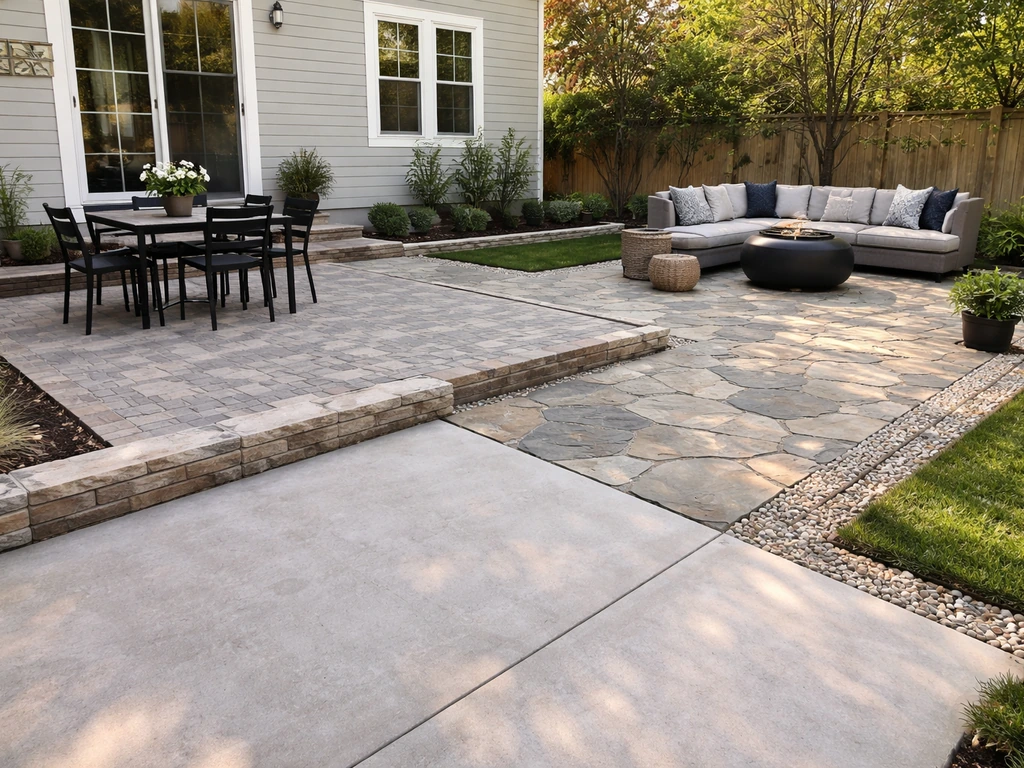
Compare patio surfaces, layouts, costs and setup for your budget, climate and DIY or pro install choices.
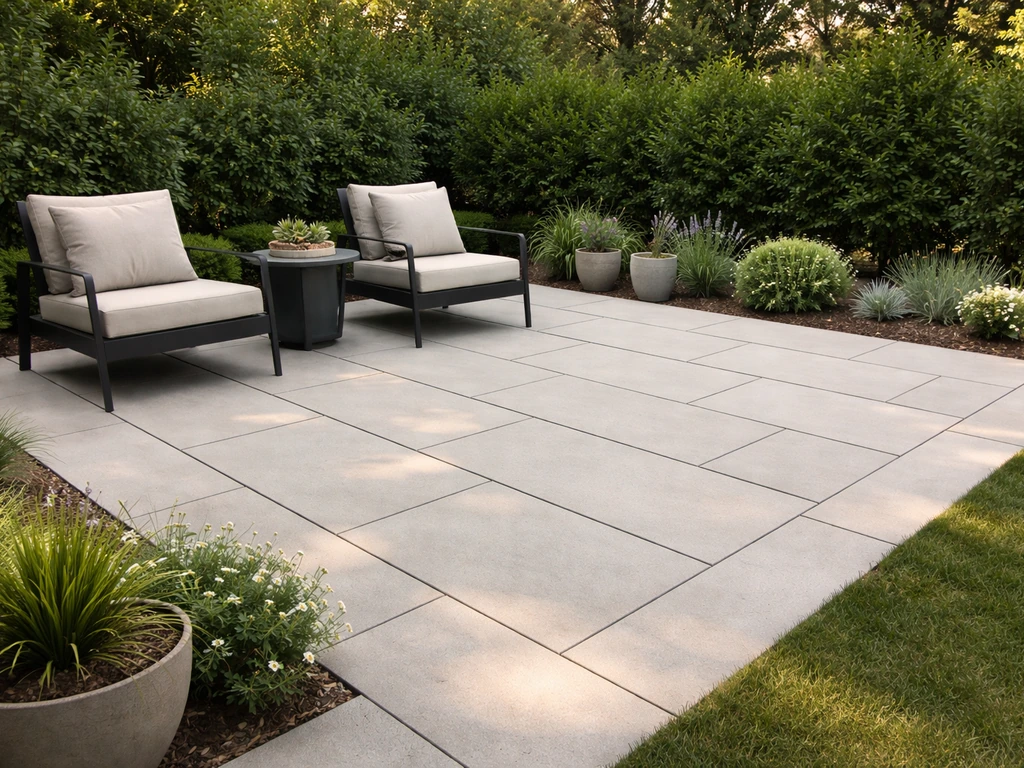
Compare alternative patio materials for durability, maintenance, weather performance, costs, comfort, and installation t
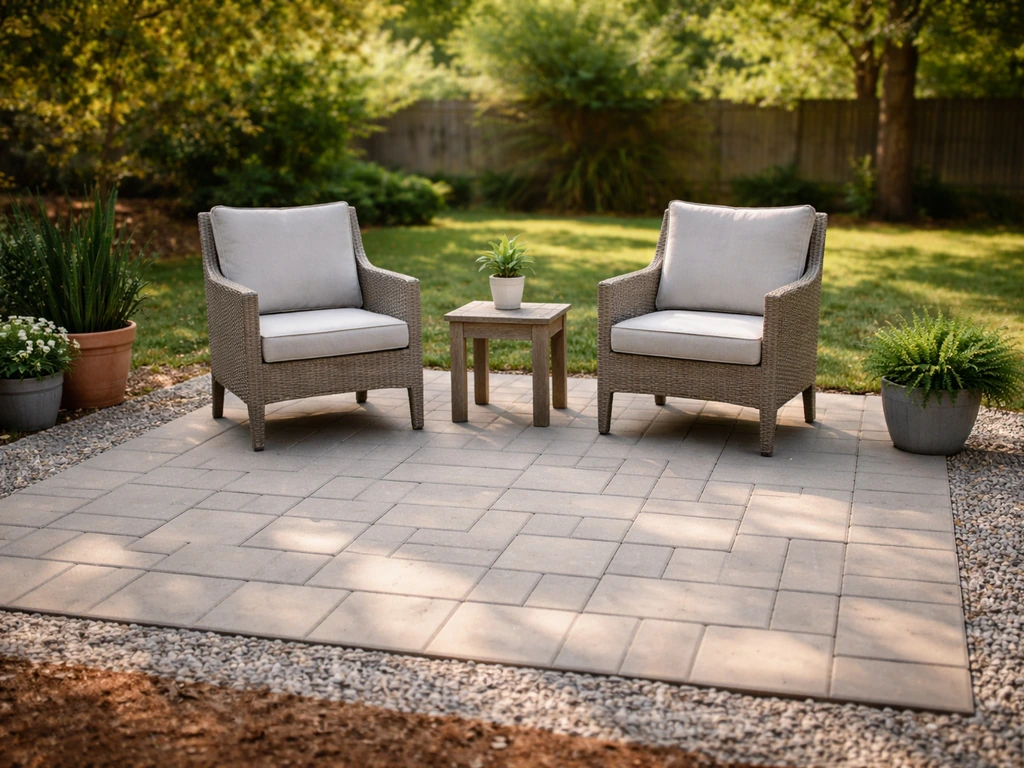
Affordable patio alternatives with costs, easy DIY surfaces, durability tips by climate, and step-by-step next actions.