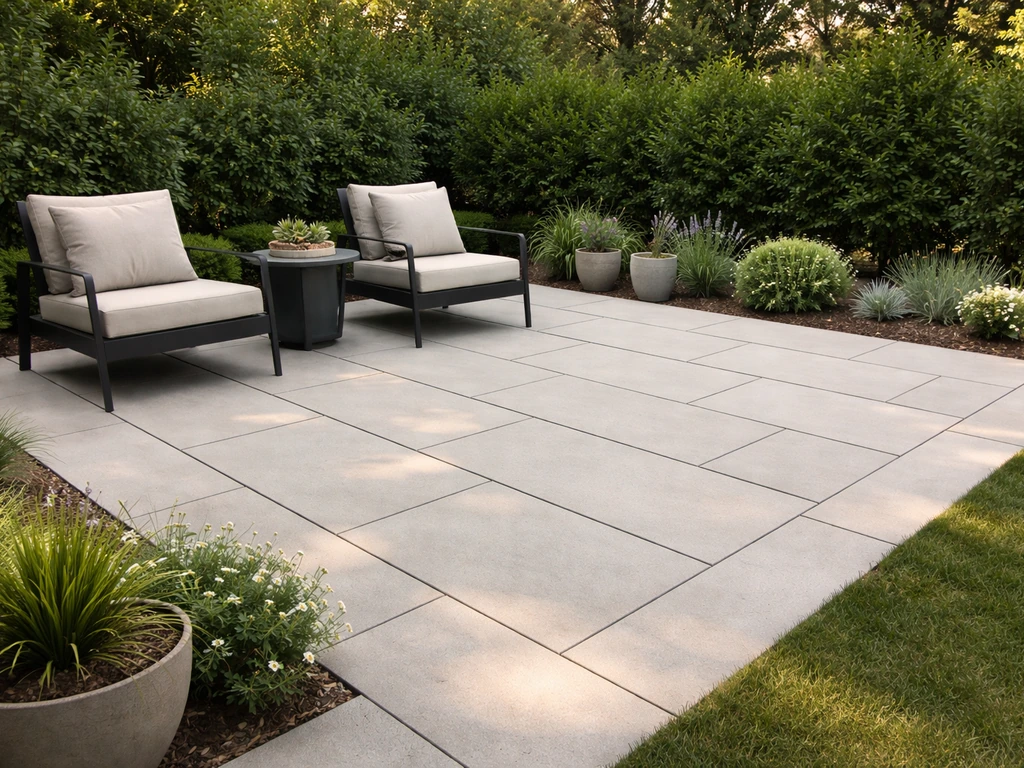
The best alternative patio material for most homeowners right now is porcelain pavers, followed closely by rubber interlocking tiles and decomposed granite, depending on your climate, budget, and how hands-on you want to be. Each one sidesteps the biggest complaints people have about traditional concrete slabs and natural stone: cracking, staining, constant sealing, and weed nightmares between joints. But none of them is perfect for every yard, so the right pick comes down to a handful of factors you can sort out in about ten minutes. If you want the best patio options for your yard, focus on the material that matches your climate, budget, and how much maintenance you are willing to handle.
Alternative Patio Materials Guide: Durability, Cost, Fit

Phoebe Foster
6 Jun 2026
Why bother looking beyond concrete or traditional pavers
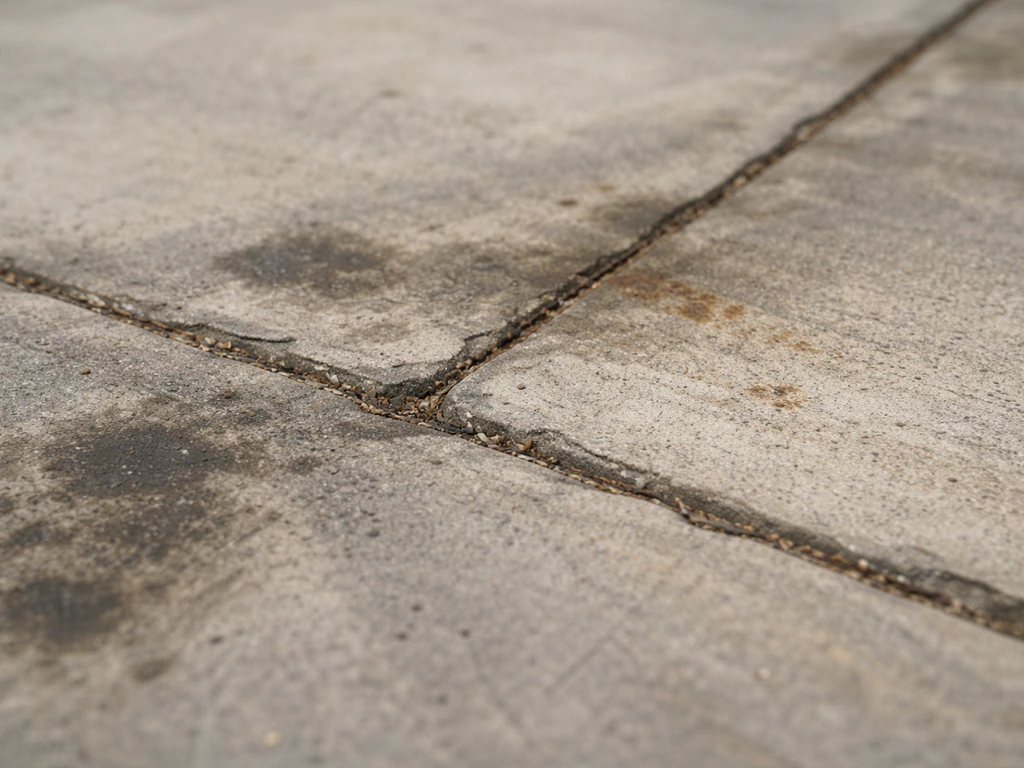
Plain poured concrete cracks. It stains from grease, rust, and leaves. Resealing it every one to three years gets old fast, and once it settles unevenly, you're either living with a tripping hazard or paying for a full grind-and-pour. Traditional clay or concrete pavers solve some of that, but they bring their own headaches: weeds pushing through joints within a season or two, ants excavating the sand base, and sections that rock underfoot after one hard frost.
A lot of the recurring weed problems people see with pavers trace directly back to water sitting in the joints, either because the patio wasn't sloped correctly or because the joint material failed. Once water is sitting in there, organic debris follows, and you have a planter built right into your patio.
That's not a reason to give up on hard surfaces entirely. It's a reason to look at materials and installation systems that handle water and movement better from the start. The good news is the alternatives have gotten genuinely good. If you're also exploring alternatives to patio blinds, the same mindset applies: focus on coverage and weather performance that match your space alternatives have gotten genuinely good.
Porcelain pavers that were hard to find five years ago are now widely available at home centers. Porcelain pavers that were hard to find five years ago are now widely available at home centers garden patio alternatives. Rubber tiles that once screamed 'commercial gym' now come in natural-stone textures. Synthetic turf has moved way past the AstroTurf of the 1970s.
If you're starting fresh, doing a partial renovation, or just trying to fix a problem area, there's almost certainly a material that works better for your specific situation than what you currently have.
Most popular alternative patio flooring options
Here's a plain-language rundown of the main contenders. These aren't obscure specialty products: they're all materials you can price out today and get installed in most parts of the country.
Porcelain pavers
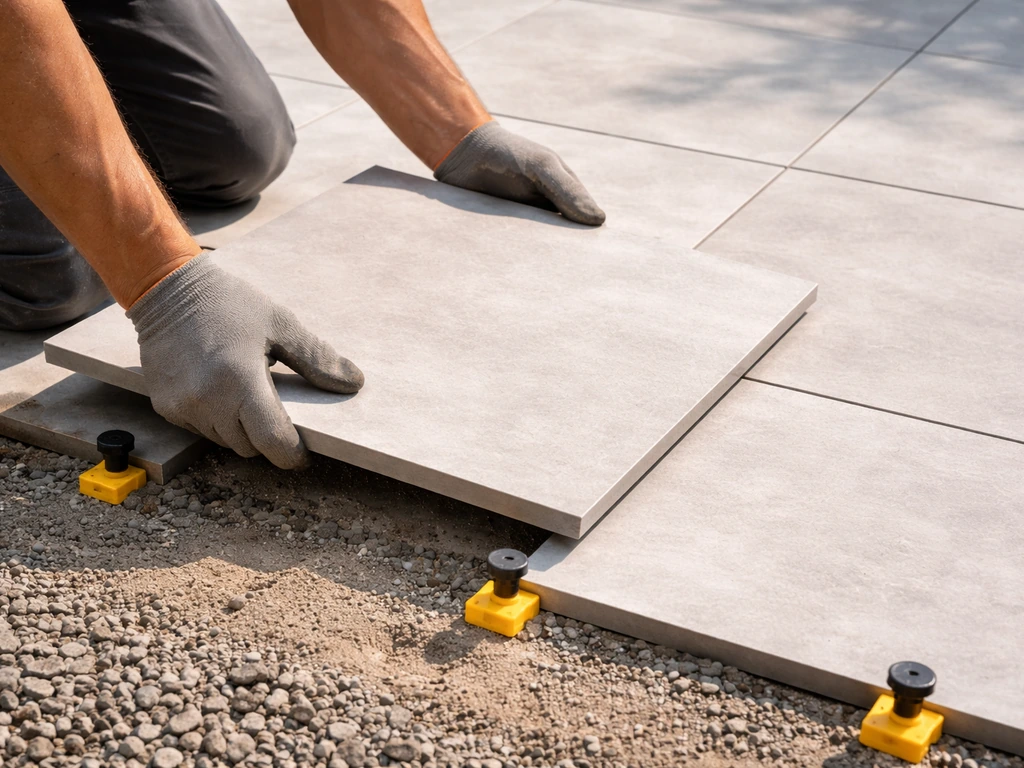
These are large-format tiles engineered specifically for outdoor use. The standard outdoor thickness is 2cm (about 3/4 inch), which is thick enough to handle foot traffic and outdoor furniture without cracking under normal conditions. They're dense, with water absorption rates at or below 0.3% by ASTM C373 standards, which is why they resist freeze-thaw damage better than most natural stone. You get the look of slate, travertine, or wood plank without the maintenance those materials require. Colors stay stable under UV because the pigment runs through the body of the tile, not just a surface coating.
Rubber interlocking tiles and mats
These are exactly what they sound like: interlocking rubber panels, typically made from recycled tire rubber, that snap or lay together over an existing surface or compacted base. They have drainage channels built into the underside, so water moves through and doesn't pool. They're comfortable underfoot, forgiving if someone trips, and genuinely DIY-friendly. Modern versions come in textures that mimic slate or stone, though they don't fool anyone up close. Best use cases are around pools, under covered patios, and anywhere you need cushioning or fast installation.
Decomposed granite (DG)
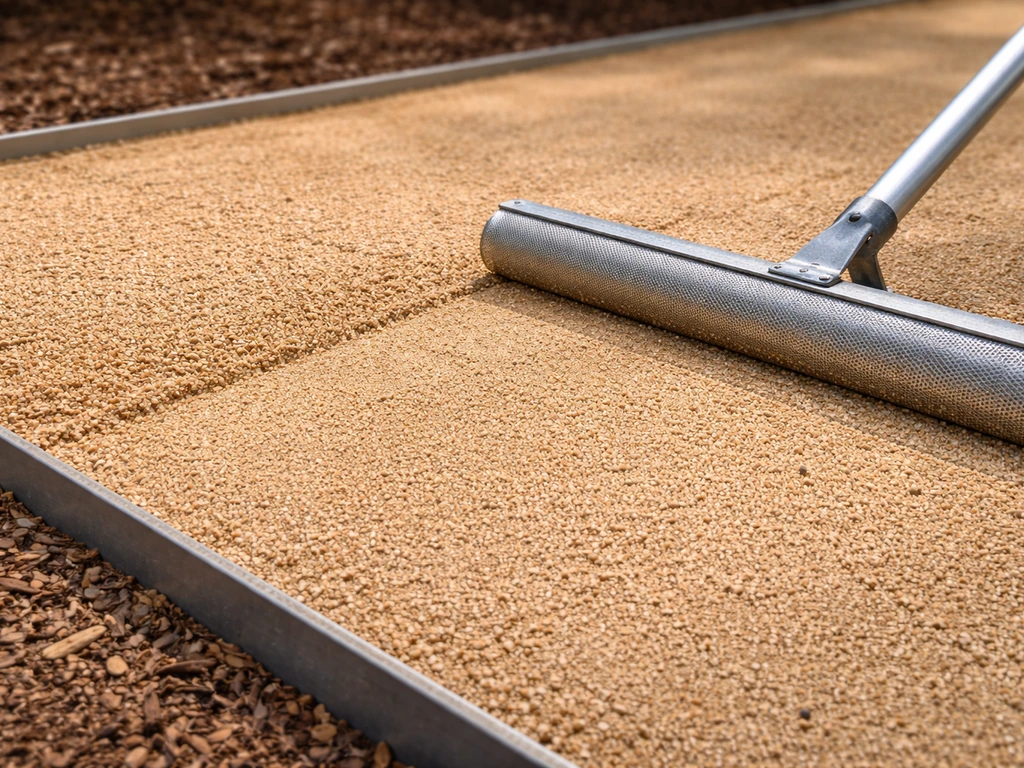
Decomposed granite is crushed granite in a loose or stabilized form. The stabilized version has a binding agent mixed in that firms it up to a surface similar to packed dirt, but with better drainage and a cleaner look. It's one of the cheapest ways to cover a large outdoor area, it drains extremely well, and it fits naturally into drought-tolerant or xeriscape landscapes. The downsides are real: it tracks into the house, needs periodic topping off, and isn't great for dining areas where chair legs sink in slightly.
Composite or PVC deck tiles
These are snap-together tiles made from composite wood-plastic blends or pure PVC. They sit on top of an existing slab or a level base and can be removed and reinstalled. Renters love them for that reason. They handle moisture well and don't rot the way real wood does, but they can get hot in direct sun and the wood-grain textures show wear over time if cheap materials are used. Stick with tiles at least 12mm thick and look for ones with UV stabilizers in the specs.
Synthetic turf
Modern synthetic turf is legitimately impressive for certain uses: play areas, putting greens, side yards where real grass won't grow. For a dining or seating patio, it's a harder sell because it gets hot in direct sun. Research on synthetic surface temperatures consistently shows that synthetic turf runs measurably hotter than natural grass under solar exposure, sometimes significantly so on the hottest summer days. For shaded patios or cooler climates, that concern shrinks considerably. It pairs well with patio covers or shade structures.
Gravel and pea gravel
Gravel is the budget king. A basic gravel patio with proper edging and landscape fabric underneath can be put together for under $1,000 in many regions. Keeping the material budget in mind, gravel and pea gravel are among the most inexpensive patio alternatives for many yards. It drains perfectly, never cracks, and looks clean when properly edged. The tradeoffs are comfort (it shifts underfoot and isn't great for bare feet), furniture stability (legs sink slightly unless you use pads), and maintenance (leaves and debris mix in and it needs occasional raking and topping off). Pea gravel is the smooth, rounded version: easier on bare feet but more prone to displacement.
Stamped or resurfaced concrete
If you already have an existing concrete slab in decent structural shape, stamped concrete overlay is a strong option. It's applied over the existing slab and can mimic the look of stone, brick, or wood at a fraction of the cost of tearing out and replacing. Resurfacing costs roughly $3 to $5 per square foot for basic work, with intricate patterns reaching around $20 per square foot. New stamped concrete pours run $10 to $14 per square foot for standard work. It's not truly a different material, but the finished result looks nothing like plain gray concrete.
Durability, maintenance, and weather performance by material
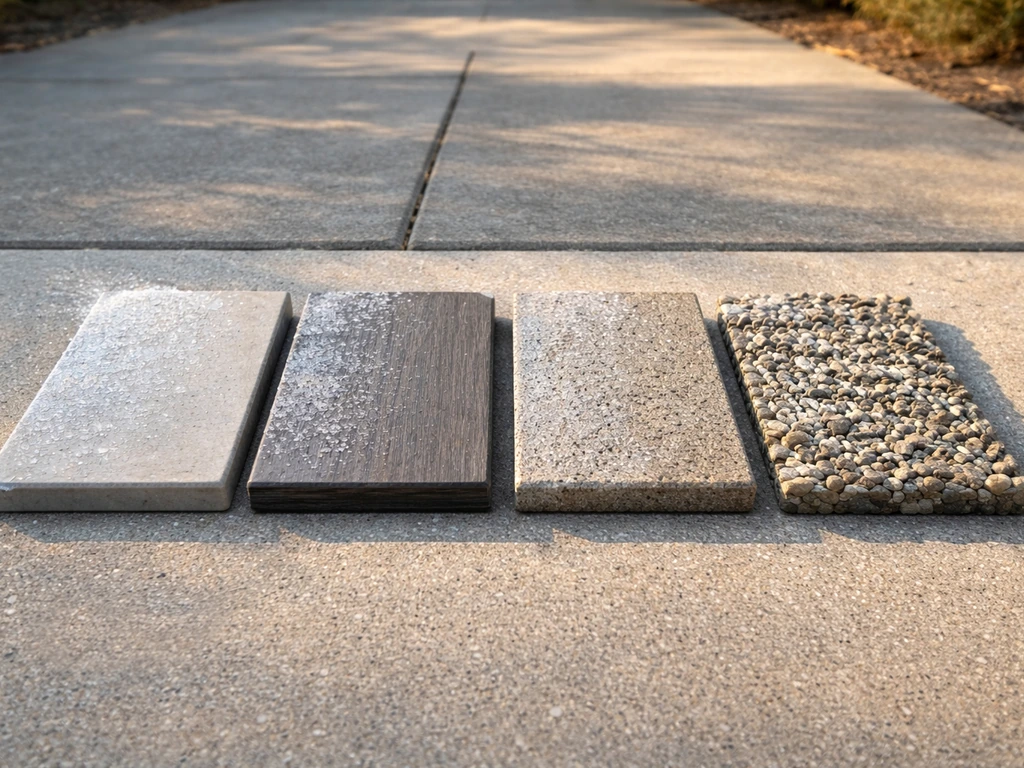
| Material | Freeze-Thaw Performance | UV/Heat Resistance | Weed/Pest Risk | Maintenance Level | Crack/Failure Risk |
|---|---|---|---|---|---|
| Porcelain pavers | Excellent (≤0.3% water absorption) | Excellent, colorfast | Low with correct jointing | Low: rinse, occasional joint check | Low if base is correct |
| Rubber interlocking tiles | Good (flexible, doesn't absorb water) | Moderate: degrades in harsh UV over years | Very low | Low: rinse or sweep | Very low: tiles replace individually |
| Decomposed granite (stabilized) | Fair: can erode in heavy freeze-thaw | Excellent, natural material | Moderate without fabric barrier | Moderate: top off annually | Low: settles, doesn't crack |
| Composite/PVC deck tiles | Good: no moisture absorption | Moderate to good with UV stabilizers | Very low | Low: rinse | Low: individual tile replacement |
| Synthetic turf | Good: no cracking | Moderate: fibers degrade over 10–15 years | Very low | Low: brush, rinse infill | Low structurally, replace at end of life |
| Gravel | Excellent: drains freely | Excellent | Moderate without fabric | Moderate: rake, top off | None: no solid structure to crack |
| Stamped concrete overlay | Moderate: depends on base integrity | Good with sealer, fades without | Very low | Moderate: reseal every 2–3 years | Moderate: cracks follow base |
Porcelain pavers are the standout performer in freeze-thaw climates because their extremely low water absorption means ice expansion inside the material is nearly a non-issue. The risk shifts to the base and substrate instead. A properly prepared base of 6 to 12 inches of compacted aggregate with controlled drainage is what separates a porcelain patio that lasts 30 years from one that starts rocking within three winters. In climates with regular freeze-thaw cycling, porcelain installations should use larger expansion spacers (the 5.5-inch diameter spacers designed specifically for freeze-thaw regions) and pedestal systems where drainage beneath the surface can be maintained without trapping moisture.
Rubber tiles and composite deck tiles share a practical advantage: when something does fail, you replace one tile, not a whole section. That's a genuine long-term maintenance win. Synthetic turf's biggest durability issue isn't structural, it's the fibers themselves: UV exposure degrades the blades over 10 to 15 years depending on product quality and climate, and you're looking at a full replacement rather than spot repairs.
Cost comparison: upfront, installation, and long-term upkeep
| Material | Material Cost (per sq ft) | Installed Cost (per sq ft) | Long-Term Upkeep Cost | DIY Friendly? |
|---|---|---|---|---|
| Gravel | $0.50–$2 | Under $1,000 total for small patios | Low: $50–$100/yr to top off | Yes |
| Decomposed granite (stabilized) | $1–$3 | $3–$7 | Low to moderate | Yes |
| Rubber interlocking tiles | $2–$6 | $3–$8 | Very low | Yes |
| Composite/PVC deck tiles | $3–$7 | $4–$9 | Very low | Yes |
| Stamped concrete overlay | $3–$5 (overlay) | $3–$20 depending on pattern | Moderate: reseal every 2–3 years | No, pro recommended |
| Synthetic turf | $2.20–$7.58 (material) | ~$10 fully installed | Low annually, full replacement at 10–15 yrs | Partial DIY possible |
| Porcelain pavers | $5–$15 | $15–$35+ | Very low ongoing | Possible but base prep is critical |
| Traditional pavers (reference) | $10–$50 installed | $10–$50 | Moderate: joint maintenance, sealing | Possible but labor-intensive |
The sticker price on porcelain pavers is real, but so is the math over 20 years. Once you factor in that you're not resealing every two to three years, not replacing crumbled joint sand every season, and not patching cracks, the long-term cost gap between porcelain and cheaper alternatives narrows considerably.
Stamped concrete overlay is the most cost-effective upgrade for existing slabs, but it does need regular resealing to maintain color and surface integrity, and if the underlying slab cracks, the overlay cracks with it. Stamped concrete overlay is the most cost-effective upgrade for existing slabs, but it does need regular resealing to maintain color and surface integrity, and if the underlying slab cracks, the overlay cracks with it cheaper alternatives.
Gravel and stabilized DG shine on large areas where you want drainage and a natural look without spending thousands on hard surface materials.
One cost line that homeowners consistently underestimate is base preparation. Inadequate base thickness and compaction is the number-one cause of cracked and failing patio surfaces, regardless of material. Skimping on base prep to save money upfront is the fastest way to spend more later. Get the sub-base right first.
Comfort and usability: slip resistance, heat, drainage, and sound
Slip resistance matters more than people realize, especially around anything involving water. The industry benchmark for wet slip resistance on tile and pavers is a minimum wet DCOF (Dynamic Coefficient of Friction) of 0.42, which is the threshold referenced by ANSI A137.1 and widely cited as the ADA-minimum baseline for tiles in wet conditions. When you're shopping for porcelain pavers, look for a wet DCOF of 0.42 or higher on the product spec sheet, and go higher (0.50+) if the patio is adjacent to a pool or gets regular rainfall without shade. Textured and matte finishes almost always perform better here than polished surfaces.
Heat underfoot is a real consideration in hot climates. Porcelain and concrete both absorb and radiate heat, which can make them uncomfortable in bare feet on a 95-degree Texas afternoon. Rubber tiles and composite deck tiles stay meaningfully cooler because they have lower thermal mass and are often raised slightly off the ground. Synthetic turf runs hotter than natural grass under direct sun, which is a documented performance characteristic worth taking seriously if you're in Phoenix or Dallas and planning an exposed seating area. Shade structures change this equation dramatically: under a pergola or solid patio cover, surface temperature differences between materials shrink significantly.
Drainage is where a lot of patios fail silently for years before becoming obvious problems. Every hard patio surface should slope at least 2% away from the house, which works out to 1/4 inch per foot. That's the engineering standard for reliable drainage in rainfall events over one inch per hour.
It sounds small but it makes a real difference: without it, water pools near your foundation, works into joints, accelerates weed growth, and in freeze-thaw climates, gets under your base and starts the frost-heave cycle. If you're installing over an existing slab, confirm the slope before you commit to a surface material, because some materials (gravel, rubber tiles, DG) forgive poor drainage naturally while others (porcelain mortar-set, stamped concrete) can't compensate for a flat or back-pitched base.
Sound and leveling are underrated comfort factors. Loose gravel crunches underfoot, which some people love and others find annoying. Rubber tiles absorb impact sound and footstep noise noticeably. Hollow-sounding porcelain pavers over a dry-lay base usually indicate inadequate bedding contact and should be addressed before heavy use. A level, stable surface also matters for chairs: wobbly chairs on an uneven patio are a minor but constant frustration, and it's worst with pavers that have shifted or joints that have eroded.
Design integration: matching patio covers, lighting, and outdoor living
The patio surface doesn't exist in isolation. Whatever you put underfoot has to work with everything else happening at the same level: the overhang or cover above it, the outdoor furniture sitting on it, any misting system or fans overhead, and the lighting running along the perimeter or through it. Getting this integration right from the start saves a lot of retrofitting.
Porcelain pavers in large-format wood-plank looks (600mm x 1200mm or similar) pair especially well with modern pergolas and aluminum patio covers because they share the same clean, low-maintenance design language. The 2cm thickness sits flush with most thresholds and transitions cleanly to interior flooring, which matters if you have sliding glass doors opening onto the patio. If you're adding a misting system or overhead fans, the hard surface holds up to the occasional water exposure without warping or staining, which is a real advantage over composite or wood-look tiles.
Rubber tiles and composite deck tiles work particularly well under covered patios and around pool decks because the cushioning reduces slip risk in wet environments and the modular format makes it easy to run wiring for outdoor lighting underneath without cutting into a slab. Rubber and composite deck tiles are also popular patio alternatives to consider if you want modular installation and easier repairs than a full slab system. If you want specific ideas for staying cooler without changing flooring, see patio shade alternatives. If you're doing a patio shade alternatives setup with a sail shade or retractable awning, rubber or composite tiles can be reconfigured if the post footings need to move, which isn't possible with a monolithic pour.
Decomposed granite and gravel suit naturalistic outdoor spaces: raised garden beds, fire pit areas, xeriscape landscapes, and anything with a loose, organic aesthetic. They don't compete visually with heavy structural elements like steel pergolas or large concrete footings, and they work with drip irrigation and landscape lighting buried at grade without any conflict. If you're exploring garden patio alternatives or a backyard patio alternatives approach where the line between patio and landscape is intentionally blurred, DG and gravel are design-compatible options that traditional hard surfaces can't match.
Synthetic turf works best as a complementary zone rather than the entire patio surface. A grass panel flanking a hard-surface seating area, a putting green adjacent to a covered porch, or a kid-friendly play pad next to a grill area are all natural fits. Pairing it with proper outdoor lighting at the perimeter helps define the zone at night and highlights the texture contrast in a way that reads intentional rather than accidental.
Installation approaches: DIY vs hiring pros and what to ask contractors
What's actually DIY-able
Rubber interlocking tiles, composite deck tiles, gravel, and stabilized decomposed granite are all genuinely DIY-friendly for most homeowners with basic tools and a willing weekend. The work is largely physical (digging, leveling, compacting, laying) rather than technical. Gravel and DG require edging to be effective, and DG needs a plate compactor for a stable finish, but neither requires specialized skills. Rubber and composite tiles are literally snap-together on a prepared surface.
Porcelain pavers on a dry-lay base with proper edge restraints are DIY-possible for experienced homeowners, but the base preparation is unforgiving. The base needs 6 to 12 inches of properly graded and compacted aggregate depending on soil conditions, and slope must be built into the base, not corrected afterward. Skipping or shortcutting base prep is the most common reason porcelain patio installations fail within a few years. If you're not confident in your grading and compaction work, hire out at least the base and edge restraint, then lay the tiles yourself.
Mortar-set porcelain over a concrete slab is a contractor job. The expansion joint alignment between the concrete base and the porcelain layer is a technical requirement: pavers cannot be applied directly over expansion joints in the concrete, and elastomeric jointing strategies need to be used at those boundaries to allow movement without cracking. Miss this detail and you'll see cracked tiles within a season or two.
Questions to ask any contractor before signing
- What is your base preparation spec for this project? (Get the depth and compaction method in writing: 6 to 12 inches of compacted aggregate is the right range for most conditions.)
- How are you managing drainage slope? What slope percentage are you targeting, and how will you confirm it before surface installation? (The answer should be at least 2%, or 1/4 inch per foot, away from the house.)
- How are you handling expansion joints, especially if setting porcelain or any rigid tile over an existing concrete slab?
- What jointing material are you using, and what is your process for activating polymeric sand to ensure it bonds correctly without premature activation?
- What edge restraint system are you using, and how are they anchored?
- In freeze-thaw climates specifically: are you using freeze-thaw rated porcelain (water absorption under 0.5%), and how are you sizing spacers and managing under-paver drainage?
- What is your drainage plan if the existing grade doesn't support the target slope?
- Can you provide a written warranty that covers both materials and installation, including base failure?
Any contractor who can't answer the base prep, slope, and expansion joint questions specifically and confidently is a contractor to walk away from. These aren't trick questions: they're the basics of a patio that lasts. The most expensive patio mistake most homeowners make isn't choosing the wrong surface material. It's hiring someone who shortcuts the groundwork and leaves them with a beautiful-looking surface that starts failing within two to three years.
A quick decision framework before you commit
- Freeze-thaw climate + want hard surface + budget allows: porcelain pavers, dry-lay on compacted base with pedestal or spacer system rated for cold climates.
- Hot climate + want hard surface + want low maintenance: porcelain pavers or large concrete pavers with polymeric sand joints; add shade structure to manage surface heat.
- Pool area or anywhere wet and barefoot: rubber interlocking tiles or textured porcelain with wet DCOF above 0.42 (ideally 0.50+).
- Covered patio + want DIY-friendly + renter or temporary: composite or PVC deck tiles over existing slab.
- Large area + low budget + natural aesthetic: stabilized decomposed granite with proper edging and a weed barrier underneath.
- Existing slab in decent shape + want a visual upgrade cheaply: stamped concrete overlay, accepting the resealing commitment.
- Play area, putting green, or shaded side yard: synthetic turf, especially under a cover or in a cooler climate where heat buildup is manageable.
- Fire pit area or naturalistic landscape space: pea gravel or gravel with steel or aluminum edging and landscape fabric base.
The practical reality is that a lot of homeowners end up with a combination: a hard surface zone for dining and seating, a softer or permeable zone for a fire pit or garden edge, and maybe a turf panel for kids or pets. There's no rule that says one material has to cover the whole yard. Mixing them thoughtfully, with consistent edging and drainage designed from the start, usually produces both a better-looking and better-performing result than forcing one material to do everything.
FAQ
Can I install alternative patio materials right up to a sliding glass door or interior threshold without creating a trip or drainage problem?
Yes, but only if you build the right transition layer. For porcelain pavers, use edging and a bonded or mechanically locked strip system so water cannot migrate under the threshold gap, and confirm the height difference at doors (most problems come from settling at the edge, not from the tile itself).
If I choose porcelain pavers, what joint material and joint maintenance actually prevent weeds and pooling?
Start by matching the jointing approach to the drainage plan. For porcelain pavers on a dry-lay system, use the recommended joint width and joint material type from the manufacturer, and keep joint areas clear of fines that can clog drainage (clogging is a common cause of weeds and rocking later).
How do I calculate whether my base thickness is enough, and which part matters most for avoiding rocking and cracking?
In most climates, you want a base that is compacted in lifts and aligned to the drainage slope, then install an edge restraint that locks the perimeter. The key decision is thickness and compaction method, you do not fix weak base prep with any surface choice.
When is a stamped concrete overlay a bad idea versus ripping out the slab?
If you already have a slab, do not assume stamped overlay is “maintenance-free.” Plan on re-sealing on a schedule that matches sun exposure and traffic, and avoid applying over active cracks without an assessment, because reflective cracking is common when the slab moves.
Do I need landscape fabric under gravel or decomposed granite, or will it cause drainage issues?
You usually should, even with weed-resistant approaches. For gravel and stabilized DG, install landscape fabric only as directed (some systems specify using a geotextile to control migration, not to completely block drainage), then add proper edging so material does not migrate into lawns and joints.
If porcelain pavers are freeze-thaw resistant, what extra steps should I take in cold climates to protect the base and prevent frost heave?
For freeze-thaw regions, larger spacers and a pedestal or drainage-capable assembly can be more important than the surface selection. Also confirm freeze-thaw rated underlayment or base specifications, because the risk often shifts to the substrate even when the tile itself resists water absorption.
How do I handle repairs or replacements if a rubber or composite deck tile gets damaged?
Rubber and composite tiles are generally easier to replace, but they still need a stable base and correct locking orientation. Keep an eye on gaps at edges, if water enters and freezes under modular systems, tiles can shift and create uneven seams.
What are the biggest practical downsides of synthetic turf patios that people only notice after installation?
Synthetic turf is best for defined zones, but the hidden risk is heat and mat wear from heavy furniture. Use outdoor furniture pads, rotate or relocate when possible, and ensure you have a drainage base so water does not sit and thaw-refreeze under the turf in colder climates.
Can I use the same material around a pool and also around an exterior shower or misting zone?
Yes, but confirm the specific product’s wet traction rating and installation surface. Textured finishes typically meet wet slip benchmarks more reliably, and you should avoid polished or glossy coatings near pool edges unless the spec sheet explicitly supports wet DCOF performance.
Which alternative patio materials require real maintenance versus “occasional cleaning,” and what are the common maintenance shortcuts?
It depends on the failure mode. Gravel and DG often require periodic topping and raking, while porcelain or composite tiles mainly need inspection for edging shifts and occasional cleaning of joints, not resealing. The biggest maintenance “mistake” is letting water channels clog or letting the perimeter edge drift, which eventually causes migration and pooling.
Next Articles
Cheap Patio Alternatives: Easy Options, Costs, and Next Steps
Affordable patio alternatives with costs, easy DIY surfaces, durability tips by climate, and step-by-step next actions.
Do It Yourself Outdoor Patio Ideas: Build, Upgrade, Maintain
DIY outdoor patio ideas for planning, building, upgrading, and maintaining floors, shade, privacy, lighting, and decor.
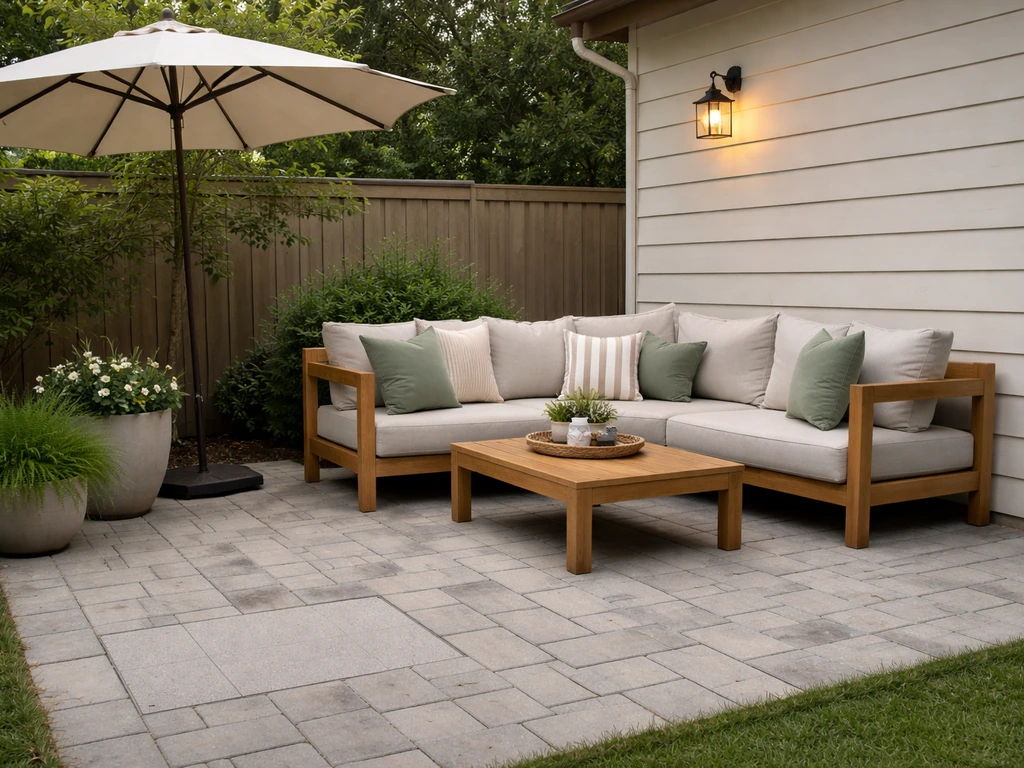
Quick Fix Patio Ideas for Instant Comfort and Style
Quick fix patio ideas for fast comfort and style: cleanups, repairs, shade, flooring tweaks, and safe upgrades on any bu