A garden patio alternative is any outdoor surface or zone that gives you the usable, comfortable space a traditional concrete or paver patio provides, without necessarily pouring a slab or laying mortar-set stone. If you're evaluating alternative patio materials, start with how they handle drainage and base preparation, not just the surface appearance. That could mean gravel, decomposed granite, a floating deck, permeable pavers, ground-cover living surfaces, outdoor rugs on compacted base material, or a hybrid of several. The right choice depends on your drainage situation, budget, how much maintenance you're willing to do, and what your yard actually looks like right now.
Garden Patio Alternatives: Options for Drainage, Comfort, DIY

Phoebe Foster
9 Jul 2026
What 'patio alternative' actually means for your yard
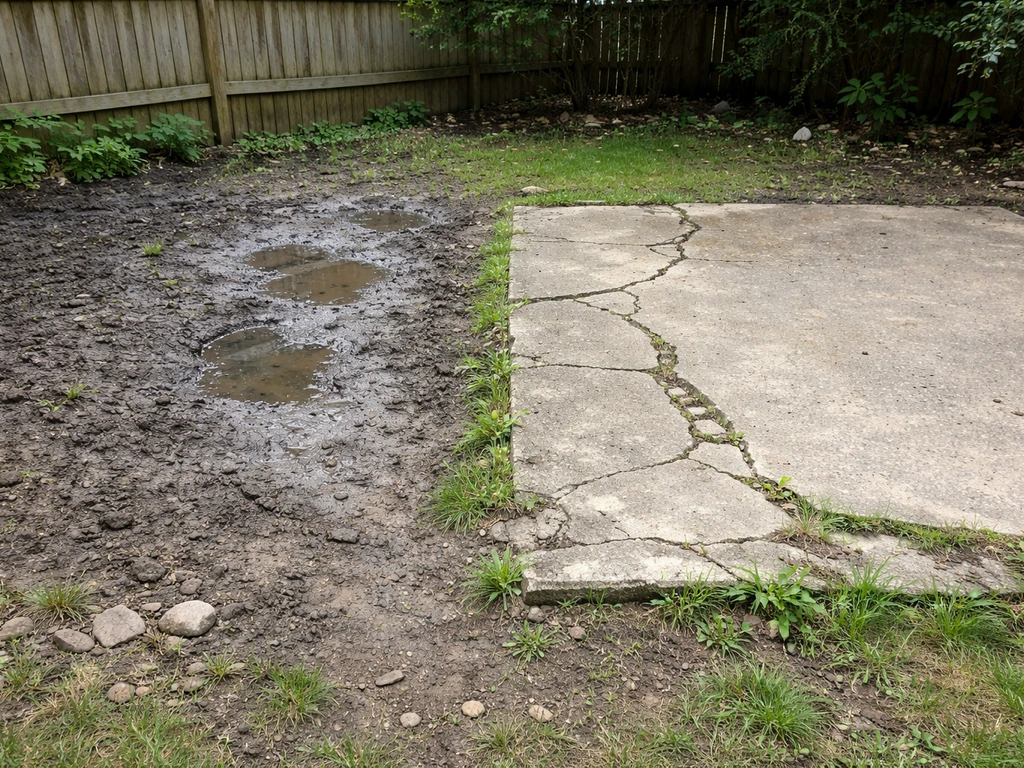
Before you start pricing materials, it helps to get honest about your goal and your constraints. Are you replacing a crumbling concrete slab, starting from a muddy bare patch, or trying to extend your usable outdoor space further into the garden? Each of those scenarios points toward a different solution. Your real constraints are usually some combination of: drainage problems (standing water, clay soil, a low spot), budget limits, rental or HOA restrictions, physical access for delivery and digging, and how much you want to maintain it long-term. Once you know those, the shortlist of options gets short fast.
One important distinction: a patio alternative does not have to be permanent or fully permeable, but ideally it should handle water better than a solid concrete pad. Most homeowners in wetter climates or shady yards are dealing with water sitting under or around their patio surface, which is exactly why permeable and flexible options keep coming up. If drainage is your problem, fixing that at the base layer is more important than whatever surface material you pick.
The main options and when each one makes sense
There are six types of garden patio alternatives that consistently work well for residential yards. Each has a different sweet spot, and knowing which fits your situation keeps you from buying materials you'll regret.
Gravel and decomposed granite
Gravel is one of the cheapest, most DIY-friendly options you can install in a weekend. Decomposed granite (DG) compacts into a firm, walkable surface that feels more like a path than a loose pebble pit. Both drain extremely well, which makes them excellent for wetter yards, slopes, or areas where concrete would trap and pool water. The downsides are that loose gravel migrates underfoot and shifts furniture legs, and DG can turn muddy if it doesn't have good edging. Best use case: casual garden dining areas, side yards, or transitional zones between lawn and a main entertaining space.
Permeable interlocking pavers
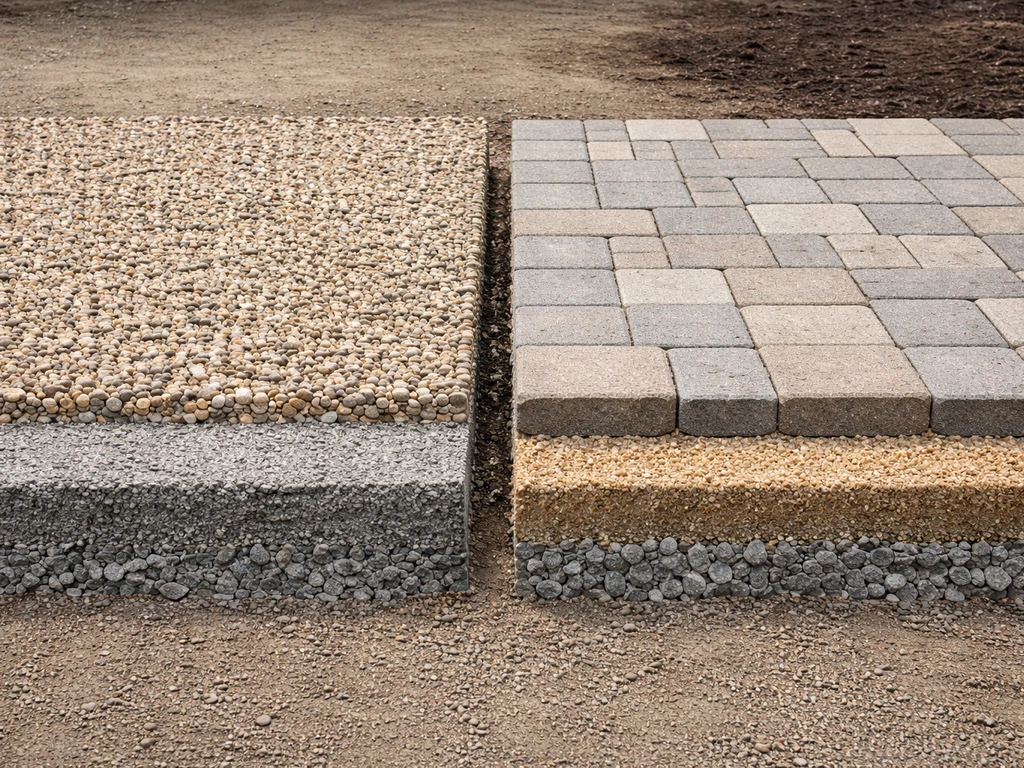
Permeable interlocking concrete pavers (PICP) look like a standard paver patio but have gaps filled with aggregate that let rainwater filter through the surface into a layered gravel and stone subbase, rather than running off as sheet flow. The EPA and FHWA both recognize these as legitimate stormwater management tools, not just decorative surfaces. They're a strong choice when you want the look and feel of a traditional patio but your yard has drainage issues or you're in an area with stormwater runoff restrictions. They do require a properly engineered subbase (surface material, bedding layer, choker stone, and reservoir aggregate above the soil subgrade), and they aren't suitable where the water table sits within about 2 feet of the bottom of the installation. This is not a casual weekend DIY for large areas, but a contractor who knows permeable systems can do it right the first time.
Floating deck or platform
A floating deck sits on ground-contact deck blocks or short concrete piers rather than a continuous concrete footing, which means it doesn't require a permit in many jurisdictions (check your local code). Composite decking is the low-maintenance choice here since it doesn't rot, warp, or need annual staining. A floating deck is excellent for uneven ground, shaded areas where moisture stays high, and yards where you want a defined raised zone without the cost of a full poured patio. It also pairs well with container gardens and planters, which makes it feel more integrated into the garden than a slab does.
Outdoor rugs on a stabilized base
This one sounds too simple, but a compacted base of crushed stone or stabilized gravel topped with a high-quality outdoor rug is genuinely usable and surprisingly comfortable. It's the fastest and cheapest way to define an outdoor dining or lounge zone in a garden. The key is the base: if you skip the compaction step and just lay a rug on grass or soft soil, you'll get a muddy, lumpy mess by fall. Prepare the base properly and this works well for renters, temporary setups, or low-traffic secondary zones.
Ground-cover living patios
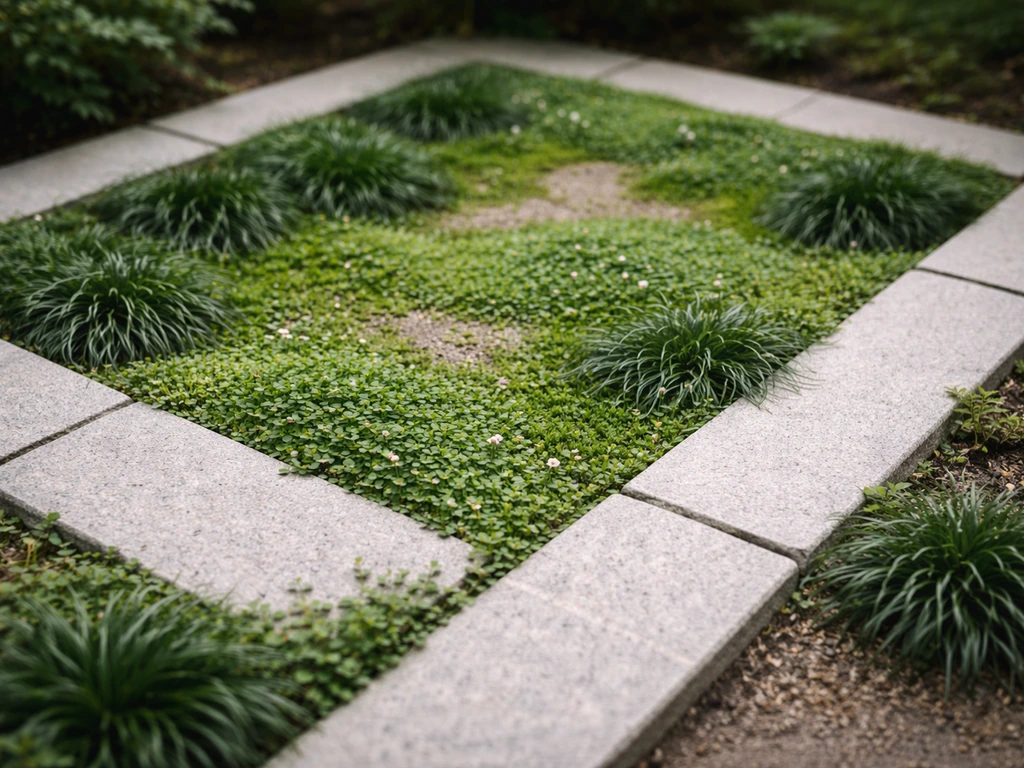
Creeping thyme, clover, dwarf mondo grass, or low-growing sedums can create a soft, garden-integrated surface that handles light foot traffic surprisingly well. These work best in part-shade to full-shade situations where traditional grass doesn't thrive, or as gap fillers between stepping stones. They're not suitable as primary surfaces for dining furniture since legs will sink into soft plants and soil, but they're excellent for the transition zones around a main patio surface, shady garden paths, or as the 'carpet' in a relaxed seating nook on flat ground. Maintenance is low once established, though establishment takes one full growing season.
Stepping stone paths with infill
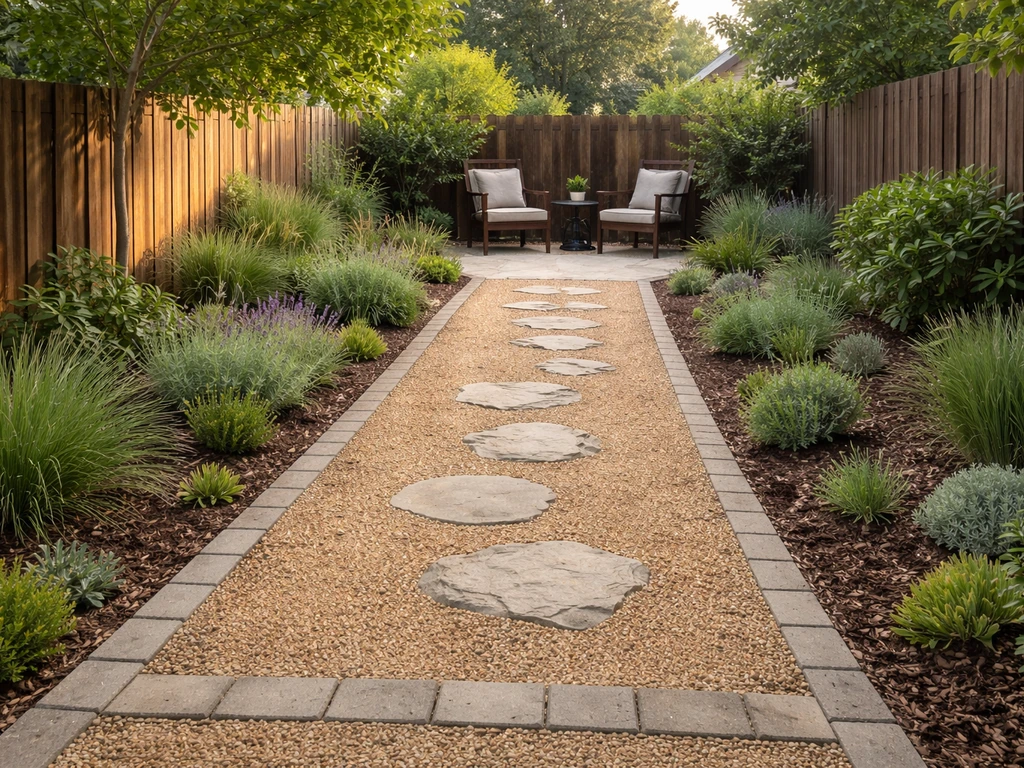
Large-format stepping stones (24 inches or bigger) set into a gravel or ground-cover infill can define an outdoor room without a continuous hardscape surface. This works exceptionally well in cottage-style and naturalistic gardens where a solid patio would look out of place. The stepping stones carry the furniture and foot traffic load while the infill material handles drainage and fills the visual space. It's one of the most garden-friendly options on this list and can be installed in stages as budget allows.
The real success factors: base prep, drainage, and edging
This is where most DIY garden patio projects fail. People spend money on good-looking surface material and skip the base work, then wonder why the surface is uneven, muddy, or covered in weeds after one season. Whatever alternative you choose, the base preparation follows the same basic logic.
- Excavate 4 to 6 inches below finished grade for gravel or pavers, 6 to 8 inches if you're doing a proper permeable paver system with a reservoir subbase.
- Lay landscape fabric or a non-woven geotextile to separate the subgrade soil from your aggregate layers and prevent fine particles from migrating up and clogging your drainage.
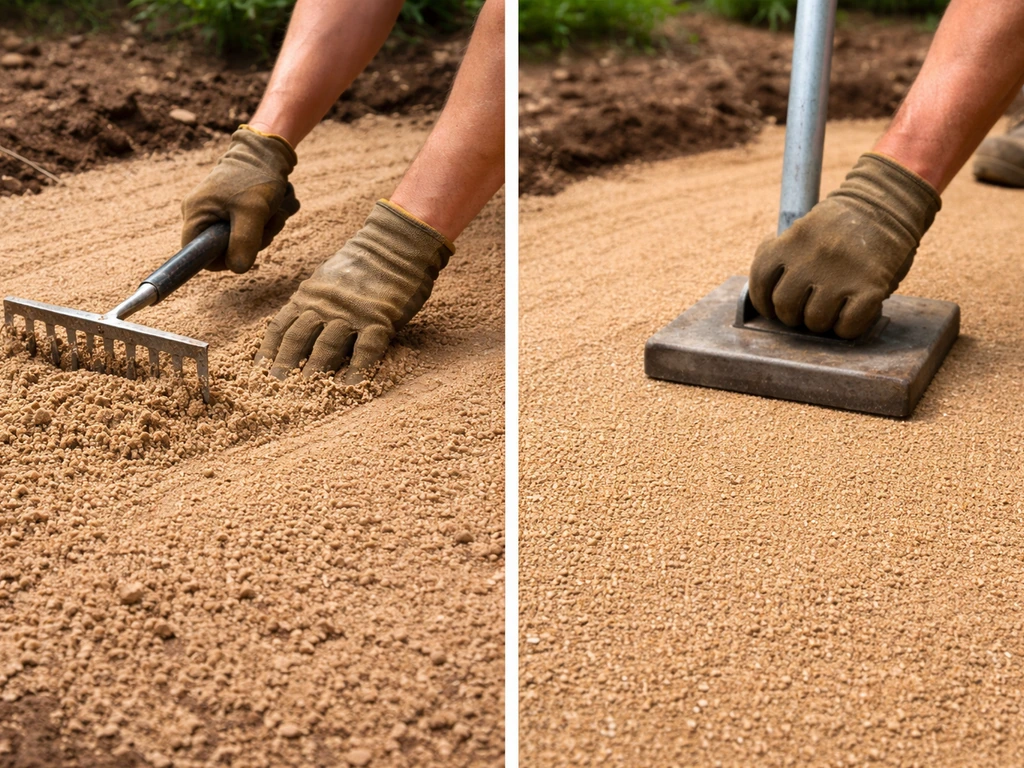
- Add a compacted base layer of crushed angular stone (not rounded pea gravel, which doesn't compact). A minimum 4-inch compacted depth is the standard for light residential use.
- Install edging before adding surface material. Metal, composite, or stone edging keeps gravel from migrating, keeps DG from washing away at the edges, and gives permeable pavers a stable lateral boundary. Edge restraints are specifically called out in PICP design guidance as non-negotiable.
- Add your surface layer and compact or settle it appropriately for the material type.
- Check drainage: water should move away from your house foundation and not pool at the center of your new surface. A 1 to 2 percent slope (about 1/8 inch per foot) away from structures is the standard minimum.
If you're in a wet climate, on clay soil, or dealing with a low spot in the yard, consider adding a perforated drain pipe (French drain) at the lowest edge of the excavation before backfilling. This is an hour of extra work that prevents years of problems. For a permeable paver system specifically, the multi-layer build (surface pavers, bedding aggregate, choker stone, reservoir base course, geotextile, subgrade) is designed to store and slowly infiltrate water. For permeable paver systems, Alexandria’s stormwater BMP guidance recommends periodic sweeping and vacuum sweeping performed at least once a year to prevent sediment and debris from clogging the system. The EPA notes that the thickness of the reservoir layer depends on how much water storage your site needs, so if you're in a high-rainfall area, don't skimp on that layer depth.
Weed control in gravel and DG areas is one of the most common ongoing frustrations. The geotextile layer below helps a lot, but seeds blown in from above will still germinate in surface material. The correct long-term approach for permeable paver systems is mechanical removal or careful hand-weeding, not chemical herbicides. The City of Annapolis specifically advises against using herbicides in permeable pavement systems because chemicals can damage the infiltration function and the biological activity in the soil below.
Cost, maintenance, durability, and comfort: side-by-side
| Option | Typical DIY Cost (per sq ft) | Maintenance Level | Durability | Comfort/Usability | Best Drainage? |
|---|---|---|---|---|---|
| Gravel / Pea Gravel | $1–$3 | Low (top up every 2–3 yrs) | High (no cracking) | Moderate (unstable for furniture) | Excellent |
| Decomposed Granite | $1–$4 | Low–Medium (re-edge, top up) | Good (compacts well) | Good (firm surface) | Very Good |
| Permeable Interlocking Pavers | $10–$25 (contractor) | Low (annual vacuum sweep) | Excellent (30+ yrs) | Excellent | Excellent |
| Floating Composite Deck | $15–$30 | Very Low (annual clean) | Excellent (25+ yrs) | Excellent (most comfortable) | Good (gaps drain) |
| Ground-Cover Living Surface | $0.50–$2 (plants) | Medium (weeding, irrigation) | Moderate (traffic limits) | Soft/Informal | Good |
| Stepping Stones + Infill | $3–$8 | Low–Medium | Very Good | Good | Good |
| Outdoor Rug on Compacted Base | $2–$6 (base + rug) | Medium (clean, store winter) | Low–Medium (rug lifespan) | Very Good (soft) | Depends on base |
A few things worth flagging about that table. The composite floating deck has the highest upfront DIY cost but the lowest long-term maintenance burden, which makes it the best total-value option for a primary outdoor living area if you're planning to stay in the home for more than five years. Gravel and DG win on budget but require you to accept some limitations on furniture stability and a bit of ongoing material loss. Permeable pavers hit the best balance of aesthetics, drainage, and durability, but they're contractor territory for most homeowners and the cost reflects that.
On comfort: bare gravel gets hot in direct summer sun (think Texas or Arizona afternoons), and pavers can hold heat well into the evening. Composite decking with light colors handles heat better than dark concrete or dark pavers. Ground covers stay cooler than any hardscape but aren't practical as a primary surface. If you're in a hot climate, surface color and material thermal mass matter more than most guides admit.
Layout ideas for dining, lounging, and moving through the garden
One thing that makes garden patio alternatives more interesting than a plain slab is that they let you create layered outdoor rooms rather than one big hard surface. Here's how to think about layout for the three main use cases.
Outdoor dining zone
A dining area needs a stable, level surface that doesn't wobble chair legs. Decomposed granite (compacted and stabilized with a binder), a floating deck, or permeable pavers are the best alternatives for this use. Size it generously: a 4-person table needs at least a 10x10-foot zone, and a 6-person table realistically needs 12x14 feet to pull chairs out comfortably. Define the space with edging or a slight elevation change from the surrounding garden. A simple gravel surround around a DG dining pad creates a visual transition and catches any loose material tracked off the edges.
Lounging and seating nooks
Lounge areas are more forgiving because foot traffic is lighter and the furniture has wider legs or flat bases. This is where ground-cover living patios, stepping stones with soft infill, or a partial deck works beautifully. A floating platform deck (even a small 8x8-foot one) in a shaded garden corner instantly creates a destination. Surround it with low planting or ornamental grasses and it feels like a room in the garden rather than an afterthought. This secondary zone approach is something worth exploring alongside ideas for backyard patio alternatives if your yard has multiple distinct areas.
Circulation paths between zones
If you're creating two or more outdoor zones (main dining area near the house, a fire pit or lounge further out, a garden shed path), connect them with a defined surface rather than just worn grass. Stepping stones set flush into gravel or ground cover work perfectly here. Use a minimum 18-inch-wide stepping stone or 24-inch-wide gravel path for comfortable single-file walking, and 36 inches if two people walk side by side. The path material doesn't need to match your main patio surface, but using the same stone or similar color gravel ties the design together.
DIY vs hiring a contractor: what to budget and ask
Most of these alternatives are genuinely DIY-friendly with the right tools and a free weekend. Gravel, DG, stepping stones, ground covers, and outdoor rugs on a prepared base are all manageable without professional help. A floating deck is a moderate DIY project if you're comfortable with basic carpentry and have access to a miter saw and drill. Permeable interlocking pavers are the exception: the subbase design, proper compaction with a plate compactor, and the precision of getting the aggregate layers right make this a job where a contractor who specifically knows PICP installation is worth the extra cost.
When getting contractor quotes for any patio alternative, treat the quote process seriously. Ask each contractor to itemize base prep separately from materials and labor so you can compare apples to apples. The base prep (excavation, gravel base, compaction, edging) is often 40 to 60 percent of the total project cost, and a contractor who quotes low by cutting corners on base work will cost you more in repairs within three years.
- Ask specifically: how deep will you excavate and what base material and depth will you use?
- Ask whether they'll install edge restraints, and if so, what type and how they'll be anchored.
- For permeable systems: ask what subbase layer system they use and whether they follow ICPI or FHWA design guidance.
- Ask about drainage: will they slope the surface away from your foundation and how will they handle runoff at the perimeter?
- Ask for references from a similar project completed in the last 12 months, specifically one with comparable soil or drainage conditions to yours.
- Get at least three quotes and be wary of the lowest bid if it doesn't itemize base prep.
For DIY budget planning, here's a realistic breakdown for a 200-square-foot gravel garden patio as a baseline: landscape fabric ($30), edging ($60–$80), crushed stone base material ($80–$120 delivered), and decorative gravel surface ($100–$160 delivered) puts you in the $270–$390 range for materials. Rent a plate compactor for half a day ($50–$70) if you're doing more than 100 square feet. For a floating composite deck of the same size, budget $3,000–$6,000 in materials (composite boards, deck blocks, framing lumber, hardware), which you can do yourself over two weekends if you have basic carpentry skills.
Picking the right option for your actual yard conditions
Here's the shortlist decision framework. Match your situation to the recommendation and you'll have a clear starting point today.
| Your Situation | Best Fit Option | Key Action |
|---|---|---|
| Small backyard, tight budget | Decomposed granite with steel edging | Excavate 4 in, compact base, stabilize DG with binder |
| Wet/muddy yard, drainage issues | Permeable interlocking pavers or gravel with French drain | Get drainage assessed before choosing surface material |
| Sloped yard | Floating deck on piers or terraced stepping stones | Level deck framing; step-down stones on slope |
| Shady, damp area | Composite floating deck or stepping stones + ground cover | Use composite (not wood) to resist moisture rot |
| Hot climate (South/Southwest) | Light-colored DG, pale pavers, or composite deck with light boards | Avoid dark materials; add shade structure overhead |
| Uneven or rocky ground | Floating deck or large-format stepping stones | Deck blocks adjust to grade without major excavation |
| Kids and pets | Gravel (rounded, not sharp), DG, or composite deck | Avoid loose small pebbles; check for sharp aggregate edges |
| Garden-integrated aesthetic | Stepping stones + creeping ground cover or living patio | Leave planting gaps in design from the start |
| Rental or temporary setup | Compacted base + quality outdoor rug | Focus budget on base prep; rug can move with you |
One situation that trips up a lot of homeowners is assuming that drainage is someone else's problem. If you have standing water or soft, saturated soil in the area you want to convert, no surface material alone will fix it. You need to address the drainage at the base layer first, whether that's sloping the subgrade, adding a French drain, or choosing a permeable surface system that's specifically designed to infiltrate water rather than shed it. If you're comparing options, exploring alternatives to patio blinds can help you pick a solution that controls heat and glare in the same outdoor area. The EPA classifies permeable pavement as a genuine stormwater management tool precisely because it moves the problem underground in a controlled way, rather than just redirecting runoff onto your neighbor's yard or into the street. In a study described by the EPA, researchers replaced a large parking area with permeable surface types designed to manage stormwater through infiltration and storage rather than conventional runoff control blank" rel="noopener noreferrer">permeable pavement as a genuine stormwater management tool.
If you're still choosing between several options, compare them on the three criteria that matter most for your specific situation: drainage demands, maintenance tolerance, and budget. Most people can narrow a list of six options down to two by being honest about those three factors. From there, walk both options through the base prep requirements and get a rough material cost for your actual square footage. The option that fits your drainage needs and your real maintenance habits, not your aspirational maintenance habits, is the right one. And if you're budget-focused, the articles on cheap patio alternatives and inexpensive patio alternatives go deeper on ways to cut material costs without compromising the base prep that makes everything else work. If you're focused on staying on budget, cheap patio alternatives can help you cut material and labor costs while still meeting the key drainage and base-prep needs.
FAQ
How do I tell whether I need a drainage system or just a better surface material?
Before you buy, measure how far the patio area sits below nearby grades and how long water remains after rain (for example, 30 minutes, overnight, or multiple days). If the ground stays saturated for more than a day, plan for a base-layer drainage fix like a French drain or a permeable system with adequate reservoir depth, because choosing “the nicer surface” will not solve soft subgrade.
Can permeable pavers work in areas with a high water table?
For French drains and most base builds, the critical depth is the bottom of the installation relative to the groundwater level. If your site has a high water table (common in low spots), permeable pavers may fail because the reservoir cannot store and infiltrate water. In that case, consider a floating deck, stepping-stone design, or regrading to lower the effective subgrade.
What is the best way to control weeds in gravel or decomposed granite without harming drainage?
Yes, but only when the weed problem is managed at the right layer. Geotextile helps, yet windblown seeds can still root in DG or gravel. Use a plan for periodic hand-weeding and surface raking, and keep edges tight (steel or concrete edging) so material does not migrate and expose new germination points.
How can I keep a dining area level while still draining the patio area effectively?
Treat “level for furniture” differently from “sloped for water.” A dining zone needs a stable plane so chair legs do not rock, but the surrounding area still needs a gentle slope or drainage outlet. For example, create a well-compacted, level dining pad inside an overall sloped or drained footprint so water routes away without compromising comfort.
What changes should I make if I have wobbly chairs or sinking furniture on gravel or DG?
To avoid furniture instability on DG and gravel, choose wider, flat chair feet (not narrow legs), use outdoor furniture with adjustable glides, and add a perimeter border that locks in the surface. A stabilized DG binder helps, but if you plan heavy table loads or rolling carts, permeable pavers or a floating deck will feel safer.
What are the most common DIY mistakes when preparing a gravel or DG base for a patio alternative?
If you rent a plate compactor, add time for multiple passes and do not overfill the base. Compacting in lifts (thin layers) is usually more effective than compacting one thick layer. Also, confirm you can achieve a firm surface when you press with body weight, because poor compaction is a common cause of future settlement and uneven stepping.
How should I prep the ground under a floating deck if my yard gets muddy?
In most cases, avoid locking water against the deck blocks. Ensure there is air circulation and drainage around the base, and do not place deck supports on soft topsoil. If your yard floods or stays muddy, floating decks often outperform slabs, but only if the deck blocks sit on a stable, compacted base layer.
Do patio alternatives still require HOA approval or permits, especially for drainage-related designs?
Many HOA rules focus on visible hardscape, setbacks, and stormwater controls. Even if a floating deck “often avoids permits,” you still may need approval for height, railing, or materials. Before buying, ask for the HOA’s specific language on permeable or non-permanent patios and whether they require contractor documentation for drainage-related builds.
What is the best way to design stepping-stone paths so they do not become tripping hazards after rain?
You can create durable pathways by treating stepping stones as the load-bearing elements and using the infill only as a drainage and visual filler. Keep the stone tops flush and consistent, and choose infill that stays firm underfoot, like compacted gravel or suitable ground cover, to reduce trip hazards after rain.
How do I connect two different patio alternative surfaces without creating weed or trip problems?
Mixing materials can work well, but use a clear transition method. For example, if you use DG under dining chairs, create an edging line where a gravel surround can catch stray material, or use the same stone color family so the boundary reads intentional. Avoid abrupt changes that leave gaps where weeds can establish.
What should I require in a contractor quote for permeable pavers so I can compare bids fairly?
When comparing contractor quotes, insist they include a written layer-by-layer section (for example, geotextile type, aggregate gradation, bedding, choker stone, and reservoir thickness) and note the compaction method. Also ask who is responsible if water infiltration performance does not meet expectations, because that matters most in permeable systems.
Can I use outdoor rugs on a patio alternative, and when does that stop working?
For a cheaper temporary or lower-traffic zone, outdoor rugs over a prepared compacted base can be effective, but you need drainage-consistent prep. If you lay the rug on grass or soft soil, you will get wrinkling and mud. If you want longer use, consider switching to the same base but using a more rigid surface like stabilized DG or a compacted gravel pad for improved stability.
Next Articles
Inexpensive Patio Alternatives: Cheap Surface and Shade Fixes
Budget patio makeover ideas: cheap surfaces, shade and weather fixes, DIY vs hiring tips, costs, and installs for any ya
Backyard Patio Alternatives: Best Options by Budget and Use
Compare backyard patio alternatives by budget and use, with site prep, drainage, costs, and DIY vs pro install tips.
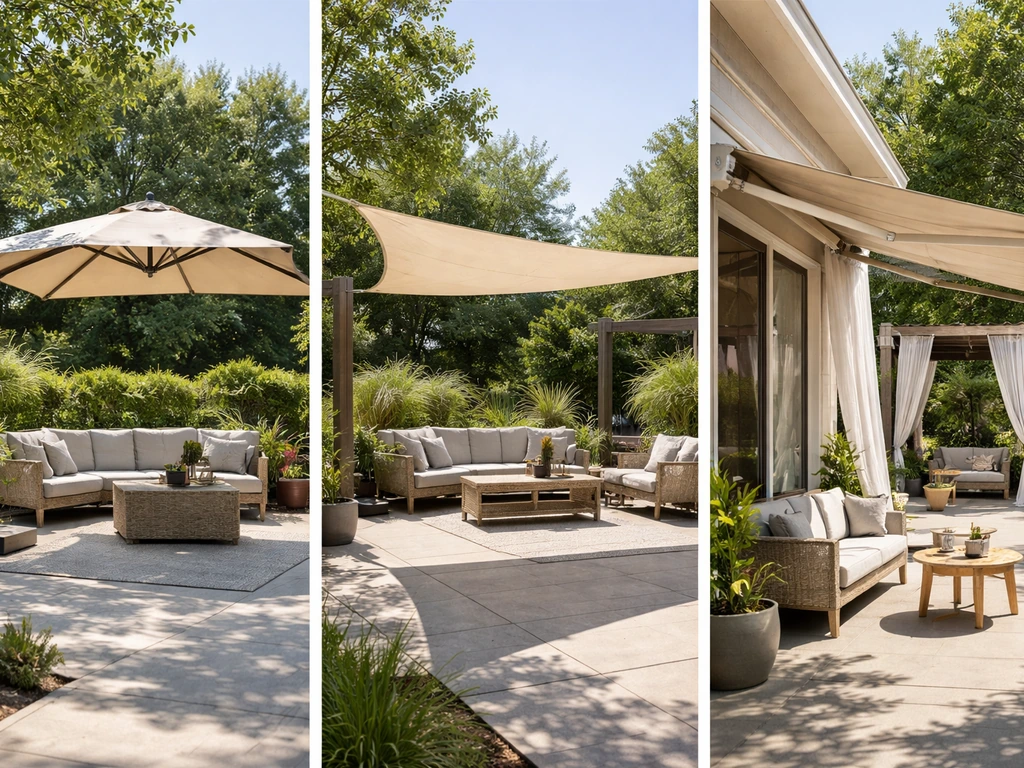
Patio Shade Alternatives: Best Options by Sun, Privacy, Budget
Compare patio shade alternatives by sun, privacy, wind and budget, with costs, DIY tips, and how to measure and mount sa