
Oasis patio covers are a solid mid-range option for homeowners who want an aluminum-framed, low-maintenance shade structure, but they are not the only game in town. After spending time comparing Oasis alongside Mr. Patio, Patio Cover Concepts, HHI, Acrylite, Palram Feria, Temo, and Try-Tech, the clearest takeaway is this: the best cover depends almost entirely on your climate, your budget, and whether you are comfortable with a weekend DIY project or need a contractor to pull a permit. This guide walks through all eight brands with the same level of detail so you can make a genuinely informed decision rather than defaulting to whatever your local big-box store happens to stock.
Oasis Patio Cover Reviews: Compare Brands, Materials & Picks

Phoebe Foster
9 Aug 2026
Who This Guide Is For and How to Use It
This article is written for homeowners at the research stage of buying a patio cover: people who have already decided they want some kind of permanent or semi-permanent overhead structure but have not yet chosen a brand, material, or installation path. If you are still weighing a freestanding pergola against an attached cover, you may want to start with a broader overview of patio cover types first. But if you are ready to compare specific brands and panels, you are in the right place. Work through the buying checklist and decision flow first, then jump to the brand reviews and comparison table that match your shortlist.
Quick Buying Checklist Before You Pick a Brand
Running through four questions before you look at any brand will cut your shortlist in half. Budget, climate, appearance, and durability requirements pull you in different directions, and it is better to know your constraints before you fall in love with a product that does not fit your situation.
- Budget: Are you working with under $1,500 (DIY kit), $1,500 to $5,000 (mid-range kit or partial contractor install), or $5,000 and above (full contractor build with permits)? Solid aluminum pan-style covers and polycarbonate panel kits occupy very different price points.
- Climate: Do you face high UV and heat (Southwest, Texas, Florida), heavy snow loads (Midwest, Mountain West), coastal salt air and wind (Gulf Coast, Pacific Coast), or a combination? Each material handles these conditions differently.
- Appearance: Do you want a fully opaque solid-roof look, a translucent panel that lets in diffused light, or a louvered design? This eliminates several brands immediately.
- Durability and maintenance tolerance: Are you prepared to re-coat or inspect fasteners annually, or do you want something essentially set-and-forget for ten or more years?
- Permit requirement: Many jurisdictions require a building permit for any attached patio cover over 200 sq ft or over a certain height. Check your municipality before buying, because some brands offer engineered drawings that simplify permit submittal and others do not.
Decision flow: If you are in a snow-load region (more than 20 psf ground snow load), start with structural ratings and eliminate any product that cannot meet your local code requirement. If you are in a high-UV desert climate, material UV resistance jumps to the top of the list. If you are coastal, look specifically for marine-grade coatings and fasteners. After filtering by those non-negotiables, compare price and appearance among the brands that remain.
At-a-Glance Verdicts: One-Line Take on Each Brand
| Brand | Best For | One-Line Verdict |
|---|---|---|
| Oasis | Homeowners wanting a clean aluminum cover at a mid-range price | Reliable regional brand with good aluminum construction; limited national dealer network. |
| Mr. Patio | Budget DIY buyers in mild-climate regions | Affordable kits with straightforward assembly; thinner profiles mean it is not ideal for heavy snow or wind. |
| Patio Cover Concepts | Custom residential builds in California and the Southwest | Strong local reputation for engineered aluminum systems; best accessed through their dealer network. |
| HHI (Heartland Industries) | Midwest and Southern homeowners wanting a contractor-installed system | Solid regional brand with dealer-supported installation; good warranty terms for the price. |
| Acrylite (Acrylic panels) | High-clarity, long-life glazing for decorative or sunroom-adjacent covers | Excellent optical clarity and UV stability; higher cost and more brittle than polycarbonate. |
| Palram Feria | DIY buyers who want a full retail-available kit with polycarbonate panels | Best mainstream kit for a weekend installer; rated specs are published and verifiable at retail. |
| Temo | Homeowners who want a contractor-installed system with a strong lifetime warranty | Premium aluminum systems with a transferable limited lifetime warranty; not a DIY product. |
| Try-Tech | Budget-conscious buyers and contractors in the Western U.S. | Competitive pricing on aluminum kits; regional pickup/delivery network makes logistics straightforward. |
Brand-by-Brand Reviews
Oasis Patio Covers
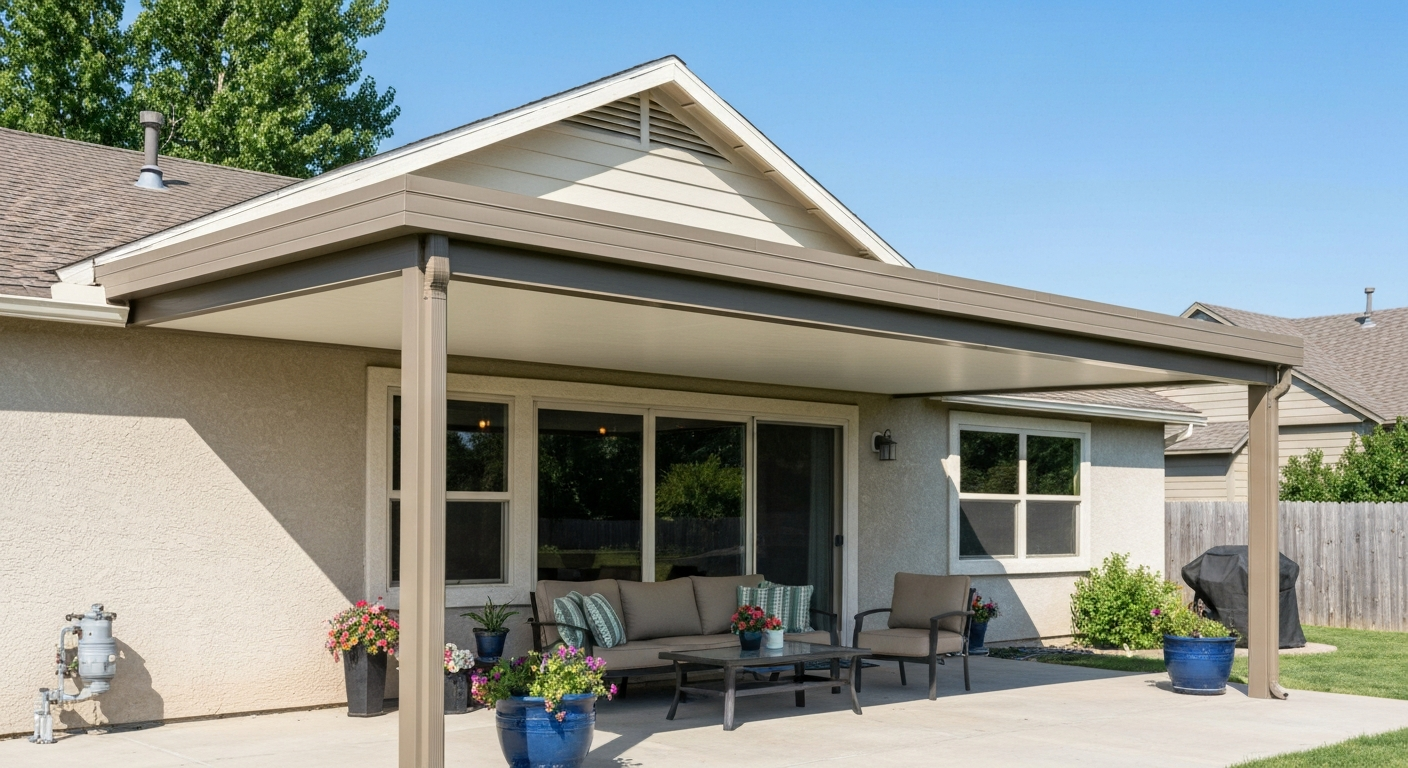
Oasis operates primarily through regional dealer networks rather than national big-box retail, which is both a strength and a limitation. The strength is that you typically get a dealer who can do a site measure, pull permits, and install the system rather than leaving you to figure it out alone. The limitation is that pricing and availability vary significantly by region, and it can be harder to comparison-shop because you are not looking at a fixed retail price. Their aluminum-framed systems use standard extruded aluminum components, and the covers are available in solid insulated panel configurations as well as open-lattice designs. Homeowners in the Sun Belt report good long-term performance with minimal fading on the powder-coat finish, which is the finish most commonly specified. The main complaint pattern across consumer reviews is lead time: because these are dealer-sourced and often custom-cut, production and delivery windows can run six to twelve weeks depending on your region. If you are in a hurry, that is worth knowing before you sign a dealer agreement.
Mr. Patio Covers
Mr. Patio sits at the more accessible end of the market. Their kits are designed for homeowners who want a straightforward aluminum patio cover without a large contractor bill. Panel profiles are thinner than contractor-grade systems, which keeps cost down but also means you need to be realistic about structural limits. For a mild-climate region with no significant snow load and moderate wind exposure, Mr. Patio kits perform well for the price. For anyone in a high-wind corridor or dealing with winter snow accumulation, the lighter profiles are a legitimate concern and worth cross-checking against your local code requirements before purchase. Their installation instructions are reasonably clear for a two-person weekend crew. For more detail on this brand's strengths and common failure points, the dedicated Mr. Patio cover review covers the model lineup in depth. See our Mr. Patio cover reviews for a detailed analysis of models, pros and cons, and real-user feedback to help you decide if their kits suit your needs.
Patio Cover Concepts
Patio Cover Concepts has a particularly strong reputation in California and the Southwest, where their dealer network is dense and their products are well-suited to the climate. They offer aluminum lattice covers, solid patio covers, and pergola-style systems, with a focus on custom sizing rather than fixed-dimension kits. The permit-readiness of their systems is a real practical advantage in California, where engineering submittals can add meaningful cost and delay to a patio project. Consumer feedback trends positively around the quality of the extrusions and the accuracy of the cut-to-size components. The trade-off is that outside their core service region, finding an authorized dealer and getting support can be more difficult.
HHI Patio Covers
HHI (Heartland Industries) builds contractor-installed aluminum patio cover systems and operates primarily through a dealer and installer network in the Midwest and South. Their systems are engineered for regional conditions and come with documentation that supports permit submittal, which is a genuine time-saver for contractors. Homeowners who have gone through the contractor-installed route report good craftsmanship when a trained HHI dealer does the install. The flip side is that HHI is not a DIY product in any practical sense: you really do need a dealer to get the components, the hardware schedule, and the installation support. For a deeper look at product specs, dealer experiences, and user reviews, see our HHI patio covers reviews. Pricing through dealers is typically mid-range to premium depending on the configuration.
Acrylite (Acrylic Glazing Panels)
Acrylite is a brand of acrylic (PMMA) sheet rather than a patio cover system per se. It is used as a glazing panel in custom patio covers, sunroom roofs, and carport structures, typically installed by fabricators or specialty contractors rather than sold as a complete kit. The key advantage of Acrylite acrylic over polycarbonate is its optical clarity over time: acrylic resists UV yellowing significantly better than standard polycarbonate, maintaining close to its original light transmission for decades. Acrylite publishes UV transmission data for their product lines, and the numbers are genuinely impressive for a plastic glazing material. The trade-off is brittleness: acrylic panels are more susceptible to impact cracking than polycarbonate and must be handled and cut carefully. In hail-prone regions, this is a meaningful drawback. Cost per square foot is also higher than polycarbonate alternatives.
Palram Feria
Palram Feria is the most widely available retail-purchase patio cover kit in this comparison. You can walk into a Home Depot or Lowe's and buy one in standard sizes, which makes it uniquely accessible for DIY buyers. The system uses an aluminum frame with 8 mm multiwall polycarbonate panels rated at approximately 65 percent light transmission, which gives a bright, shaded-but-not-dark feel. Palram publishes snow and wind load ratings for the Feria line, making it straightforward to check against your local code requirements before you buy. Installation manuals are available from the retailer product pages, and the step sequence is manageable for two people with basic tools over a weekend. The most consistent consumer complaint is that the included fasteners and some of the smaller hardware pieces can be undersized for heavy-use conditions, and upgrading to stainless fasteners in coastal or wet climates is a common recommendation from experienced installers.
Temo
Temo is a premium end of this market, and their value proposition is built around the warranty rather than the initial price point. They publish a Limited Lifetime Warranty on their aluminum systems, and the warranty is transferable to a subsequent homeowner, which is a genuine differentiator if you are thinking about resale value. Temo systems are contractor-installed through an authorized dealer network, and the installation quality tends to be consistent because dealers go through training. The aluminum extrusions are heavy-gauge, and the overall system is engineered for long service life. The obvious trade-off is cost: a Temo installation will run more than a DIY kit alternative, sometimes significantly more. But if you are looking for a set-it-and-forget-it system with documented warranty backup, Temo is the brand most consistently cited in that context.
Try-Tech Patio Covers
Try-Tech is a Western U.S.-focused brand that supplies both homeowners and contractors through a network of regional yards where you can pick up components directly. That regional yard model makes logistics noticeably easier than waiting for freight-shipped kits, which matters when you are trying to hit a project timeline. Pricing is competitive, and the aluminum systems are available in standard lattice and solid configurations. For budget-conscious buyers in the West who are willing to do some of the work themselves or coordinate their own contractor, Try-Tech represents good value. For detailed model comparisons and user feedback, see try-tech patio cover reviews. The limitation is purely geographic: outside their distribution territory, the logistical advantage disappears.
Side-by-Side Comparison: Specs and Pros/Cons
| Brand | Primary Material | Panel / System Type | Typical Price Range (Installed) | DIY-Friendly? | Key Strength | Key Weakness | Warranty Highlight |
|---|---|---|---|---|---|---|---|
| Oasis | Aluminum frame + panel | Solid insulated or lattice | $3,000 – $7,000+ | No (dealer install) | Regional dealer support; durable powder coat | Long lead times; limited national reach | Varies by dealer; typically 10–25 yr structural |
| Mr. Patio | Aluminum | Solid or lattice kit | $1,200 – $3,500 | Yes | Affordable; accessible entry point | Lighter profiles; lower structural ratings | Manufacturer limited warranty (varies by product) |
| Patio Cover Concepts | Aluminum | Custom solid/lattice/pergola | $3,500 – $8,000+ | No (dealer/contractor) | Permit-ready engineering; strong SW network | Limited availability outside core region | Manufacturer limited warranty |
| HHI | Aluminum | Contractor-installed system | $3,000 – $7,500+ | No (contractor req.) | Engineered permit docs; Midwest/South coverage | Not DIY; dealer-dependent pricing | Limited warranty via dealer network |
| Acrylite panels | Acrylic (PMMA) | Glazing panel (custom fit) | $4,000 – $10,000+ (fabricated) | No (fabricator req.) | Best optical clarity; UV-stable long term | Brittle; higher cost; not a kit product | Acrylite sheet warranty (material only) |
| Palram Feria | Aluminum + 8mm multiwall polycarbonate | Attached patio cover kit | $1,500 – $4,500 (DIY install) | Yes | Retail availability; published spec ratings | Hardware can be undersized; limited snow range | 10-year manufacturer warranty on panels |
| Temo | Heavy-gauge aluminum | Contractor-installed system | $5,000 – $12,000+ | No (authorized dealer) | Transferable limited lifetime warranty | Premium price; not DIY | Limited Lifetime Warranty (transferable) |
| Try-Tech | Aluminum | Solid or lattice kit/system | $1,800 – $5,000 | Partial (yard pickup) | Regional logistics; competitive pricing | Western U.S. only; variable installer support | Manufacturer limited warranty |
Materials Compared: Aluminum, Polycarbonate, Acrylite, and Vinyl
The material choice determines almost everything else: how long the cover lasts, how much light it admits, what it weighs, how it handles heat and cold, and how much maintenance it asks of you. Here is how the four main materials in this comparison actually perform.
Aluminum
Aluminum is the frame and panel material of choice for most residential patio covers in North America for good reason. It does not rot, it does not absorb moisture, and a quality powder-coat finish will hold up for fifteen or more years without significant maintenance beyond cleaning. Extruded aluminum sections can be engineered to specific load requirements, which is why most contractor-grade systems (Temo, HHI, Oasis, Patio Cover Concepts) use aluminum as the primary structural element. The main limitation is thermal conductivity: bare aluminum transmits heat efficiently, which is why insulated aluminum panels (with a foam core between two aluminum skins) are popular in hot climates. Solid aluminum pan-style covers in direct sun can radiate heat downward noticeably on very hot days, whereas an insulated panel system reduces that effect substantially.
Polycarbonate
Polycarbonate panels are used in systems like the Palram Feria because they offer a good balance of impact resistance, light transmission, and workability. Standard multiwall polycarbonate (such as the 8 mm twin-wall panels in the Feria system) transmits roughly 60 to 70 percent of visible light while blocking most UV radiation when manufactured with a UV-protective coextrusion layer. The practical downside of polycarbonate is long-term clarity: uncoated polycarbonate yellows with UV exposure over time, and even UV-coated panels will show some discoloration after ten to fifteen years in intense sun exposure. Impact resistance is polycarbonate's strongest card: it is far more resistant to hail damage than acrylic, which matters greatly in Tornado Alley, the Front Range, and the Great Plains.
Acrylite (Acrylic / PMMA)
Acrylic panels, marketed under brand names including Acrylite, offer superior long-term optical clarity compared to polycarbonate. Acrylite publishes light transmission and UV transmission curves for their product lines, and the UV stability of quality acrylic sheet over twenty or more years outperforms standard polycarbonate in retained clarity. Acrylic also has a higher surface hardness, so it resists minor scratching better. The trade-offs are meaningful: acrylic is more brittle than polycarbonate, requiring more careful handling during cutting and installation, and it is significantly less impact-resistant. In hail regions, acrylic glazing can crack where polycarbonate would dent or flex and recover. Cost per square foot for acrylic panels is also higher, and because acrylic is typically fabricated to order by specialty shops rather than sold in standard kit dimensions, it is primarily a contractor or custom-fabricator material.
Vinyl
Vinyl patio covers are less common in the brands reviewed here but appear as an alternative in some regional markets, particularly for pergola and lattice structures. Vinyl does not rust, does not require painting, and is relatively affordable. The limitations for overhead cover applications are structural: vinyl extrusions have lower load ratings than aluminum and are more susceptible to thermal expansion and contraction, which can cause creaking, joint loosening, and panel-gap issues over time. In very hot climates, vinyl can soften and deflect under load. For a purely decorative lattice or shade structure in a mild climate, vinyl is serviceable. For any load-bearing attached cover or any region with meaningful snow or wind, aluminum is the more reliable choice.
Structural Performance: Wind, Snow, Span, UV Transmission, and Insulation
Structural performance is not a marketing claim you can take at face value. The most useful verification is an ICC-ES Evaluation Service Report (ESR), which is an independent third-party review of a product's structural claims against building codes like the IRC and IBC. Palram Feria, for example, has published ICC-ES evaluation documentation supporting its rated load values. When a manufacturer cannot point you to an ICC-ES report or a stamped engineering letter, the load ratings on their website are self-reported and should be treated accordingly.
| Performance Factor | Aluminum (Insulated Pan) | 8mm Multiwall Polycarbonate | Acrylic (Acrylite) | Vinyl Lattice |
|---|---|---|---|---|
| Typical wind load rating | Up to 110+ mph (varies by system/engineering) | Varies; Palram Feria rated ~80–90 mph typical | Fabricator-dependent; typically 80–100 mph | Lower; generally 60–80 mph |
| Snow load capacity | Up to 20–40 psf (engineered systems) | 10–20 psf typical for kit systems | Fabricator-dependent; up to ~20 psf | Generally 10 psf or less; not recommended for snow regions |
| Maximum span (unsupported) | Up to 20+ ft with proper beam sizing | Per ICC-ES span tables; typically 4–6 ft panel span | Fabricator-dependent; similar to polycarbonate | Generally 8–12 ft total structure span |
| UV transmission (glazing) | Near zero (solid aluminum) | ~1–5% UV with coextrusion layer | Very low UV pass-through; Acrylite blocks >98% UV | N/A (opaque) |
| Visible light transmission | Zero (opaque) | ~60–70% (8mm twin-wall) | ~80–90% (clear sheet) | N/A (opaque/decorative) |
| Insulating value (R-value approx.) | R-3 to R-6 (insulated foam-core panel) | R-1.5 to R-2 (multiwall) | R-0.9 to R-1.1 (single sheet) | Minimal (decorative only) |
If you are in a snow-load region, match your product's rated snow load against your local ground snow load value, which you can find in ASCE 7 maps or on your local building department's reference sheet. The rule of thumb most inspectors apply is that the roof snow load is roughly 70 percent of the ground snow load, but your jurisdiction may have specific requirements. For wind, the ASCE 7 wind speed maps (available through most engineering resources and embedded in the IBC) give you the design wind speed for your area. A product rated at 90 mph is not a comfortable choice in a region with a 115 mph design wind speed.
Warranty Comparison and Expected Lifespans
Warranties in this category vary enormously, and the fine print matters as much as the headline number. A "lifetime warranty" on a vinyl pergola from a brand that may not exist in ten years is worth less than a twenty-five-year warranty from a well-capitalized national manufacturer with a clear claims process.
| Brand | Warranty Headline | Transferable? | Key Exclusions/Notes | Expected Material Lifespan |
|---|---|---|---|---|
| Oasis | Typically 10–25 yr (varies by dealer contract) | Check with dealer | Labor and incidental damage typically excluded | 20–30 yr aluminum frame; 15–20 yr finish |
| Mr. Patio | Manufacturer limited warranty (varies) | Generally no | Storm damage, improper install excluded | 15–20 yr frame; 10–15 yr finish |
| Patio Cover Concepts | Manufacturer limited warranty | Check with dealer | Installation labor excluded | 20–30 yr aluminum with maintenance |
| HHI | Limited warranty via dealer | Check with dealer | Excludes acts of nature, improper installation | 20–25 yr aluminum frame |
| Acrylite panels | Acrylite sheet material warranty (varies by product line) | No (material only) | Does not cover fabricated structure | 20–30 yr clarity (UV-stabilized grades) |
| Palram Feria | 10 yr on panels; frame warranty varies | No | Discoloration from improper cleaning; storm damage | 10–15 yr polycarbonate panels; 20+ yr aluminum frame |
| Temo | Limited Lifetime Warranty | Yes (transferable) | Excludes labor after initial install; requires authorized install | 30+ yr with proper maintenance |
| Try-Tech | Manufacturer limited warranty | Check with dealer | Regional dealer support; varies | 20–25 yr aluminum frame |
Temo's transferable limited lifetime warranty is the strongest in this group in terms of headline terms, and the transferability is a genuine selling point if you think you might sell the home. Palram Feria's ten-year panel warranty is industry-standard for polycarbonate and aligns with realistic panel lifespan in most climates. For any contractor-installed brand, always ask to see the actual warranty document before signing: the dealer's verbal summary and the manufacturer's written warranty are not always identical.
Installation: DIY vs. Contractor, Time, Tools, and Permits
Which Brands Are Actually DIY-Friendly
Palram Feria and Mr. Patio are the clearest DIY candidates in this comparison. Both are sold through retail channels with published installation manuals, and a two-person crew with basic carpentry tools can typically complete a standard 10-by-12-foot attached cover in one to two days. Try-Tech kits are also doable as a DIY project if you are comfortable with aluminum framing and can access their regional pickup locations. Oasis, HHI, Temo, and Patio Cover Concepts are designed for professional installation and are generally only available through dealer channels, which is not a knock on the products: they are engineered to higher structural specifications and the installation requires accurate anchor scheduling and flashing details that benefit from professional execution.
Typical Tools and Time for a DIY Kit Install
- Drill/driver with appropriate bit set
- Circular saw or jigsaw with a fine-tooth blade for aluminum cutting (a carbide blade rated for non-ferrous metal is essential)
- Level (4-foot minimum) and tape measure
- Ladder rated for the eave height you are working at
- Socket set and adjustable wrench for lag bolt anchoring
- Chalk line for layout
- Safety glasses and gloves (aluminum swarf is sharp)
- Caulk gun for any required sealant at wall flashing
- Two-person crew: most kit installs are not safely achievable solo due to panel weight and alignment requirements
- Time estimate: 8 to 16 hours total for a 10-by-12 ft attached cover on a standard wood-frame house, not including site prep or permit inspection time
Permit Checklist and What to Expect
Permit requirements vary by jurisdiction, but a consistent rule of thumb is that any attached patio cover over 200 square feet, any cover that penetrates or attaches to the building envelope, or any cover in a regulated flood or wind zone will require a permit. Some municipalities (Phoenix is a well-documented example) require a permit for any attached patio cover regardless of size. The consequences of skipping a permit range from a forced teardown to problems at resale, so it is worth the thirty minutes it takes to call your local building department before you order anything.
- Site plan showing cover footprint relative to property lines and the house
- Structural drawings or manufacturer ICC-ES report showing rated loads
- Details of attachment to the house (ledger board size, lag bolt schedule, flashing)
- Post footing details if freestanding columns are involved
- Electrical plan if you are adding lighting or fan circuits under the cover
- Inspection sequence: typically a footing inspection before concrete pour, a framing inspection before panels go in, and a final inspection
Permit fees vary widely but typically run $100 to $500 for a standard residential patio cover project. If your chosen product does not come with ICC-ES documentation, you may need to pay for a structural engineer's letter to support the permit submittal, which can add $300 to $800 to your project cost. Products like Palram Feria, which have published third-party evaluation reports, sidestep that cost because the building department already has a framework for approving them.
Regional and Climate Suitability
No single cover material or brand performs equally well in every climate. Here is a practical summary of how the major climate scenarios map to the products in this comparison.
| Climate / Region | Priority Concern | Best Material Choice | Brands That Fit Well |
|---|---|---|---|
| Southwest / Sun Belt (TX, AZ, NV, SoCal) | UV degradation, heat accumulation under panel | Insulated aluminum or UV-coated polycarbonate | Oasis, Patio Cover Concepts, Try-Tech, Palram Feria |
| Gulf Coast / Southeast (FL, LA, AL) | Wind load, coastal salt corrosion, humidity | Heavy-gauge aluminum with marine-grade fasteners | Temo, HHI, Oasis (with stainless hardware upgrade) |
| Midwest / Great Plains (KS, MO, OK, IL) | Snow load + hail impact + wind variability | Aluminum frame + impact-resistant polycarbonate or solid panel | Temo, HHI, Palram Feria (verify snow load rating) |
| Mountain West (CO, UT, ID, WY) | Heavy snow load (20–40 psf+), UV at altitude | Engineered aluminum with certified snow load rating | Temo, HHI (engineered systems only; verify local load) |
| Pacific Northwest (WA, OR) | Rain, moss growth, low-pitch drainage | Aluminum with positive-slope design; sealed fasteners | Patio Cover Concepts, Try-Tech, Temo |
| Northeast (NY, MA, PA, OH) | Snow load + freeze-thaw cycling | Engineered aluminum; avoid vinyl in this climate | Temo, HHI; contractor-installed systems preferred |
One detail that catches homeowners off guard in coastal regions: standard aluminum extrusions with standard zinc or steel fasteners will show corrosion within a few years in salt-air environments. If you are within a mile or two of saltwater, specify stainless steel fasteners throughout and ask specifically about the coating grade on the aluminum extrusions. Most contractor-grade brands can accommodate this, but you need to ask for it explicitly rather than assuming it is standard.
Accessories, Fans, Misters, and Lighting Compatibility
A patio cover is rarely the end of the project. Most homeowners eventually add a ceiling fan, misting system, or lighting once the structure is up. The structural compatibility question is worth asking before you buy: a fan rated for damp locations and weighing 25 to 40 pounds needs a properly rated junction box and a beam or rafter member it can fasten to. Solid insulated aluminum panels have consistent framing members that make fan mounting relatively straightforward. Polycarbonate panel systems like the Palram Feria have open rafter bays that also work, but the panel surface itself cannot carry a hanging load.
- Ceiling fans: specify wet-rated or damp-rated fans for any covered outdoor application; mount to a structural rafter, not to a panel; confirm the fan weight does not exceed the manufacturer's rated load for the beam spacing
- Misting systems: most misting lines can be surface-run along the perimeter beam or fascia; high-pressure systems require a dedicated supply line and should not be run through insulated panels
- Recessed lighting: possible in insulated aluminum pan systems with a fabricated cutout; not compatible with multiwall polycarbonate panels without a supplemental light channel
- LED strip lighting: very compatible with all systems; typically surface-mounted to the underside of the beam or rafter; waterproof-rated strips are recommended
- Heaters: infrared ceiling heaters mount similarly to fans; confirm structural capacity and electrical circuit capacity before installation
Maintenance, Common Problems, and Realistic Lifespans
Aluminum patio covers are genuinely low-maintenance compared to wood, but low-maintenance does not mean zero-maintenance. A powder-coated aluminum cover in a typical suburban environment should get a rinse with a garden hose two to three times a year to remove dust and pollen, an inspection of all fasteners and the ledger-board connection once a year, and a check of any sealant at the wall flashing every two to three years. Polycarbonate panels should be cleaned with a mild soap solution and a soft cloth, not abrasive pads or solvents, which can damage the UV-protective coextrusion layer. Acrylite acrylic panels are even more scratch-sensitive and require the same gentle approach.
The most common field problems reported across consumer reviews for kit systems are fastener corrosion (especially in humid or coastal environments), panel discoloration from improper cleaning products, and gutter or drainage failures at the wall connection during heavy rain. For contractor-installed systems, the most common complaints are installation-related: improperly shimmed posts, insufficient flashing at the ledger, and under-spec lag bolt patterns for the attachment point. These are installer errors rather than product failures, which is why checking references for your installation contractor matters as much as choosing the right brand.
Cost Breakdown: What to Budget Realistically
Cost ranges across this market are wide because installed price depends on size, material, region, and whether you are paying contractor labor. Here is a realistic breakdown of what different paths actually cost, based on typical contractor estimates and retail pricing.
| Install Path | Cover Size (approx.) | Material Cost | Labor / Permit | Total Installed Range |
|---|---|---|---|---|
| DIY kit (Palram Feria, Mr. Patio) | 10x12 ft | $800 – $1,800 | $100 – $400 (permit only) | $900 – $2,200 |
| DIY kit (Try-Tech, partial pro help) | 12x16 ft | $1,500 – $3,000 | $300 – $800 (permit + partial labor) | $1,800 – $3,800 |
| Contractor-installed mid-range (HHI, Oasis) | 12x16 ft | $2,000 – $4,000 | $1,500 – $3,500 (labor + permit) | $3,500 – $7,500 |
| Contractor-installed premium (Temo) | 12x20 ft | $4,000 – $7,000 | $2,500 – $5,000 (labor + permit) | $6,500 – $12,000+ |
| Custom acrylic/Acrylite fabricated | 10x14 ft | $3,500 – $7,000 | $2,000 – $4,000 (fabrication + labor) | $5,500 – $11,000+ |
Regional labor costs shift these numbers meaningfully. In high-cost metros like the San Francisco Bay Area or Seattle, contractor labor can push the total twenty to thirty percent above the ranges shown. In lower-cost Midwest markets, contractor labor is often at the low end. Getting at least three quotes from local installers before committing is the standard advice, and Angi or HomeAdvisor can surface local patio cover specialists if you do not already have a contractor relationship. Angi – Patio cover pros and cost guidance lists local patio cover specialists and published cost ranges to help you gather multiple quotes.
Finding Local Installers and Replacement Parts
For contractor-installed brands like Temo, HHI, and Oasis, the manufacturer's dealer locator is the right starting point: these brands train their installers, and an authorized dealer is more likely to have access to the correct components and to honor warranty claims if something goes wrong. See Solara – Find a Dealer / Products / DIY / Dealer resources for an example manufacturer dealer-locator that maps local purchasing and installation options. For retail kit brands like Palram Feria, the retailer (Home Depot, Lowe's) can handle replacement parts in most cases, and the manufacturer's website has a parts portal for components like brackets, fasteners, and replacement panels. Try-Tech's regional yard model means you can often pick up replacement sections directly without a freight wait, which is a practical advantage if you need a damaged panel replaced before a season.
If you are replacing an existing cover rather than installing new, take measurements of the existing ledger connection height, the post locations, and the overall projection before contacting any dealer or retailer. Manufacturers will ask for these dimensions to confirm compatibility, and having them ready speeds the process significantly. Also photograph the existing attachment point and any flashing details: that information helps a new installer understand what they are working with and can prevent surprises on install day.
FAQ
What manufacturer documents are essential for accurate product specs and advertised performance?
Official product pages, spec sheets, and downloadable installation manuals from each brand (Oasis, Mr. Patio, Patio Cover Concepts, HHI, Acrylite, Palram Feria, TEMO, Try‑Tech). These provide model dimensions, materials, panel thicknesses, finish/coating names, advertised wind/snow/span ratings, accessory lists, recommended fasteners, and step‑by‑step assembly guidance. Cite exact PDF/manual versions and product SKUs when possible.
Which independent certifications and engineering reports must I collect and verify?
ICC‑ES Evaluation Reports (ESRs) for the specific panel or system (span tables, allowable loads, installation limits), UL listings and ASTM test reports referenced by manufacturers, and any third‑party structural test certificates. Use ESR numbers and UL/ASTM test IDs to verify structural claims and code compliance (IBC/IRC). Include ESR supplements for CA/FL/coastal use when applicable.
What standards and technical references are required to interpret ratings?
Relevant codes and standards: ASCE 7 (wind and snow load methodology), IBC/IRC sections for accessory structures, ASTM standards for material properties (UV, impact, flammability), and NFPA/UL references for glazing/impact testing. These enable converting advertised ratings into design inputs and regional suitability checks.
What laboratory or manufacturer test data should be obtained for material comparisons?
Light‑transmission and UV‑transmission curves, impact resistance/ballistic‑impact reports, tensile/flexural strength and creep data, thermal expansion coefficients, flame‑spread/flammability tests, and aging/yellowing accelerated‑weathering reports (QUV/UV‑B exposure). Seek datasheets from Acrylite, polycarbonate suppliers, and manufacturer testing labs.
Which climate and hazard data sources are needed to map product suitability regionally?
NOAA/NCEI climate normals, FEMA flood/wind zone maps, ASCE/IBC snow and wind contour maps, and local wind‑speed maps. Use these datasets to compare local design loads to manufacturer allowable loads and to provide region‑specific recommendations (snow, UV, heat, coastal salt, high winds).
What retail and market data are required to establish price bands and package contents?
SKU‑level retail listings from Home Depot, Lowe’s, Wayfair, Amazon and manufacturer dealer pages to capture MSRP and common street prices, package inclusions/exclusions, and SKU variants. Aggregate multiple listings across regions to build low/median/high price bands for DIY kits vs professionally installed systems.
Next Articles
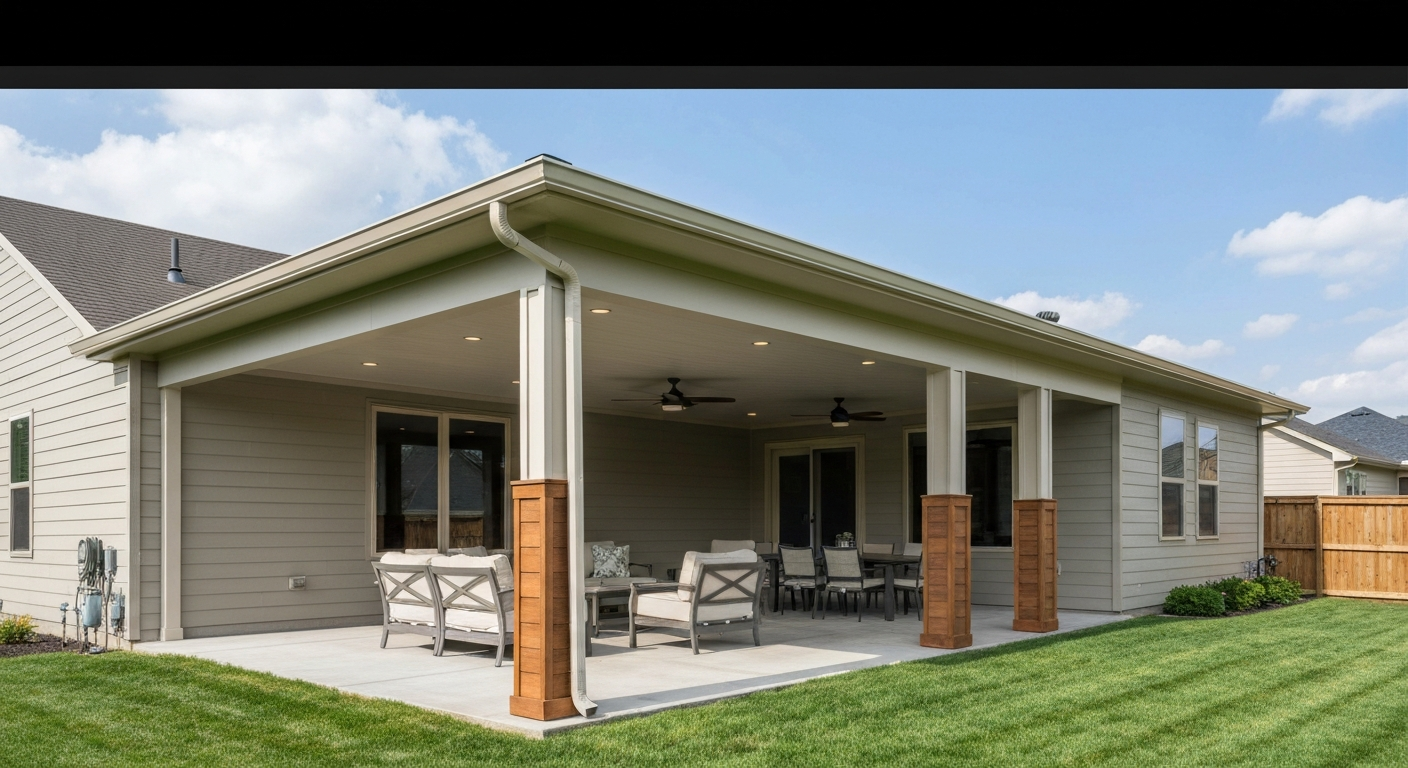
Temo Patio Cover Reviews: Best Models, Pricing & Guide
Temo patio cover reviews: unbiased buying guide with model comparisons, prices, warranties, installation and maintenance
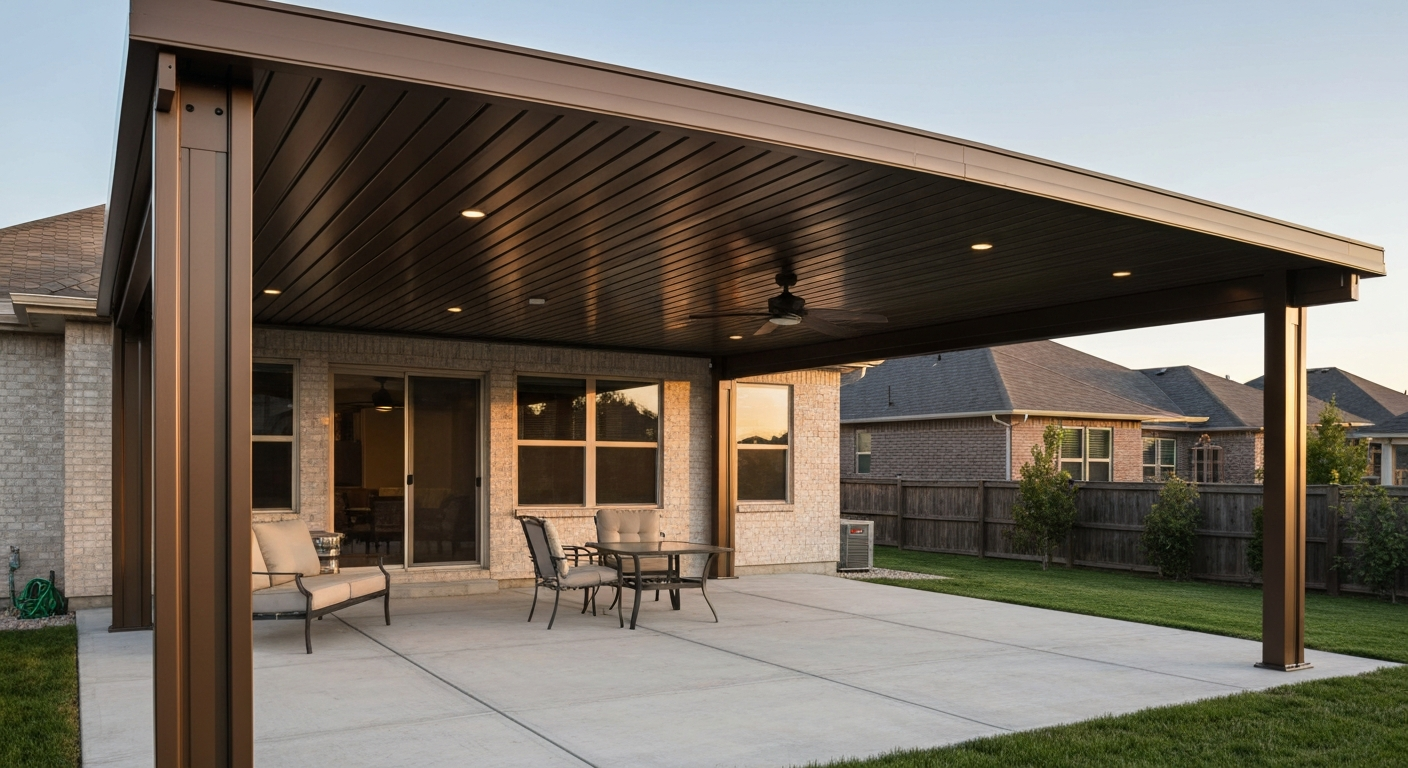
Try‑Tech Patio Cover Reviews & Buying Guide for Homeowners
Try‑Tech patio cover reviews, unbiased guide to models, weather performance, pricing, and DIY vs pro installation
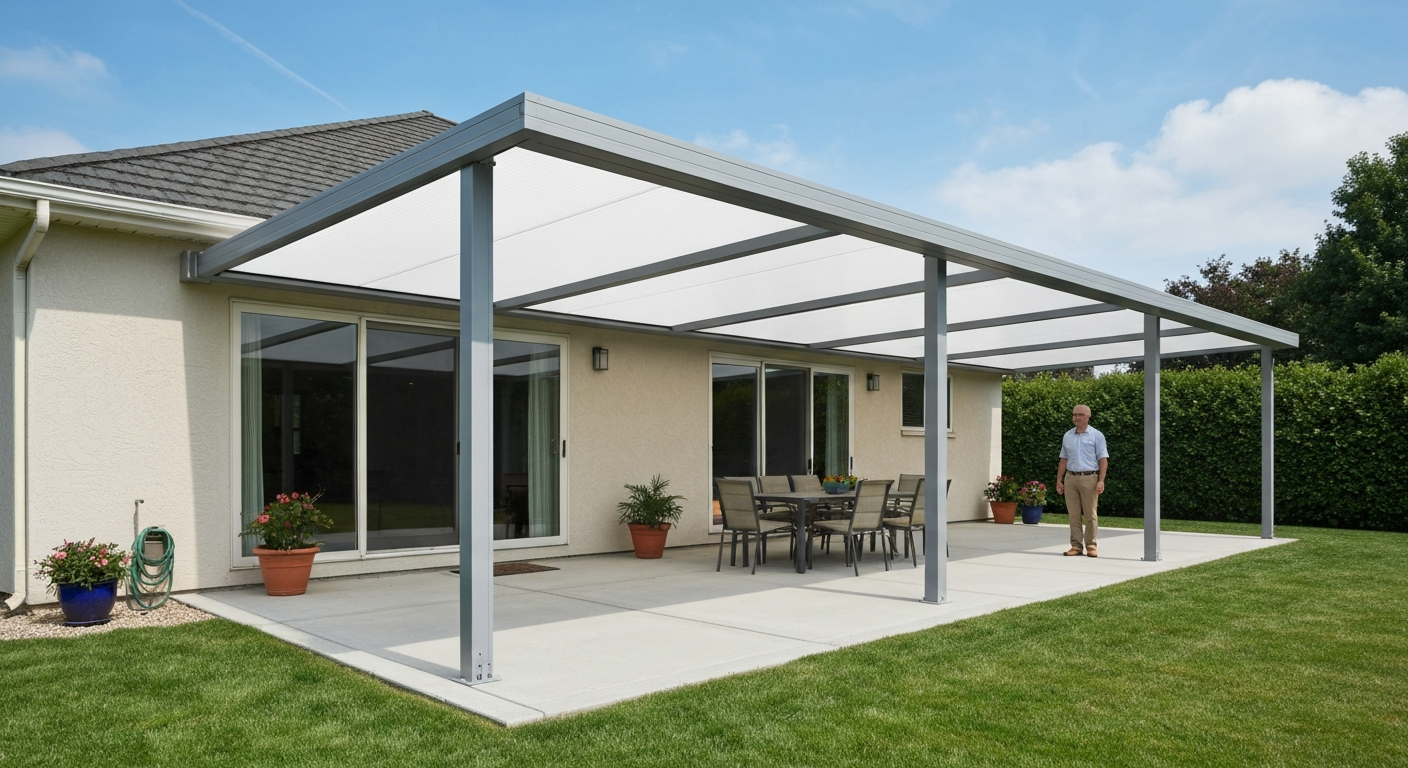
Palram Feria Patio Cover Reviews: Complete Buyer's Guide
Palram Feria patio cover reviews: honest pros, cons, installation tips, climate performance, price & buying checklist.