Try-Tech sells aluminum patio cover kits starting at $16 per square foot, with a basic 10x20 non-insulated kit listed at $3,157 before shipping or installation. If you are comfortable with basic tools and can spare a weekend, that price covers a legitimate, permit-ready structure backed by stamped engineering plans and a transferable limited-lifetime warranty on the Alumawood panels. Whether that makes Try-Tech the right pick for your project depends on your climate, your budget for labor, and how much DIY risk you are willing to accept.
Try‑Tech Patio Cover Reviews & Buying Guide for Homeowners

Phoebe Foster
4 Aug 2026
Quick Verdict
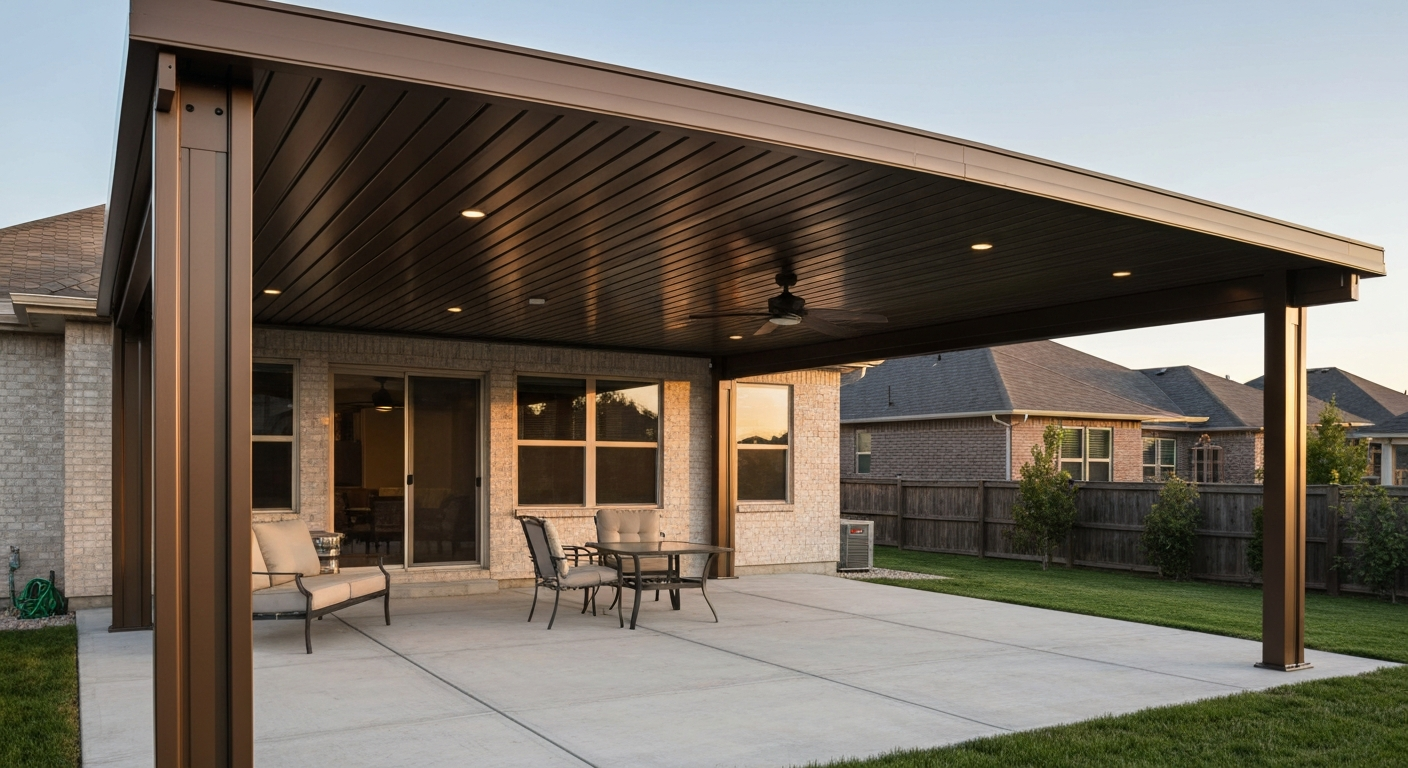
Try-Tech is a solid choice for budget-conscious homeowners who want a professionally engineered aluminum patio cover they can install themselves, as long as they are prepared to manage the ordering process carefully and understand the brand's material substitution policy before placing an order.
Who This Guide Is For
This review is written for homeowners who are past the "should I even cover my patio?" stage and are now comparing specific brands. That includes hands-on DIYers who want to skip contractor markups, budget-minded buyers who need to know exactly what they are getting for $3,000 to $10,000, and anyone who has already looked at competitors like Palram Feria or local custom installers and wants a direct comparison. It is also useful for homeowners in high-wind or high-snow regions who need a cover backed by actual engineering documentation rather than a marketing brochure.
Try-Tech Product Line Overview
Try-Tech sells aluminum patio cover kits under the Alumawood and Elitewood product lines. Both are manufactured-aluminum systems assembled from extruded components: beams, posts, roof panels, ledger boards, and trim pieces that ship as a packaged kit. The two main roof types are non-insulated (solid panels with a single-wall profile) and insulated (dual-wall foam-core panels that add thermal performance and a finished ceiling look). Insulated kits cost more but are noticeably better in hot climates like Texas or Arizona where a non-insulated cover basically becomes a radiant heat reflector in July.
On sizing, Try-Tech covers a wide range of patio footprints. Standard kit widths and projections can be combined or extended, and the system accommodates freestanding and attached configurations. The company's pricing page uses a 10x20 kit as the baseline example, but custom dimensions are part of the standard ordering process. You specify your dimensions, and they build the kit to match, which is one genuine advantage over big-box patio kits that only come in fixed sizes.
Finish options are published on the Try-Tech site under their Colors section. The panels and extrusions are coated with AlumaShield paint, an electrostatically applied finish that the manufacturer positions as fade and chalk resistant. Available colors include standard shades like patina, white, sandstone, and bronze. Four end cap styles let you customize the look of the exposed beam ends, and there are matching ledger covers and post base caps to clean up the attachment points.
Materials and Construction
The frame uses extruded aluminum throughout, which matters for longevity in wet or coastal climates where steel-framed alternatives rust. Roof panels are aluminum extrusions (solid for non-insulated, foam-filled dual-wall for insulated), and assembly relies primarily on self-tapping and sheet-metal screws. The fastener approach is straightforward and makes DIY installation realistic without specialized tools.
One thing worth flagging: Try-Tech's Terms and Conditions include a substitution clause that allows them to fulfill orders using either Alumawood or Elitewood materials. Both are aluminum systems, but the profiles, panel thicknesses, and finish details differ between the two lines. Before you order, confirm in writing which product line your kit will use. If you are matching an existing cover, this substitution policy could mean a visible mismatch in color or profile.
The Alumawood line is covered by ICC-ES Evaluation Report ESR-1398, which is an independently reviewed engineering document that confirms the product meets the structural requirements of the International Building Code. This is not a small thing. Many patio cover brands rely on manufacturer-only testing. Having an ICC-ES report means a building department can accept the structural documentation without commissioning a separate engineering review, which saves both time and money during the permit process.
Weather Performance
Wind Ratings
Try-Tech publishes wind ratings starting at 95 mph, with some configurations exceeding 130 mph depending on the kit specified. That 130 mph threshold puts certain Try-Tech configurations in range for hurricane-prone coastal areas and high-wind plains states. The exact rating you qualify for depends on your local design wind speed, the span and configuration of the cover, and which engineering option you select at checkout. The permits and engineering page on Try-Tech's site lets you input your zip code or jurisdiction to check applicable ratings.
Snow Load
Live load ratings run from 10 lb per square foot up to 60 lb ground snow load. For context, most Midwest and Mid-Atlantic locations require somewhere between 20 and 40 lb ground snow load, so the upper end of Try-Tech's range covers most of the continental US except the heaviest mountain-zone requirements. If you are in Colorado or the northern Rockies with ground snow loads above 60 lb, talk to a local structural engineer before ordering any kit-based patio cover.
UV Protection and Heat
Solid aluminum panels block 100% of direct UV rays, which is the main advantage over polycarbonate alternatives like the Palram Feria. Polycarbonate lets in light but also transmits heat and only partially blocks UV over time as the material yellows. In climates like Texas, Florida, or Southern California where summer heat is the primary enemy, a solid aluminum insulated cover is going to outperform a polycarbonate panel system on every thermal measure. The trade-off is that you lose natural light under the cover entirely.
Hail Resistance
Aluminum holds up to hail better than polycarbonate, which can crack under large hailstones. Minor hail denting is possible with aluminum, but the panels will not crack or shatter. For hail-prone states like Oklahoma, Kansas, and Nebraska, aluminum is genuinely the better material choice. The paint finish can chip at impact points, but structural integrity is usually unaffected.
Durability, Warranty and Maintenance
The Alumawood product carries a transferable limited-lifetime warranty. The first-year coverage is full remedy for defects. After year 16 the warranty shifts to a pro-rata refund structure. Warranty registration must happen within 30 days of installation, and it is transferable, which adds value if you sell the home. See Our Warranty, Alumawood Outdoor Living (manufacturer warranty & registration) for warranty registration deadlines, transferability details, and recommended cleaning concentrations and maintenance steps Our Warranty — Alumawood Outdoor Living (manufacturer warranty & registration). Read the exclusions carefully: normal handling marks, color variation between production runs, and damage from improper installation are excluded. Given Try-Tech's substitution policy, take photos of every panel and component when the kit arrives and note the product line confirmed on your order.
For cleaning, Alumawood recommends mild soap and water at low concentrations. Avoid abrasive cleaners or pressure washing directly at panel seams, which can force water under the lapped joints. An annual wash is usually enough for most climates. In coastal areas with salt air, cleaning twice a year helps protect the AlumaShield finish from corrosion. Inspect fasteners every two to three years; self-tapping screws in aluminum can back out slightly over time in climates with large thermal swings.
- Register warranty within 30 days of installation
- Wash panels annually with mild soap and water
- Inspect and retighten self-tapping screws every 2 to 3 years
- Check ledger attachment to house for any gap or water intrusion annually
- Touch up any paint chips with matching AlumaShield color to prevent oxidation
- In coastal zones: clean twice per year to remove salt deposits
Pricing and Real Costs
Try-Tech's published starting price is $16 per square foot for kit-only pricing, with a 10x20 non-insulated kit listed at $3,157. That is the material cost before shipping, any accessories, or labor. Insulated kits run higher, typically adding 30 to 50 percent to the panel cost depending on the configuration. Shipping adds real money on large kits since aluminum extrusions are bulky; factor in $200 to $600 depending on your distance from the fulfillment location.
Professional installation adds labor cost on top of the kit price. Based on regional cost guides and contractor estimates for installed aluminum patio covers, labor typically runs $1,500 to $4,000 for a standard 10x20 to 12x24 structure, depending on complexity, region, and whether a permit inspection is required. In San Diego and other high-cost metros, total installed costs for a 200 square foot aluminum cover can reach $8,000 to $14,000 when permits, footings, and contractor overhead are included. DIY installation saves most of that labor, though you still pay for permit fees (typically $150 to $500) and any concrete work.
Try-Tech does not appear to offer in-house financing, so buyers typically use home equity lines, personal loans, or contractor financing if going the professional install route. Some patio contractors who work with Alumawood products offer their own financing terms, so ask when getting quotes.
| Scenario | Estimated Cost | Notes |
|---|---|---|
| 10x20 DIY kit (non-insulated) | $3,157 to $3,800 | Kit + shipping; excludes permit fees and footings |
| 10x20 DIY kit (insulated) | $4,500 to $5,500 | Estimated range; varies by configuration |
| 10x20 professionally installed (non-insulated) | $5,500 to $8,000 | Kit + labor + permit; varies by region |
| 12x24 professionally installed (insulated) | $9,000 to $14,000+ | Full-service in high-cost metros |
| Permit fees | $150 to $500 | Stamped engineering plans included from Try-Tech |
DIY Installation: What to Expect
Try-Tech states that average DIY installation time is about two days. That is realistic for a straightforward attached cover on a level slab with no complex roof transitions, assuming two people working together. The instructions are detailed, and the downloadable PDFs include step-by-step assembly sequences, screw types, and fastener placement notes. The basic tool list is ordinary: a drill, level, tape measure, ladder, and standard hand tools. You do not need specialty aluminum-working tools.
Where DIYers run into trouble is the ledger attachment to the house. If your home has stucco, brick, or lap siding, the flashing and sealing at the ledger is the most consequential step, and getting it wrong causes water intrusion into your wall assembly. Take your time there, and if you are not confident in flashing work, that is the one piece worth hiring out even if you do everything else yourself. Try-Tech's installation PDFs address ledger attachment, but the specific flashing method will depend on your siding type.
How Try-Tech Compares to Other Brands
Try-Tech sits in a competitive space alongside other aluminum kit brands and custom local installers. For broader context and comparisons, consult our patio cover concepts reviews for a deeper look at materials, costs, and long-term performance. Here is how the major alternatives stack up on the specs that matter most to most buyers.
| Brand / Product | Material | Wind Rating | Snow Load | Warranty | DIY Kit Available | Approx. Starting Price (kit) |
|---|---|---|---|---|---|---|
| Try-Tech (Alumawood/Elitewood) | Aluminum | 95 to 130+ mph | 10 to 60 lb psf | Limited lifetime (transferable) | Yes | ~$16/sq ft ($3,157 for 10x20) |
| MR Patio | Aluminum | Varies by model | Varies | Limited lifetime | Yes | Comparable range |
| Patio Cover Concepts | Aluminum | Varies by model | Varies | Limited lifetime | Yes | Comparable range |
| HHI Patio Covers | Aluminum | Varies by model | Varies | Limited lifetime | Yes | Comparable range |
| Oasis Patio Covers | Aluminum | Varies by model | Varies | Limited lifetime | Yes | Comparable range |
| TEMO | Aluminum | Up to 140 mph (some models) | Varies | Lifetime limited | Dealer/contractor | Higher; dealer-installed |
| Palram Feria | Polycarbonate panels, aluminum frame | Up to ~75 mph | Lower snow load | 10-year limited | Yes | Lower; ~$1,500 to $3,000 |
| ACRYLITE patio systems | Acrylic/polycarbonate panels | Varies | Varies | Varies by product | Limited | Mid-range |
The Palram Feria is the most common retail alternative and it wins on entry price, but it uses polycarbonate panels that transmit heat, yellow over time, and carry only a 10-year warranty. For independent palram feria patio cover reviews and detailed comparisons, see our dedicated review. Read Oasis patio cover reviews for another installer comparison. For a detailed comparison of polycarbonate systems, see our acrylite patio cover review. If your main goal is shade and UV protection in a hot climate, aluminum covers like Try-Tech outperform polycarbonate on every long-term metric. TEMO is a premium aluminum brand with strong engineering credentials, but it is primarily sold and installed through dealers, so the DIY path is more limited and prices are higher. For more on TEMO's offerings and dealer-based model, see TEMO patio cover reviews. MR Patio, Patio Cover Concepts, HHI, and Oasis all occupy similar territory to Try-Tech as aluminum kit suppliers, and comparing their specific model specs and current pricing is worth doing before you commit.
Choosing by Climate and Budget
If you are in a hot, sun-heavy climate like Texas, Arizona, or Southern California, go with an insulated aluminum cover. The foam-core panels make a real difference in the temperature under the cover and justify the extra cost over several summers. If you are in a mild climate primarily looking for rain coverage and light shade, a non-insulated kit is perfectly adequate and saves money. For high-wind coastal areas, confirm the specific wind rating for the configuration you are ordering, not just the advertised maximum, since actual ratings depend on span and post spacing.
For budget buyers who want the lowest entry cost, the Palram Feria or a basic non-insulated aluminum kit will get you covered fastest with the least upfront spend. If you want a cover that will still look good and function well in 20 years without repainting or re-paneling, the premium for an aluminum insulated kit is worth it. The lifetime warranty on Alumawood products, especially given the transferability clause, also adds real resale value in markets where buyers expect outdoor structures to be permitted and warranted.
Accessories and Compatibility
Try-Tech's accessory pages list fan-beam upgrades that integrate an electrical chase into the main beam so you can run wiring to a ceiling fan without exposed conduit. Recessed LED lighting is also available as a factory option in the beams. Both accessories are significantly easier to install when ordered with the original kit rather than retrofitted later, since the beams come pre-routed. Post base caps and ledger covers are cosmetic trim pieces that make the finished install look cleaner and are worth including in the original order.
Ceiling fans and misting systems are popular add-ons for hot-climate patios. A fan beam is the cleanest integration, but any standard outdoor-rated fan can mount to the structural beam with appropriate hardware. Misting systems attach to the perimeter of the cover frame and are generally independent of the cover structure itself, so compatibility is not an issue. Make sure your misting system uses weather-resistant fittings rated for the temperature range in your climate.
Permits and Contractor Considerations
Most jurisdictions require a building permit for a permanent attached patio cover. Try-Tech provides stamped engineering plans with orders, which is one of the most useful features of buying from an engineered kit supplier rather than a generic building-supply retailer. Without stamped plans, you may need to hire a local structural engineer for $500 to $1,500 just to get permit-ready drawings. With Try-Tech's plans in hand, most building departments can process the permit based on the ICC-ES report and the stamped documents without additional engineering review.
If you are hiring a contractor, confirm they have experience with aluminum patio cover kits specifically. General contractors who primarily work in wood framing sometimes make fastener and flashing mistakes on aluminum extrusion systems. Ask to see previous aluminum cover installs and check whether they pull permits routinely. An unpermitted cover creates problems at resale and may void the manufacturer warranty.
What Real Customers Say
Try-Tech has a BBB business profile but is not BBB accredited. See Try‑Tech Industries, BBB Business Profile for the company's BBB listing (not accredited) including years in business and complaint history blank" rel="noopener noreferrer">Try‑Tech Industries — BBB Business Profile. Customer feedback from review aggregators like Birdeye and the BBB complaint record reveals a few recurring themes. Positive reviews consistently highlight the quality of the aluminum components, the clarity of the installation instructions, and the value compared to getting a custom cover installed locally. Negative feedback most often centers on lead times and shipping logistics, particularly damage in transit and delays in receiving replacement components for damaged pieces. A smaller number of complaints involve finish color variation between ordered panels, which connects directly to the substitution policy and the fact that Alumawood and Elitewood panels are not always an exact visual match. See hhi patio covers reviews for additional comparative perspectives and user ratings.
The practical takeaways from the complaint pattern: inspect every panel and component the day the kit arrives, document any damage with photos immediately, and contact Try-Tech before you start assembly if anything looks wrong. Trying to make a damage claim after you have already installed panels is significantly harder. Lead times have reportedly stretched to several weeks during high-demand periods, so order well before your planned installation window.
Pros and Cons at a Glance
| Pros | Cons |
|---|---|
| Stamped engineering plans included with order | Substitution policy (Alumawood vs Elitewood) can cause finish mismatches |
| ICC-ES ESR-1398 certification for Alumawood line | Not BBB accredited; some complaints about shipping damage response time |
| Wind ratings up to 130+ mph on certain configurations | Lead times can run several weeks in peak season |
| Transferable limited-lifetime warranty on panels | DIY ledger flashing requires some building skill to do correctly |
| DIY-friendly instructions with two-day average install time | Insulated kits add significant cost over non-insulated |
| Fan beam and LED lighting accessories available | Financing options are limited; buyer sources their own |
Decision Checklist Before You Buy
- Measure your patio footprint and confirm attachment point (house wall or freestanding)
- Check your local design wind speed and ground snow load requirements on the ASCE 7 maps or with your building department
- Confirm with Try-Tech in writing whether your order will be fulfilled as Alumawood or Elitewood
- Get permit requirements from your local building department before ordering
- Download and review the installation PDF for your specific model before committing
- Order early: account for 3 to 6 weeks lead time plus shipping
- Budget for shipping damage contingency and have a plan to report it immediately on delivery
- Register the warranty within 30 days of installation
- Decide on accessories (fan beam, LED lighting) before ordering so they can be integrated into the kit
- If hiring a contractor, confirm they have aluminum kit installation experience and pull permits
FAQ
What product specification details should I gather for Try‑Tech patio covers?
Collect model names and SKUs, available sizes and span tables, materials (frame alloy/spec, panel type: AlumaShield/Alumawood vs polycarbonate), finish and color options, accessory list (end caps, light kits, post bases, ledger covers), fastener/connector types, and downloadable spec sheets/brochures from the official Try‑Tech site and manufacturer PDFs.
Which primary sources are essential for accurate product specs and installation details?
Try‑Tech official product pages, downloadable brochures, and PDF installation/assembly instructions (example non‑insulated and insulated kits). Manufacturer pages for Alumawood/Alumawood Outdoor Living (warranty/care) and ICC‑ES evaluation reports (ESR‑1398) for certified structural data.
What structural performance and code‑compliance questions must be answered?
Document published wind ratings (mph), ground snow/live‑load ratings (lb/ft²), allowable spans and cantilevers per model, ICC/IBC/ICC‑ES compliance (ESR references), availability of stamped engineering plans, and any region‑specific load tables or design limits from Try‑Tech/ESR documents.
What warranty and maintenance information should I verify?
Obtain full warranty text (length, transferability, registration window, exclusions, pro‑rata terms), recommended maintenance/cleaning procedures and intervals, what damages are excluded (UV fade, chalking, handling marks), and where to register claims (Try‑Tech vs manufacturer).
How should I research weather‑performance (UV, wind, hail, snow) and durability?
Use Try‑Tech published ratings and ICC‑ES reports for wind/snow; manufacturer technical data for UV resistance, paint/AlumaShield system performance; independent installer and consumer reviews for hail and long‑term durability reports; and third‑party tests or ASTM standards referenced by manufacturer docs.
What pricing and cost data are required and where to find them?
Collect Try‑Tech published starting $/ft² and example kit prices (from Try‑Tech pricing page), local contractor installed cost ranges from regional contractor guides, retailer competitor pricing (Palram/Canopia Feria, etc.), and estimates for typical add‑ons and shipping/lead‑time costs.
Next Articles
Palram Feria Patio Cover Reviews: Complete Buyer's Guide
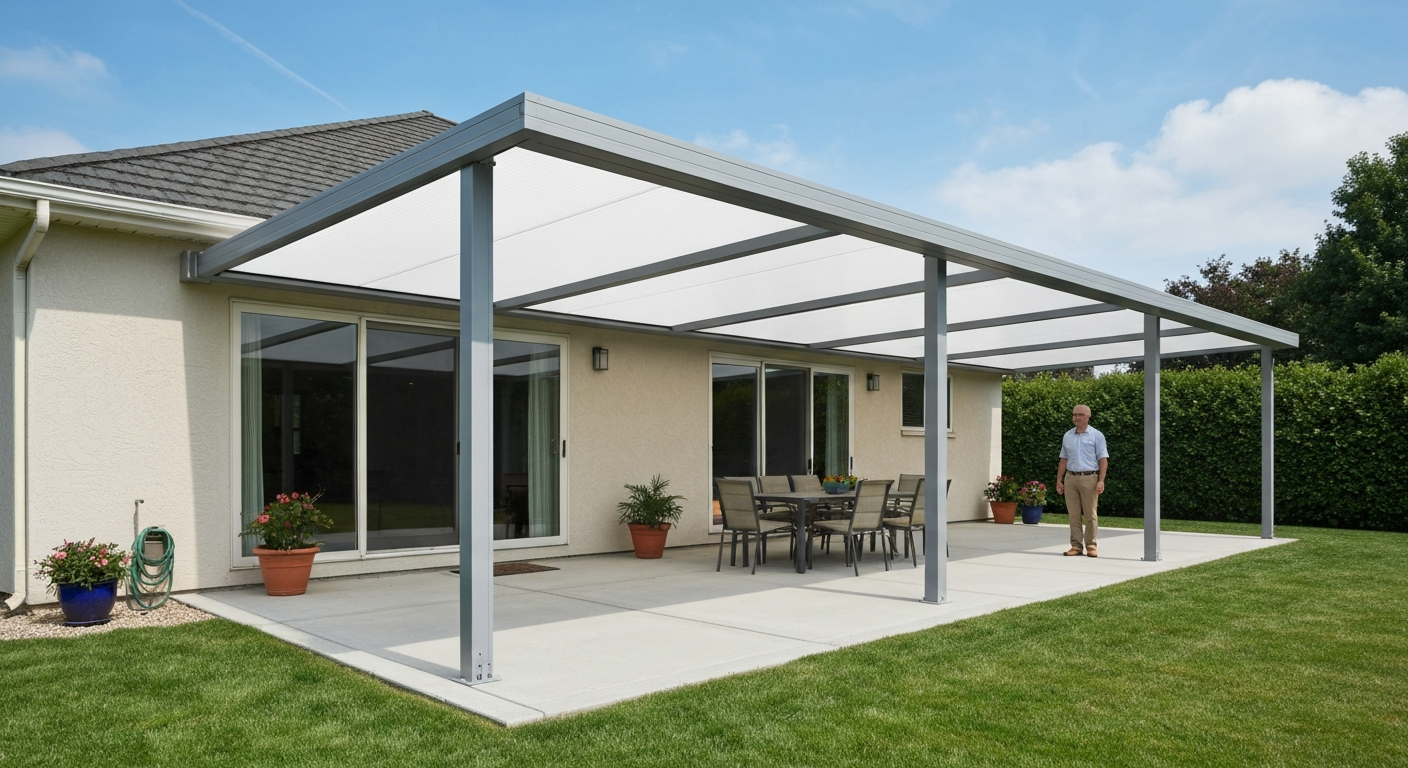
Palram Feria patio cover reviews: honest pros, cons, installation tips, climate performance, price & buying checklist.
HHI Patio Covers Reviews: What to Check Before You Buy
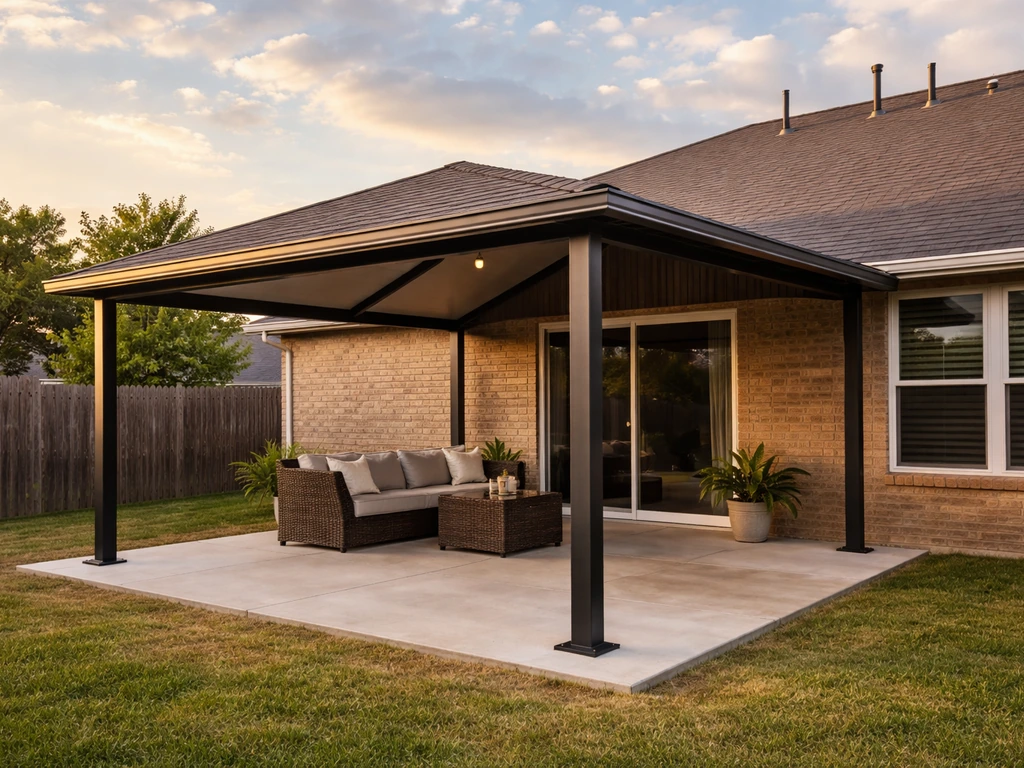
Use hhi patio covers reviews to judge shade, weather durability, wind load, install support, costs, and best fit by clim
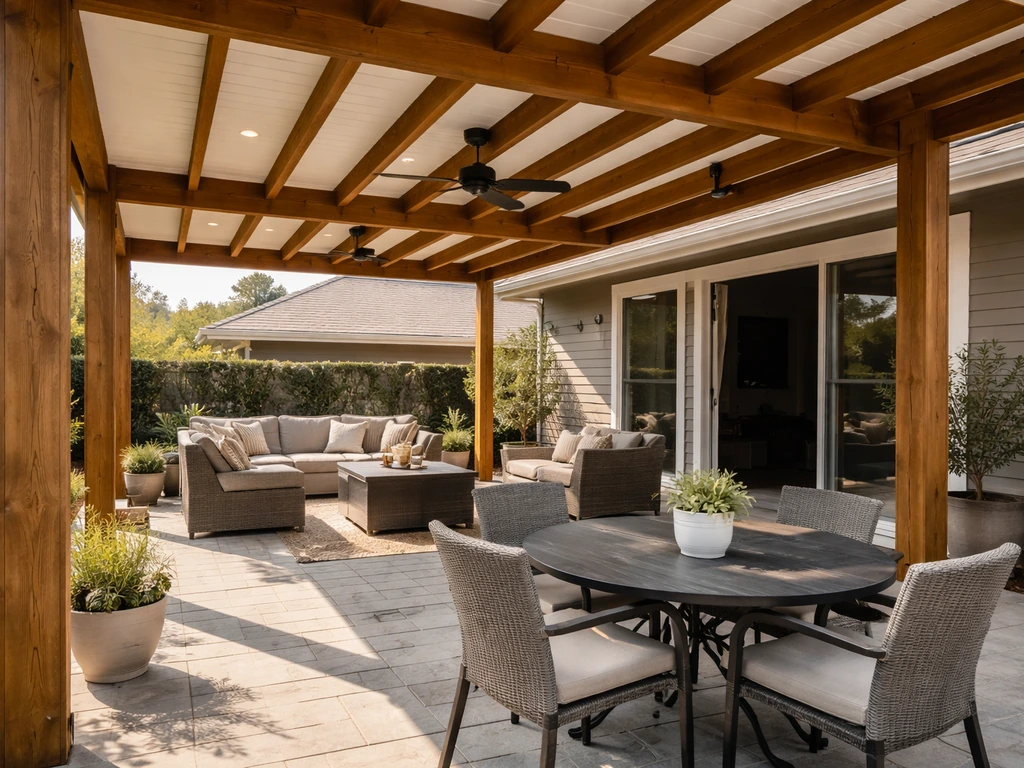
Patio Cover Concepts Reviews: Compare Types, Costs, and Contractors
Compare patio cover concepts with contractor ratings: costs, materials, durability, warranties, permits, and bid checkli