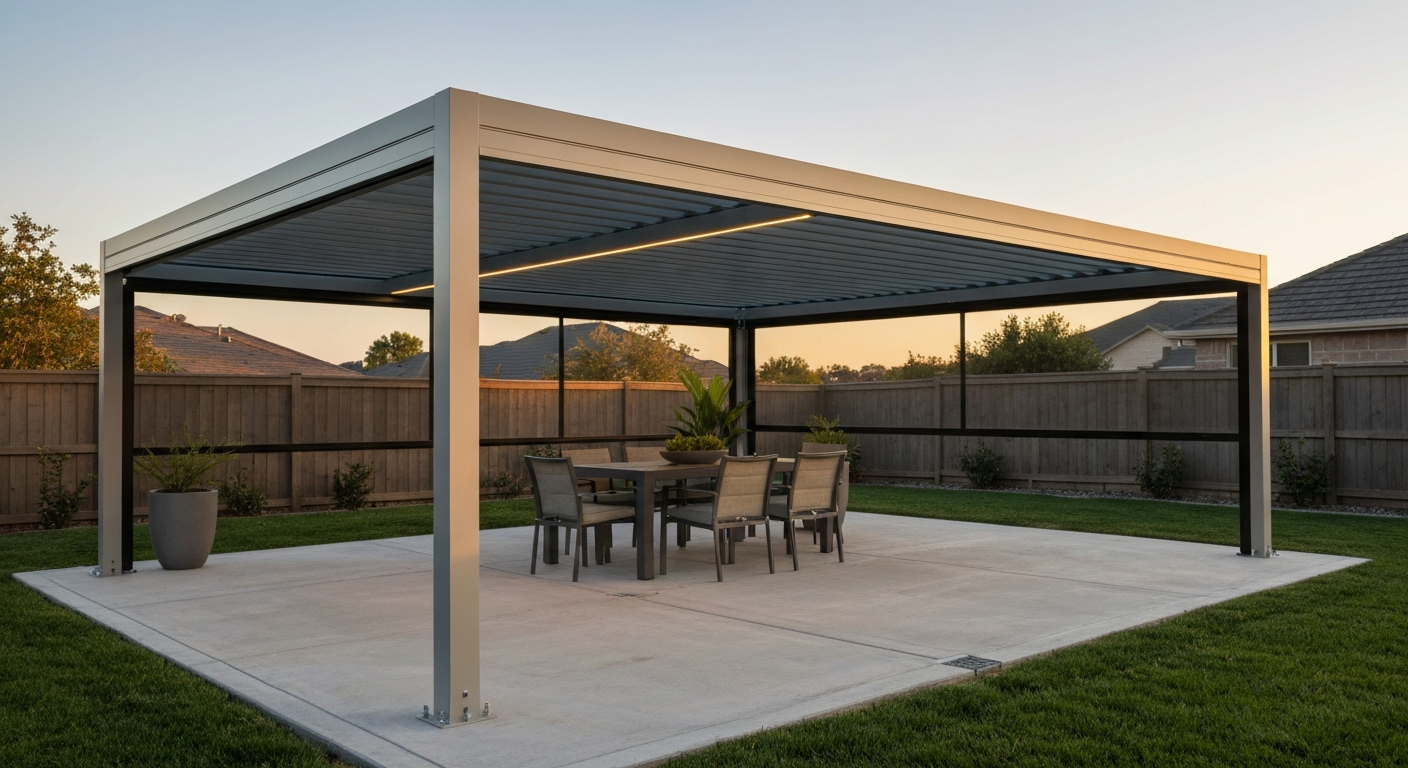
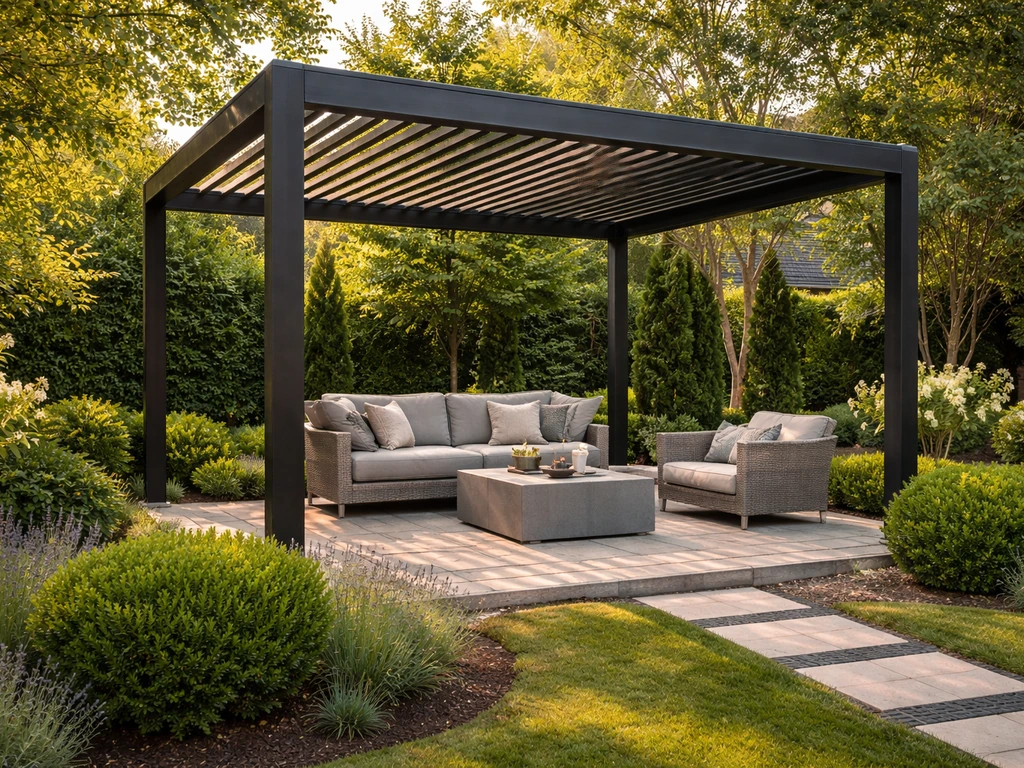
Mirador patio pergolas are well-built, aluminum-framed louvered structures that generally deliver on their promise of adjustable shade and weather protection. The 111-series models start around $1,400 for a basic canopy version and climb to $3,700 or more for larger motorized builds, and you can pick them up through Home Depot, Lowe's, Costco, or directly from Mirador's site. They are a solid middle-ground option for homeowners who want something more permanent and polished than a fabric sail shade but are not ready to commit to a fully enclosed screened room or patio enclosure.
Mirador Patio Pergola Reviews: Features, Pricing & Verdict

Phoebe Foster
21 Jul 2026
Who this review is for
This guide is written for homeowners who have already done some initial research on Mirador and want a clearer picture before putting down $1,500 to $4,000 or more. Maybe you found the Mirador listing on Lowe's or Costco and the product looks great in the photos, but you're wondering about real-world durability, how hard it is to actually assemble, and whether those motorized louvers are worth the extra cost. I've dug into the manufacturer manuals, warranty documents, user communities, and retail listings to give you a straight answer on all of it. I'll also flag where Mirador makes sense versus a screened patio enclosure or a full patio room, because depending on your climate and how much bug protection you need, those other options might be the better fit.
Quick verdict: when a Mirador pergola makes sense
A Mirador pergola is the right choice when you want a permanent, clean-looking aluminum structure with adjustable roof louvers, you're comfortable with a DIY assembly project (or hiring a local handyman), and you don't need full insect protection or HVAC-quality enclosure. The open-frame design with optional accessories like pull-down screens gives you flexibility that a fixed patio cover doesn't. If your primary goal is sealing out bugs or creating a climate-controlled outdoor room, a screened enclosure from a brand like Champion or a patio room system like Better Living will serve you better. For a direct comparison of fully enclosed patio room systems, see better living patio enclosures for options and specifications. But if you want year-round adjustable shade, a drainage system built into the posts, and an aluminum build that won't rot or warp, Mirador hits a sweet spot in the $1,400 to $4,000 price band.
Mirador model overview: what's actually available
Mirador's main residential line is the 111-series, which comes in several sub-variants. Here's how the lineup breaks down based on current retail and manufacturer listings.
| Model | Key Feature | Example Size | Approx. Price |
|---|---|---|---|
| 111A (standard louvered) | Manual adjustable aluminum louvers, no motor | 10' x 20' | ~$3,699 (Home Depot) |
| 111S e-Motion | Motorized louvers, included remote/app control | 10' x 13' | ~$3,299 (Mirador direct) |
| 111S LED series | Motorized louvers + integrated LED lighting | Various | Higher (add ~$300–$500 over base) |
| 111DA / canopy models | Fixed or semi-fixed canopy roof, lower entry price | 10' x 12' | ~$1,416 (Lowe's) |
| 111 round louvered | Circular frame, motorized louvers | 10' x 20' | Varies by retailer |
Costco periodically carries the 10'x10' adjustable louvered version through Costco Direct with member pricing or promotional savings. Availability rotates, so if you're a member it's worth checking, because the pricing there can undercut the standard retail listings. Mirador ships free to the contiguous U.S. on most SKUs, which matters when you're talking about a structure that weighs several hundred pounds packaged.
Build materials and construction quality
Frame and posts
The 111-series frame is powder-coated aluminum. That matters for longevity, especially in coastal or humid climates where a steel frame would begin surface-rusting within a few seasons. Powder coating is not indestructible, and you'll want to touch up any scratches promptly so the aluminum underneath doesn't oxidize, but it holds up far better than painted wood and requires zero sealing or staining. The posts are hollow-profile aluminum and double as the drainage conduit, routing rainwater collected in the roof channels down through the legs and out at the base. That's a thoughtful design detail that you don't get on cheaper pergola kits.
Louvers and roof panels
Here's something that surprised me when I read through the technical manuals: the louvers on Mirador 111-series models are galvanized steel, not aluminum. The frame is aluminum, but the adjustable louver slats themselves are galvanized steel. That's heavier and adds structural stiffness to the roof assembly, but it does mean the louvers are a different material than the frame. In practice, galvanized steel is corrosion-resistant and should be fine in most climates, but in saltwater-adjacent environments you'll want to keep an eye on the louvers more carefully than the frame. The louver adjustment range is 0 to 93 degrees, which gives you everything from fully closed (rain/sun block) to fully open (maximum ventilation).
Fasteners and anchoring
Mirador includes anchor plates at the base of each post for concrete slab attachment. You'll need a hammer drill to set the concrete anchors, which is the one tool most homeowners don't already own but can rent for about $50 a day. The kit hardware is generally described in user communities as complete, though more on that in the real-world feedback section below. One consistent note from DIY installers is to dry-fit the entire structure before committing anything to concrete, because tolerances can be tight and repositioning after anchoring is a real headache.
Key features worth understanding before you buy
Motorized louvers vs. manual
The e-Motion motorized version adjusts the louvers via a remote or, depending on the model variant, a smartphone app. For a 10'x13' motorized version (111S e-Motion), Mirador charges $3,299 direct. The manual 111A at 10'x20' is $3,699, which is actually more than the motorized smaller unit, because the size premium outweighs the motor cost at that scale. If you're comparing like-for-like sizes, expect the motorized version to add roughly $400 to $600 over the manual equivalent. The motor and drive system on LED-equipped models carry ETL certification (blank" rel="noopener noreferrer">Intertek listing 5026666), which is the certification many local permit offices want to see for any pergola with integrated electrical components.
Screens and enclosure accessories
Mirador sells pull-down screens as add-ons, priced around $799 to $899 per side panel. Sliding glass doors and premium AeroFlow-style panels run from roughly $1,399 to $2,499 depending on the option. This is where costs escalate fast. A fully screened-in 10'x13' Mirador with four sides screened would add $3,200 to $3,600 on top of the base structure price. At that point, you're getting close to the cost territory of a dedicated screened patio enclosure system. The screens are useful for insect protection and wind blocking, but they are add-ons, not part of the core product, and you need to verify model compatibility carefully before ordering, because not every accessory fits every 111-series sub-model.
Integrated rain drainage
When the louvers are closed, rainwater collects in a channel system built into the roof frame and drains through the posts to the base. This is a genuine functional advantage over open pergola designs that let rain through freely. It means you can sit under a closed Mirador during a light to moderate rainstorm without getting wet. For heavy downpours, the drainage capacity has limits, and Mirador's own instructions note that you should open the louvers during heavy snowfall or extreme wind to reduce structural load, which brings us to the performance section.
Structural performance: wind, snow, and long-term durability
The 111-series models are rated for wind speeds up to approximately 70 to 73 mph depending on the specific model and size, with a snow load capacity around 13.8 lb/ft². Those are respectable ratings for a mid-range louvered pergola, but they're not hurricane-grade specs. To put it in context, a Category 1 hurricane starts at 74 mph sustained winds, so Mirador's rating sits right at that threshold edge. If you're in South Florida, coastal Louisiana, or the Gulf Coast, this is a pergola you would need to remove accessories from and possibly disassemble for major storm events. For Texas, the Midwest, and most of the Mountain West, the wind rating is adequate for seasonal weather variability.
The critical manufacturer instruction around weather performance is this: open the louvers during heavy wind or snowfall. Closed louvers create a sail effect in wind and accumulate snow load, both of which push the structure toward its rated limits faster. If you're in a climate with regular heavy snowfall, for example northern Illinois, Minnesota, or Colorado, a motorized version with remote operation makes this much easier to manage from inside the house. That's actually a practical argument for spending the extra money on the e-Motion version in snow climates.
Long-term durability for aluminum pergolas in general is well-established. The material doesn't rot, warp, or require refinishing the way wood does. The weak points to watch on any aluminum louvered pergola are the motor and drive system (mechanical parts with finite service lives), the fasteners at connection points (check for loosening annually), and any drainage channel gaskets or seals that can dry out over time.
Typical price ranges and what drives the cost up
Mirador's pricing is transparent across major retailers, which makes comparison-shopping straightforward. Here's the realistic cost picture.
| Cost Component | Low End | High End | Notes |
|---|---|---|---|
| Base pergola (canopy model, smaller size) | $1,416 | $1,800 | Lowe's entry-level, 10'x12' |
| Base pergola (louvered, mid-size) | $3,299 | $3,699 | Mirador direct / Home Depot, 10'x13' to 10'x20' |
| Side screens (per panel) | $799 | $899 | Manufacturer accessory pricing |
| Sliding glass / AeroFlow panels | $1,399 | $2,499 | Premium enclosure accessories |
| Third-party installation labor | $500 | $2,000+ | Varies by region and installer |
| Motorized pergola total (national avg) | $4,000 | $13,700+ | Angi national cost guide range |
| Permits (if required) | $50 | $400 | Varies widely by municipality |
The three biggest cost drivers are size, motorization, and accessories. Going from a 10'x10' to a 10'x20' footprint can add $1,000 to $1,500 to the base price. Adding motorized louvers and LED lighting adds another $400 to $600 over a manual equivalent. And if you start adding multiple screen panels and a door system, you can easily push the total project cost past $8,000 including installation. That's a number worth knowing before you fall in love with a product page photo. Angi's national data puts the average motorized pergola project (including installation) around $13,700 for full-featured systems, though a straightforward Mirador DIY install with no screens comes in well below that. Angi's cost guide 'How Much Does a Motorized Pergola Cost?, Angi (cost guide)' reports a national average around $13,700 for motorized pergola projects, noting typical ranges from the mid-$4K level to well over $10K depending on size, motorization, and installation How Much Does a Motorized Pergola Cost? — Angi (cost guide).
Warranty: what Mirador actually covers
Mirador's warranty documentation is issued under the Sorara Outdoor Living brand, which is the manufacturer behind the Mirador label. For the 111-series, the frame warranty is 3 years for standard models, with an additional year available through product registration on the 111 LED series, bringing it to 4 years for registered owners. Electronic components and LED systems carry separate, shorter warranty terms. That's a reasonable but not exceptional warranty for this price tier. Competitors in the enclosed patio space, like the systems reviewed in Champion and Elegant patio enclosure categories, sometimes offer longer structural warranties, but those are typically dealer-installed systems with professional backing. See our Elegant patio enclosures reviews for detailed comparisons, user feedback, and warranty breakdowns. For a direct-to-consumer shipped product, 3 to 4 years on the frame is workable.
The practical warranty advice here is simple: register your product after purchase, keep your receipt and installation photos, and document any delivery damage before assembly. Multiple user reports mention damaged packaging on arrival, and having photo evidence before you start building protects your claim if you need to use the warranty.
Real-world owner feedback: what buyers actually say
Across Trustpilot, Lowe's listings, Costco reviews, and Reddit threads on r/Costco, r/landscaping, and r/HomeImprovement, Mirador owner feedback tends to cluster around three consistent themes. On the positive side, owners frequently praise the look and perceived build quality once assembled, the plug-and-play nature of the packaging, and the satisfying operation of the louver system. The Lowe's 10'x12' listing, for example, showed a 5-out-of-5 average across the reviews available at that listing.
The negative feedback is also consistent: delivery damage and missing parts come up repeatedly, along with slow customer service response times. This is a direct-ship heavy product, and freight damage is a real risk with any large structure shipped by carrier. The missing-parts issue is frustrating but often resolvable. Customer service response time is the recurring complaint that appears hardest to predict or mitigate. If you order during peak season (spring and early summer), set expectations accordingly for support responsiveness.
Reddit DIY threads add useful texture: most owners who attempted self-installation report it's manageable but genuinely needs 3 to 6 people for the assembly day, especially for larger models. The comment about tight accessory tolerances is worth repeating. If you're planning to add screens or door panels later, buy them at the same time and verify compatibility with your exact model number before ordering anything separately.
Installation: what to expect step by step
Mirador does not provide installation services directly. Any installer options you see at checkout are third-party providers. That means you're either doing this yourself or finding a local handyman or contractor. Here's the realistic installation picture based on manufacturer guidance and community experience.
- Site prep: ensure your concrete slab or deck is level and structurally sound enough to anchor into. This is the step most people underestimate. An unlevel base means an unlevel roof and gaps in the drainage channels.
- Dry-fit the posts and base plates without anchoring. Confirm all four (or six) post positions are square and that the footprint matches your marked layout.
- Assemble the roof frame on the ground before lifting. For smaller models, this makes the raised assembly much safer and faster.
- With 3 to 6 people, lift the roof assembly onto the posts. Manufacturer guidance lists 4-leg models at roughly 1 to 2 hours and 6-leg models at 3 to 4 hours total assembly time, not counting site prep.
- Once the structure is plumb and square, mark anchor hole positions through the base plates.
- Use a hammer drill to set concrete anchors (a rented rotary hammer works well here). Torque fasteners to spec per the manual.
- Connect motorized components or LED wiring if applicable. ETL-certified electrical components should meet most local code requirements, but verify with your permit office before closing up any junction boxes.
- Attach any accessory screens or panels, verifying model compatibility for each piece.
- Test louver operation through full open-close range and check drainage flow with a garden hose before calling the project complete.
For a 4-leg 10'x12' or 10'x13' model with no electrical, a competent DIY team of 3 or 4 can realistically complete this in a weekend day. A 6-leg larger model with motorized louvers, LED wiring, and screens should be planned as a full weekend project. If you're not comfortable with hammer drill work on concrete or basic low-voltage electrical connections, budgeting $500 to $1,500 for a local installer is money well spent.
Contractor vs. DIY
The honest answer on DIY versus contractor depends on your comfort level with two specific things: concrete anchoring and electrical work. The structural assembly itself is straightforward for anyone who has tackled furniture assembly at a larger scale. The concrete anchoring and any motor/LED wiring are the steps that benefit most from professional involvement. A middle path that many homeowners take is doing the structural assembly DIY and hiring a licensed electrician for just the electrical connections. That approach keeps labor costs down while making sure the permitted electrical work is done correctly.
Permits, regional fit, and climate considerations
Permit requirements for pergolas vary enormously by municipality. Many jurisdictions require a permit for any permanent structure anchored to a foundation, which a concrete-anchored Mirador definitely qualifies as. Some cities draw the line at structures over 200 square feet; others require permits for anything with a roof, motorized or not. The ETL certification on the electrical components helps with permit approval in jurisdictions that require it, but do not assume certification equals automatic permit approval. Check with your local building department before you start, and budget $50 to $400 for the permit itself.
On regional fit: for hot-climate homeowners in Texas, Arizona, or the Southeast, the adjustable louver system is genuinely useful for managing afternoon sun angles, and the open frame allows airflow that a solid patio cover blocks. Pair this with a ceiling fan or misting system and you extend your comfortable outdoor hours considerably. For Midwest and Northern climates, the open-louver-in-heavy-snow instruction is an important operational habit to build. In the Pacific Northwest, the drainage channel system earns its keep during prolonged rain seasons. Coastal homeowners should note the galvanized-steel louver material and plan for more frequent inspections of fastener corrosion.
Accessory recommendations that actually improve the experience
- Ceiling fan (flush-mount, wet-rated): improves comfort significantly in heat and humidity without blocking sightlines. A 52-inch wet-rated fan works well for 10'x12' or 10'x13' footprints.
- Misting system: for dry-heat climates like Arizona and West Texas, a low-pressure misting ring attached to the interior beams drops the perceived temperature by 10 to 20 degrees.
- Pull-down screens: Mirador's own screens ($799 to $899 per panel) are the most compatibility-assured option, but third-party exterior roller shades can work on the side rails if you verify mounting dimensions.
- LED string lights or track lighting: if you're not ordering the integrated LED model, aftermarket weatherproof LED strip lights along the louver rails give similar ambiance at lower cost.
- Outdoor-rated area rug and composite deck tiles: Mirador pergolas sit over whatever surface you install them on. A composite deck tile system or sealed concrete finish under the pergola completes the outdoor room feel.
- Furniture covers sized to the pergola footprint: even with the louvers closed, wind-driven rain at an angle can reach furniture. Waterproof furniture covers protect your investment between uses.
How Mirador compares to screened enclosures and patio rooms
Mirador sits in a different product category than screened patio enclosures or full patio rooms, but buyers often find themselves deciding between these options. Here's the honest comparison.
| Factor | Mirador Pergola | Screened Enclosure (e.g., Champion, Elegant, Patio Mate) | Full Patio Room (e.g., Better Living) |
|---|---|---|---|
| Insect protection | Partial (add-on screens required) | Full, by design | Full, by design |
| Adjustable roof | Yes (louvers 0–93°) | No (fixed screen roof) | Depends on model |
| Weather enclosure | Partial (louvers close for rain) | Moderate (screens reduce wind/rain) | High (insulated panels option) |
| DIY-friendly | Yes (with crew of 3–6) | Varies (some DIY kits available) | Usually contractor-installed |
| Base price range | $1,400 – $3,700+ | $1,000 – $5,000+ | $5,000 – $30,000+ |
| Permit typically required | Often yes | Often yes | Almost always yes |
| Climate-control potential | Low (open structure) | Low to moderate | High (can add HVAC) |
| Aesthetic / style | Modern, architectural | Functional, less decorative | Room-like, home extension |
If bug control is your top priority and you're in the Southeast or anywhere mosquitoes are a serious seasonal problem, a screened enclosure is the more practical solution. For a direct comparison to screened systems, see Patio Mate screened enclosure reviews for details on build quality, insect protection, and pricing. If you want the feel of an additional living space that functions year-round, a Better Living patio room system or similar full enclosure is worth the higher investment. Mirador's sweet spot is for homeowners who want year-round flexibility, a clean modern aesthetic, and don't need full insect sealing or climate control. For detailed comparisons and performance reports on screened systems, see champion patio enclosures reviews for real-owner feedback and professional evaluations.
DIY budget alternatives worth considering
If Mirador's $3,000 to $4,000 price point for a full louvered system is more than your budget allows, there are a few ways to get a comparable outdoor space for less. A basic aluminum-post pergola kit from a big-box store in the $600 to $1,200 range paired with a shade sail or retractable canopy gives you meaningful sun control for roughly one-third the cost, though without the drainage integration or motorized operation. Polycarbonate roofing panels on a DIY-built cedar pergola is another popular approach, running $800 to $1,500 in materials with significant labor investment. These alternatives lack the louver adjustability and integrated drainage of a Mirador, but they're genuine options for budget-conscious projects where the premium features aren't essential.
Buyer's checklist before you order
- Measure your slab or intended footprint precisely, accounting for setback requirements from property lines and the house wall.
- Confirm your local permit requirements before ordering. Knowing the permit requirements can also influence which model/size you select.
- Decide on motorized vs. manual based on your climate. In snow climates, motorized makes the open-in-heavy-snow instruction much easier to follow.
- Identify which accessories you want (screens, lighting, doors) and verify compatibility with your specific model number before checkout.
- Check the wind rating against your regional wind data. For coastal or storm-prone areas, verify the 70–73 mph rating is sufficient for your location.
- Plan your assembly crew. For a 4-leg model you need at least 3 people; for a 6-leg model, plan for 5 to 6.
- Inspect all packages before beginning assembly and photograph any damage. This is your warranty protection.
- Compare current pricing across Mirador direct, Home Depot, Lowe's, and Costco (if a member) before buying. The same model can vary in price or come with different promotional terms depending on the retailer and season.
Overall recommendation
Mirador patio pergolas offer a well-engineered aluminum structure at a price point that is competitive for the louvered pergola category. The 111-series is the product to focus on, with the motorized e-Motion version being the most practical choice for anyone in a climate with meaningful snow or who wants hands-off operation. The warranty is adequate but not exceptional, customer service responsiveness is the most cited risk based on owner feedback, and the accessory system can push total project cost significantly higher than the base unit price. Go in with realistic expectations about assembly complexity, verify your permit requirements, line up your crew before delivery day, and Mirador delivers a patio structure that holds up well and looks genuinely good when it's done. For help choosing the best patio pergola, see our best patio pergola guide (d010465d-1d0a-4cc8-b21a-2d87b36e5afd).
FAQ
What is the Mirador patio pergola and who is it best for?
The Mirador is a factory‑built aluminum-framed, adjustable louvered pergola available in freestanding and attached configurations, with motorized and manual louver options, integrated drainage, and electrical/LED options. It suits homeowners who want a durable, low‑maintenance, semi‑permanent outdoor cover that offers weather control (sun/rain) without building a full enclosed room. Best fits: homeowners seeking modern aesthetics, modular accessories (screens, lights, fans), and a product that can be DIY‑installed by capable teams or installed by contractors.
What are the key materials and build features of Mirador pergolas?
Frames are powder‑coated aluminum; louvers are typically galvanized steel or aluminum depending on the model; posts include internal drainage channels and concrete anchor plates. Motorized models use ETL‑listed drive/electrical subsystems. Louvers rotate 0°–~93° for shade and venting. Many models include integrated drainage through posts and options for LED lighting, sensors, and power controls.
How does Mirador perform in wind, rain and snow?
Manufacturer specs list wind ratings around 70–73 mph for typical 111‑series models and published snow loads around ~13.8 lb/ft² (model/size dependent). For heavy winds or snowfall Mirador instructs opening louvers during storms to reduce uplift and to avoid snow accumulation. These ratings are adequate for many suburban climates but may be insufficient for high‑wind coastal zones, hurricane regions, or heavy snow areas without site‑specific engineering or added reinforcement.
What are typical price ranges for Mirador pergolas?
Retail and manufacturer listings show broad pricing: small manual or canopy models under $1,500 (sale prices) up to $3,000–4,000 for common motorized 10'×12' to 10'×20' assemblies. Motorized 10'×13' e‑Motion models are listed around $3,299; larger motorized units and premium accessories (screens, glass walls, motors, LED packages) add $800–$2,500 per accessory. Installation labor can add several thousand dollars for contractor installs; motorized pergola installations nationwide can average much higher (Angi reports motorized systems averaging mid‑four‑figures to >$10k depending on complexity).
What does Mirador’s warranty cover and what are its limits?
Mirador (Sorara) provides limited residential warranties that vary by model: typical frame coverage is 3–4 years (some models extend a year with registration); electronics/LEDs have shorter separate terms. Warranties are limited (not lifetime) and usually exclude environmental misuse, improper installation, and shipping/delivery damage. Read the model’s specific warranty PDF for exclusions, claims procedures and registration requirements.
How difficult is installation—DIY vs contractor?
Mirador kits are designed for consumer assembly but often require 3–6 people for handling large panels and safe anchoring. Basic models can be DIY for experienced homeowners with power tools and a hammer drill for concrete anchors. Motorized or large multi‑post models increase complexity (electrical connections, heavier parts) and usually benefit from a contractor. Mirador does not offer in‑house installation; third‑party installation partners are available through retailers.
Next Articles
Better Living Patio Enclosures: How to Choose, Plan, and Install
Compare screen or all-season patio enclosures, plan layout and materials, budget add-ons, and get install and maintenanc
Patio Mate Screened Enclosure Reviews: Buyer Guide
Patio Mate screened enclosure reviews buyer guide: what it is, key specs, pros and cons, costs, and red flags to check.
Best Patio Pergola: How to Choose the Right One Today
Choose the best patio pergola by size, shade, materials, costs, and installation tips for your sun, wind, and rain.