The best patio pergola for your space is the one that matches your actual sun exposure, how you plan to use the space, and how much maintenance you're willing to do long-term. For most homeowners wanting real shade and low upkeep, an aluminum louvered or aluminum frame with a solid roof covering is the strongest all-around choice. If budget is the primary concern and you're handy, a pressure-treated wood kit with open slats works well in drier climates. The sections below walk through every decision you'll need to make, with real numbers and honest trade-offs.
Best Patio Pergola: How to Choose the Right One Today

Phoebe Foster
13 Jun 2026
What 'best' actually means for your patio
Before you shop a single product, spend ten minutes defining what you actually need. The pergola that works great on a shaded, calm backyard in the Pacific Northwest is a poor fit for a west-facing Texas patio that gets hammered by afternoon sun and occasional 50-mph wind gusts. Ask yourself four questions: How big is your usable patio footprint? What direction does your patio face and what are your worst-case weather conditions? How do you primarily use the space (dining table, lounge seating, outdoor kitchen, covered walkway)? And how much are you willing to maintain it year to year?
Size and dimensions matter more than most buyers realize. Pergola kits are typically sized as Rafter (depth/projection) by Beam (width), so a 12x16 unit covers a 12-foot depth and 16 feet of width. Measure your usable patio area, then subtract a foot or two on each side so posts don't land at the edge of your slab. For a standard 6-person dining set, a 12x14 or 12x16 footprint is usually the minimum comfortable coverage. For a full outdoor living room with a sofa grouping, think 14x20 or larger.
Sun and wind exposure also shape which roof approach makes sense. If you get consistent afternoon sun from the west, open slats alone won't cut it. If you're in a coastal area or a region with strong seasonal storms, you need a structure with engineered wind ratings and a material that won't corrode. In the Midwest and Mountain West, frost heave is a real concern for footings. In the Southeast and Gulf Coast, humidity and insects are the long-term enemies. Knowing these factors upfront narrows your choices fast.
Pergola styles and what each one does well
There are four main pergola configurations, and they're not interchangeable. The right style depends on where the pergola sits relative to your house and how integrated you want it to feel.
Freestanding pergolas
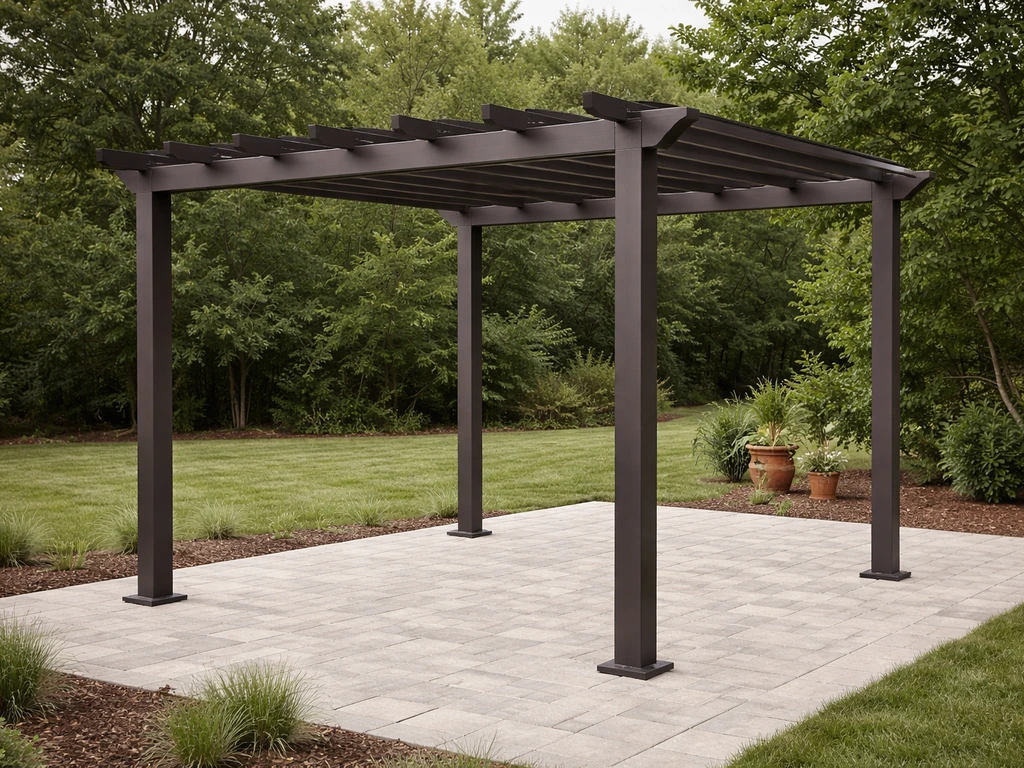
A freestanding pergola stands on its own four (or more) posts, fully independent of the house. This gives you the most flexibility in placement, you can put it over a detached patio, in the middle of a yard, or over a hot tub. The trade-off is that it requires independent footings engineered to handle both the structure's dead load and wind shear forces. If you want to grow climbing vines on it, plan for beefier post and beam construction from day one because a mature wisteria or Virginia creeper adds significant weight. Freestanding units are the most common DIY-friendly configuration because they don't involve attaching anything to your house.
Attached pergolas
An attached pergola connects one side to your home's exterior wall via a ledger board, with the opposite side on posts. This creates a seamless transition from the interior and is often the most visually integrated look. Because one side is supported by the house, you only need posts on the outward edge, which frees up more open space underneath. The downside: attachment needs to be done correctly and often triggers a building permit because you're connecting a structure to the home. It also means any water management issue becomes your house's problem if flashing and drainage aren't handled properly.
Retractable pergolas
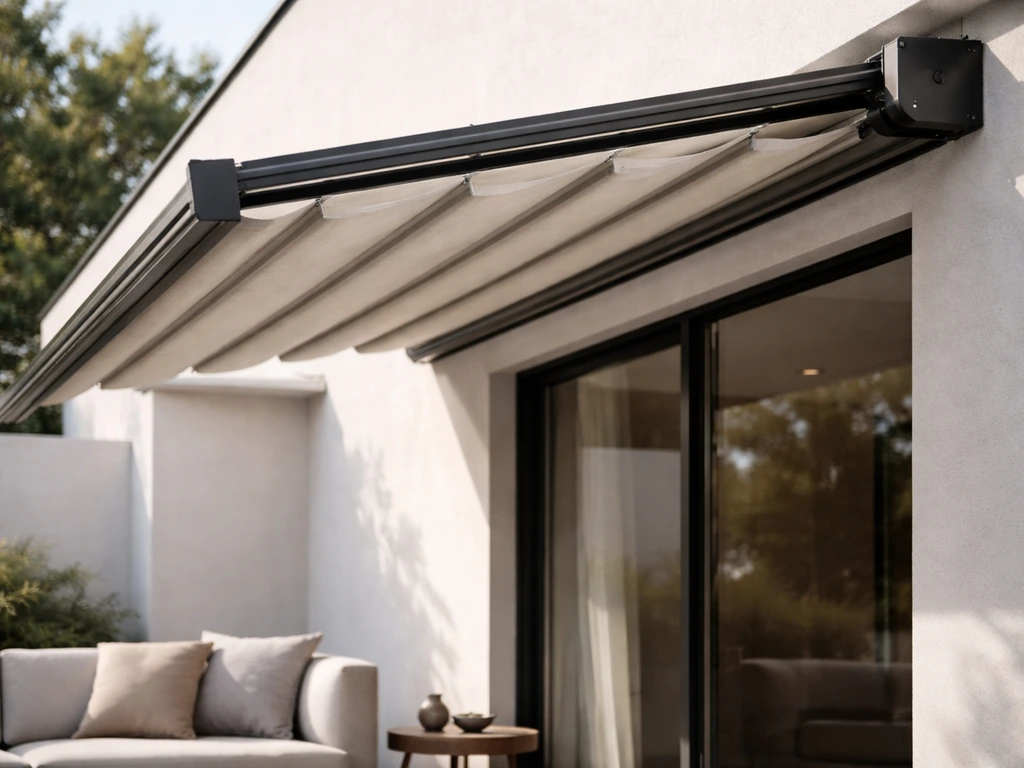
Retractable pergolas use a fabric canopy or sail that extends and retracts on a track system. They're generally the most affordable way to get adjustable shade and they look clean when retracted. The major limitation is weather performance: fabric canopies provide good sun filtering but offer no meaningful rain protection and need to be retracted at wind speeds above roughly 25 to 30 mph. If you're in a region with unpredictable weather or frequent wind events, a retractable fabric system will spend a lot of time retracted. They're best suited for mild-climate patios where you want flexibility rather than year-round protection.
Louvered pergolas
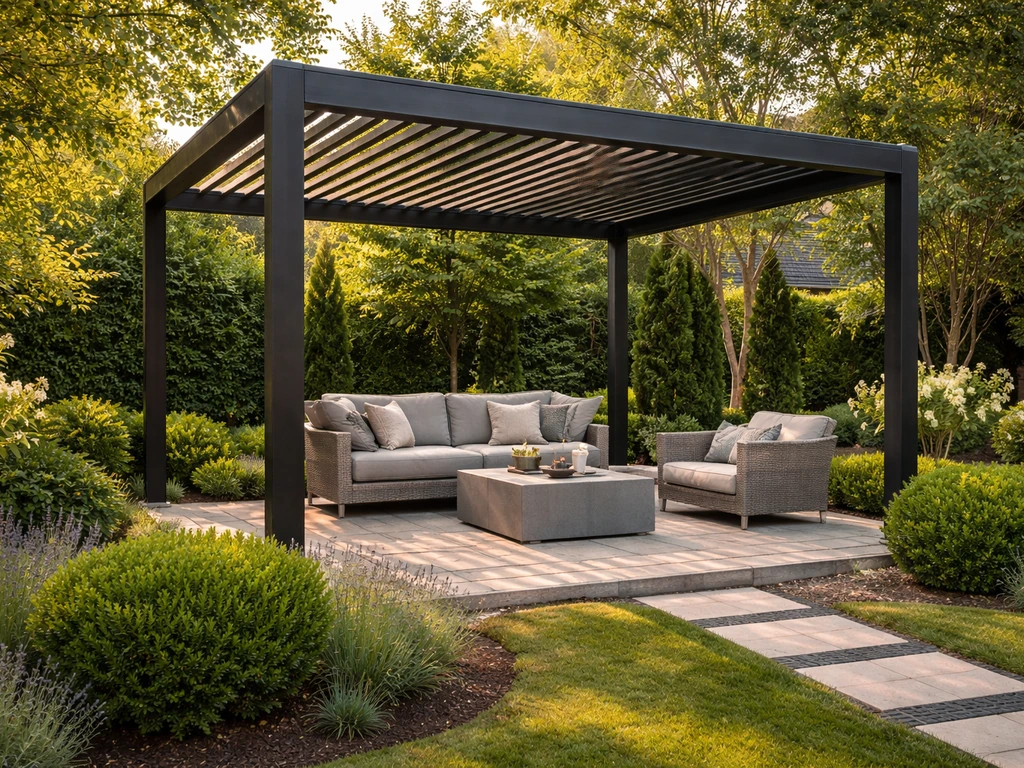
Louvered pergolas have adjustable roof slats that rotate open for ventilation and close to block sun or rain. When fully closed, the louvers form a watertight seal and channel water away through an integrated drainage system. This is the closest you get to a true four-season outdoor room without building a full enclosure. Motorized versions can be controlled via remote or phone app and some include wind and rain sensors that auto-close the louvers. They're the most expensive option by a wide margin, but for a patio you use heavily, they earn their cost. HomeGuide’s cost guide lists installed price ranges by size and roof type, including an example 10’x10’ louvered or motorized pergola pricing breakdown blank" rel="noopener noreferrer">Louvered pergolas are the most expensive option. If you're comparing screened enclosures or full patio rooms, louvered pergolas sit in an interesting middle ground: more weather-capable than a basic pergola but more open-feeling than a full enclosure. If you're specifically comparing patio mate screened enclosure reviews, focus on screening quality, airflow, and how well the enclosure keeps bugs and debris out over time.
Materials: wood, aluminum, vinyl, and steel compared
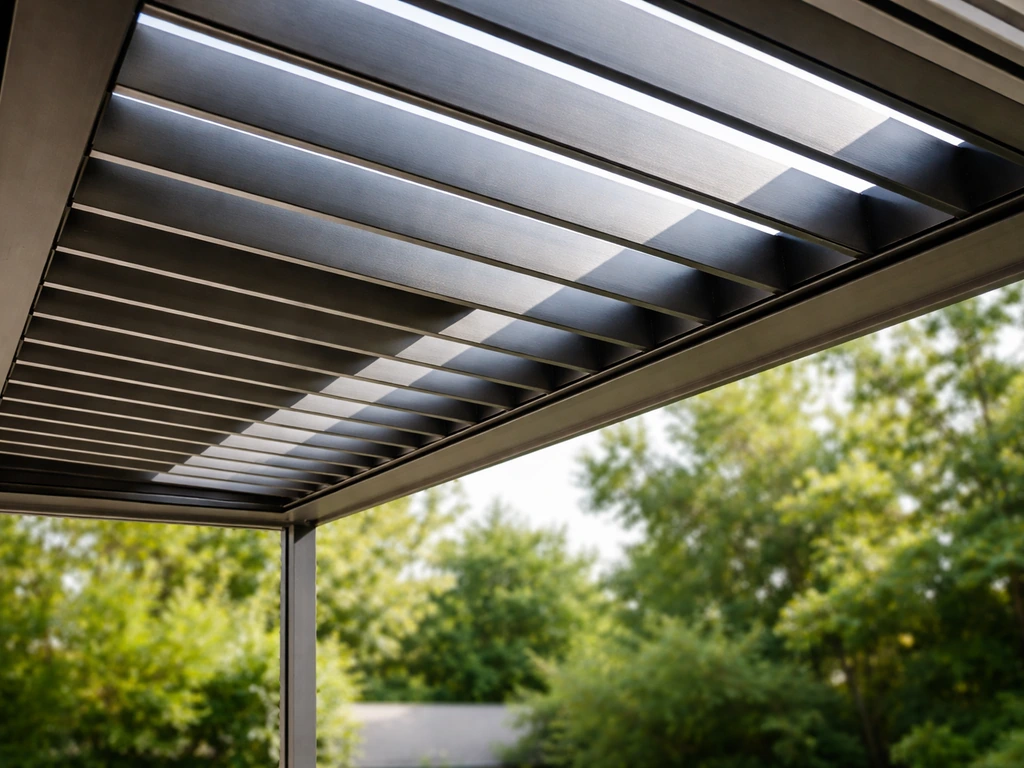
Material choice is one of the most consequential decisions you'll make and it's easy to default to wood because it looks familiar. Here's what each material actually delivers over time.
| Material | Typical Lifespan | Annual Maintenance | Weather Resistance | Best For |
|---|---|---|---|---|
| Wood (pressure-treated pine) | 5–15 years | 8–15 hrs/year, $300–$800 | Moderate (needs sealing) | Budget builds, DIY, dry climates |
| Wood (cedar/redwood) | 15–25 years | 6–12 hrs/year, $200–$600 | Better natural rot resistance | Traditional look, moderate climates |
| Aluminum (powder-coated) | 25–40+ years | Minimal (occasional wash) | Excellent, won't rot or rust | Low-maintenance, wet/humid climates |
| Vinyl/PVC | 20–30 years | Very low (wipe clean) | Good, won't rot or rust | Budget-friendly low maintenance |
| Steel (powder-coated) | 20–30 years | Low (touch up chips) | Good, check coastal exclusions | Heavy-duty looks, strength needs |
Wood is the entry point for most DIYers and it genuinely looks great when new, but a well-built wood pergola lasts only 5 to 15 years in most climates before it needs significant repair or replacement, and that assumes you re-stain and seal it every one to three years depending on sun and moisture exposure. If you skip that upkeep cycle, the clock accelerates fast. Make sure any wood in ground contact is rated for ground contact (check the end tag, not all pressure-treated lumber qualifies) because using the wrong treatment grade in a post footing is a common DIY mistake that leads to early rot.
Aluminum is the sweet spot for most homeowners who want durability without the maintenance grind. A quality powder-coated aluminum frame won't rot, won't rust in most environments, and typically outlasts wood by decades. Read warranty fine print carefully: most aluminum warranties include exclusions for salt-air and high-contaminant environments, so if you're within a mile or two of the coast, confirm coverage explicitly. Steel follows a similar profile but is heavier, which adds installation complexity, and coastal exclusions apply there too.
Vinyl is often overlooked but deserves consideration for budget-focused projects. It won't rot, doesn't need painting or staining, and is genuinely low maintenance. The limitations are that vinyl can become brittle in extreme cold, it doesn't carry the same premium look as wood or aluminum, and structural spans are typically shorter so it's less suited for large open-ceiling designs.
Roof options and how much shade they actually deliver
The frame gets all the attention but the roof covering determines how comfortable the space actually is. These are the four main approaches, ordered from least to most weather protection.
- Open slats: The classic pergola look with parallel rafters spaced 6 to 12 inches apart. These filter light and provide partial shade, but slatted roofs are designed for shade, not rain protection. Good for mild climates or spaces under tree cover where you just want to define the area.
- Fabric canopies and retractable shade sails: Better sun blocking than open slats, easy to adjust, and some UV-rated fabrics block 90%+ of UV radiation. No meaningful rain protection and need to be retracted in high winds. Great seasonal solution for mild climates.
- Polycarbonate and solid panel covers: Clear or tinted polycarbonate sheets over the rafter structure give you full rain protection with some light transmission. A solid wood or metal roof panel gives full rain and sun blocking. Rain protection depends on pitch and coverage: a pitch of at least 15 degrees helps water sheet off effectively. Good middle-ground option for year-round use in rainy climates.
- Motorized louvered roofs: The top tier. When fully closed, integrated louvers create a watertight seal and channel drainage through built-in gutters. Many high-end systems include four drainage points per module as best practice. Open the louvers for breeze and light, close them for full weather protection. The only option that truly adapts to conditions in real time.
One practical note on drainage: if you go with a solid or louvered roof, drainage design matters a lot. A roof that just dumps water off the edge will flood your patio during heavy rain. Quality louvered systems route water through internal channels to downspouts. Solid panel roofs need gutters added along the low edge, which is an easy addition but needs to be planned before installation.
What a pergola actually costs and what drives the price
Pergola pricing spans a wide range depending on material, size, and how much of the roof system is included. Here's a realistic breakdown for 2026 installed pricing.
| Pergola Type | Typical Installed Cost Range | Notes |
|---|---|---|
| DIY wood kit (open slat) | $1,500–$4,000 | Material cost only, your labor |
| Professional wood pergola | $3,500–$8,000 | Includes labor and basic footings |
| Aluminum kit (open or fixed slat) | $2,500–$7,000 installed | Per project, varies by size |
| Polycarbonate/solid roof aluminum | $5,000–$12,000 installed | Full rain coverage adds cost |
| Manual louvered pergola | $45–$110 per sq ft installed | Roughly $6,500–$16,000 for 12x12 |
| Motorized louvered pergola | $55–$95+ per sq ft installed | Full project often $12,000–$30,000+ |
A professionally installed pergola typically costs between $2,100 and $6,400 for a basic aluminum or wood structure. The number jumps fast when you add motorized louvers, integrated lighting, electrical runs, or a large footprint. The biggest single cost variable is the roof system: an open-slat pergola and a motorized louvered pergola of the same footprint can differ by $15,000 or more. Secondary cost drivers include site conditions (concrete footings vs existing slab anchoring), whether you need an electrician for lighting or fans, and permit fees which vary widely by municipality.
For budget-conscious homeowners, a wood or vinyl kit in the $1,500 to $4,000 range is legitimate if you're comfortable with basic construction and can commit to the maintenance. If DIY isn't your thing but budget is still a concern, a simple aluminum frame with a fixed slat or polycarbonate roof installed professionally in the $5,000 to $9,000 range delivers a durable, low-maintenance structure that will still be standing in 20 years.
Installation planning: permits, footings, and DIY vs contractor
Don't skip the permit question. Many homeowners assume small pergolas fly under the radar, but requirements vary dramatically by jurisdiction and getting caught with an unpermitted structure can complicate a home sale or insurance claim. Some cities (like Orland Park, IL) require permits for all pergolas, arbors, and shade structures without exception. Others, like Bend, OR, set thresholds: a permit is needed if the pergola exceeds 12 feet in height or covers more than 200 square feet. Smaller open-top freestanding structures may be exempt in some places, but confirm with your local building department before you buy. Attached pergolas almost universally require a permit because they connect to the home.
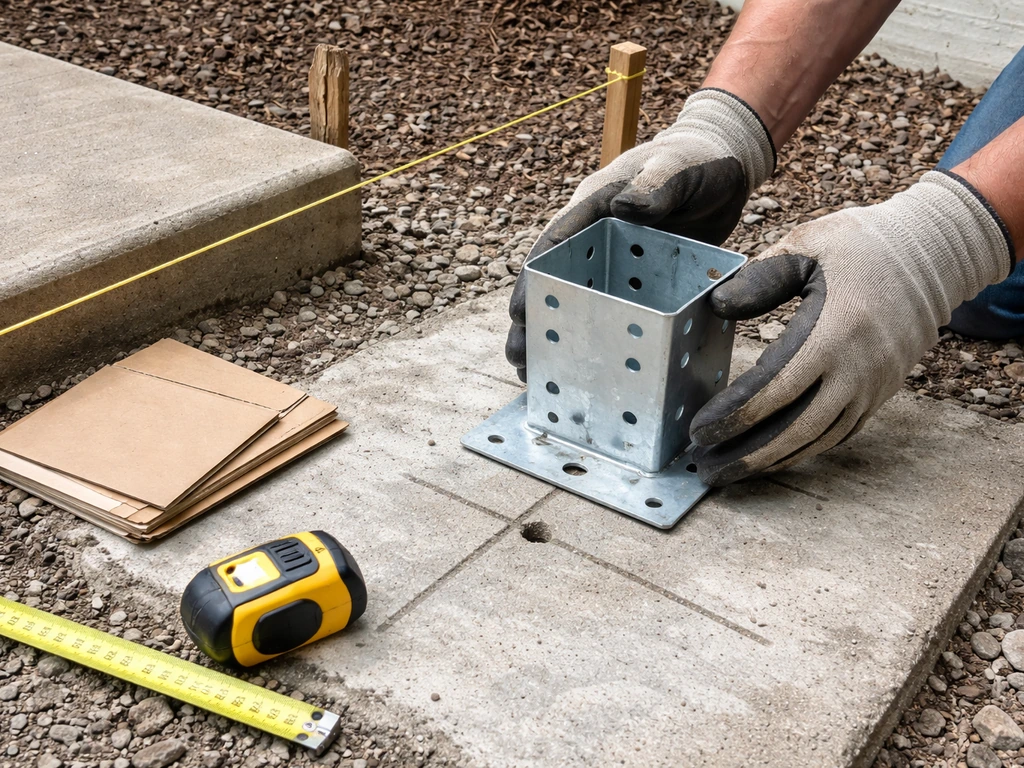
Footings and anchoring are where many DIY pergolas fail. Posts need to support the structure's weight (dead load) and resist wind shear and frost heave, not just sit on the surface. The minimum live load standard for patio covers under building codes is 10 psf (pounds per square foot), and if you're in a snow region, that load goes up. Frost-depth footings require digging below the frost line, which in the Midwest can be 36 to 42 inches. If you're anchoring to an existing concrete slab, use engineered post bases per manufacturer specs, not just a sleeve and bolt. Simply attaching a post to a slab with a basic bracket is not adequate for most wind conditions.
Here's a practical pre-installation checklist to work through before you order anything.
- Measure your patio footprint and identify post placement locations (avoid landing posts over underground utilities or directly at a slab edge)
- Check your local building department's pergola permit thresholds and application requirements
- Determine your wind exposure category: IRC default is Exposure B (suburban/wooded), IBC default is Exposure C (open terrain), coastal areas often require higher-rated engineering
- If attaching to the house, confirm your ledger attachment point is structurally sound and plan for proper flashing
- Determine footing depth based on your local frost depth
- If adding electrical (lighting, fans, motorized louvers), plan conduit routing and schedule an electrician concurrently with installation
- Confirm any HOA restrictions on pergola height, materials, or color before ordering
For DIY suitability: a freestanding wood or aluminum kit with open slats is genuinely manageable for a capable DIYer comfortable with concrete work, post setting, and basic carpentry. Two people and a weekend is realistic for a 12x12 kit. Anything with a motorized roof system, electrical integration, attached footprint, or complex engineering should go to a contractor. The mistakes that happen in DIY pergola builds almost always involve underbuilt footings or improper attachment to the house, both of which are safety and structural issues, not just cosmetic ones.
Upgrades that make a pergola feel like a real outdoor room
A bare pergola frame is just a start. Upgrading to a more fully covered patio setup can help create better living patio rooms you can enjoy in more weather. The upgrades you add in the first year or two are what turn it from a structure into a space you actually want to spend time in. Here are the ones that make the biggest functional difference.
- Ceiling fans: A pergola fan rated for outdoor/damp or outdoor/wet use is one of the highest-return upgrades you can make. In warm climates, a good fan makes an 85-degree patio feel 10 degrees cooler. Size up: for a 12x14 pergola, use a 52-inch fan minimum. Plan the electrical run before installation.
- String lights and overhead lighting: Low-voltage LED string lights hung from beam to beam are inexpensive and create a finished look instantly. For a more permanent setup, hardwired fixtures mounted to the beams give cleaner lines and better task lighting over a dining table.
- Privacy screens and shade curtains: Outdoor curtain panels hung from a track on the inside of the beams add privacy from neighbors and block late-afternoon sun from the sides. Look for solution-dyed acrylic fabrics (like Sunbrella) that resist fading and mildew. For total insect and privacy control, motorized or zipper-track screens are a significant upgrade that overlap with full patio enclosure territory.
- Misters: In dry, hot climates (Arizona, Texas, Southern California), a misting system run along the inside beam perimeter can drop the perceived temperature by 15 to 20 degrees. They work best in low-humidity environments; in the Southeast, misters add humidity you don't need.
- Outdoor heaters: A pergola extends your season on both ends. Infrared ceiling heaters mounted to the overhead structure provide direct warmth without heating the open air around you. More efficient than standing propane heaters and cleaner looking.
- Shade cloth or polycarbonate roof panels: If you started with an open-slat frame and realize you need more sun or rain coverage, adding shade cloth panels (cut to fit between rafters) or polycarbonate panels over the top is a cost-effective upgrade that doesn't require replacing the whole structure.
What to look for in product specs and warranties
When you're comparing specific products, translate the spec sheet into real-world meaning. Here are the terms that actually matter and what they tell you.
- Load rating (psf): Minimum code for patio covers is 10 psf live load. If you're in a snow zone, the product needs to be rated at or above your local ground snow load, not just 10 psf. Ask for this spec explicitly, especially for louvered and solid-roof systems.
- Wind speed rating: Products should list the design wind speed they're rated for (in mph). Compare this against your local ASCE 7 wind speed, which your building department can provide. Coastal and high-wind areas need rated structures, not just 'suitable for outdoor use' language.
- Coverage dimensions (width vs projection): Remember that sizes are listed as Rafter x Beam or Projection x Width depending on the brand. A 12x16 from one company may describe the dimensions in a different order than another. Confirm which dimension is the depth into the yard and which is the width across.
- Beam spacing and span: Wider beam spacing means longer unsupported spans, which requires heavier framing. For DIY kits, confirm that the rafter and beam sizing matches your intended span without intermediate posts interrupting the layout.
- Drainage design: For any closed or semi-closed roof system, ask specifically how water is managed. Integrated gutters with downspouts are better than open-edge drainage. Best-practice louvered systems include multiple drainage points per module.
- Hardware and fastener quality: Stainless or hot-dipped galvanized hardware resists corrosion. Cheap zinc hardware will rust and stain the structure within two to three years, especially in humid or coastal climates.
- Warranty terms and exclusions: Read the exclusions, not just the headline warranty length. Most aluminum warranties exclude salt-air environments within a certain proximity to the coast. Steel warranties often have similar exclusions. Check whether the warranty covers fading (AAMA-rated coating retention is a better benchmark than generic 'fade-resistant' claims), structural defects, and hardware separately.
- Return and exchange policy: For kits, confirm what happens if parts arrive damaged or if dimensions don't fit as expected. Large freight shipments are hard to return, so buy from a supplier with clear policies and responsive customer service.
Before you commit to a product, run through this quick shortlist process: measure your patio and write down the exact footprint you need to cover, note your dominant sun direction and worst-case weather conditions, set your budget ceiling including installation and at least one or two upgrades (lighting, fan), then request quotes from two or three contractors or compare at least two to three kit specs side by side using the criteria above. If you're looking at higher-end louvered systems, the Mirador pergola line is one option worth reviewing in that category. For full enclosures or sunrooms, that's a different product category entirely with its own set of trade-offs worth exploring separately. If you’re considering elegant patio enclosures reviews instead of a pergola, focus on airflow, sightlines, and how well the system seals against rain and wind full enclosures. If you're considering a more solid, enclosed setup, it helps to compare champion patio enclosures reviews so you understand how different systems perform in real homes.
The bottom line: you don't need the most expensive pergola on the market to end up with a great outdoor space. You need the one that's correctly sized for your patio, built from a material that holds up in your specific climate, covered in a way that matches how you actually use the space, and installed with footings and anchoring that meet local code. Get those four things right and you'll have a structure that looks great and lasts for decades.
FAQ
How do I choose the right pergola size if I have an oddly shaped patio or existing furniture?
Measure the patio area you actually use, not the whole backyard, and then account for post footprint and walking space. A good rule is to size the pergola so posts land on solid ground away from step edges, and leave at least 2 feet of clearance behind seating so you can still move chairs in and out comfortably.
Will a pergola actually keep my patio dry in real rain, or will it still drip?
Even with an aluminum or louvered roof, consider how you’ll manage runoff and prevent water from dripping onto people or plants. If you plan to add a dining table near the edge, prioritize a roof that fully controls drainage to gutters or integrated downspouts, and place seating so it is not directly under the drip line.
What roof type is best if my main priority is protecting a dining setup from both sun and rain?
If you want to cover food or electronics, you need a roof system that closes fully (solid or fully closed louvers), plus drainage paths that direct water away. Open-slat designs reduce sun but will not reliably block sideways rain, especially with wind from the west or prevailing storms.
Can I upgrade a standard pergola later with heavier panels, motorized louvers, or lights without redoing the foundation?
Yes, and the common mistake is assuming “lighter” equals “easier.” Larger louvers, solid panels, and motorized systems increase dead load and wind load, so you may need bigger footings and different post spacing. Confirm the kit’s engineering loads match your local wind zone and snow or frost requirements before ordering.
What’s the safest way to anchor a freestanding pergola to an existing slab?
If your patio has existing concrete, anchoring is still code-driven. The safest approach is to use engineered post bases specified for your system and to follow manufacturer spacing and bolt patterns, rather than relying on generic sleeve-and-bolt setups that can loosen under wind or frost movement.
When does DIY stop being practical, and how do I decide whether I need a contractor?
For DIYers, the easiest path to avoid rework is to choose a configuration that matches your site constraints. If you cannot properly handle footing depth, frost, or ledger attachment details, stay with a freestanding kit and keep the design simple, or hire a contractor for structural work while you handle non-structural finishes.
Is a retractable pergola worth it if my area gets occasional strong wind gusts?
Yes, retractable fabric works best when you treat it as adjustable shade, not a storm shelter. If you routinely experience winds above about 25 to 30 mph, you’ll spend more time retracting, so a louvered or solid roof that can close or shed water will be more dependable.
Do motorized louvered pergolas with wind or rain sensors fully eliminate manual adjustments?
Louvered pergolas can auto-close with sensors, but sensors do not remove the need for correct installation and drainage design. Make sure the system includes wind and rain sensor capability that matches your climate, then verify placement so the runoff drains away from the patio surface and not back toward doors.
How should I compare warranties when I’m choosing between aluminum, steel, and wood?
Start by checking the warranty exclusions you care about, then match them to your environment. If you are within a mile or two of the coast, confirm coverage explicitly for salt air, and for wood, confirm what upkeep intervals the warranty expects so you don’t void coverage by missing re-stain or seal windows.
What permit details are easiest to miss, and what should I ask my local building department?
Don’t assume permit “thresholds” are consistent across cities. Attached pergolas almost always require review, and freestanding units may too depending on height, coverage area, and local definitions of shade structures, arbors, and accessory structures. Verify with your building department before you buy.
I want climbing vines on my pergola, what design changes should I make from day one?
If you’re growing vines, plan for structural capacity and future loads. Mature vines and irrigation can add weight and stress, and you may need stronger posts and beams than a standard shade-only design, plus clearance so vines can trail without damaging gutters or siding.
What upgrades give the biggest comfort improvement in the first year?
Look for an upgrade path that improves comfort without forcing you into full enclosure complexity. Common high-impact add-ons include integrated lighting positioned for task visibility, ceiling fans sized to the covered area, and guttering plans for solid or closed systems, so the patio stays usable during heavier rain.
Next Articles
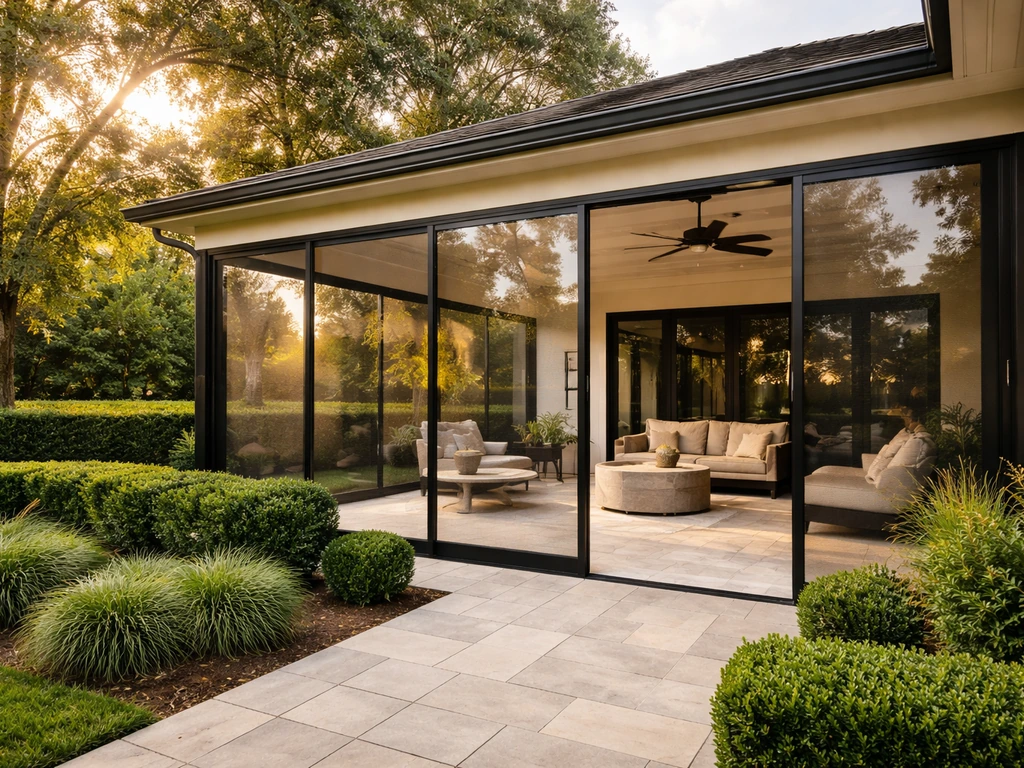
Elegant Patio Enclosures Reviews: Compare and Choose
Compare elegant patio enclosures by reviews: pros, complaints, best fit, and a checklist to choose wisely.
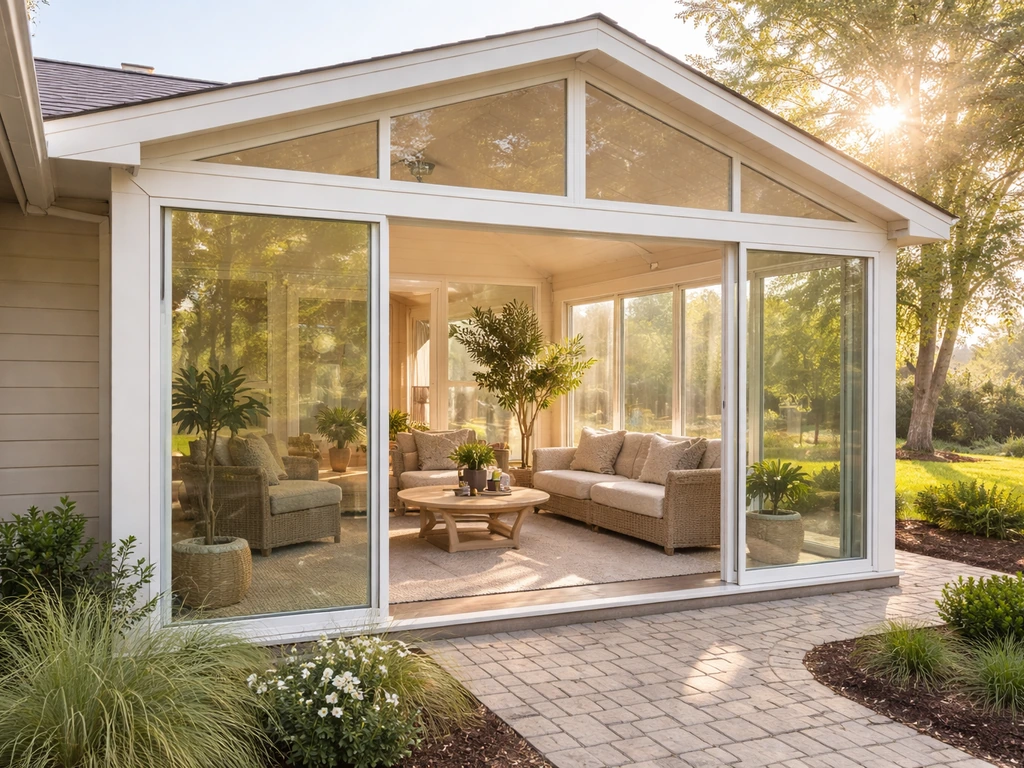
Better Living Patio Rooms and Sunrooms: Buyer Guide
Choose Better Living patio rooms or sunrooms with features, layout tips, climate fit, and how to compare quotes.
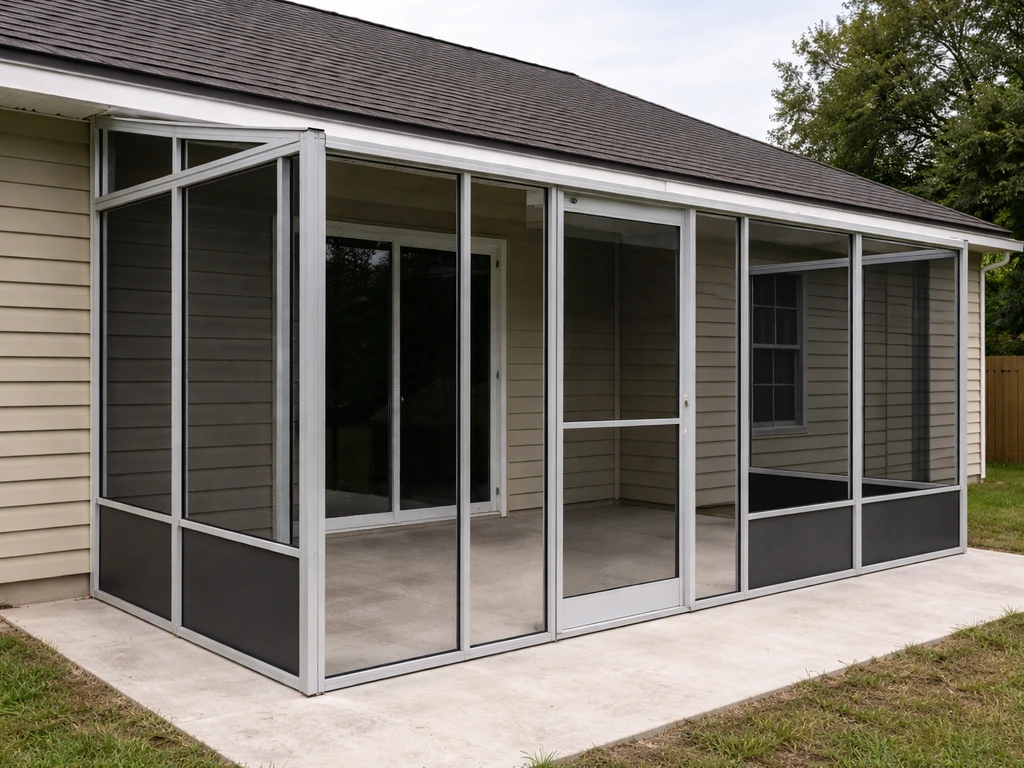
Champion Patio Enclosures Reviews: Pros, Cons, and Fit
Champion patio enclosure reviews with pros and cons, common complaints, fit tips, cost checklist, and climate performanc