For most windy areas, a solid-roof patio cover made from aluminum or steel, properly anchored with concrete footings and rated hardware, is the best choice. It handles uplift pressure, sheds wind-driven rain, and won't flap, tear, or become a projectile in a gust the way fabric covers and poorly anchored pergola panels can. That said, the 'best' cover really depends on how windy your specific site is, whether you're coastal or inland, and how much engineering you're willing to put into the installation. Choosing the best type of patio cover for your home comes down to wind performance, secure anchoring, and the right cover style for your climate. This guide walks you through every part of that decision.
Best Patio Cover for Windy Areas: Materials, Design, and Install

Phoebe Foster
11 Jun 2026
How wind actually damages patio covers
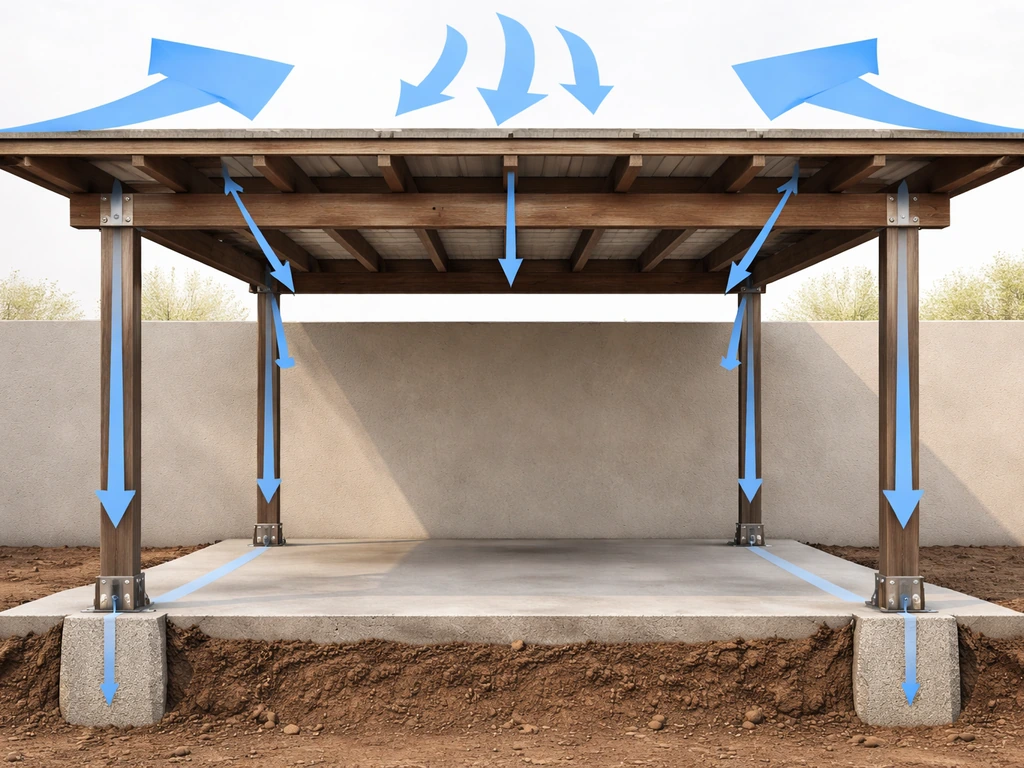
Wind doesn't just push on things sideways. When wind hits a roof surface, it creates uplift pressure underneath the cover, which tries to peel the whole structure away from whatever it's attached to. The IBHS (Insurance Institute for Business & Home Safety) is very direct about this: a poorly connected overhang can detach from the building and become large airborne debris, damaging the primary structure on its way off. That's not just a patio problem, that's a whole-house problem.
There are four main failure modes to understand. First, uplift: air accelerates over the top of the cover and creates a pressure differential that literally tries to lift the roof off its frame. Second, lateral loads: the same gust pushes sideways on posts and attachment brackets, bending or shearing them. Third, wind-driven rain and debris: high-velocity water and airborne objects punish gaps, seams, and lightweight panel materials. Fourth, fatigue: repeated gusts create vibration cycles that loosen fasteners and crack brackets over time, even when no single gust was catastrophic. The IBC (International Building Code) addresses all of these, requiring patio covers to resist dead loads plus a minimum 10 psf vertical live load and to withstand minimum code-defined wind loads based on your location.
Where a cover is attached to the house matters enormously. A ledger board bolted to the rim joist is only as strong as those bolts, that joist, and the connection between the joist and the foundation. Connection failures are what IBHS consistently flags as the primary reason patio covers detach in storms. The frame and materials get a lot of attention in marketing, but the connection hardware and anchoring is where covers actually succeed or fail.
Solid roof vs. pergola vs. awning: which wins in wind?
Each cover type handles wind differently, and the gap between them is larger than most people expect. Here's a practical breakdown.
Solid-roof patio covers
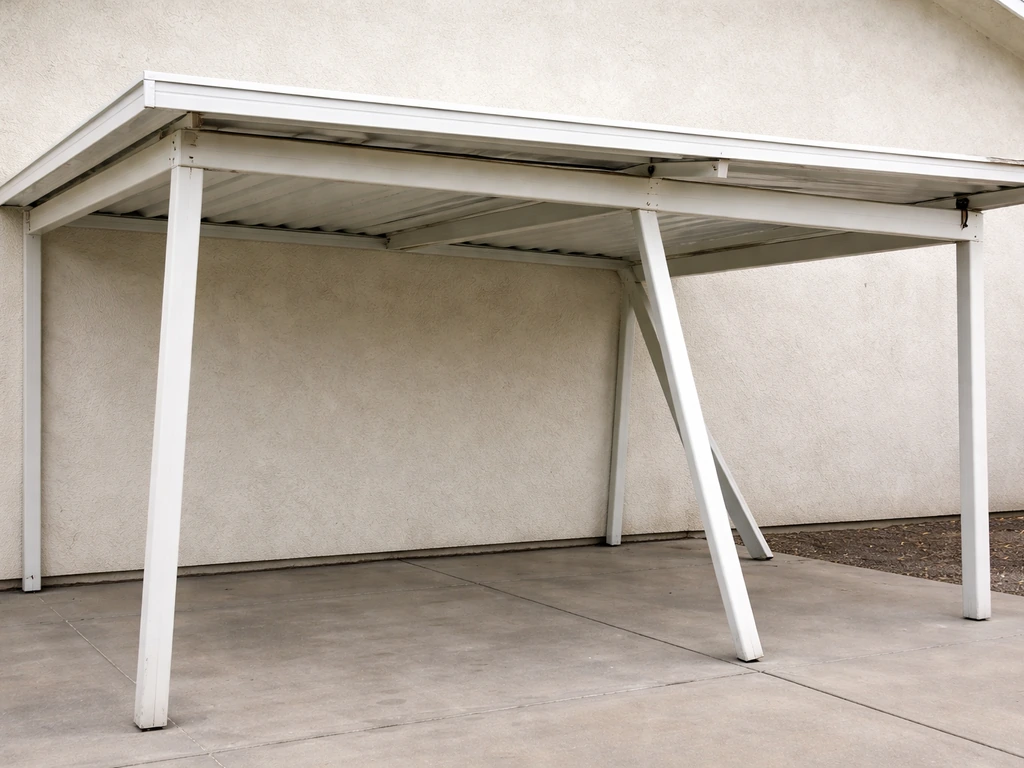
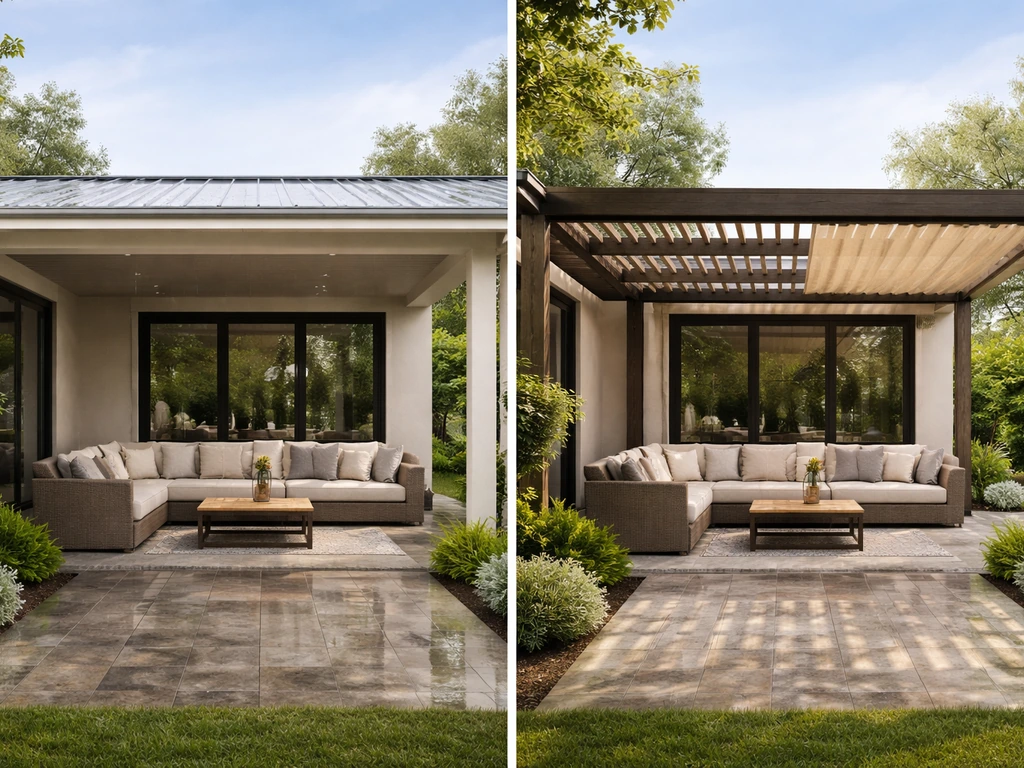
A fully enclosed solid roof, whether it's aluminum panel, polycarbonate, metal roofing over a steel frame, or a full patio room addition, is the strongest wind performer. The surface is continuous, so there are no fabric edges to catch air, no gaps for wind to accelerate through, and the load path from roof panel to rafter to post to footing can be fully engineered and code-compliant. This is the structure that can be built to specific wind-speed ratings verified by third-party testing. If you're in a coastal zone, a hurricane-prone region, or a high plains area where sustained 60+ mph gusts happen regularly, a solid-roof cover with proper anchoring is the right answer.
Louvered and motorized pergola systems
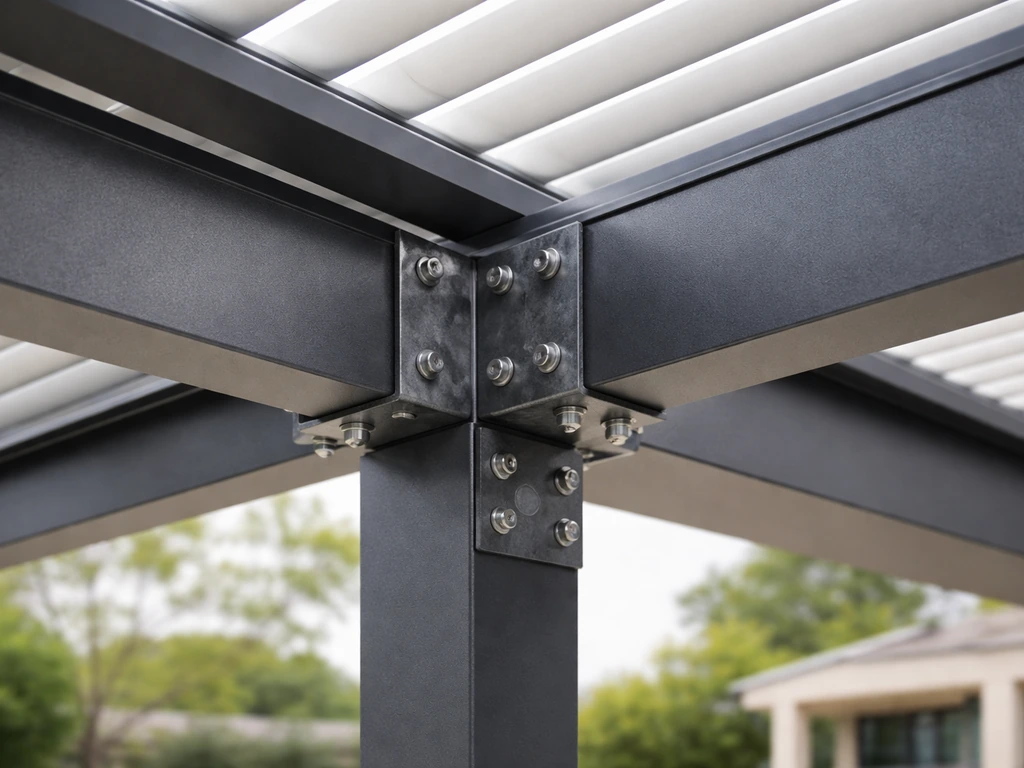
Motorized louvered pergolas sit in an interesting middle ground. When the louvers are closed, they act similarly to a solid roof and can be engineered to impressive wind ratings. One product category (motorized aluminum louvered systems) makes claims as high as 190 mph wind ratings when properly installed. When the louvers are open, though, the structure behaves more like a pergola and the wind loading drops significantly because air passes through. Many manufacturers require louvers to be opened at sustained winds above 45 mph to avoid overloading the system. That operational dependency is worth understanding: you need to actually be home and manage the system during a storm, or rely on an automated wind sensor. If you want both weather coverage and reasonable wind performance, a motorized louvered system from a manufacturer with ICC-ES evaluation documentation is a serious option, just verify the rated wind speed applies to your local exposure category.
Open pergolas
A traditional open pergola (the kind with spaced rafters and no solid roof) actually handles wind reasonably well structurally, because wind passes through the frame rather than pushing against a solid surface. The problem comes when homeowners add polycarbonate panels, corrugated roofing, or fabric panels to a pergola that wasn't engineered for that added load. You've suddenly created a sail effect on a structure built to handle minimal wind loads. If you want a pergola in a windy area, either leave it open or choose a pergola system that was designed and rated as a louvered/covered structure from the start.
Retractable awnings
Retractable awnings are the most vulnerable option in wind. The fabric creates a large sail surface, and the extension arms hold it out from the wall on lightweight pivoting hardware. Most manufacturers recommend retraction at winds above 20 to 25 mph. Wind sensors that trigger automatic retraction exist and are worth every dollar if you go this route. Fixed awnings are more rigid but still experience significant uplift and lateral loading, and the attachment to the fascia or wall is a common failure point. For occasional-wind areas where gusts are brief and predictable, retractable awnings work fine with sensors. For consistently windy sites, they're a compromise at best.
Shade sails
Shade sails are the most wind-risky option for permanent installation in a windy area. The curved fabric surface creates both direct pressure and uplift as air moves over and under it, and the anchor hardware at the corners is almost always the first failure point. Guidelines from shade sail manufacturers are honest about this: remove the sail when high winds are forecast, and don't rely on it as a permanent wind-resistant structure. In mild climates with occasional afternoon breezes, a shade sail can work beautifully. In genuinely windy areas, they're a seasonal accessory, not a permanent cover solution.
| Cover Type | Wind Performance | Best For | Main Risk |
|---|---|---|---|
| Solid-roof (aluminum/steel) | Best: fully engineered, rated | High-wind, coastal, storm-prone regions | Cost and permitting complexity |
| Motorized louvered pergola | Very good when closed, good when open | Moderate-to-high wind areas, year-round use | Requires sensor/management in storms |
| Open pergola (no roof) | Good (wind passes through) | Mild-to-moderate wind, aesthetic priority | Fails if panels added without re-engineering |
| Fixed awning | Moderate with proper anchoring | Moderate wind, seasonal use | Fascia/wall attachment is a weak point |
| Retractable awning | Poor without auto-retract sensor | Light wind, occasional use | Fabric and arms damaged above 25 mph |
| Shade sail | Poor for permanent installation | Mild climates, seasonal decoration | Hardware failure, must remove in storms |
Materials and frames: aluminum, steel, or wood?
Frame material is where a lot of homeowners make a choice based on looks and price without thinking about how it'll hold up after a decade of storm cycles. Here's what actually matters in a windy climate.
Aluminum
Aluminum is the most popular choice for patio covers in windy and coastal areas, and for good reason. It doesn't rust, it's light enough to keep dead loads manageable, and modern extruded aluminum profiles used by reputable manufacturers are engineered to specific load ratings. A powder-coated aluminum frame in a quality louvered system or solid-panel cover can hold up extremely well over 20+ years with minimal maintenance. The trade-off is that aluminum is less stiff per pound than steel, so heavier-gauge profiles and proper cross-bracing matter for larger spans. Stick with 6063 or 6061 series aluminum in structural applications, and look for wall thickness specs rather than just weight.
Steel
Steel framing gives you more structural depth for wide spans and can handle higher point loads at connection hardware. It's the right choice for very large covers, heavy roofing materials, or genuinely extreme wind zones. The downside is corrosion. In coastal salt air or humid climates, untreated or poorly coated steel will begin rusting within a few years, and rust at connection points undermines the fastener integrity that holds everything together. If you use steel, galvanized or hot-dip galvanized steel is the minimum for outdoor use. In coastal zones, stainless steel hardware at every connection point is worth the cost.
Wood
Wood pergolas and patio covers can be built to handle moderate wind loads, and properly engineered timber frames are beautiful and durable. The problem in windy areas is that wood's structural performance degrades with moisture cycling, and the connections (post bases, hurricane ties, lag bolt seats) are more vulnerable to corrosion than aluminum or stainless alternatives. In a dry inland climate like parts of the Southwest, a well-built wood cover with pressure-treated lumber and galvanized hardware performs reasonably well. In humid coastal areas or the Pacific Northwest, wood requires more maintenance discipline than most homeowners consistently apply. If you want wood aesthetics with better durability, many aluminum systems are available in wood-grain finishes that perform much better in harsh conditions.
| Material | Wind Strength | Corrosion Resistance | Maintenance | Best Climate |
|---|---|---|---|---|
| Aluminum (extruded) | Good to excellent (gauge-dependent) | Excellent | Low | Coastal, humid, all regions |
| Steel (galvanized) | Excellent | Good (galvanized), poor (bare) | Moderate | Inland, high wind zones |
| Wood (pressure-treated) | Good when properly detailed | Moderate | High | Dry inland climates |
| Vinyl/PVC | Fair (low-strength profiles) | Excellent | Very low | Light wind only |
Design features that make a cover wind-safe
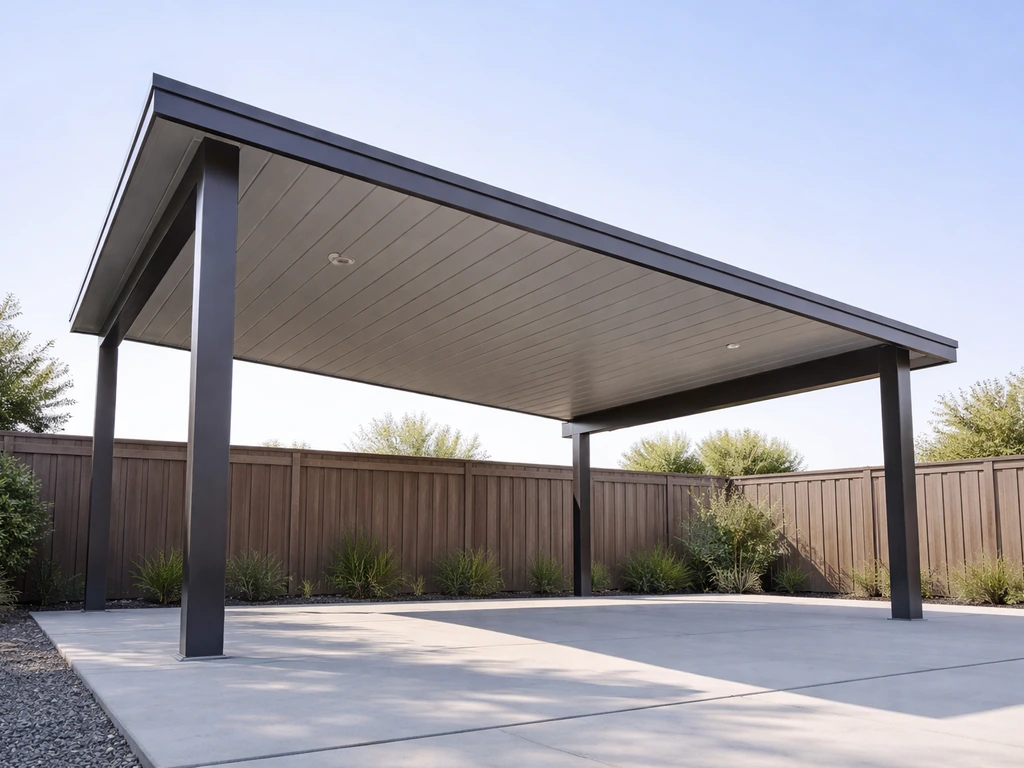
Even with the right material and cover type, poor design choices will create wind vulnerabilities. These are the features to prioritize.
Roof pitch and shape
A sloped roof sheds both water and wind pressure better than a flat surface. Wind loads create the highest uplift on flat roofs because air gets trapped underneath with no clear escape path. Even a modest 3:12 pitch (3 inches of rise per 12 inches of run) improves drainage and reduces the effective uplift coefficient. Hip roof shapes, where all four sides slope downward, outperform gable ends in wind because there's no large vertical face for wind to push against. If you're in a high-wind zone and have any choice in the roof profile, avoid a flat design.
Minimizing the sail effect
Any large continuous surface acts as a sail under wind load. Solid-panel roofs are unavoidable here, which is why anchoring matters more with them. For open structures, keeping the sides open rather than screening or wrapping them significantly reduces lateral loading. If you do want screened sides, screen panels need to be specifically designed for wind loads, using framed screen systems with allowable pressure ratings, not just stapled fabric.
Orientation to prevailing wind
Before you finalize placement, identify the direction your worst wind comes from. In Texas, that's often the south and southwest. In coastal New England, it's northeast storms. On the high plains, it varies by season. Positioning the short edge of a rectangular cover into the prevailing wind direction reduces the total surface area exposed. It's a small but real improvement, and it's free.
Ventilation and pressure relief
Solid roof covers can benefit from ventilation gaps at the ridge or perimeter, which allow pressure to equalize instead of building up underneath the roof. Some aluminum panel systems include integrated ventilation channels for this reason. It's not always possible or necessary depending on your design, but for large continuous roof spans in high-wind areas it's a meaningful detail.
Anchoring and connection design
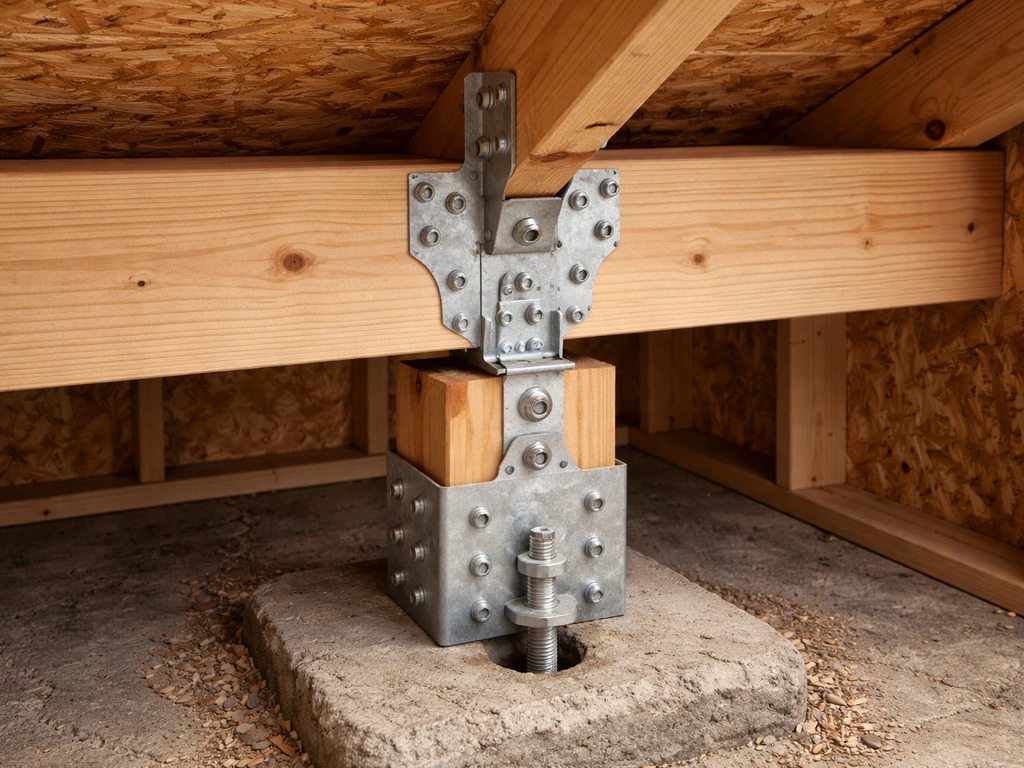
This is the single most important design feature. The load path from roof panel to rafter to beam to post to footing has to be continuous and rated. Every connection in that chain needs to be sized for both gravity loads and uplift loads. Hurricane ties at rafter-to-beam connections, rated post bases at the footing interface, and lag screws or through-bolts (not just wood screws or deck screws) at ledger attachments are the baseline. The IBC explicitly requires corrosion-resistant attachment hardware and permanently installed anchors for wind-load connections. This isn't optional and it's not just a code formality.
Installation and anchoring: what actually holds it down
Even a well-designed cover fails if the installation cuts corners. These are the specifics that matter.
Post spacing and sizing
Closer post spacing means shorter beam spans, which means lower bending loads in the horizontal members. For a wind-exposed cover, don't stretch posts to maximum spacing just to save material. The engineering tables for your specific product system will show allowable spans at given wind speeds. In higher wind zones, tighter spacing is almost always required.
Footing depth and size
In frost-free climates, IBC Appendix I allows some shallow footing options for patio covers, including slab-on-grade under certain column load limits. But for wind-exposed structures, a deeper concrete footing with the post anchor embedded (not surface-mounted) is significantly stronger against overturning. In frost-prone areas, footings have to go below the frost line regardless, which in the Midwest can mean 36 to 48 inches. When in doubt, go deeper and wider than the minimum. Post holes for a wind-exposed cover should be at a minimum 24 inches deep and 10 to 12 inches in diameter, with the post anchor fully embedded in poured concrete.
Ledger attachment to the house
Where a cover attaches to the house is the most critical connection of all. Lag screws into the rim joist or structural framing need to be properly sized, spaced, and torqued. Through-bolts are stronger. The ledger itself needs to be flashed to prevent water infiltration that will rot the framing behind it. Many home inspectors find that retrofit patio covers are attached with inadequate fasteners directly into siding or sheathing, bypassing structural framing entirely. That's a failure waiting to happen in any wind event.
Local codes and permits
Local permitting requirements are not something to skip in a windy area. Local jurisdictions use the IBC or IRC as a baseline, but many layer on additional requirements for their specific wind zones. Coastal communities in Florida, the Carolinas, and Texas have stricter wind provisions than the base code. Orange County, California, for example, requires patio covers to comply with CBC wind and seismic provisions. Getting a permit means a plan check and an inspection that verifies your connection hardware, footing depth, and structural sizing. That's actually worth it in a high-wind area, both for safety and for insurance coverage if a storm does cause damage.
- Check your local jurisdiction's wind speed zone (ASCE 7 wind maps or your local building department)
- Determine if you're in a special wind region, coastal high-hazard area, or hurricane zone
- Pull the permit before starting, not after
- Request a structural plan review for any attached cover over 200 sq ft
- Schedule a framing inspection before closing up any connections you can't later inspect
What to actually look for when shopping
Wind-rating claims in patio cover marketing are all over the place. Here's how to separate real engineering from marketing language.
What 'wind-rated' should actually mean
A credible wind rating comes from third-party testing and evaluation under a defined standard. The ICC-ES acceptance criteria AC340 is the governing framework for patio cover wind and snow load performance in the U.S. An ICC-ES evaluation report (like ESR-2676 series documents) specifies the design wind speed, the exposure category, and the exact conditions under which the rating applies. Crucially, each covered structure should have a permanent decal or tag showing the allowable design wind speed and exposure category. If a manufacturer can't point you to an ICC-ES report with a specific design wind speed and exposure category, the wind rating claim is marketing, not engineering.
Understanding wind speed numbers
Per ASCE 7-22, basic wind speed is defined as a 3-second gust speed in mph at 33 feet above ground in Exposure Category C (open terrain). That's the standard basis for most code calculations. When a product claims '190 mph wind rated,' you need to ask: tested under what exposure category, at what height, and with what installation conditions? A rating achieved in Exposure C at a specific post spacing and footing depth may not apply to your specific installation if you deviate from those conditions. Check the evaluation report for the exact parameters.
Shopping checklist
- ICC-ES evaluation report (ESR number) with specific design wind speed and exposure category
- AC340 compliance documentation for patio cover wind and snow loads
- Permanent decal/tag requirement on finished structure showing rated wind speed
- Hardware specs: galvanized, hot-dip galvanized, or stainless steel at all connection points
- Post anchor type and rated capacity (not just the post size)
- Footing requirements spelled out in the installation manual, not just 'anchor as required'
- Warranty that specifically addresses wind damage (and what voids it)
- Whether the wind rating requires a specific post spacing, footing depth, or exposure category to be valid
- For motorized systems: wind sensor compatibility and the recommended maximum wind speed for open vs. closed operation
DIY vs. hiring a contractor: be honest about the risks
DIY patio covers are genuinely achievable for moderate wind areas if you're comfortable with basic concrete work, post setting, and following an engineered kit's instructions exactly. Several aluminum patio cover kit systems are designed for homeowner installation and include pre-engineered components with rated connection hardware. The key word is 'exactly.' Skipping or substituting steps in the installation manual of an engineered system voids the wind rating and potentially your insurance coverage.
Where DIY becomes genuinely risky: any attached cover over about 200 square feet, any project in a hurricane zone or coastal high-hazard area, any project requiring a footing deeper than 24 inches in dense soil or with frost-depth requirements, and any project where the house's existing ledger or rim joist condition is unknown. In those cases, the cost of a structural engineer reviewing your plans (typically $300 to $700 for a patio cover drawing review) is cheap insurance. A licensed contractor for a full installation on a mid-size aluminum cover system in a high-wind area typically runs $8,000 to $18,000 depending on region and complexity, versus $2,500 to $6,000 for DIY materials on a comparable kit. That gap is real, but connection failures cost more.
Permitting is required in most jurisdictions for any permanently attached cover regardless of size. 'Unpermitted' work can create problems at resale and may mean your homeowner's insurance won't pay a claim for storm damage. If you're in a high-wind area, that's not a theoretical risk. Pull the permit. If your jurisdiction requires engineered drawings and you're doing DIY, use an online structural engineer review service or hire a local engineer for a plan stamp. It's worth it.
Keeping it in shape after storms
Even a well-built cover needs ongoing attention to stay wind-safe over time. The connections that fail in year eight usually showed early signs in year three that nobody noticed.
After every major storm
- Walk the perimeter and check every visible fastener and bracket for displacement, loosening, or cracking
- Check the ledger flashing for gaps or lifted sections that could allow water infiltration
- Inspect post bases for standing water, rust staining, or concrete cracking
- Look for any roof panel movement, lifted edges, or displaced clips
- For louvered systems: cycle the louvers through open and closed to confirm motor function and check for bent blades
Annual maintenance
- Re-torque visible lag screws and structural bolts at the ledger (they can back out slightly over seasonal temperature cycles)
- Inspect and reapply sealant at any ledger-to-wall penetrations
- Clean aluminum frames with mild soap and water to remove salt deposits in coastal areas (salt accelerates corrosion at hardware even on 'rust-proof' aluminum)
- Treat any rust spots on steel or galvanized components with a cold galvanizing compound immediately
- For wood components: check for soft spots, check end-grain sealing, and re-apply penetrating sealer every 2 to 3 years
- Inspect and replace any missing or damaged post cap or base covers that shield the connection hardware from moisture
Seasonal prep in storm-prone areas
If you're in a hurricane region, pre-season preparation (May in the Gulf Coast and Southeast) should include a full inspection of all connections, a check of any retractable components, and confirmation that automatic wind sensors are functioning. Retractable awnings should be fully retracted and locked when a storm watch is issued, not just a warning. Shade sails should be taken down entirely before hurricane season if you live in a named-storm zone. For solid-roof and louvered covers, there's no seasonal takedown needed, but a pre-storm hardware check is still worth 20 minutes of your time.
Putting it all together: the decision path
Start by finding your local design wind speed. Your local building department can give you this, or you can look it up on the ASCE 7 wind speed maps online by zip code. If your design wind speed is below 90 mph, most well-installed aluminum solid-roof or louvered pergola systems will serve you well. Between 90 and 120 mph, you need ICC-ES-evaluated products with verified installation requirements and a permit. Above 120 mph, particularly in a coastal high-hazard zone, hire a structural engineer to design the anchoring and review the product selection. The material choice question for most homeowners comes down to aluminum (best all-around for maintenance and corrosion), steel (for very large spans or extreme loads), and wood (for moderate climates with a willingness to maintain it). If you're still comparing options, use these best patio cover ideas as a quick shortlist alongside the right materials and wind-rated anchoring. When you're trying to choose the best material for patio cover in a windy or coastal area, aluminum is often the strongest practical baseline to start from aluminum (best all-around for maintenance and corrosion). If you're comparing options for different seasons or climates beyond just wind, the considerations for winter snow loads and summer heat overlap with wind performance in ways worth exploring alongside this guide. For winter specifically, you should also verify the same cover has an engineering-based snow-load rating for your area, not just wind performance.
The bottom line is that the cover type and material matter, but the anchoring and connection quality is what determines whether it stays on your house or ends up in your neighbor's yard. Don't buy the most expensive louvered system on the market and then let an installer skip the footing depth specs. Get the evaluation report, pull the permit, use rated hardware, and inspect it every year. That combination will outlast almost anything the weather throws at it.
FAQ
How do I know whether a patio cover’s advertised “mph rating” actually applies to my property?
If you do not have a current design wind speed for your exact zip code, ask your building department for the “design wind speed” and exposure category used for permit plans, or look up your local requirement and match it to the product’s ICC-ES evaluation. A product can be rated for one exposure category but not automatically valid for your site if your exposure, post spacing, or footing depth differs from the tested installation conditions.
What connection failures happen most often in windy areas, and what should I inspect first?
For wind safety, the attachment to the house usually matters more than the roof material itself. Common weak points include ledger fasteners landing in only sheathing, attachment to siding, or skipping through-bolts when the kit requires them. Ask your installer to confirm where each connection is made, what member it is anchored to (rim joist, engineered beam, or structural framing), and to show torquing/spec documentation.
If my area has both snow and wind, can I rely on wind ratings alone?
Yes, wind and snow ratings are separate engineering checks, even if the cover looks similar. In many regions a solid-roof cover may handle high wind but fail an unverified snow-load scenario (or vice versa). When comparing products, ensure the same ICC-ES or engineering documentation includes the snow-load requirement for your area, not just wind.
Can motorized louvered pergolas handle hurricanes reliably without constant human monitoring?
Even in a hurricane region where you may prioritize solid roofs, motorized louvered systems can work well only if you follow the operational rules in the evaluation documentation. Key details to confirm are the wind-sensor set points, whether the system must be put into a specific louver position during a watch, and what happens if power fails (manual override, default position, and whether that default is safe).
Are screened-in patio covers a good idea for windy areas, or do screens create extra risk?
It depends on how the “enclosed” portion is built. Solid-roof and properly framed sidewalls perform best, but partially screened sides can still be risky if the screen system does not have a rated allowable pressure. If you want side protection, use framed screen panels designed for wind pressures and verify their integration with the cover’s engineered load path.
What are the biggest mistakes installers make that reduce wind resistance even if the cover is the right type?
A valid kit or custom design should specify allowable post spacing, footing dimensions, and anchor hardware based on uplift and lateral loads. If a contractor proposes wider spacing “to save money” or smaller footings “because the ground looks fine,” treat that as a red flag. Ask for the specific span and footing details tied to your design wind speed and exposure category.
Can I modify an engineered patio cover kit (post spacing, brackets, or roof pitch) and still keep the wind rating?
You should not assume every ICC-ES report automatically covers every installation configuration. Check the report for the required orientation, maximum span, post size, footing type, and the exact hardware included, then compare them to your site conditions. If you are changing roof pitch, cover size, beam layout, or attachment method, require a written engineering review or an approved substitution.
What should I check about my existing house structure before installing a windy-area patio cover?
If your patio cover is large or attached to an older house, wind uplift can reveal hidden issues like deteriorated rim joists, loose structural connections, or prior rot from water intrusion. Before installation, inspect or have an inspector evaluate the ledger area, flashing condition, and framing condition, then plan repairs before bolting anything in place.
What are the permit and inspection “must-haves” for insurance and storm coverage in high-wind zones?
Many jurisdictions will require permitting for any permanently attached cover, and some wind zones require engineered drawings even for “kit” installations. If a permit is required and the plan set or inspection does not match the product evaluation, coverage and resale documentation can become complicated after a storm. Confirm whether you need a signed-off engineering stamp for your specific design wind speed.
How often should I inspect a patio cover in windy areas, and what early warning signs should I not ignore?
Over time, loosened fasteners and changing clearances are common early signs. Use a simple seasonal checklist: look for gaps between components, verify that louvers are smooth to operate, confirm no visible movement at ledger connections, and re-torque or replace any corroded hardware as specified by the manufacturer or engineer. If you see rust staining around connection points, prioritize those connections first.
Next Articles
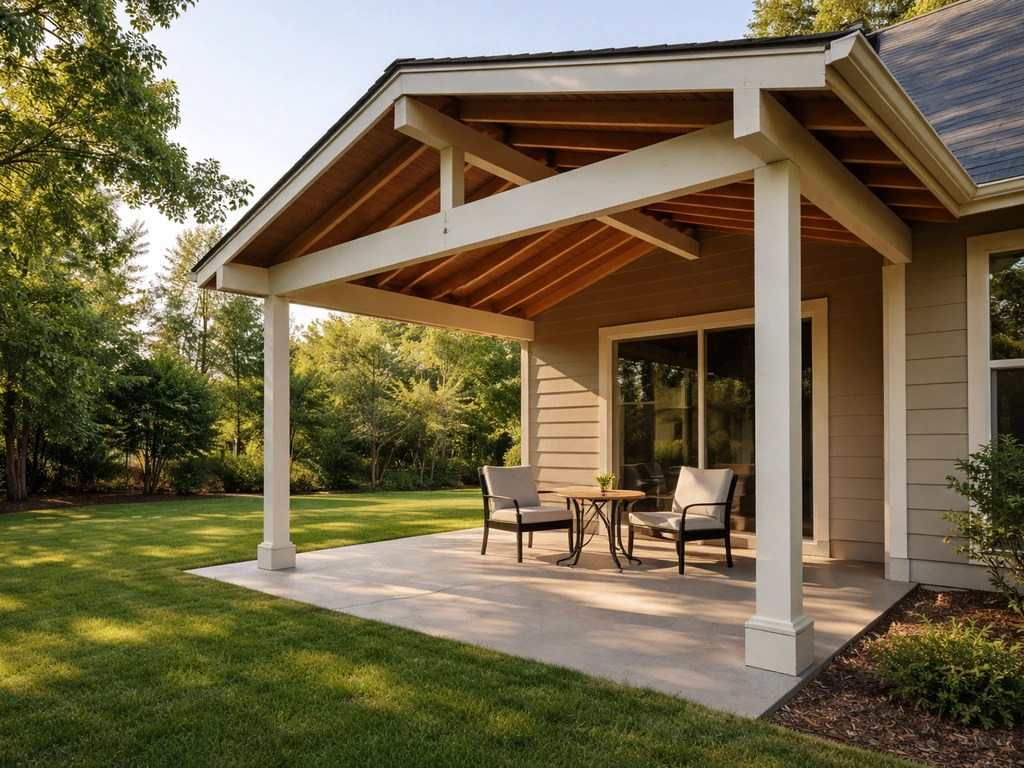
Best Patio Cover Ideas: Designs, Materials, Costs
Top covered patio cover ideas with roof styles, materials, costs, key specs, and DIY vs contractor guidance.
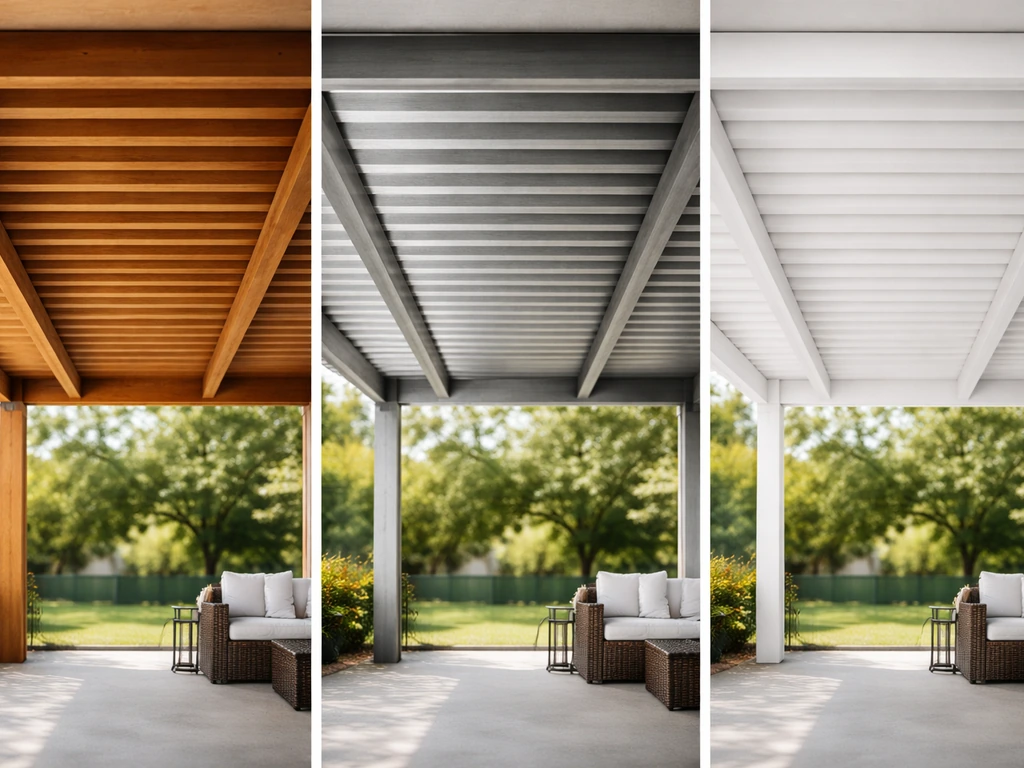
Best Material for Patio Covers: Wood, Aluminum, Vinyl
Compare wood, aluminum, vinyl and more for patio covers by durability, maintenance, wind, shade, light, insulation, and
Best Cover for Patio: Compare Types, Costs, and How to Choose
Compare patio cover types, costs, sizing, and climate fit to choose the best option for shade, rain, and longevity.