The best louvered patio cover for most homeowners is a motorized extruded aluminum system with integrated drainage, a wind rating of at least 90 mph, and a powder coat finish that meets AAMA 2604 or better. Top patio covers typically focus on ventilation and rain control, which is why a motorized louvered system is often the go-to choice louvered patio cover. If you want maximum flexibility with rain protection and year-round use, motorized louvers win over manual every time.
Best Louvered Patio Cover: How to Choose, Size, and Install

Phoebe Foster
27 Jun 2026
Budget somewhere between $6,500 and $18,000 installed for a mid-size space, or closer to $2,500 to $6,000 if you go the DIY kit route. The right choice depends on your climate, your patio size, and how much you want to spend, so let's walk through all of it.
What a louvered patio cover actually does
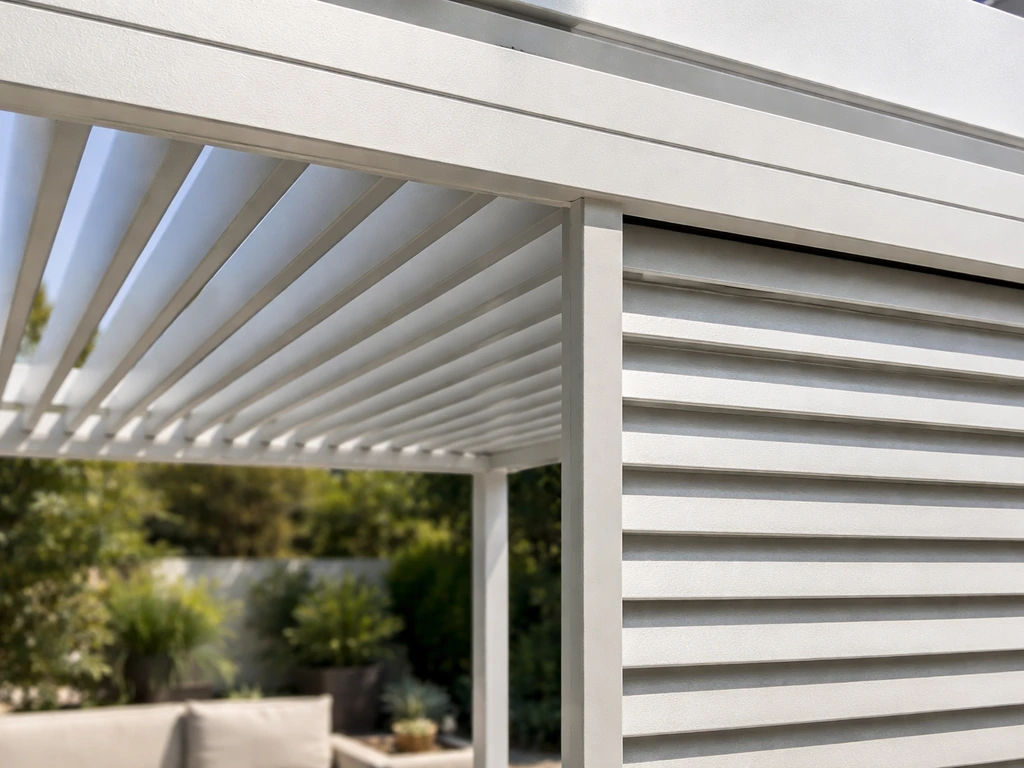
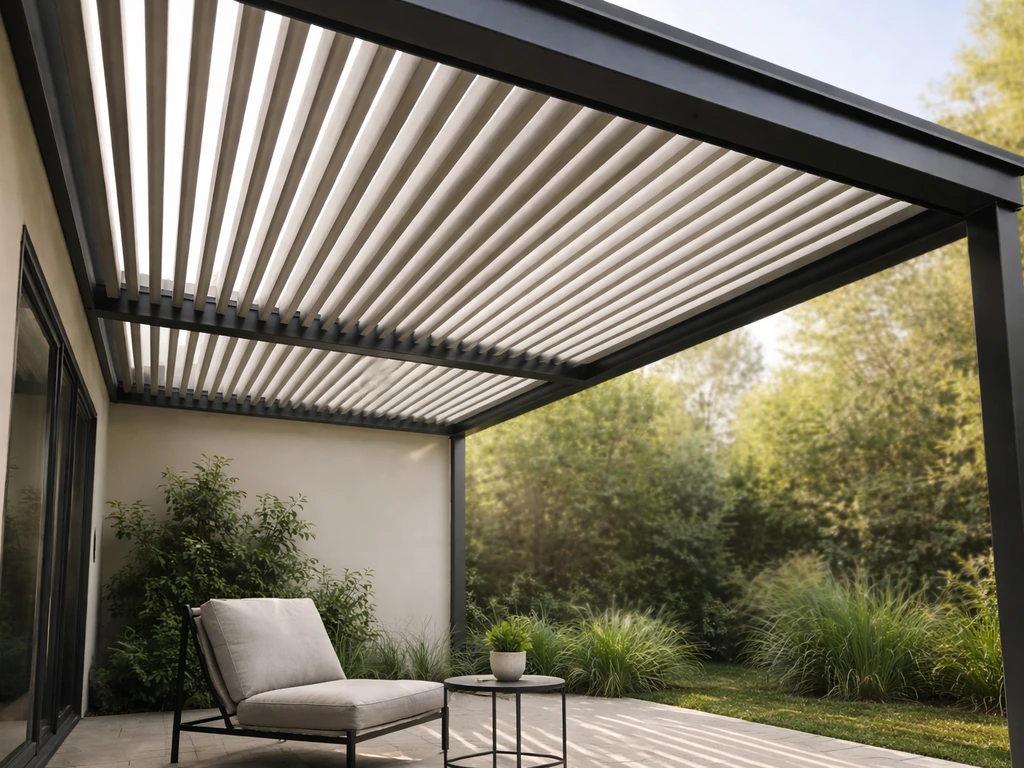
A louvered patio cover uses a series of adjustable aluminum slats (louvers) set into a structural frame. You rotate those slats from fully open, which lets in full sun and cross-breeze, to fully closed, which blocks rain and direct sun. That adjustability is what sets it apart from a solid pergola roof, polycarbonate panels, a retractable awning, or a shade sail. None of those let you dial in exactly how much light, air, and protection you want at any given moment.
When the louvers are open, air moves freely through the structure, which matters a lot in hot climates like Arizona, Texas, or the Southeast. When they're closed and the system is properly pitched with an engineered gutter and downspout setup, rainfall sheds off the louvers into perimeter gutters and drains away from your patio.
When louvers are fully closed and the system includes an engineered drainage approach that sheds water into perimeter gutters and routes it away via downspouts or drains, adjustable louvered pergolas can be designed to handle rain effectively engineered drainage approach that sheds rainfall into perimeter gutters and routes it away via downspouts or drains. This is the core value proposition: one structure that handles bright summer afternoons and rainy afternoons equally well.
The catch is that drainage only works well when the pitch, closure alignment, and gutter sizing are done right. Homeowners on forums have reported water pooling in the roof when installation tolerances are even slightly off, so this is not a product category where you cut corners on install quality.
Wind resistance is the other big piece. Quality commercial-grade louver systems are tested against standards like AMCA 550, which simulates wind speeds from 35 mph up to 110 mph while driving water at roughly 8.8 inches of rain per hour. What you see quoted as a "wind rating" on a product page ties back to this kind of testing. A system rated to 110 mph with louvers closed is a serious structure. Some manufacturers (Breslow's Azenco R-Blade line, for example) publish PE-stamped structural drawings to back up their 110 mph claims, which is the kind of documentation you want if you're in a coastal or hurricane-risk area.
Choosing the right louvered style for your space
Manual vs motorized
Manual louvered systems use a hand crank, pull rod, or lever to rotate the slats. They cost less upfront, have no electrical components to fail, and are perfectly serviceable for a covered patio you use occasionally. The limitation is convenience: if it starts raining while you're inside, you have to go out and close them. For daily use on a patio you live on, that gets old fast.
Motorized systems run on low-voltage motors (look for IP55 or better waterproofing rating on the motor itself), and many can be controlled via a wall switch, remote, or smartphone app. Some systems integrate with weather sensors that automatically close the louvers when rain or wind is detected. If you're spending $10,000 or more on a cover, the $1,500 to $4,000 upgrade to motorized is almost always worth it.
Open pergola-style vs more enclosed designs
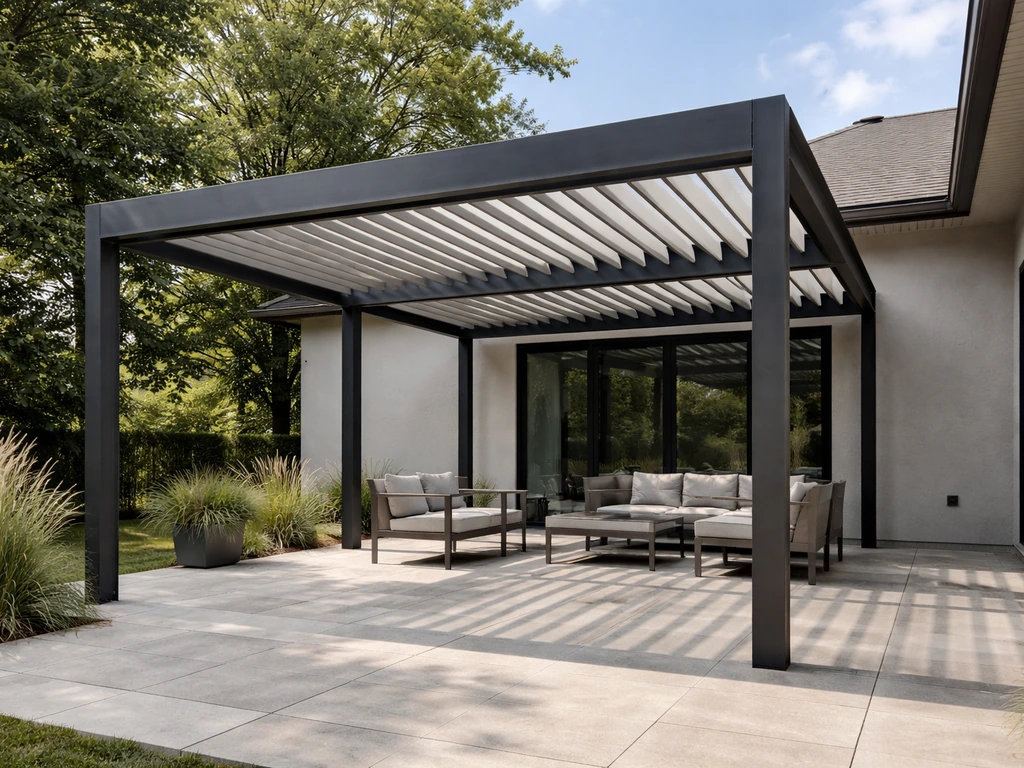
Most louvered covers come in an open pergola style: four posts, a louvered roof, and open sides. This maximizes airflow and works beautifully in dry or moderately rainy climates. If you're trying to answer what are the best patio covers for your home, focus on coverage quality, drainage, wind performance, and how much protection you need year-round. You can add privacy screens, retractable side curtains, or aluminum louver panels to the sides later, which is how most people gradually enclose their space over time. Fully enclosed louvered rooms with screened or glass-paneled sides exist too, but they push cost significantly higher and start crossing into permitted addition territory in many jurisdictions.
Material options
Extruded aluminum is the right material for virtually every homeowner reading this. It doesn't rot, warp, or corrode under normal conditions, it handles UV without fading if the coating is good, and it's structurally strong enough to meet code load requirements for patio covers. Some systems use hollow extruded louvers (dual-wall construction) which adds stiffness and helps with drainage routing inside the louver itself. Steel is heavier and used more in commercial applications. Wood looks beautiful but requires ongoing maintenance and doesn't hold up in wet climates without significant upkeep. Vinyl and polycarbonate systems exist at lower price points but can't match the longevity or wind ratings of aluminum.
How to measure and size your patio cover correctly
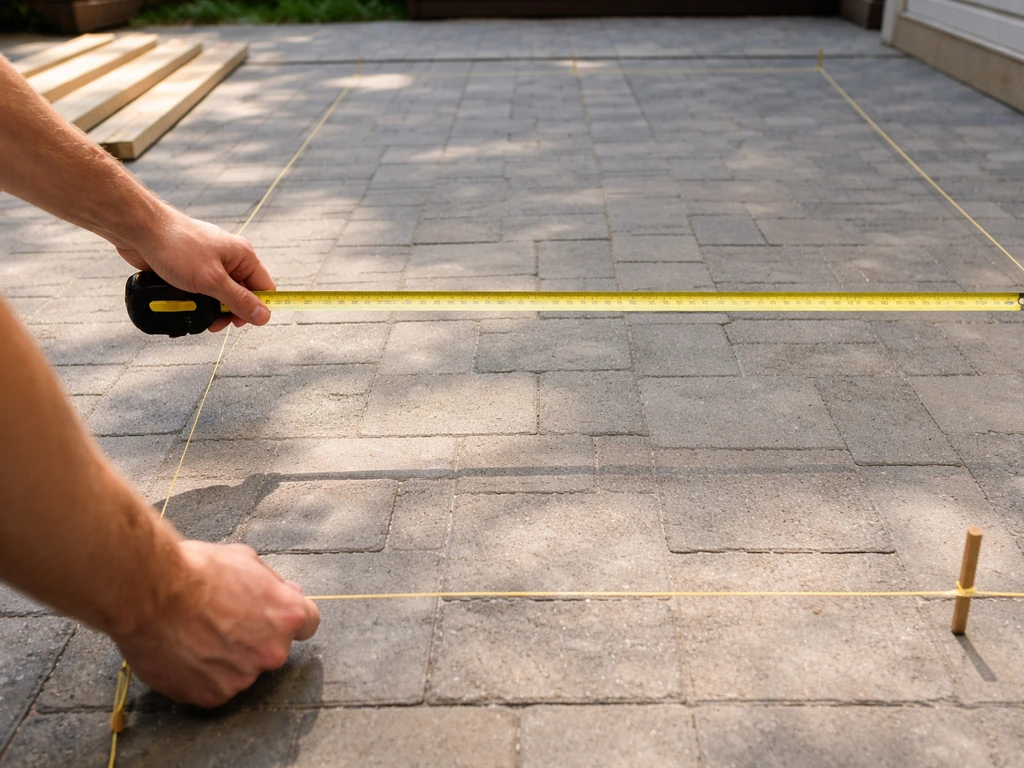
Get this right before you look at a single product page. Measure the width and projection (depth) of the area you want covered, then check whether your patio or deck is actually square. It often isn't, especially on older homes. If you're working with a kit, the manufacturer's guide will typically tell you that post spacing is based on your measured width, often a couple of feet shorter than your outer measurement to account for overhang. Do not assume square. Measure diagonally corner to corner in both directions and compare.
Clearance matters almost as much as footprint. The California Building Code (Appendix I) limits patio covers to one story and a maximum height of 12 feet, and most local jurisdictions follow similar rules. You need at least 7 feet of headroom (many cities specifically require 6 feet 8 inches minimum clear height), and you need to account for roof attachment point height at the house side, slope for drainage, and door/window clearance. A typical louvered cover slopes about 1 to 2 inches per foot toward the outer edge or toward a perimeter gutter. Factor that slope into your post height calculations on both ends.
For larger patios, you may need a multi-span layout with a center beam. This changes your structural requirements considerably and almost always requires a permit and engineered drawings. For spans over about 16 feet in any direction, ask for PE-stamped structural drawings from the manufacturer. Some manufacturers include these; others charge extra.
- Measure width and projection at multiple points, not just one
- Check for square by measuring diagonals in both directions
- Note the height of your roof attachment point and any eave obstructions
- Calculate post heights accounting for slope toward drainage
- Identify door and window swing clearances along the house wall
- For spans over 16 ft, plan for a center beam and confirm load requirements
What to look for when comparing products
Not all louvered covers are built the same, and the marketing language can obscure the real differences. Here's what actually separates a quality system from a mediocre one. A well-built setup and smart material choices are what make quality patio covers hold up and perform in real weather quality system.
Wind rating is the headline spec, but ask for it with louvers in the closed position and louvers in the open position. Some manufacturers only rate the structure in one configuration. Look for systems tested to at least 90 mph; coastal or hurricane-prone areas should push for 110 mph or higher with documentation. The blank" rel="noopener noreferrer">AMCA 550 standard is the benchmark for high-velocity wind-driven rain resistance, and products that reference it have gone through a more rigorous third-party evaluation than those citing only manufacturer claims.
Drainage design is where many cheaper systems fall short. Look for integrated through-post drainage that routes water collected by the perimeter gutter down through hollow structural posts to downspouts at the base. External gutter-and-downspout tack-ons work but look messy and can fail at connection points. Dual-wall extruded louvers that direct water internally to the gutter channel are a meaningful upgrade.
Coating quality determines how long the aluminum looks good. AAMA 2604 is the minimum standard you want for exterior aluminum powder coat. It's engineered specifically for weathering, humidity, and corrosion resistance. AAMA 2605 is the higher tier, designed for even more aggressive environments. For coastal installs with salt air exposure, push for 2605 or a Kynar-based finish. A system with a weaker coating will chalk, fade, and corrode within a few years of coastal exposure regardless of how strong the aluminum underneath is.
Motor quality matters for long-term satisfaction with motorized systems. IP55 is the minimum waterproofing rating you should accept for a motor that will sit in a wet environment. Better systems use fully sealed motors with drip loops in the wiring and fused power supplies. Confirm whether the system has a manual override if power is lost, since getting stuck with closed louvers during a power outage or motor failure is a real scenario.
Add-on compatibility is worth checking upfront. Many homeowners start with a louvered roof and later want to add side screens, lighting, ceiling fans, or heaters. Quality manufacturers design their extrusions with integrated mounting channels for these accessories. If you're buying a budget kit that wasn't designed for add-ons, retrofitting them later gets awkward and expensive.
| Spec | Minimum to Accept | Better | Best |
|---|---|---|---|
| Wind rating (closed) | 70 mph | 90 mph | 110 mph+, AMCA 550-tested |
| Powder coat finish | Basic exterior powder coat | AAMA 2604 | AAMA 2605 or Kynar |
| Drainage | External gutter/downspout | Integrated gutter channel | Through-post drainage, no external hardware |
| Motor rating | IP44 | IP55 | IP65+ with manual override |
| Engineering docs | None provided | Load calculations included | PE-stamped drawings, permit-ready |
| Warranty | 1–5 years | 10–15 years | 25–50 years on structure |
Cost breakdown: what you're actually paying for
Expect to pay $6,500 to $18,000 for a professionally installed motorized louvered pergola covering a typical 12x16 to 16x20 foot patio. Per square foot, installed costs run roughly $45 to $125 on the mid-range and up to $180 per square foot for premium custom systems. A small DIY kit (10x10 or 10x12) can come in around $2,500 to $5,000 in materials alone. Custom professionally installed systems for large or complex patios can exceed $30,000.
The motorization upgrade alone adds $1,500 to $4,000 to a manual system's price, depending on the number of motors, automation features, and sensor integration. That's a significant jump but one that most people don't regret once they're using the cover daily.
What drives cost differences: size (obviously), span complexity (multi-span layouts require heavier beams and more hardware), attachment method (freestanding vs house-attached, which affects footings), finish quality (AAMA 2604 vs 2605, color matching), add-ons (side screens, lighting, heaters, fans), and labor rates in your region. Labor typically runs 40 to 60 percent of total installed cost, which means there's real money to save if you're a competent DIYer with the right tools and a helper.
For comparison, a solid aluminum Alumawood-style patio cover runs $12 to $18 per square foot installed, making it far cheaper but fixed in its shade and ventilation. Polycarbonate roof panel pergolas fall in between, at $30 to $60 per square foot installed typically. Retractable awnings are cheaper ($1,000 to $4,000 installed) but offer far less structural protection. So a louvered system costs more than most alternatives, but it genuinely does more than all of them.
Installation and permits: DIY vs hiring a pro
Whether you need a permit depends on your jurisdiction and the size of the structure. In California, for example, some cities exempt patio covers under 300 square feet of projected roof area from permits if they meet certain conditions, but larger structures or those in stricter jurisdictions require a full permit and plan check.
Most jurisdictions follow something similar to the California Building Code Appendix I framework: one-story max, 12-foot height limit, 10 psf minimum live load, and compliance with local wind and seismic requirements. Cities like Menifee, CA require you to specify a design wind speed (often 95 mph in that region) on permit applications. Don't skip the permit step assuming you won't get caught. If you sell the house or have a weather-related insurance claim, an unpermitted structure becomes a major headache.
DIY is genuinely viable for freestanding kit systems in the 10x10 to 12x16 range. Most quality kit manufacturers publish detailed installation guides, and some (like Solara) include louver-specific and flashing instructions that address the tricky rain management details. You need basic carpentry skills, a post-hole digger or concrete tube forms, a level, and a second person. Budget a full weekend plus dry time for concrete footings. Where DIY gets risky: house-attached systems that require flashing into the roof or wall, multi-span layouts, and anything in a high-wind or seismic zone where PE-stamped drawings are required.
A good contractor will pull the permit for you, set posts in properly sized concrete footings, flash the ledger correctly if it's house-attached, install and test all drainage connections, set the louver pitch precisely, wire and test the motors if motorized, and walk you through operation. Get at least three quotes and ask each contractor whether they've installed that specific brand before. Installation quality is the single biggest variable in whether a louvered system performs as promised or gives you drainage and operational headaches.
Durability, maintenance, and keeping it working long-term
A quality aluminum louvered cover with a proper coating should last 25 to 50 years structurally. Some manufacturers offer 50-year warranties on structural members (Forever Pergola, for example), though warranty terms vary and usually require registration and proper maintenance. The aluminum itself is not the vulnerability. The coating, the moving parts, the motor seals, and the drainage channels are where long-term performance lives or dies.
Cleaning is straightforward: wash the louvers and frame with mild soap and water two to four times per year. Use a soft brush or cloth, not a pressure washer on high settings, which can force water into motor housings and strip coating at seams. In coastal areas with salt air, rinse more frequently, at least monthly, to prevent salt buildup on the coating and hardware.
Lubrication is the maintenance step most homeowners skip and then wonder why their louvers squeak or stick. Pivot points, hinges, and drive mechanism components should be lubricated annually with a silicone-based lubricant. Avoid petroleum-based products, which can attract dirt and degrade certain gaskets. If you have motorized louvers, test the full open-close cycle monthly and inspect the wiring connections for corrosion at least annually.
Clear the perimeter gutters and downspouts at least twice a year, more if you have trees nearby. A clogged gutter is how a properly engineered drainage system turns into a pooling problem. Check the louver blade seals and end caps annually for cracking or displacement, especially after a hard freeze or severe wind event. Most manufacturers sell replacement gaskets and hardware, but only if you bought a system from a company that will still exist in ten years. That's another reason to prefer established brands with documented warranty programs.
Best louvered options by homeowner goal and climate
There's no single best louvered cover for every situation, but here's how to match your priorities to the right system type. When you shop for the best patio structures, a louvered patio cover is often the sweet spot because it balances ventilation with weather protection. Think about your primary use case first, then let climate narrow it down further.
| Primary Goal | Best System Type | Key Features to Prioritize | Climate Notes |
|---|---|---|---|
| Maximum shade and UV block | Motorized, fully closeable louvers | Louver width/density, UV-rated coating | Hot/sun-heavy climates: Arizona, Texas, Southern CA |
| Cross-breeze and airflow | Manual or motorized, open-pergola style | Wide slat spacing, no solid sides, post placement for airflow | Hot-humid climates: Southeast, Gulf Coast |
| Rain protection | Motorized with integrated drainage, dual-wall louvers | Through-post drainage, engineered gutter, motor sensors | Pacific Northwest, Midwest, coastal Southeast |
| Wind resistance | Heavy-gauge extruded aluminum, 110 mph+ rated | PE-stamped drawings, AMCA 550 testing, freestanding footing depth | Coastal areas, tornado-risk zones, high-elevation sites |
| Privacy and enclosure | Louvered roof + side louver or screen panels | Add-on compatibility, side panel system integration | Dense neighborhoods, any climate |
| Aesthetics and curb appeal | Custom color, modern profile, integrated lighting | AAMA 2605 finish, slim extrusion profiles, accessory ecosystem | Any climate; budget for premium finish in coastal zones |
For hot, dry climates like Phoenix or Las Vegas, the rain drainage system matters less than UV and heat performance. If you are comparing options for the best patio covers Las Vegas homeowners typically choose systems built for intense sun and reliable UV performance hot, dry climates like Phoenix or Las Vegas. You'll use the louvers half-open most of the time to let heat escape while blocking direct sun.
A motorized system with a good UV-rated coating and compatibility with ceiling fan and misting system add-ons is the right call here. For rainy climates like Portland, Seattle, or the Southeast, prioritize the drainage system above everything else: integrated gutters, through-post downspouts, and a properly pitched install. For coastal zones from Florida to the Pacific Coast, push for AAMA 2605 or Kynar finish and an independently tested wind rating with documentation.
Quick comparison checklist before you buy
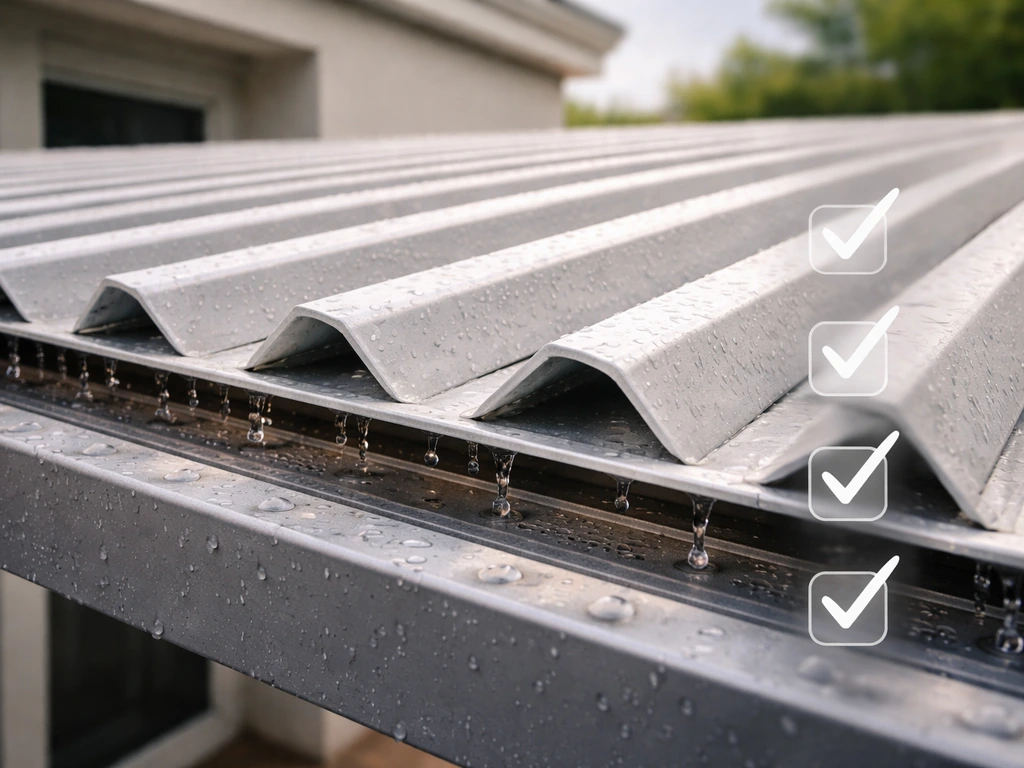
- Confirm the wind rating in both open and closed louver positions, and ask whether it's backed by third-party testing (AMCA 550 or equivalent)
- Check the drainage design: is it integrated through-post, or does it rely on external add-on gutters?
- Verify the powder coat rating: AAMA 2604 minimum, AAMA 2605 for coastal or premium installs
- For motorized systems, confirm the motor IP rating (IP55 minimum), manual override capability, and whether smart controls are included or an extra cost
- Ask for PE-stamped structural drawings if your area requires permits or if your span exceeds 16 feet
- Compare warranty terms: structural warranty, motor warranty, and finish warranty are typically separate
- Confirm add-on compatibility for anything you might want later: fans, lights, heaters, screens, side panels
- Get at least three installation quotes if hiring out, and ask specifically about permit handling, footing specs, and prior experience with that brand
- If buying a kit, download and read the full installation manual before purchasing, not after
If you're still weighing whether a louvered cover is the right call versus other patio cover types, it helps to know where the alternatives genuinely compete. A solid roof pergola (Alumawood or similar) is dramatically cheaper and lower maintenance if you don't need ventilation control. Polycarbonate roof panels let in diffused light while blocking rain. Retractable awnings are the most affordable option but provide the least structural protection. Those alternatives are worth understanding before committing to a louvered system, especially if budget is the primary constraint. If you want inspiration for what those options look like in real homes, browse patio cover examples to compare styles side by side alternatives.
The bottom line: if you want one structure that handles sun, breeze, and rain with daily adjustability and long-term durability, a quality motorized aluminum louvered cover is genuinely the best option available to residential homeowners right now. If you are trying to find the best patio tent option for shade and weather protection, a high-quality motorized louvered cover is one of the closest matches. Buy the drainage system and the coating quality first. Everything else is secondary.
FAQ
Can I add ceiling fans, heaters, or lighting to a best louvered patio cover after it’s installed?
Yes, but only if your system is designed for it. Ask whether the roof panel framing has integrated wiring channels and approved load limits for fan brackets, and confirm whether the motor controller is separated from any low-voltage accessories. Many homeowners add fans after install, but some budget kits do not include the reinforcement or mounting provisions.
Will a louvered patio cover drain properly in freezing weather, or will it form ice?
Look at the fan and gasket materials, and confirm that the drainage design still works when louvers are mostly closed. If you live where freeze-thaw happens, ask whether the system uses internal channels that prevent ice dams and whether downspouts discharge away from the foundation. Also plan to keep gutters clear, since ice forms first where debris holds water.
What should I do with the louvers during strong wind or a storm?
Usually, you should keep louvers fully open or fully closed during high-wind events, depending on the manufacturer’s guidance. “Partially open” can reduce weather shedding and increase wind loads on slats. If your system has sensors, verify the exact wind trigger settings and whether they are adjustable.
During a power outage, can I still open or close the louvers safely?
If you buy motorized, confirm the manual override type and where it is accessible (so you can operate it during a power outage). Also ask whether the system supports a wired control option if the app fails, and whether the controller has surge protection. This matters because stuck closed louvers can trap water or block egress during outages.
Will adding side curtains, privacy screens, or enclosure panels later affect permits or structural requirements?
Plan for two different quotes: one for the structural layout and one for integration. In a lot of systems, changing slope, adding side enclosures, or altering the beam span changes the engineering, which can push permit requirements and costs. Get a written change order policy before installation if you might add screens or a glass wall later.
Where do louvered patio covers most commonly leak, and what should I inspect on day one?
Not all leaks are “roof leaks.” Ask whether the company tests water flow with louvers closed at the intended pitch, and whether flashing is included for house-attached designs. Common failure points are the ledger flashing, end caps, and downspout connections. Request a walkthrough of the flashing and drainage path before work starts.
Do louvered patio covers get noisy in heavy rain compared with solid roofs?
It can be, depending on the slat spacing, enclosure choices, and how close you are to the patio. For noise reduction, prioritize tighter slat fit, properly seated end caps, and integrated gutters that prevent rattling. If you are noise-sensitive, ask whether the manufacturer has test data or typical performance notes for rain impact.
How much clearance do I need above the patio cover, and how do I account for the slope?
Yes, and it’s a safety and performance issue. Confirm the clearance requirements for your door swing and any steps or roof attachment points, then verify the required headroom in your city. Also check where the louver end caps sit at full closure, because that can slightly change usable clearance at corners.
What are the most common mistakes installers make that cause pooling or poor wind performance?
Make sure the system’s wind rating is tested with louvers in both configurations, open and closed, and that the installer follows the specified post spacing. Many failures happen when a kit is “close enough” on alignment and pitch, which prevents drainage and can alter wind performance. Ask whether the installer will provide the installation checklist and whether they verify pitch with a level or laser tool.
Is a manual louvered system ever a better choice than motorized?
Not necessarily, but it depends on how you use it. For daily adjustment, manual is fine if you only open or close a few times per day and you can reliably reach the mechanism safely. If storms or sun exposure change frequently, motorization usually reduces the chance of leaving the louvers partially set in bad weather.
Next Articles
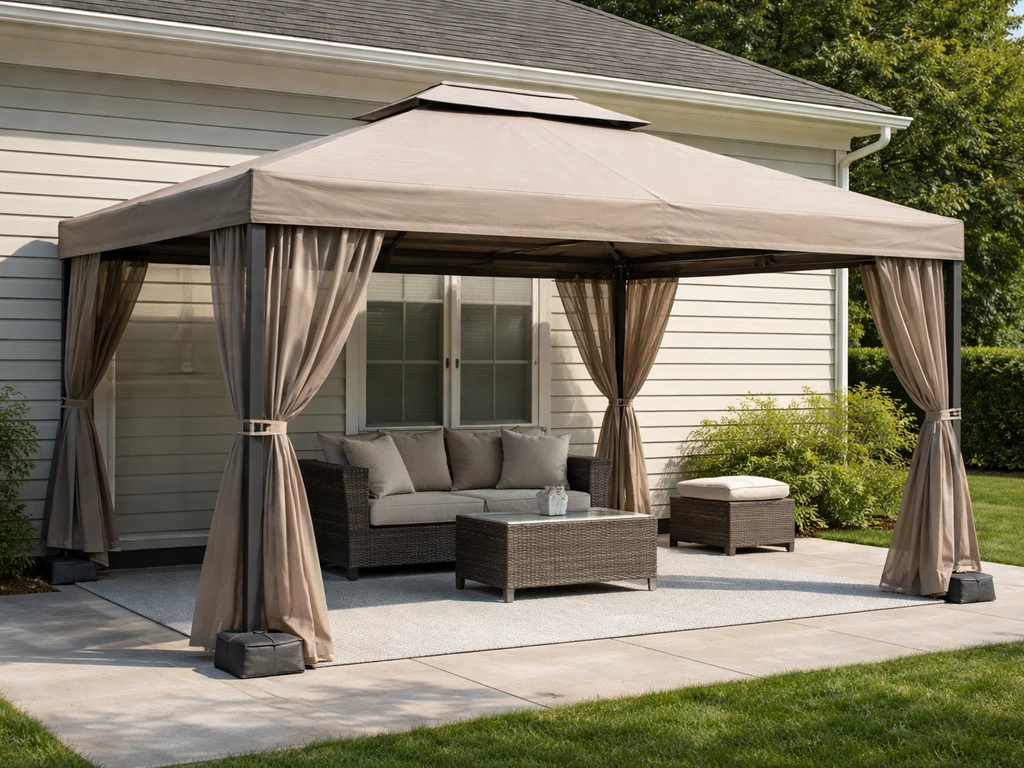
Best Patio Tent Guide: Choose Size, Style, and Weatherproofing
Pick the best patio tent with size, style, weatherproofing, airflow, and value-tier tips plus patio measuring and care.
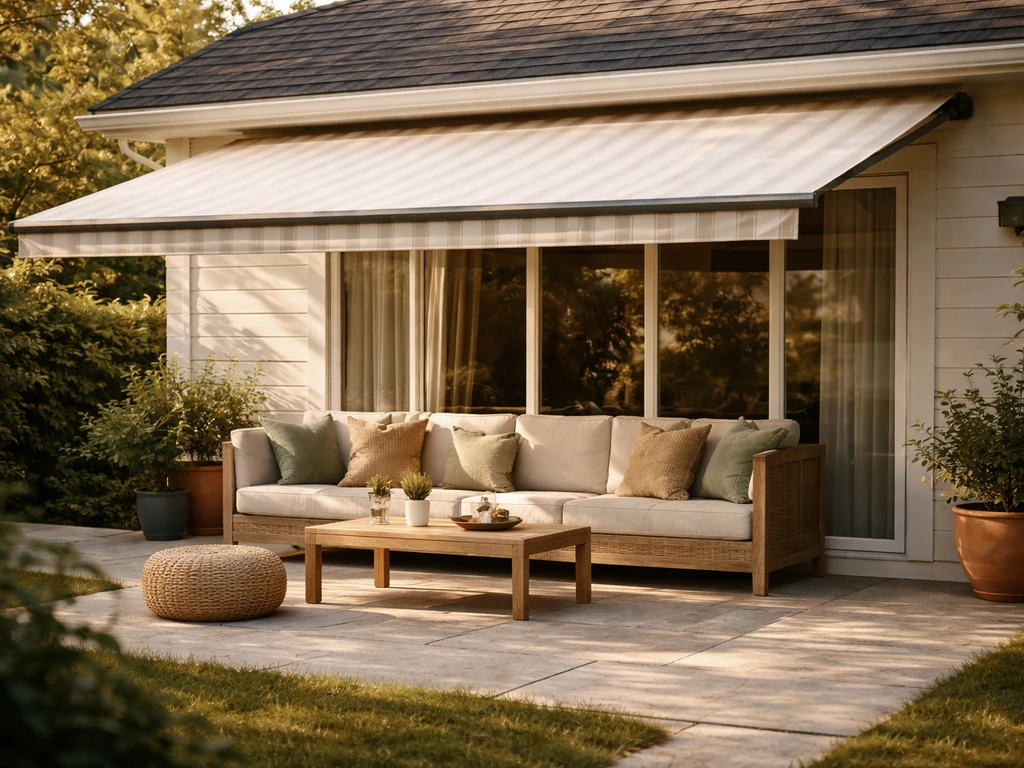
Alternative Patio Covers: Options, Costs, and How to Choose
Compare alternative patio covers with costs, pros/cons, and a step-by-step plan to choose by weather, budget, and upkeep
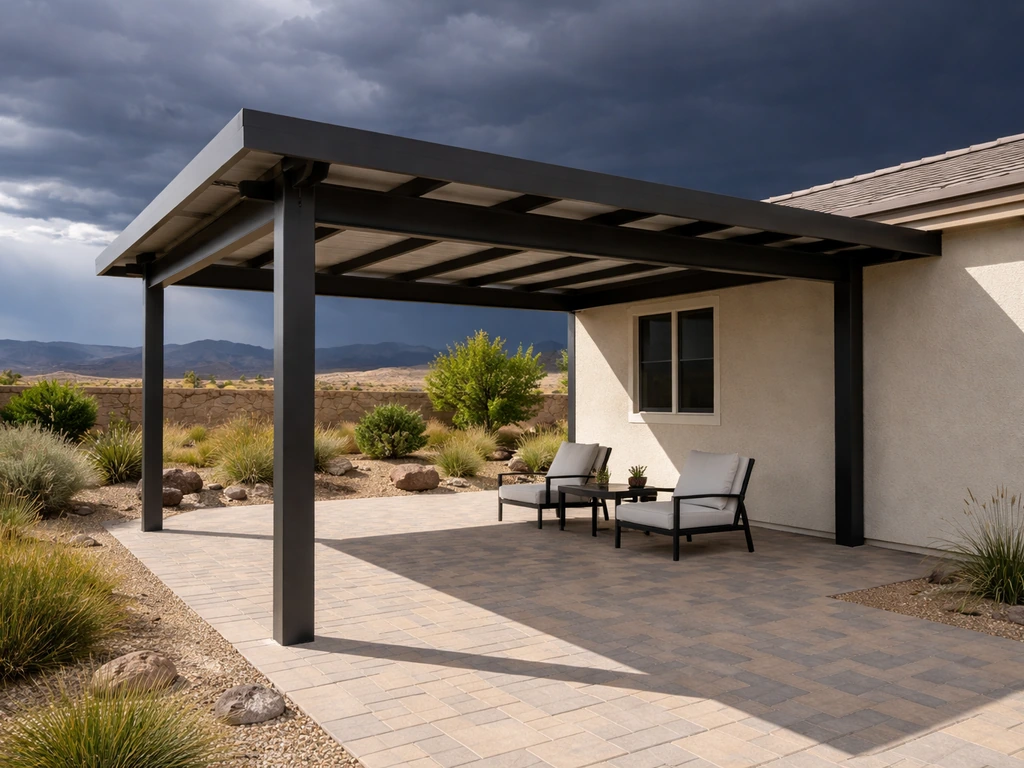
Best Patio Covers in Las Vegas: Types, Costs, Permits
Compare the best Las Vegas patio covers by type, materials, costs, insulation, permits, and wind-safe installation tips.