Concrete pavers (segmental interlocking pavers) last the longest of any common patio material, with field installations routinely reaching 50+ years and many major manufacturers backing their products with transferable lifetime warranties. Poured concrete comes in a close second at 30 to 50 years under normal conditions. Natural stone, especially granite and bluestone, can match or exceed either one, but the real-world lifespan of any patio depends less on the raw material and more on how well the base is prepared, how drainage is handled, and whether your climate throws hard freeze-thaw cycles at it every winter.
What Type of Patio Lasts the Longest: Best Materials and Costs

Phoebe Foster
30 Jul 2026
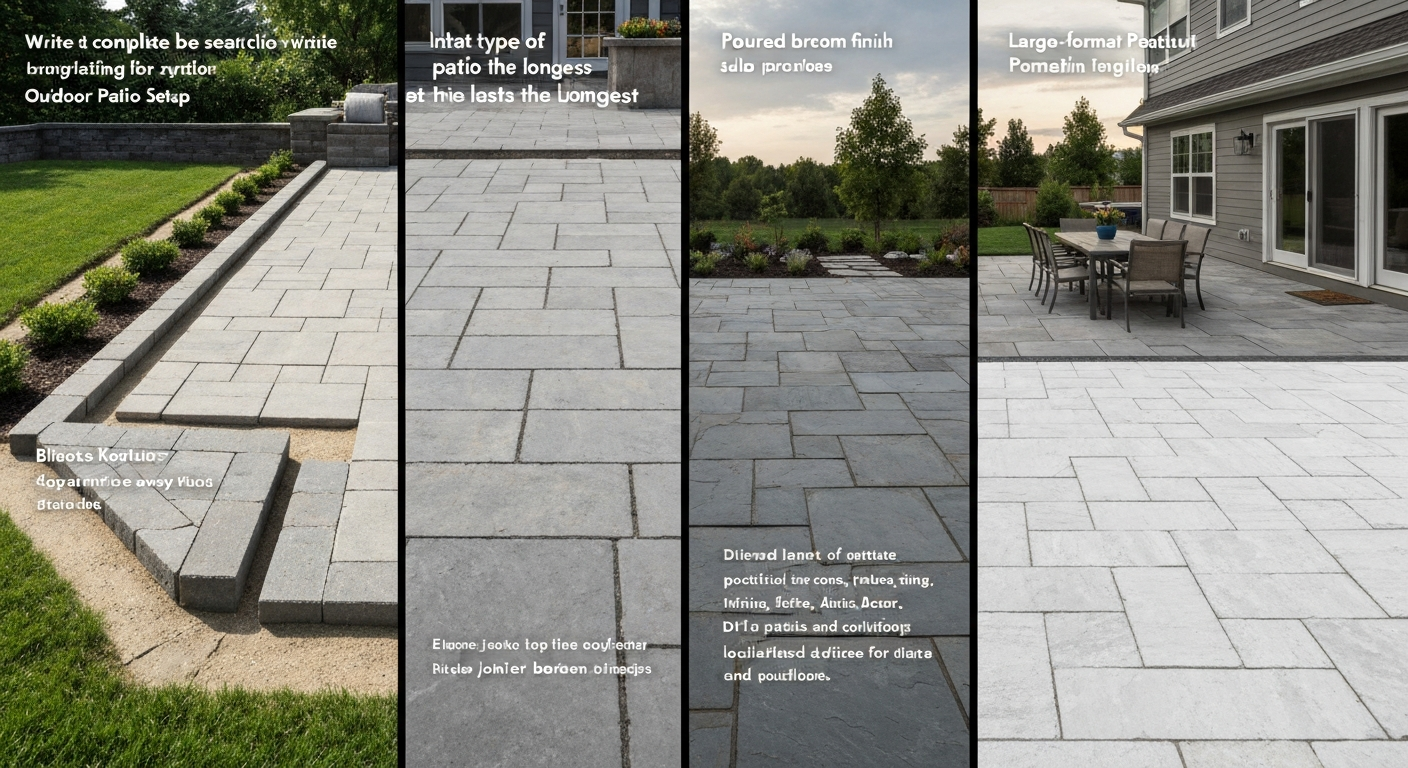
Lifespan at a glance: how the main patio materials stack up
| Material | Typical Installed Lifespan | Installed Cost (per sq ft) | Maintenance Level | Best Climate Fit |
|---|---|---|---|---|
| Segmental concrete pavers | 50+ years (lifetime warranty from many brands) | $8–$25 | Low | All climates with proper base |
| Poured concrete | 30–50 years (up to 100 in ideal conditions) | $6–$18 | Low–Medium | Mild to moderate freeze-thaw |
| Natural stone (granite, bluestone, slate) | 50–100+ years (granite/bluestone); 25–50 years (slate) | $15–$30+ | Low–Medium | All climates; hard stone preferred in freeze-thaw |
| Clay brick pavers | 25–50+ years | $6–$30 | Low–Medium | Mild to moderate; watch de-icing salts |
| Outdoor porcelain pavers | 20–40+ years | $15–$50 | Very Low | All climates (frost-resistant BIa grade required) |
| Composite decking | 25–50 years (warranty tier dependent) | $15–$30 (material only) | Very Low | All climates; elevated structures only |
These ranges assume correct installation by a qualified contractor. DIY installations can cut first-cost by 30 to 60 percent on materials, but shortcuts on base compaction or drainage are the single biggest reason a patio fails years ahead of schedule. More on that below.
What actually determines how long a patio lasts
A lot of homeowners focus almost entirely on which material they pick, but after watching dozens of patios age over the years, I'd say installation quality accounts for at least as much as material choice. A perfectly specified natural stone patio laid on a poorly compacted base will start rocking and cracking inside a few years. A simple broom-finish concrete slab poured on a properly graded, compacted subgrade can outlast a fancy flagstone job installed carelessly.
The factors that separate a 10-year patio from a 50-year one
- Base preparation: ICPI guidance requires a compacted aggregate base of 6 to 8 inches for pedestrian paver applications, compacted to roughly 98% Standard Proctor density, topped by a 1-inch screeded bedding sand layer. Skip or shortcut this and you get settlement, rocking, and cracking regardless of material.
- Drainage: water sitting under any hardscape is destructive. Slopes of at least 1 to 2 percent away from the house are the standard minimum; flat patios with no drainage plan are almost always problem patios.
- Freeze-thaw cycling: in Midwest and northern climates, water trapped in pores or under the slab expands during freezing and physically fractures material from the inside. ASTM C666 test data shows that low-absorption materials and air-entrained concrete resist this; high-porosity materials fail faster. De-icing salts accelerate damage significantly on concrete and brick.
- UV and heat exposure: relevant mainly for composite decking and sealers. In places like Texas or Arizona, UV degrades topical sealers on concrete faster (sometimes requiring recoating every 2 years instead of 5), and composite products need to be spec'd for high-heat environments.
- Load: a patio that doubles as a parking pad or hosts heavy outdoor kitchens needs thicker concrete (4 to 6 inches reinforced vs. the typical 4-inch slab) or a heavier paver base spec. Most residential patios are pedestrian-rated by default.
- Edge restraint: for paver and brick systems, plastic or steel edge restraint pinned into the base prevents lateral creep, which is what makes pavers fan out over time and joints widen.
- Joint sand and weed management: eroded or missing polymeric sand lets weeds and water in, accelerating freeze-thaw damage in joints and undermining the base.
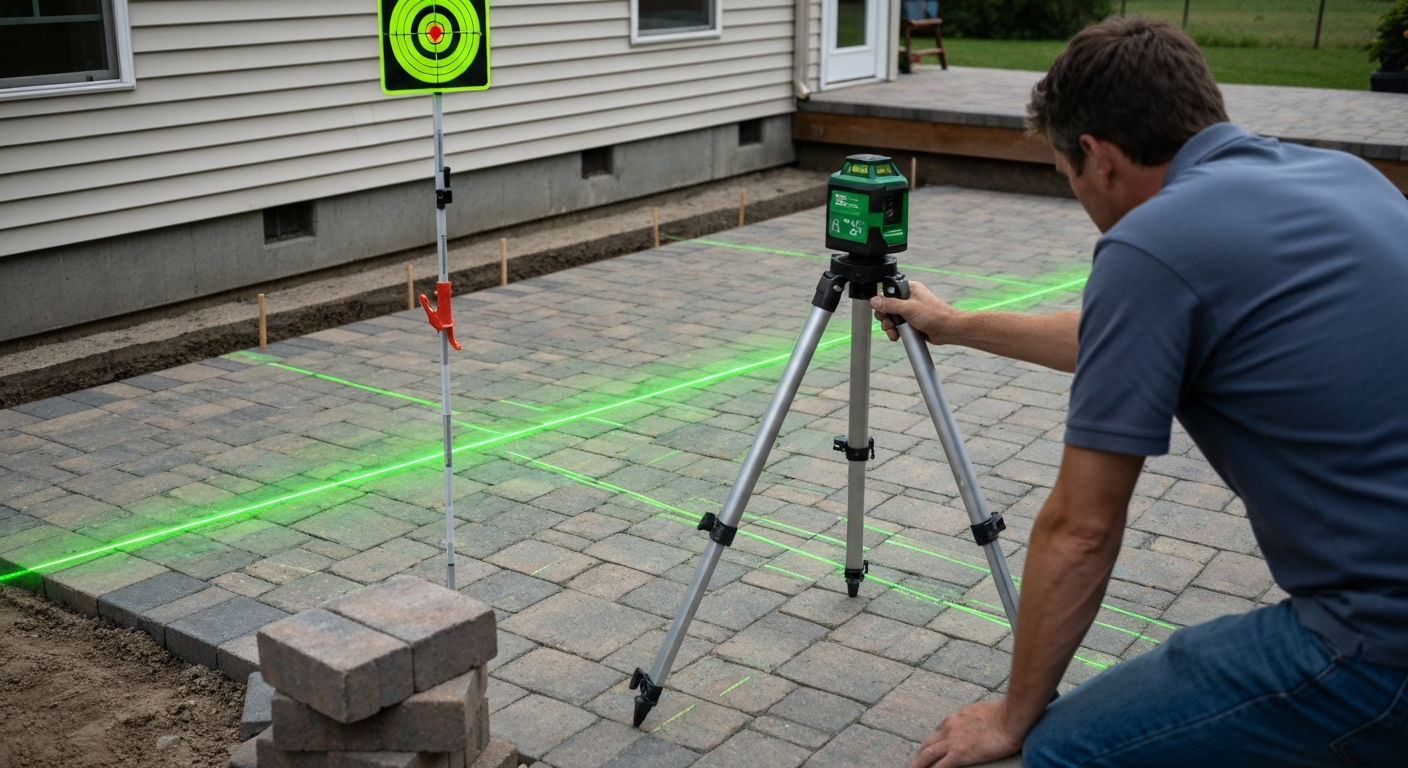
One tool that often gets overlooked on DIY projects is a laser level for checking your base slope before you pour or lay anything. Getting that grade dialed in before installation is far easier than fixing drainage problems after the fact, and it's one of the most practical investments for a DIY base prep job.
Choosing a material: durability, maintenance, and cost trade-offs in plain terms
There's no single right answer here because the best patio for a Minnesota homeowner dealing with hard winters is a different animal from what works in coastal South Carolina. What I try to do is match material to climate and budget first, then worry about aesthetics. The table above gives you the numbers; the sections below go deeper on each material so you can make an informed call.
Poured concrete patios
Poured concrete is the most common patio surface in the US for good reason: it's versatile, relatively affordable, and when done right it will outlast most of the homeowners who install it. The typical useful life is 30 to 50 years, and industry guides have cited 'up to 100 years' in ideal conditions with proper design and maintenance. The real-world average is closer to 30 to 40 years for a standard residential slab before significant cracking or surface deterioration becomes a real issue.
What to expect from a concrete patio
- Pros: lowest entry cost among durable options ($6 to $18 per sq ft installed for plain broom finish), can be stamped or stained for a higher-end look, very strong under load, monolithic surface requires no joint maintenance.
- Cons: cracks are inevitable over time (control joints help manage where they form, but they don't prevent cracking entirely); freeze-thaw plus de-icing salts cause surface scaling and spalling; once cracked it cannot be spot-repaired invisibly; repair patches are visible.
- Freeze-thaw climates: specify air-entrained concrete (typically 5 to 7 percent air entrainment) to resist freeze-thaw damage; avoid calcium chloride de-icers directly on the surface.
- Maintenance: clean annually, fill or rout-and-seal cracks when they appear, and apply a breathable penetrating sealer every 3 to 5 years; topical acrylic sealers may need recoating every 2 to 3 years depending on sun exposure.
- DIY potential: pouring a slab is doable for an experienced DIYer on smaller areas (under 200 sq ft), but larger pours involving ready-mix trucks, screeding, and proper finishing are contractor territory for most homeowners. Renting equipment and sourcing correct mix spec is the main challenge.
- Typical installed cost: $6 to $18 per sq ft for a plain broom-finish slab; stamped or colored finishes push to $12 to $25 per sq ft or more.
Concrete's biggest long-term weakness is that it's a single-piece system. When it cracks, the options are patching (visible), overlaying (adds cost), or tearing out and starting over. Compare that to pavers, where you can lift and relay individual units around a problem area without touching the rest of the surface.
Segmental concrete pavers
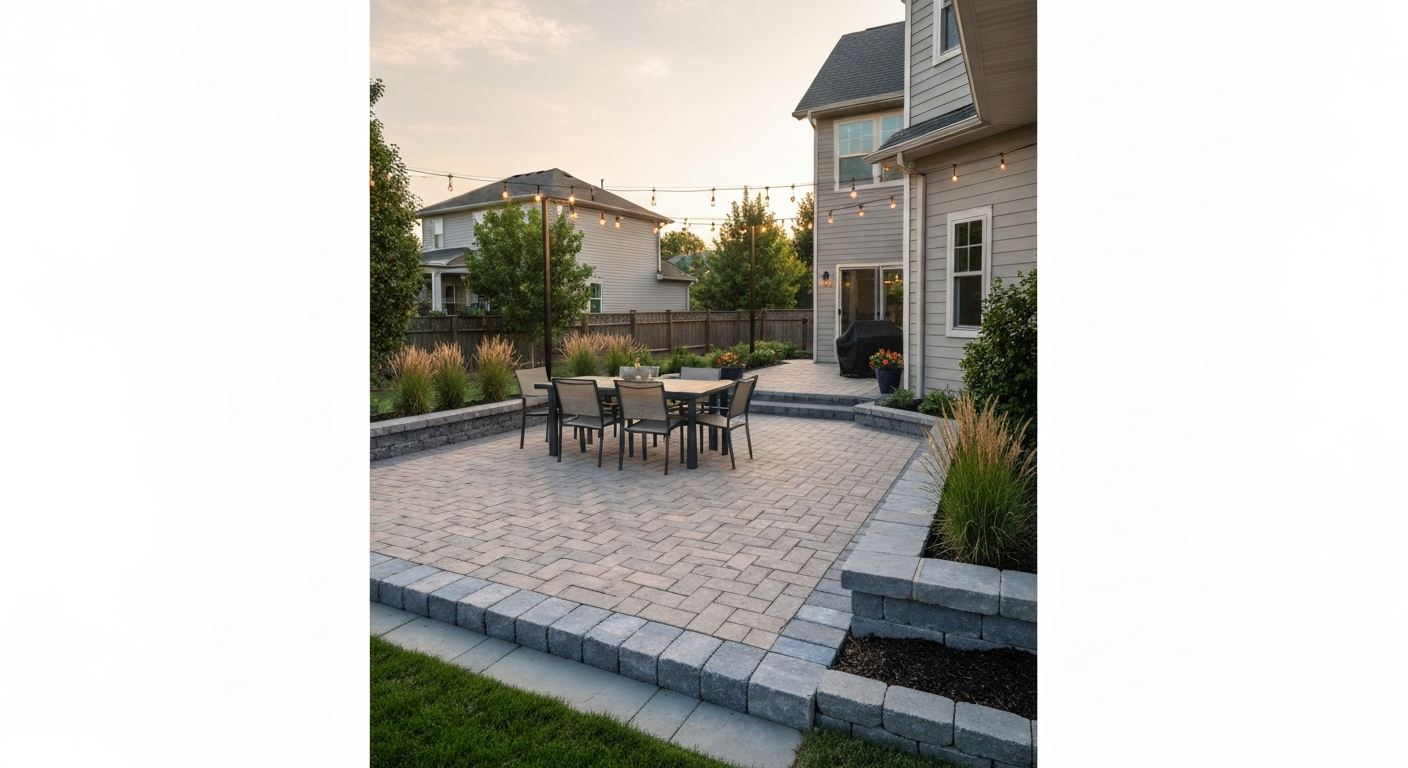
Interlocking concrete pavers are the material I recommend most often when someone asks me for the longest-lasting patio with the most practical repair story. Major manufacturers like Belgard, Unilock, and Pavestone offer transferable lifetime product warranties on the paver units themselves, and ICPI documents field installations that have held up for 50-plus years when the base and edge restraint were done correctly. See the ICPI Guide Specification for the Construction of Interlocking Concrete Pavers (ICPI Tech Spec) for required base depths, a 1 in. screeded bedding sand layer, edge restraint details, and compaction to approximately 98% Standard Proctor for pedestrian installations. The product warranty covers the integrity of the paver unit, not failures caused by improper installation, so the base prep still matters enormously.
What to expect from a paver patio
- Pros: lifetime product warranties from leading brands; individual pavers can be lifted and replaced if one cracks or an underground repair is needed; flexible system handles minor settlement without cracking; wide range of colors, shapes, and finishes; performs well in freeze-thaw climates when base drainage is correct.
- Cons: higher upfront cost than plain concrete ($8 to $25 per sq ft installed); joint sand requires periodic attention (polymeric sand refresh every 3 to 5 years as needed); weeds can grow in joints if polymeric sand erodes; requires precise base work — a poorly compacted base will cause rocking and settling.
- Maintenance: sweep regularly, inspect joints seasonally in freeze-thaw climates, refresh polymeric sand when joints show erosion, and re-edge restrain if lateral creep occurs. A professional clean-and-resand service typically runs a few hundred dollars for a standard patio and is needed far less frequently than, say, resealing or restaining a wood deck.
- DIY potential: paver patios are one of the more accessible DIY hardscape projects for a prepared homeowner. The main challenges are base excavation, accurate compaction (a plate compactor rental is essential), and getting the screeded sand layer perfectly flat. A laser level is very useful here for establishing a consistent slope across the base.
- Typical installed cost: $8 to $25 per sq ft depending on paver style, pattern complexity, and regional labor rates.
Natural stone patios (flagstone, bluestone, slate)
Natural stone is the prestige option, and for good reason: it's the oldest paving material on earth and some of it is still in daily use after centuries. For residential patios, the practical lifespan range is 50 to 100-plus years for hard, low-porosity stones like granite and bluestone, and 25 to 50 years for softer or more porous options like slate or sandstone. The key variables are stone density, porosity, and local frost exposure.
What to expect from natural stone
- Pros: unmatched natural aesthetics; extremely long service life with hard stones; each piece is unique; some stones (granite, bluestone) handle freeze-thaw well when properly installed; high resale appeal.
- Cons: the most expensive material category at $15 to $30-plus per sq ft installed for flagstone or bluestone; slate and softer stones can crack, flake, or spall in harsh freeze-thaw exposure; irregular flagstone requires more skilled installation (especially mortar-set work); heavy pieces are harder for DIY handling.
- Stone selection matters: granite and dense bluestone are top choices for northern freeze-thaw climates. Slate and sandstone are better suited to mild climates (Southeast, Pacific Coast) where hard winters aren't a factor. Always ask for the absorption rate of the specific stone before buying for a cold-climate project.
- Sealing: porous stones (bluestone, slate, sandstone) should be sealed with a penetrating stone sealer on installation and resealed every 2 to 3 years to reduce water absorption and staining. Granite typically needs less frequent sealing.
- Maintenance: periodic re-pointing of mortar joints (for mortar-set installations), weed management in dry-laid joints, and sealing as above. Surface staining from organic debris (leaves, pine needles) is more visible on lighter-colored stones and needs prompt cleaning.
- Typical installed cost: $15 to $30-plus per sq ft for flagstone and bluestone; premium cut granite can push well above that in some markets.
If you're drawn to natural stone but concerned about budget, irregular (tumbled) flagstone in a dry-lay system on a compacted base is one of the more DIY-accessible natural stone options. Cut and gauged stone is generally a job for a mason. The cost difference between the two is significant.
Brick patios
Clay brick is one of the most traditional paving choices, and a well-installed brick patio can last 25 to 50-plus years with appropriate maintenance. The Brick Industry Association has published technical guidance on clay paver paving systems for decades, and clay brick used in pedestrian applications holds up well when the base drainage is correct and de-icing salts are avoided.
What to expect from a brick patio
- Pros: classic, timeless look that pairs well with traditional architecture; wide cost range ($6 to $30 per sq ft depending on installation method and brick grade); like concrete pavers, individual units can be lifted and relaid if settlement or repair is needed; ages gracefully with character.
- Cons: clay brick is more vulnerable to de-icing salt damage than concrete pavers — this is a real issue in northern climates where salt is used heavily on adjacent surfaces; some lower-grade or reclaimed bricks are not rated for exterior paving and will spall or absorb water excessively in freeze-thaw conditions; color variation between batches makes future repairs visually tricky.
- Freeze-thaw performance: specify SW (Severe Weathering) grade clay pavers per BIA guidance for any northern climate application. MW (Moderate Weathering) grade is not suitable where hard freeze-thaw cycles occur. This is where many homeowners — and some contractors — go wrong.
- Maintenance: sand joint maintenance similar to concrete pavers (inspect and refresh as needed); avoid chloride-based de-icers; clean with pH-neutral detergents to avoid efflorescence; periodic re-sanding or re-pointing depending on installation type.
- DIY potential: a dry-laid brick patio on a compacted sand-and-gravel base is a classic DIY weekend project. Mortared brick work is a different skill level and really needs a mason.
- Typical installed cost: $6 to $30 per sq ft, with dry-lay systems at the lower end and full mortar-set work at the higher end.
Porcelain pavers and composite decking: the newer long-life options
These two materials deserve mention even though they're not traditional hardscape, because they've matured significantly and offer genuinely strong longevity cases for the right applications.
Outdoor porcelain pavers rated BIa or BIb (water absorption of 0.5 percent or less per ASTM C373) are frost-resistant by specification and are increasingly popular in contemporary designs. Installed cost runs $15 to $50 per sq ft, which is steep, but the maintenance load is extremely low: routine sweeping and occasional pressure rinsing is essentially it. Installed lifespans of 20 to 40-plus years are realistic. The critical point is using the correct frost-rated grade and the right mortar or pedestal/gravel system for exterior use. Wrong installation method is the primary failure mode.
Composite decking (brands like Trex offer 25, 35, or 50-year limited residential warranties depending on product tier) is relevant if you're building an elevated or grade-level deck structure rather than a ground-contact patio slab. It's not a direct substitute for hardscape on grade, but for homeowners who want a deck rather than a patio it's the lowest-maintenance long-life choice available, requiring roughly 1 to 2 hours of cleaning per year versus the regular staining and sealing cycles of wood.
Which material fits your situation: a recommendation by priority
Rather than give one universal answer, here's how I'd think through the choice based on what matters most to you: If you want a clear recommendation on what type of patio is best, see our guide on what type of patio is best for practical, climate- and budget-focused advice.
| Your Priority | Best Material | Why |
|---|---|---|
| Longest possible lifespan | Segmental concrete pavers or natural stone (granite/bluestone) | Lifetime warranties on pavers; geological durability in hard stone; both easily outlast 50 years with correct installation |
| Lowest maintenance over time | Segmental concrete pavers or outdoor porcelain pavers | Pavers need only occasional joint sand refresh; porcelain needs almost nothing beyond sweeping |
| Lowest first cost with good longevity | Poured concrete | Most affordable at $6–$18/sq ft installed; 30–50 year lifespan is strong value; DIY partial option |
| Best for freeze-thaw climates (Midwest, Northeast, Mountain) | Segmental concrete pavers with air-drained base, or hard natural stone (granite/bluestone) | Flexible paver system accommodates movement; low-absorption stone resists frost fracture |
| Best for hot, UV-heavy climates (Texas, Southwest) | Concrete (sealed) or natural stone | Heat-stable, UV-resistant; avoid composite in extreme heat without checking brand specs |
| Budget DIY project with decent longevity | Dry-laid concrete pavers or brick on compacted base | Most accessible for competent DIYers; repairable; materials widely available |
Maintenance schedule that actually protects your investment
The gap between a 15-year patio and a 50-year patio is often just consistent basic maintenance. None of these tasks are difficult, but skipping them for several years in a row is where problems compound. For a concise roundup of options that balance longevity with minimal upkeep, see our guide to the best low maintenance patio.
| Task | Concrete | Pavers | Natural Stone | Brick |
|---|---|---|---|---|
| Annual sweep and rinse | Yes | Yes | Yes | Yes |
| Inspect joints / cracks | Yes (fill cracks promptly) | Yes (check joint sand) | Yes (repoint if mortared) | Yes (check joint sand) |
| Polymeric sand refresh | N/A | Every 3–5 years as needed | N/A (dry-laid: every 3–5 years) | Every 3–5 years as needed |
| Seal surface | Every 3–5 years (penetrating); 2–3 years (topical) | Optional; product-dependent | Every 2–3 years for porous stone | Optional; pH-neutral sealer |
| Edge restraint check | N/A | Annually in freeze-thaw climates | Annually (dry-laid) | Annually (dry-laid) |
| Avoid de-icing salts | Yes (use sand or kitty litter instead) | Preferred (use calcium magnesium acetate if needed) | Yes for porous stone | Yes — especially important for clay brick |
DIY vs. contractor: where the risk-reward math changes
National data consistently shows DIY material-only costs running 30 to 60 percent below contractor installed prices for simple systems. That's real money on a 400-square-foot patio. The trade-off is risk: the primary cause of early patio failure is poor base preparation and drainage, both of which are harder to do correctly without the right equipment and experience. My general take is this: if you're willing to rent a plate compactor, use a laser level to nail your grades, and take the time to compact in 3-inch lifts, a dry-laid paver or brick patio is a very achievable DIY project. Poured concrete at any size above a small pad, mortared stone work, and porcelain installations are all areas where the cost of a contractor mistake is much lower than the cost of your own mistake.
Timing your project also matters more than most homeowners expect. Spring and early fall are the best installation windows in most climates: soil temperatures are stable, crews are available, and you avoid the freeze-thaw risk of late-season pours or the heat stress on concrete curing in midsummer. For guidance on timing, see our guide to the best time of year to install a patio. If you're planning ahead, locking a contractor in winter for a spring build often gets better pricing and scheduling flexibility.
Warranties and what they actually cover
A lifetime product warranty from a paver manufacturer (Belgard, Unilock, Pavestone and others all offer transferable versions) is genuinely valuable, but read the fine print before you budget around it. These warranties cover the structural integrity of the paver unit itself. They explicitly exclude failures caused by improper installation, which is defined as deviation from the manufacturer's or ICPI's installation specifications. That means if your contractor skimped on base depth or skipped edge restraint and the pavers settle and rock, the warranty doesn't cover the remediation cost. The warranty is a quality signal on the product, not a no-fault guarantee on the installation. Ask your contractor about their own workmanship warranty separately.
A quick decision checklist before you commit
- Check your climate zone: hard freeze-thaw areas (USDA zones 3 to 6 roughly) need low-absorption materials or flexible systems. Ask for specific frost resistance specs from any supplier.
- Assess drainage before anything else: identify where water flows across your site. If drainage is poor, no material will perform at its rated lifespan without addressing it first.
- Match material to budget realistically: include installation, base materials, edge restraint, and a 10 to 15 percent contingency — not just the cost per square foot of the surface material.
- Decide DIY vs. contractor honestly: base prep is the non-negotiable part. If you won't rent a plate compactor and check grades carefully, hire it out.
- Ask about base spec and drainage plan before hiring a contractor: a contractor who can't explain their base depth, compaction spec, and drainage plan is a red flag regardless of their price.
- Request material warranties in writing and understand what voids them.
- Plan your maintenance commitment: even 'low maintenance' materials need an hour or two of attention per year and periodic joint or sealer refreshes. Know what you're signing up for.
- Get at least three contractor quotes and verify they're using comparable specs — base depth differences between bids explain most price variation.
If you're still narrowing down your options, thinking through what 'best' means for your specific situation, whether that's lowest cost, least upkeep, or best fit for a difficult climate, is worth doing before you get into material specifics. If minimizing upfront expense is your priority, see what is the most cost effective patio for clear comparisons of first costs and likely lifecycle trade-offs. The right patio for your home is the one that fits your budget, your climate, and your honest willingness to maintain it over the years.
FAQ
Which patio material lasts the longest for a typical homeowner?
When properly specified, installed and maintained, segmental concrete pavers and hard natural stone (granite, dense bluestone) generally offer the longest real‑world lifespans — commonly 50+ years and in many cases 75–100+ years. Poured concrete can last 30–50 years (up to longer in ideal conditions). Clay brick and high‑quality porcelain pavers also achieve multi‑decade service lives (often 30–70+ years) when installed for exterior use and protected from poor drainage and freeze‑thaw cycling. Composite decking products have long warranties (25–50 years) and can last multiple decades but are a different system (raised deck vs flat paving).
Lifespan comparison (quick table)
Typical lifespans (real‑world ranges assuming proper installation and normal homeowner maintenance): - Segmental concrete pavers: 50+ years (many warrant product for life) - Natural stone (granite/bluestone/flagstone): 50–100+ years (stone‑dependent) - Clay brick pavers: 50+ years with good base/drainage - Outdoor porcelain pavers (frost‑rated): 30–70+ years - Poured concrete slab: ~30–50 years (up to 100 in ideal conditions) - Composite decking (exterior deck): 25–50+ years (product dependent) Note: ranges overlap; longevity is strongly controlled by climate, base prep, drainage, and maintenance.
What pros and cons determine long life for each common material?
- Segmental concrete pavers: Pro: modular (individual units replaceable), excellent freeze‑thaw performance if base/edge/drainage correct; many lifetime product warranties. Con: joint sand maintenance, possible weed/ant issues without polymeric sand. - Natural stone: Pro: extremely durable if low porosity (granite); premium appearance. Con: higher first cost, irregular units require skilled installation, some stones are porous and vulnerable to spalling. - Clay brick: Pro: durable, classic look, good compressive strength. Con: can absorb salt/moisture—needs proper base/drainage. - Porcelain pavers: Pro: very low absorption, frost‑resistant grades available, low maintenance. Con: higher material/system cost, requires correct substrate/installation. - Poured concrete: Pro: lower first cost, monolithic surface, long life with control joints/air entrainment. Con: cracks inevitable; requires good design, joints, and sealing to maximize life. - Composite decking: Pro: low routine maintenance, rot/decay resistant. Con: typically used for raised decks (not poured patio), can fade or scratch; needs proper framing and ventilation.
How do climate and site factors change real‑world lifespan?
Key factors: - Freeze‑thaw cycles: increase risk of spalling/cracking for porous materials unless frost‑rated products and proper base/air entrained concrete are used. - Drainage/surface slope: standing water accelerates deterioration and undermines bases — ensure 1/8"–1/4"/ft slope away from structures. - Soil and groundwater: high water table or expansive clay require deeper or engineered bases and sometimes geo‑fabric. - UV and heat: degrade some polymeric sand sealers and composite finishes over long exposure. - Load: frequent vehicle traffic needs stronger base and thicker units; pedestrian loads are less demanding. Adjust material and base design to local climate and loads to protect longevity.
What does proper installation include to maximize life?
Essential elements: - Subgrade evaluation and compaction to required density (e.g., 95–98% Standard Proctor as ICPI guidance). - Proper aggregate base depth for pedestrian patios (commonly 6–8" compacted for pavers; more for vehicular loads). - Edge restraints to prevent lateral movement. - Screeded bedding sand (pavers) or correct concrete mix (air‑entrained for freeze/thaw) and control joints for poured slabs. - Adequate drainage and slope (minimum 1/8"–1/4"/ft away from house). - Use frost‑rated porcelain or sealed/low‑absorption stones in freeze zones. Follow manufacturer and ICPI/industry specs; improper base is the most common failure cause.
DIY vs contractor: when should I hire a pro?
Hire a contractor if: - You lack experience with base compaction, subgrade issues or site drainage. - Your site has poor soils, slopes, or high water table. - You want natural stone or porcelain with a warranty and precision installation. - The patio is large, carries vehicle loads, or is attached to a structure requiring flashing/drainage details. DIY can be acceptable for small, simple projects (loose‑lay pavers on well‑draining sites, simple concrete pours if you’re experienced), but DIY saves money at the risk of shortened lifespan if base/drainage is done poorly.
Next Articles
Best Laser Level for Patio: Choose, Use, and Compare Models
Best laser level for patio: compare models, visibility, range, accuracy, uses, buy vs rent guidance for homeowners
What Is the Most Cost-Effective Patio: Costs, Materials
Discover the most cost-effective patio: clear cost ranges, lifespans, DIY vs pro, climate tips and a decision checklist.
What Type of Patio Is Best: Material Guide & Decision Flow
Decide which patio is best: material, cost, maintenance, climate fit, DIY vs contractor, tools & budget tips.