The best patio material for most homeowners is concrete pavers. They hit a sweet spot of durability (20 to 40+ years), repairability, design flexibility, and mid-range cost ($10 to $30 per square foot installed). Price-detail sources list concrete paver materials roughly $2–$15 per square foot (materials) and installed paver patios typically $10–$30 per square foot; stone installations (for example bluestone or slate) commonly run $15–$30+ per square foot installed depending on set method (dry-set vs mortar), Pavers Cost Per Square Foot, HomeGuide (2026) Pavers Cost Per Square Foot — HomeGuide (2026). That said, "best" genuinely depends on your budget, climate, how much maintenance you want to do, and what you plan to use the space for. If you are on a tight budget, a poured concrete slab or even a gravel patio can outperform pavers on value. If longevity and curb appeal are the priority and budget is not a constraint, natural stone is hard to beat. This guide walks through every major material option with honest pros, cons, and real cost ranges so you can make the call that fits your yard, not just a generic recommendation.
What Type of Patio Is Best: Material Guide & Decision Flow

How to use this guide
Start with the quick decision framework below to narrow down your top one or two materials based on your actual situation: budget per square foot, climate zone, how much annual upkeep you are willing to do, and what the patio is primarily for. Then jump to the section for each material you are considering and read the pros, cons, and maintenance notes. If cost is a major factor, the cost table in the overview section will help you compare at a glance. If you are thinking about timing your project, the best time of year to install a patio matters more for some materials (concrete, mortar-set stone) than others (pavers, gravel). The sections on each material also flag where DIY is realistic and where hiring a professional makes more sense, which connects to questions about tools and contractor selection you may be working through at the same time. For picking the right tool, see our guide to the best laser level for patio to choose an accurate, job-appropriate model.
Quick decision framework
Before you fall in love with a material on social media, run through these five filters. They will save you from a decision you regret two winters later.
| Your situation | Best fit material(s) | Why |
|---|---|---|
| Budget under $5/sq ft (DIY) | Gravel, plain concrete slab (DIY) | Lowest materials cost; concrete slab is a manageable DIY with proper prep |
| Budget $10–$20/sq ft installed | Concrete pavers, stamped concrete | Wide availability, solid durability, good aesthetics |
| Budget $20–$35+/sq ft installed | Natural stone, high-end pavers, brick | Premium look, very long life when installed correctly |
| Cold climate (freeze-thaw cycles) | Concrete pavers, natural stone (dry-set) | Individual units flex and move; no full-slab cracking risk |
| Hot/dry climate (Texas, Southwest) | Concrete pavers, cool-tone stone, concrete slab | All perform well; lighter colors reflect heat |
| Wet/rainy climate or drainage concerns | Permeable pavers, gravel | Reduces runoff, manages water on-site |
| Lowest maintenance wanted | Concrete pavers, sealed concrete, composite decking | Minimal annual tasks; pavers and concrete are especially low effort |
| Longest possible lifespan priority | Natural stone, poured concrete (well-built) | 30–50+ year service life with proper installation |
| Entertaining/dining focal point | Pavers, stamped concrete, natural stone | Best aesthetics and surface consistency for furniture and foot traffic |
| Pool surrounds | Concrete pavers, brushed/broom-finish concrete, natural stone | Slip resistance, heat tolerance, drainage options |
| DIY-friendly project | Gravel, concrete pavers (sand-set) | No mortar, no forms, forgiving to adjust |
| Small urban space | Pavers, brick, natural stone | Cut cleanly to shape, look upscale in compact footprints |
Climate deserves extra weight here. I have seen gorgeous stamped concrete patios in Phoenix look perfect for 20 years, then watched the same material crack and spall in a Minnesota backyard inside five years because the contractor skipped proper air entrainment and control joints. If you are in a freeze-thaw zone (roughly USDA hardiness zones 3 through 6), prioritize materials that move with the ground, like sand-set pavers or dry-set stone, over rigid slabs unless you are committed to doing the concrete right.
The main patio materials compared
There are six primary material families to consider for a ground-level patio: poured concrete, concrete pavers, natural stone, brick, wood or composite decking, and gravel. Each one involves real tradeoffs on durability, installed cost, appearance, permeability, and the amount of work you will do over the patio's life. The table below gives you a high-level view before we go deeper into each one.
| Material | Typical installed cost (per sq ft) | Expected lifespan | Maintenance level | DIY-friendly? | Permeability |
|---|---|---|---|---|---|
| Poured concrete (plain/stamped) | $4–$16 | 30+ years (well-built) | Low–Medium | Possible (plain slab) | None (impervious) |
| Concrete pavers | $10–$30 | 20–40+ years | Low | Yes (sand-set) | Optional (permeable style) |
| Natural stone (flagstone/bluestone) | $15–$35+ | 50+ years | Low–Medium | Partial (dry-set) | Partial (dry-set gaps) |
| Brick | $10–$25 | 25–50 years | Low–Medium | Partial | Partial (dry-set) |
| Wood decking (pressure-treated) | $15–$30 | 15–25 years | Medium–High | Yes | None |
| Composite decking | $20–$45 | 25–50 years | Low | Yes | None |
| Gravel/pea gravel | $1–$5 | Indefinite (with upkeep) | Medium (regrading) | Yes | High |
A few things worth calling out before we go deeper. Cost ranges are installed national averages for 2024 to 2026 in the U.S. Your local labor rates, material availability, and project complexity will move those numbers. A basic 12x12 slab in the Midwest might run $800 to $1,500 DIY, while the same footprint in a coastal metro with premium stone could exceed $5,000 installed. Also note that permeability is increasingly relevant in areas with stormwater regulations or drainage challenges. Permeable pavers and gravel are the only options here that genuinely let water pass through rather than redirecting it.
Concrete patios
Poured concrete is probably the most common patio surface in North America for good reason. It is relatively affordable, it can be customized significantly, and when it is done right it will outlast most homeowners' tenure in a house. The key phrase there is "done right," which trips up both DIYers and low-bid contractors more than any other material.
Types of concrete patios
- Plain/broom-finish concrete: the most affordable version, typically $4 to $8 per square foot installed. A simple slab with a brushed texture for traction. Functional and durable but not especially decorative.
- Stamped concrete: patterns pressed into wet concrete to mimic stone, brick, or wood. Runs $10 to $16+ per square foot installed. Looks great in photos and can be very attractive in person, but the surface coating requires periodic resealing and shows wear at high-traffic edges.
- Colored/exposed aggregate concrete: integral color or surface-seeded aggregate gives texture and visual interest. Mid-range cost, $8 to $14 per square foot. Exposed aggregate is particularly slip-resistant, which makes it popular for pool surrounds.
What makes or breaks a concrete patio
The biggest durability factors are the subbase, the mix design, and the control joints. In freeze-thaw climates, the concrete must have proper air entrainment (typically 5 to 7 percent air) to resist the expansion cycle that causes spalling. ASTM C666 testing and FHWA research confirm that concrete without air entrainment fails much faster under freeze-thaw stress. Control joints every 8 to 10 feet allow the slab to crack in predictable, manageable lines rather than randomly across the surface. A well-compacted gravel subbase prevents settling and cracking from below. Deicing salts are also a concrete patio's worst enemy in cold climates: they accelerate surface spalling dramatically, so sand and shovel rather than salt is the safer winter approach.
A properly built concrete patio commonly lasts 30 or more years. Maintenance is straightforward: clean the surface annually, reseal decorative stamped or colored concrete every two to three years depending on traffic and sun exposure, and keep joints clear of debris. If you skip sealing on decorative concrete, the color fades, the surface becomes more porous, and repair costs climb. For a plain slab, annual cleaning and monitoring for cracks is usually sufficient. If a crack appears, filling it early with a flexible concrete caulk prevents water infiltration and freeze-thaw expansion from widening it.
Concrete patio pros and cons
| Pros | Cons |
|---|---|
| Lower installed cost for a plain slab | Cracks are permanent and can be costly to repair aesthetically |
| 30+ year lifespan when properly built | Impervious: no drainage through the surface |
| Highly customizable (stamp, color, texture) | Stamped/colored versions require periodic resealing |
| Good DIY option for a plain slab with proper prep | Freeze-thaw damage is real in cold climates if mix is wrong |
| Low ongoing maintenance for plain concrete | Deicing salts accelerate spalling |
| Widely available contractors | Hard to repair section-by-section without visible patching |
Paver patios
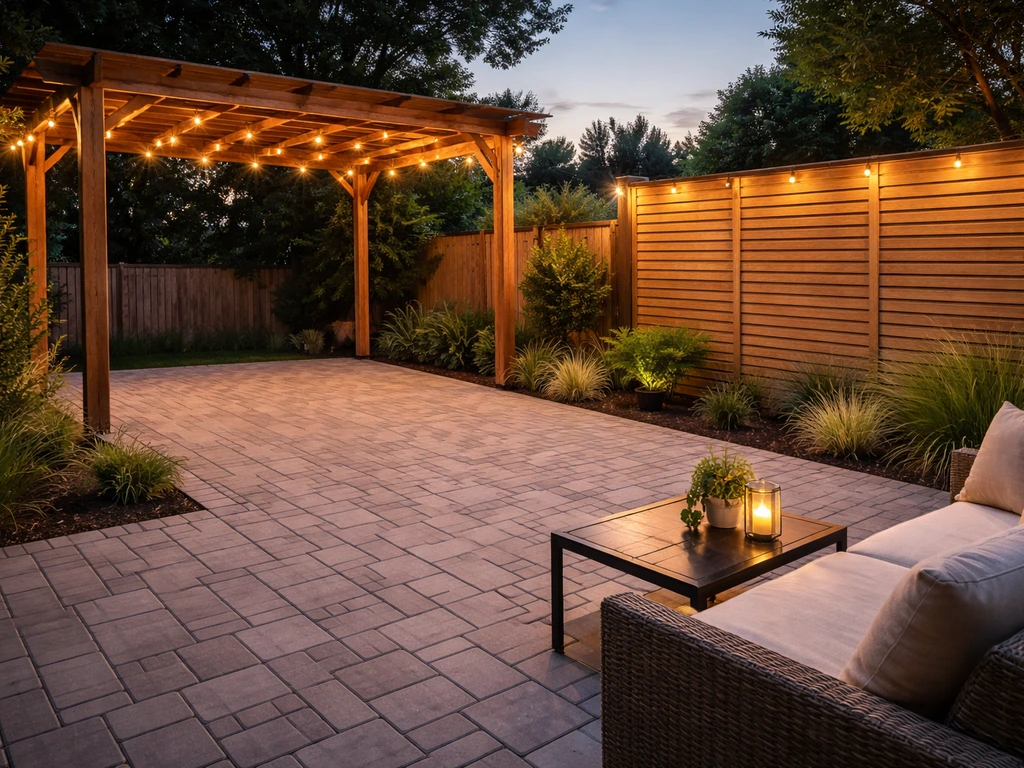
Concrete pavers are my personal go-to recommendation for most homeowners who want a durable, good-looking patio without the anxiety of cracking or the commitment of mortar. I have installed sand-set paver patios myself, and the process is forgiving in a way that poured concrete is not: if a unit settles or a section needs repair, you pull it up, fix the base, and reset it. No grinding, no patching compounds, no visible seams.
Paver material varieties
- Concrete pavers: the most common and affordable type. Available in dozens of shapes, textures, and colors. Manufactured to tight thickness tolerances which makes sand-set installation much more consistent than natural stone.
- Clay brick pavers: denser and harder than structural brick (discussed in the brick section below). More expensive than concrete pavers but very durable and colorfast since the pigment goes all the way through.
- Permeable interlocking concrete pavers (PICP): a specialized system with wider joints filled with aggregate. Lets water infiltrate through to a gravel reservoir base below. EPA-recognized as a stormwater Best Management Practice. Requires a properly designed open-graded base and biannual maintenance (vacuum sweeping) to preserve infiltration performance.
- Porcelain and travertine pavers: increasingly popular for a high-end look. Porcelain is extremely durable and low-maintenance. Travertine is porous and requires sealing but has a distinctive natural appearance.
ICPI (Interlocking Concrete Pavement Institute) standards are worth knowing when you are hiring a contractor. Properly installed paver patios, meaning correct base depth and compaction, edge restraints, and jointing sand, have demonstrated field lives of 20 to 40-plus years. Shortcuts on base preparation are the primary reason paver patios fail prematurely: without proper compaction and adequate depth (typically 4 to 6 inches of compacted aggregate base for pedestrian patios), pavers will shift, settle unevenly, and rock underfoot within a few years.
Paver maintenance
Joint sand needs attention over time. Polymeric joint sand (which hardens and resists weeds and ant displacement) is worth the small upcharge over regular sand. Reseal pavers every three to five years if you want to maintain color and surface protection. Inspect the perimeter edge restraints annually and secure any that have shifted. If you have permeable pavers, clean them twice a year with a vacuum or regenerative air sweeper to prevent sediment clogging from reducing infiltration. Studies and EPA guidance both show that neglected permeable pavement loses function dramatically over years, but properly maintained systems retain near-original performance.
| Pros | Cons |
|---|---|
| Repairable section-by-section without visible patching | Higher installed cost than a plain concrete slab |
| 20–40+ year lifespan with proper base | Base prep shortcuts are common with low-bid contractors |
| Handles freeze-thaw cycles well (individual units flex) | Joint sand requires periodic replenishment |
| Wide design variety: shapes, colors, textures | Permeable versions need biannual cleaning to maintain function |
| DIY-friendly for motivated homeowners | Edge restraint failure causes paver migration over time |
| Permeable option available for drainage management | Heavier than gravel; requires delivery and base work |
Natural stone patios
Natural stone is the premium tier of patio materials. Flagstone, bluestone, slate, limestone, travertine, and granite are the most common choices. When it is done well, a natural stone patio looks genuinely beautiful and can last 50 or more years. The tradeoffs are higher cost ($15 to $35-plus per square foot installed), more complex installation, and some maintenance requirements that depend heavily on the specific stone and how it is set.
Common stones and what they are good for
- Flagstone (sandstone or quartzite): irregular-shaped slabs with a rustic, natural look. Works well dry-set in sand or mortar-set. Varies widely in hardness; softer flagstone can chip and absorb water, requiring sealing.
- Bluestone: a dense Pennsylvania/New York sandstone with a blue-gray color. Very popular in the Northeast. Durable and elegant. Available in irregular or cut (dimensional) patterns. Mortar-set cut bluestone is a premium option; dry-set irregular bluestone is more DIY-accessible.
- Slate: flat, thin, and fine-grained. Beautiful but more brittle than bluestone or granite. Can delaminate under freeze-thaw stress if water gets into layers. Best in moderate climates.
- Limestone and travertine: warm tones, natural look. Both are porous and require sealing to prevent staining and moisture penetration. Travertine has natural voids (filled at the factory for smooth-surface versions) that can trap debris.
- Granite: extremely hard and durable. Expensive, heavy, and typically available in cut tiles or cobbles rather than large irregular slabs. Low maintenance once installed.
Installation method matters a great deal with stone. Dry-set (sand and gravel base, no mortar) gives the patio flexibility to move with freeze-thaw cycles and makes repairs straightforward. Mortar-set looks tighter and more formal but is more rigid, meaning cracks in the mortar joints over time in cold climates are nearly inevitable and can be labor-intensive to repair. For most residential patios in freeze-thaw zones, I lean toward dry-set with polymeric joint sand unless the client specifically wants the formal mortar aesthetic and understands the maintenance expectation.
Efflorescence (white salt deposits on the surface) is a common issue with porous stone, just as it is with concrete and brick. It happens when water moves soluble salts through the material to the surface. It is mostly cosmetic but can be persistent. Managing it means controlling moisture infiltration with proper sealing and drainage, not just scrubbing the surface repeatedly.
| Pros | Cons |
|---|---|
| Exceptional longevity (50+ years) | Highest installed cost of all patio materials |
| Unique, high-end aesthetic: each piece is one-of-a-kind | Irregular shapes require skilled installation to look right |
| Very durable stones (bluestone, granite) need minimal maintenance | Porous stones (travertine, limestone) require sealing |
| Dry-set versions are DIY-accessible | Some stones are brittle in freeze-thaw climates (slate) |
| Adds significant resale value | Mortar-set joints crack over time in cold zones |
| Natural material with lower processing than concrete | Material cost varies widely by region and stone scarcity |
Brick patios
Brick has been a patio material for centuries and for good reason: it is attractive, durable, and ages gracefully. A well-built brick patio can last 25 to 50 years with minimal intervention. It works especially well in traditional or colonial-style homes where the warm red and earth tones fit the architecture. The important distinction to know upfront is that structural building bricks and paver-grade bricks are different products. For patios, you want hard-fired paver brick (also called pavers or outdoor brick) rather than standard face brick, which absorbs too much water and can spall under freeze-thaw stress.
Brick can be installed dry-set in sand (similar to concrete pavers) or mortar-set on a concrete base. Dry-set brick patios are more forgiving in freeze-thaw climates and easier to repair; mortar-set installations look more formal and permanent but require more skill and are harder to fix if settlement occurs. The mortar joints are typically the first thing to deteriorate over time, developing cracks and losing material, which then allows water penetration and weed growth. Repointing brick joints is a manageable DIY repair in small areas but can become a significant project on a large patio.
Efflorescence is worth mentioning again here: it is particularly common on brick, showing up as chalky white streaks on the surface. It is caused by soluble salts migrating with moisture and is largely cosmetic. A water-repellent sealer applied after installation and renewed every few years significantly reduces the problem. Color stability is actually one of brick's strengths: because the color comes from the clay itself rather than a surface coating, it does not fade the way stamped concrete or some composite products do.
| Pros | Cons |
|---|---|
| Classic, timeless aesthetic that suits many home styles | Limited color options compared to concrete pavers |
| 25–50 year durability with proper installation | Quality paver brick costs more than concrete pavers |
| Color is permanent (clay-fired, not surface-applied) | Mortar joints deteriorate and require repointing over time |
| Dry-set versions handle freeze-thaw well | Structural brick (face brick) not suitable for patio use |
| Easy to repair section-by-section (dry-set) | Can be harder to source than concrete pavers in some regions |
| Ages gracefully; patina improves appearance over time | Efflorescence is common; needs sealing to control it |
Wood and composite decking used as patios
Technically, a deck and a patio are different structures: a patio sits on or just above grade, while a deck is an elevated platform. But in practice, many homeowners use ground-level or low-profile decks as their primary outdoor living surface, and the material choice between wood and composite is one of the most debated in the outdoor space world. So it is worth covering here, with a clear eye on the real cost, lifespan, and maintenance picture.
Wood decking options
Pressure-treated pine is the most affordable wood decking option and the backbone of most framed deck structures. As a surface material it runs $15 to $25 per square foot installed. The honest lifespan is 15 to 25 years with diligent maintenance: annual cleaning, staining or sealing every one to three years, and replacing individual boards as they split or warp. In humid climates, rot and insect damage accelerate that timeline without proper treatment and ventilation underneath. Cedar and redwood are naturally rot-resistant, cost more, and look beautiful but are less available and more expensive than they were a decade ago. Life-cycle assessments (LCA) show that pressure-treated wood often has lower embodied carbon than wood-plastic composite (WPC) products, though how often each material needs replacing affects the total picture.
Composite decking options
Composite decking (brands like Trex, TimberTech, Fiberon, and others) has become very popular as a lower-maintenance alternative to wood. It is made from a blend of wood fiber and recycled plastic, typically capped with a protective polymer shell on higher-end products. The better capped composite products carry 25-year limited residential warranties, and well-installed composite decking realistically lasts 25 to 50 years depending on product tier and climate. Installed cost is higher than wood: typically $20 to $45 per square foot installed depending on the product and labor market. The key maintenance tasks are cleaning (annual washing to prevent mold and mildew staining) and ensuring fasteners are installed per manufacturer specs since improper fastener installation is a documented failure mode. UV fading and chalking can occur on lower-quality uncapped composite boards; the capped products are significantly more resistant to both.
The biggest practical advantage of composite over wood for most homeowners is the elimination of staining and sealing cycles. If you have ever spent a weekend stripping and restaining a wood deck, you understand the appeal. The biggest downside compared to stone or concrete patio materials is that decking (wood or composite) requires a structural frame below it, which adds cost and complexity, and that frame needs to be built from pressure-treated wood regardless of what the deck boards are. Water management under the decking is also important: poor drainage underneath accelerates frame deterioration and can be a mold environment.
| Feature | Pressure-treated wood | Composite (capped) |
|---|---|---|
| Installed cost (per sq ft) | $15–$25 | $20–$45 |
| Expected lifespan | 15–25 years | 25–50 years |
| Annual maintenance | Clean + stain/seal every 1–3 years | Annual cleaning only |
| DIY-friendly | Yes | Yes |
| Appearance over time | Grays and weathers; can look worn | Holds color well (capped products) |
| Environmental profile | Lower embodied carbon (LCA) | Higher embodied carbon, but less replacement frequency |
| Warranty | None typically | 25-year limited (major brands) |
| Best climate fit | Dry climates; needs ventilation in humid areas | Most climates; resistant to moisture and UV (capped) |
What about gravel patios?
Gravel deserves a mention because it is genuinely the best option for budget-constrained homeowners and drainage-challenged yards. Pea gravel and decomposed granite patios typically cost $1 to $5 per square foot installed, making a 12x12 patio achievable for $200 to $440 in materials. They drain extremely well (the EPA includes gravel among permeable pavement Best Management Practices for stormwater), they are DIY-friendly, and they require no special tools or skills to install. The downsides are real though: gravel migrates, requires periodic regrading and topping off, can be uncomfortable for bare feet and furniture legs (use furniture pads or stepping stones), and needs weed barrier fabric plus edging to stay contained. If you are on a budget and just need an outdoor space while you plan something more permanent, a gravel patio is a completely valid starting point.
The final call: which material wins for your situation
If you want one answer: concrete pavers are the best all-around patio material for most homeowners. They handle nearly every climate, they are repairable, they look good, they offer permeable options for drainage, and they hit a cost range that works for mid-budget projects. For readers focused on minimal upkeep, see our guide to the best low maintenance patio for material-specific recommendations and care tips. Natural stone is the upgrade if budget is not a constraint and longevity or aesthetics are the top priority. If you’re specifically wondering what type of patio lasts the longest, read our focused comparison on longevity to see how natural stone, concrete pavers, and poured concrete stack up. Poured concrete is the best value for a permanent, low-hassle slab patio if you have a skilled installer and live in a mild-to-moderate climate. Composite decking wins on maintenance reduction over a wood deck if you want an elevated surface. And gravel is the honest budget champion for homeowners who need a functional space now. If you want a focused comparison on affordability, see our short piece on what is the most cost effective patio for clear cost-based guidance.
Two things that will affect every material choice equally: the quality of the base preparation and the quality of the installer. I have seen $30-per-square-foot stone patios fail in three years because the base was wrong, and I have seen simple $6-per-square-foot broom-finish concrete patios look great for 25 years because the contractor did the fundamentals right. Whichever material you choose, vet your contractor, ask specifically about base depth and compaction, and do not accept a price so low that corners will clearly be cut. The material is only as good as what it sits on.
FAQ
Which patio material is 'best' overall for most homeowners?
There is no one-size-fits-all best—choose based on priorities: poured concrete and interlocking concrete pavers are the most broadly cost-effective, durable, and low‑maintenance for many homeowners; natural stone and brick score highest for aesthetics and longevity (with higher cost); gravel is the cheapest short‑term option and good for DIY; wood/decking and composites work when you want a raised or warmer wood look. Match material to your climate, intended use, budget, and maintenance tolerance.
How should I decide by climate (cold/freezing, hot/dry, wet/humid)?
Cold/freeze–thaw: choose freeze‑thaw‑resistant concrete mixes (air‑entrained), properly installed pavers, or stone with good drainage; avoid untreated thin slabs without joints. Hot/dry: most materials work; lighter colors reduce heat gain. Wet/humid: favor permeable options or materials that drain (pavers on a good subbase, gravel, permeable pavers); avoid wood unless properly detailed and ventilated. For heavy freeze–thaw and deicing salt exposure, use materials and details specified for freeze durability.
What are the pros and cons of common patio materials?
Concrete (poured): Pros—affordable, durable 30+ years if done right, versatile finishes. Cons—can crack, freeze damage if not air‑entrained, aesthetic limits unless scored/stamped. Concrete pavers: Pros—long‑lived (20–40+ years), replaceable, flexible with settlement. Cons—higher installed cost, requires joint maintenance. Natural stone: Pros—premium look, long life. Cons—expensive, variable installation complexity. Brick: Pros—classic look, durable. Cons—mortaring/settlement issues. Gravel: Pros—lowest cost, easy DIY, good drainage. Cons—maintenance (regrading, weeds). Wood/decking: Pros—warm aesthetic, raised options. Cons—higher maintenance (rot, staining); composites reduce maintenance but cost more.
How do costs compare (installed) between materials?
Approximate US installed ranges (2024–2026 aggregate): gravel/pea gravel ~$1–$5/ft²; poured concrete ~$4–$16/ft² (plain to decorative); concrete pavers ~$10–$30/ft²; natural stone (flagstone/bluestone) ~$15–$35+/ft²; deck boards/composite/wood vary widely—composite often $20–$40+/ft² installed. Regional variation and finish choices change these numbers significantly.
Which patios last longest and which are lowest maintenance?
Longest‑lasting: properly installed natural stone and well‑installed interlocking concrete pavers (20–40+ years) and high‑quality poured concrete (30+ years). Lowest maintenance: permeable gravel and well‑installed concrete pavers (periodic sweeping/sealing) and composite decking (lower maintenance than wood). Note: low maintenance requires proper initial installation and periodic simple tasks (cleaning, resealing where recommended).
Are permeable patios a good idea and what maintenance do they need?
Permeable pavements (pervious concrete, permeable pavers, porous asphalt, gravel) are excellent for stormwater reduction and recharge when site conditions allow. They reduce runoff and improve water quality but require regular cleaning (vacuum/regenerative air or sweeping) and inspection—commonly biannual checks—because sediment loading reduces infiltration. Proper reservoir base design and maintenance plans are essential.
Best time of year to install patio: month-by-climate timing, material limits, scheduling, and DIY vs pro tips.
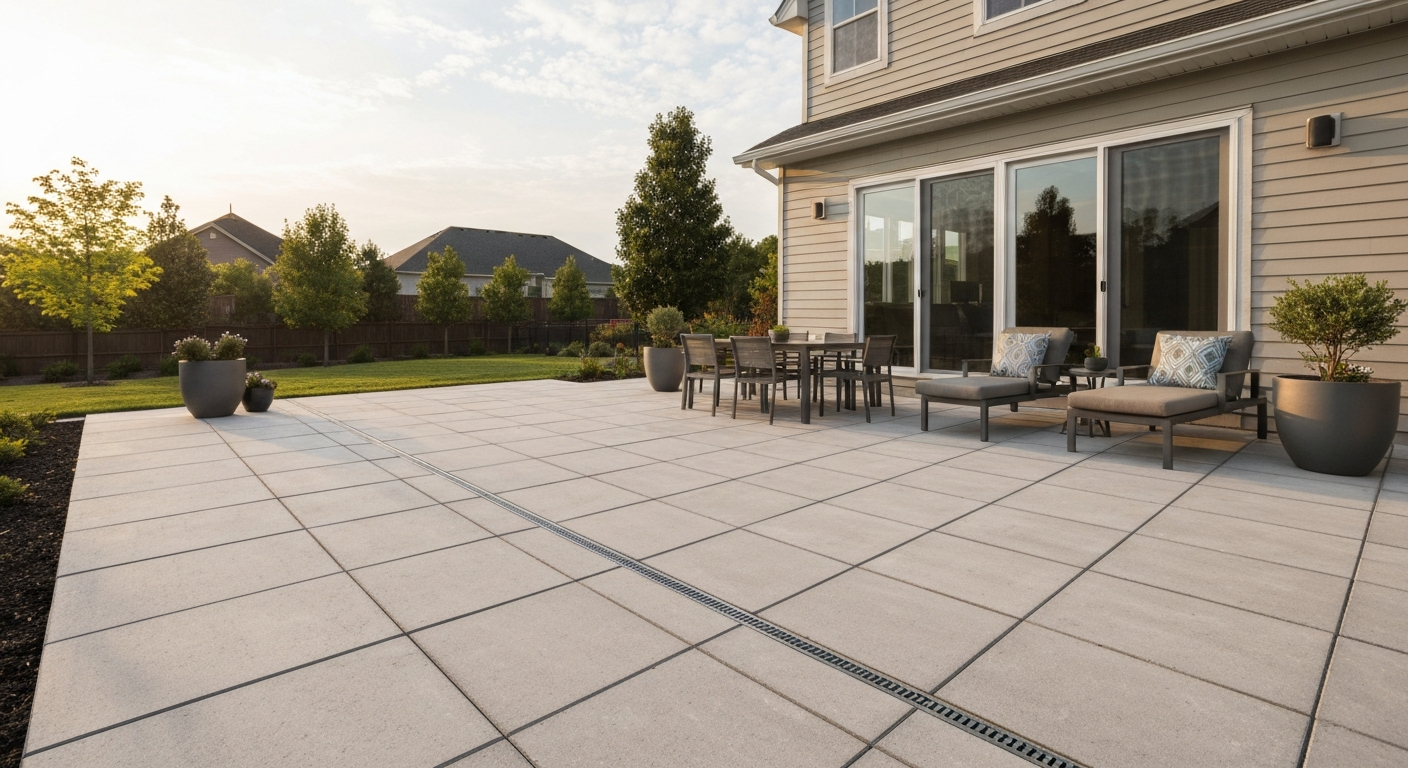
Find the best low-maintenance patio: compare materials, costs, climate tips, DIY vs pro, and a final decision checklist.
DIY outdoor patio ideas for planning, building, upgrading, and maintaining floors, shade, privacy, lighting, and decor.