Live-edge wood patios are real, but they're not a single thing, and whether one works for you depends almost entirely on the species you choose, how the wood is finished, and how well the installation manages moisture. Done right with the correct species and a penetrating oil finish, a live-edge surface or accent feature can last 15 to 25 years and look stunning. Done wrong, with the wrong wood or a film-forming coating that traps moisture, you'll be pulling rotted boards within three to five years. So the honest answer is: it's a legitimate outdoor option, not a gimmick, but it has a narrower margin for error than standard pressure-treated decking.
Are Live Edge Wood Patios Real? Pros, Risks, Lifespan

Phoebe Foster
29 Apr 2026
What people actually mean by a live-edge wood patio
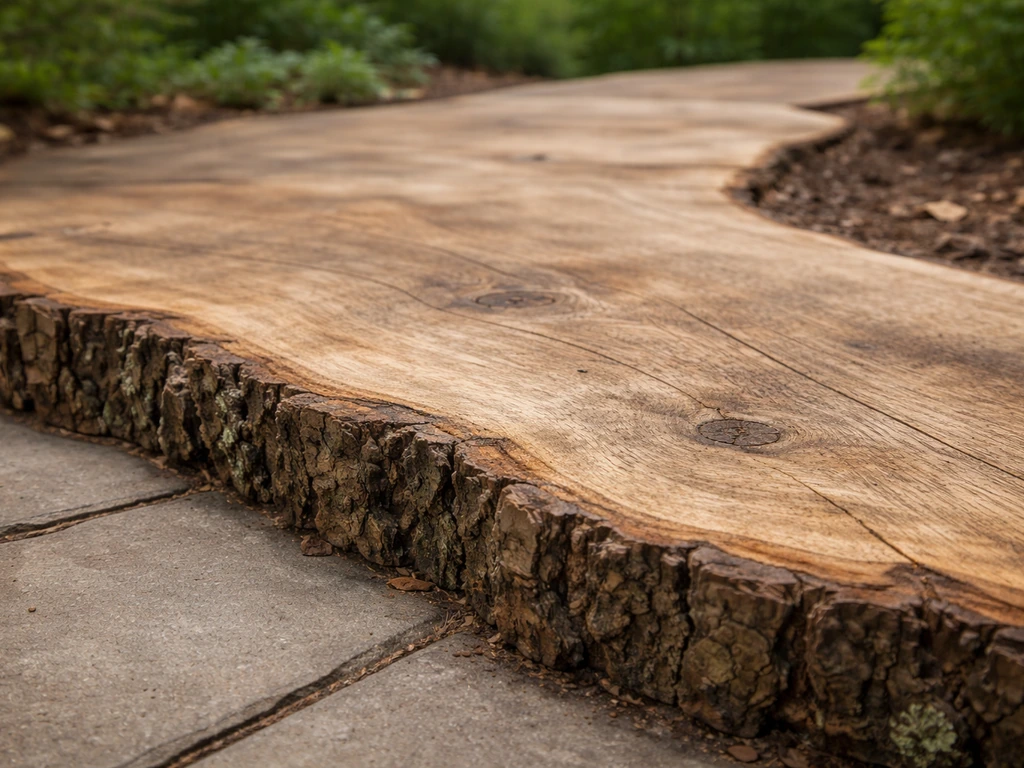
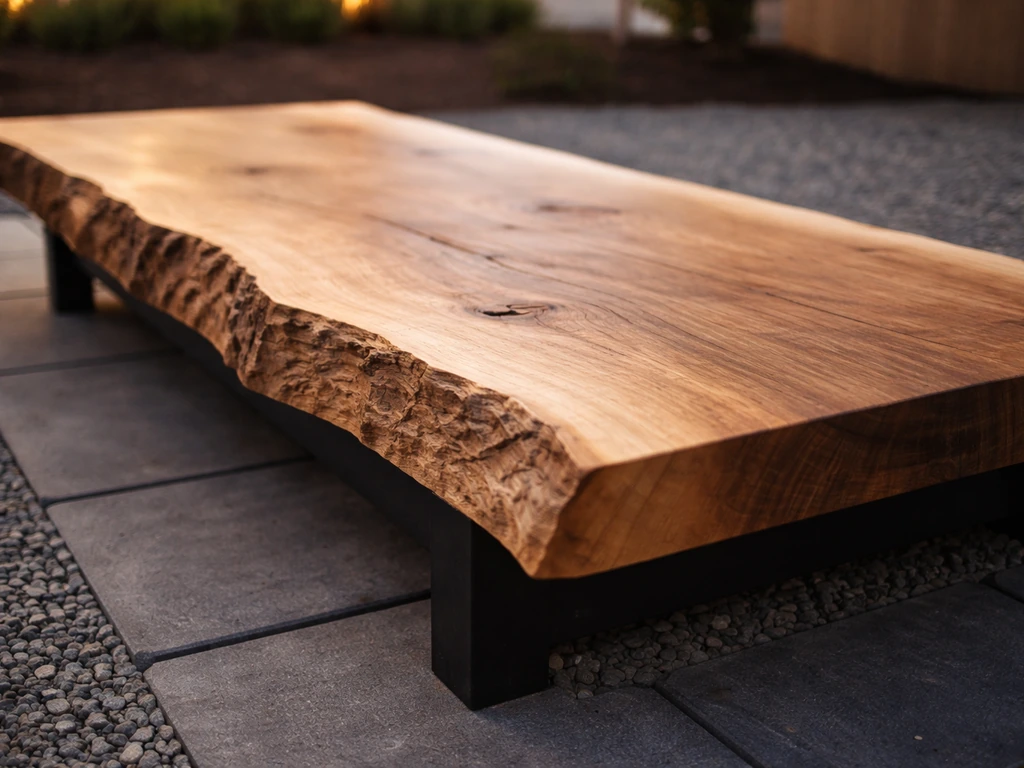
A live-edge slab is a thick cut from a log that preserves the tree's natural outer edge, including curves, knots, and sometimes the bark itself. Nothing gets squared off. The natural profile stays intact, which is what gives live-edge pieces their distinctive organic look. In furniture, this is usually a tabletop or bench seat. Outdoors, the term gets used more loosely, and there are really three different things people are describing when they say 'live-edge patio.'
- Full live-edge slab flooring: thick slabs used as the actual walking surface, like natural-stone pavers but in wood. This is the most demanding application and the riskiest from a durability standpoint.
- Live-edge border edging: natural-edge strips or boards used to frame the perimeter of a patio, either as a visual accent around pavers, gravel, or composite decking, or as a structural edge band.
- Live-edge accent pieces: benches, privacy screens, pergola beams, or a single statement piece incorporated into an otherwise conventional patio. This is the most approachable and lowest-risk use.
Most of the contractor installs you'll see online fall into the second or third category. Full live-edge slab flooring across a whole patio is rare and expensive, and for good reason: the irregular surface creates tripping hazards, uneven drainage, and bark attachment issues that make it genuinely difficult to maintain. If you've been searching for live-edge patio ideas and seen gorgeous Instagram photos, look closely at what's actually shown. It's usually a live-edge dining table or bench on a patio, not a live-edge walking surface.
Can live-edge wood actually survive outdoors?
The short reality is that live-edge wood faces every challenge standard outdoor wood does, plus a few extra ones. The uneven edge profile traps more moisture than a square-cut board. Any bark left attached is almost always a liability outdoors because bark holds moisture, harbors insects, and tends to separate from the wood over time anyway. Most experienced outdoor woodworkers remove bark before installing any live-edge piece outside, even if that slightly softens the look.
The real durability question comes down to moisture management. Wood outdoors is constantly cycling through wet and dry conditions, expanding and contracting. Freeze-thaw cycles in the Midwest and Northeast are especially punishing. Persistent heat and UV in Texas and the Southwest degrade finishes faster and push wood through more dramatic humidity swings. If your live-edge piece can drain freely, dry out between rain events, and breathe underneath, it will perform far better than one that sits flat against a slab with no airflow. This isn't just good practice, it's the fundamental reason well-built decks last decades while poorly installed ones rot in a few years.
Slip resistance is also a genuine safety concern with live-edge surfaces. The irregular profile and natural texture can be either an asset (more grip) or a hazard (uneven footing) depending on how the surface is prepared. Any outdoor walking surface needs to be evaluated for slip resistance, and live-edge pieces used as flooring should be sanded to a consistent surface height or positioned where foot traffic is minimal.
Best wood species and whether stabilization is required
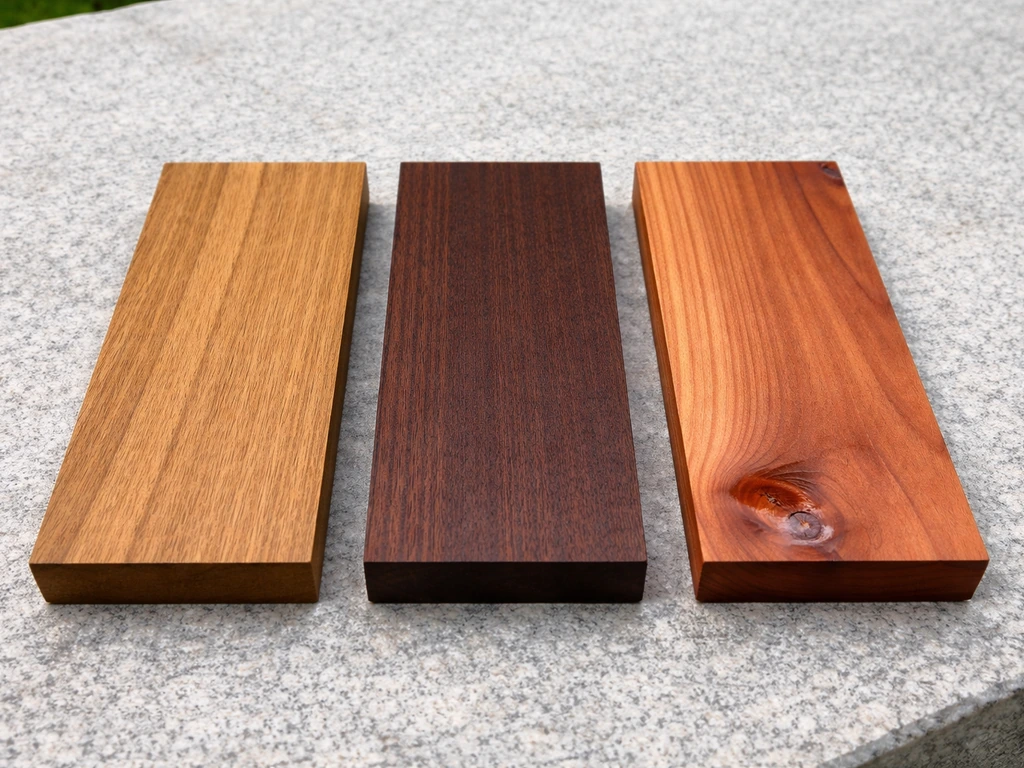
Species selection is the single most important decision you'll make. Some wood species have naturally occurring extractives in their heartwood that resist decay and insects. Others have almost no natural resistance and will rot quickly without chemical treatment. For live-edge outdoor use, you generally want naturally durable heartwood species because pressure-treated lumber isn't typically sold in live-edge slab form.
| Species | Natural Decay Resistance | Outdoor Track Record | Notes |
|---|---|---|---|
| Teak | Very high | Excellent (decades) | Premium cost; self-oiling properties reduce maintenance; high demand means verify sourcing |
| Ipe (Brazilian walnut) | Very high | Excellent (25+ years) | Extremely dense; requires pre-drilling; one of the most durable outdoor hardwoods available |
| Western red cedar (heartwood) | High | Good (15-20+ years) | More affordable; widely available; sapwood has minimal resistance so heartwood grade matters |
| White oak | Moderate-high | Good with proper finishing | Tyloses in pores improve moisture resistance; widely used for outdoor furniture and marine applications |
| Black locust | High | Excellent above-ground | Underrated species; naturally resistant; takes finish well; often available as live-edge slabs |
| Douglas-fir (heartwood) | Moderate | Fair above-ground | Better than generic pine; pressure-treat if ground contact; widely available as large slabs |
| Walnut/maple/cherry | Low-moderate | Poor without stabilization | Beautiful live-edge slabs but not good choices for unprotected outdoor exposure |
If you're set on a species that isn't naturally durable, thermally modified wood is a legitimate stabilization path. The thermal modification process improves dimensional stability and resistance to wood-decaying fungi compared with untreated wood, and thermally modified spruce has shown solid above-ground outdoor performance in research settings. It's more expensive than standard lumber but cheaper than premium tropical hardwoods, and it can be made from species that would otherwise be borderline choices for outdoor use.
One important code note: IRC R319 requires that wood in certain outdoor locations either be pressure-treated or be an approved naturally durable heartwood species. If your live-edge piece is structural or near ground contact, check your local building department's interpretation of that requirement. AWPA-listed treated wood is directly referenced in building codes, and a naturally durable heartwood live-edge slab is typically not pressure-treated, so it needs to qualify on its species merits and placement. This matters most for structural members; for bench tops and decorative accents it's usually not an issue.
Finishes, sealing, and weatherproofing: what actually works
The finish debate for outdoor wood often comes down to penetrating oils versus film-forming coatings, and for live-edge wood specifically, penetrating finishes almost always win. Film-forming finishes like paint, solid stains, and certain epoxies build a surface coating on top of the wood. When moisture moves through the wood from underneath (which it will outdoors), that film can blister, crack, and peel. Once a film-forming finish fails, you're dealing with a stripping and refinishing job, not just a quick re-coat.
Penetrating oils and semitransparent penetrating stains work differently. They soak into the wood fibers rather than sitting on top. They protect without forming a film that can peel, and when they wear, they wear gradually and evenly rather than failing catastrophically. This is the finish approach used on virtually every high-end ipe and teak deck that's lasted 20 years or more. A quality penetrating deck oil applied annually or every two years is the core of any live-edge outdoor maintenance program.
A quick word on epoxy: several people try epoxy fills on live-edge slabs (filling voids, cracks, or the natural edge cavity) and then move those pieces outside. Epoxy resin is vulnerable to UV degradation, which will cause yellowing and breakdown over time. If you use an epoxy fill on a live-edge outdoor piece, it needs to be covered with a UV-protective topcoat, and even then, expect the epoxy to need attention over time. For outdoor use, wood-fill epoxies in small voids are manageable. Large epoxy river fills across a whole slab surface are not a good outdoor choice.
Timing matters too. Freshly milled or newly built live-edge pieces should be allowed to acclimate and dry before you apply any oil-based finish. Applying a stain or oil to wood that still holds construction moisture shortens coating life significantly. A waiting period of several weeks to a few months depending on species and conditions is standard practice before first finishing.
Installation essentials: drainage, framing, fasteners, and safety
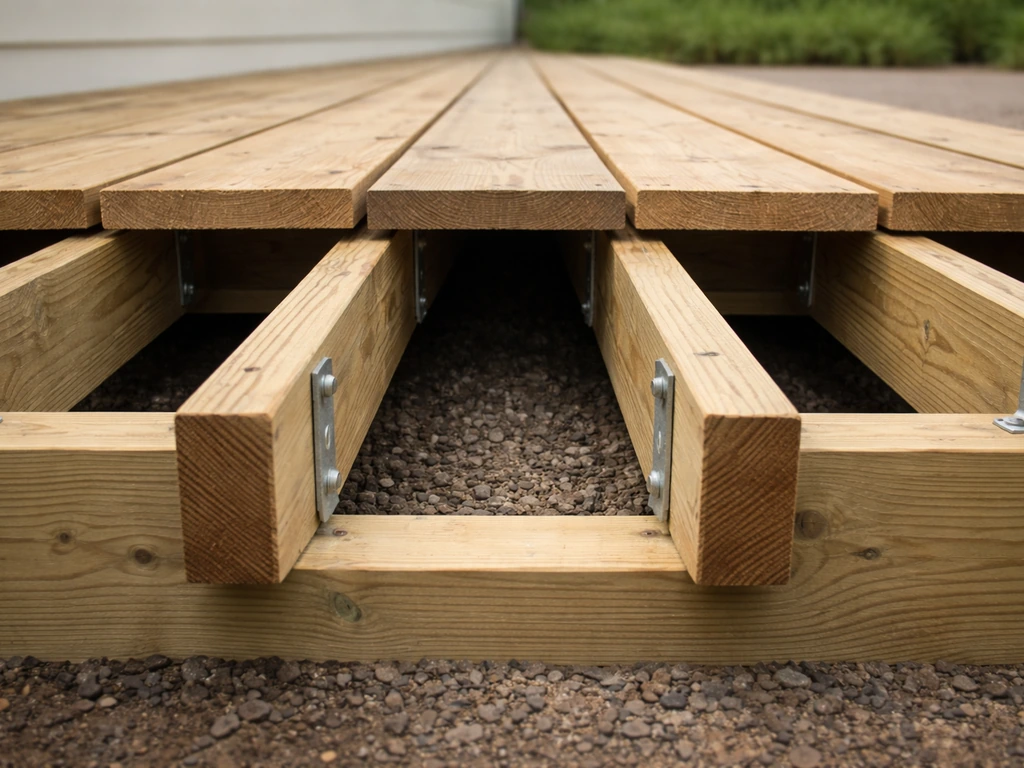
If you're using live-edge boards as decking or a walking surface, the framing and drainage details matter as much as the wood species. The American Wood Council's DCA-6 prescriptive deck guide is the reference point most contractors and inspectors use for residential deck construction, and its principles apply here. DecksDirect notes a common deck drainage-pitch rule of thumb of about 1/4 inch vertical slope per 12 horizontal feet, often described as “gently slope for drainage.”. Joist spacing for thicker live-edge slabs may differ from standard 5/4 decking, so confirm load-spanning capacity before you frame.
- Drainage pitch: slope the surface at approximately 1/4 inch per 10 feet of run so water sheds off rather than pooling. Standing water is the fastest way to destroy any outdoor wood.
- Board spacing: leave gaps between boards (typically 1/8 to 1/4 inch depending on species and moisture content at installation) to allow expansion, contraction, and airflow underneath. Dense tropical hardwoods expand less; softer domestic species need more room.
- Underside airflow: adequate clearance and ventilation underneath the deck surface prevents cupping and warping. Avoid boxing in the underside without ventilation openings. Open clearance percentages and minimum clearances are outlined in hardwood decking installation guides from manufacturers.
- Fasteners: use stainless steel (304/316 grade for coastal or wet environments) or hot-dipped galvanized fasteners. Standard zinc or electroplated fasteners will corrode and stain the wood, especially with dense tropical hardwoods. Pre-drill pilot holes in harder species like ipe and black locust to prevent splitting.
- Bark removal: strip any remaining bark before installation. Bark traps moisture, harbors insects, and separates from the wood over time, creating gaps and instability.
- Surface leveling: for any live-edge piece used as a walking surface, sand or plane the top face to a consistent height to eliminate tripping hazards.
For live-edge benches and accent features that aren't walking surfaces, installation is more forgiving, but the same fastener and drainage principles apply. A bench that holds water in a cupped seam or corrodes its hardware is going to fail from the fastener outward.
Maintenance and lifespan: what to expect season to season
Live-edge outdoor wood is not a set-it-and-forget-it material. It needs more attention than composite decking and roughly as much as any quality hardwood deck. If you're comparing it against pressure-treated pine with a solid stain, the maintenance commitment is similar in frequency but involves different products and slightly more care.
A realistic seasonal maintenance calendar looks like this: in spring, clean the surface (avoid bleach-based cleaners, which can strip and damage wood fibers) and inspect for any cracking, checking, or fastener movement after winter. Apply a fresh coat of penetrating oil if the surface has become dry or gray. In summer, check that bark edges and end grain aren't showing signs of checking or separation. In fall, clean off organic debris before it sits over winter and traps moisture against the wood. After harsh winters with freeze-thaw cycles, do a structural inspection: check that fasteners haven't corroded or loosened and that boards haven't cupped severely.
Realistically, with the right species and annual oiling, a well-installed live-edge bench or accent feature should last 15 to 25 years in most climates. Full live-edge slab flooring in a high-traffic, full-weather-exposure setting is harder to maintain consistently and may show significant wear or require board replacement at the 10 to 15 year mark. Premium species like ipe can push well past 25 years with consistent care.
When to skip live edge and choose something else
Live-edge wood is a high-investment, higher-maintenance choice. There are real situations where it makes sense to walk away from it and choose a more practical alternative. Here are the honest scenarios where I'd skip it:
- High-traffic main patio floor: if your patio is the primary entertainment and foot-traffic area, full live-edge slab flooring will show wear faster and create uneven surface problems over time. Composite decking with live-edge-inspired trim boards gives you a similar aesthetic at lower long-term cost and maintenance.
- Wet climates with persistent humidity: in regions with high year-round humidity and limited drying time between rain events, even good species and finishes are working against baseline moisture saturation. This is where thermally modified wood or composite alternatives start to make more sense.
- Freeze-thaw zones on a tight budget: if you're in the Midwest or Northeast and can't commit to consistent annual maintenance, live-edge wood will deteriorate faster than you expect. The cost of deferred maintenance compounds quickly.
- Ground contact or near-ground applications: live-edge slabs are not pressure-treated to the retention levels needed for ground contact. If your design puts wood at or near grade, you need to either use rated treated lumber or protect it with proper substrate and drainage.
- When the budget is the primary driver: premium live-edge slabs in durable species are expensive. If you're stretching the budget to afford the slabs, you may not have enough left for the proper finishing and maintenance supplies that make them last.
The practical middle ground that many homeowners land on: use standard decking (composite or treated hardwood) for the main patio floor, and incorporate live-edge accent pieces, a bench top, a bar rail, or a privacy screen to get the natural aesthetic without betting the whole patio on it. For the best wood for patio deck results, use standard decking (composite or treated hardwood) for the main patio floor, and add live-edge accents only where you can manage moisture and maintenance. For the best wood for a patio roof, prioritize naturally durable species and penetrating, UV-resistant finishes designed for exterior moisture swings best wood for patio roof. For the ceiling above your patio, the best wood for outdoor patio ceiling choices focus on durable species and finish systems that stand up to moisture and UV. If you want a patio cover, the best lumber choices depend on durability and how well the wood will handle rain and sun above you live-edge accent pieces. If you want a patio cover, the best wood for patio cover depends on durability and how well the wood will handle rain and sun above you. For the best patio wood results, focus on species durability, proper moisture management, and finishes that penetrate rather than trap water. This connects well to thinking about your overall wood choices for decking, covers, and structural elements, where species selection, treatment, and performance tradeoffs come up repeatedly whether you're working with the main deck surface or overhead structures.
How to vet contractors and materials before you commit

Most general contractors and deck builders have not installed a true live-edge wood patio before. This is a specialty application, and you need to ask the right questions up front to avoid hiring someone who's figuring it out on your dime.
- Ask for photos of previous live-edge outdoor installs, not interior furniture. Outdoor and interior applications are completely different from a durability standpoint, and a furniture maker's portfolio doesn't qualify someone to build your patio.
- Ask what species they're proposing and why. If they can't explain the decay resistance properties of the species they're recommending, that's a red flag. They should be able to tell you whether the heartwood qualifies as naturally durable and whether it meets local code requirements.
- Ask about the finishing system. Specifically, ask whether they're using a penetrating oil or a film-forming finish. If they propose a solid stain or paint, ask how they plan to manage future maintenance and peeling. If they propose epoxy on an outdoor surface, ask how they're addressing UV degradation.
- Ask about fastener spec. Stainless steel or hot-dipped galvanized only for outdoor use, with pre-drilling on dense hardwoods. If they're proposing standard wood screws without specification, push back.
- Ask about drainage and ventilation. What's the surface pitch? What's the gap spacing? How is the underside ventilated? These aren't nitpicky questions; they're the difference between a deck that lasts 20 years and one that warps in three.
- Ask for a warranty and what it covers. Some contractors will warranty labor but not materials; some will warranty neither if you supply your own slabs. Get clarity in writing on what happens if boards cup, crack, or fail within the first two years.
- Verify the slab source. Live-edge slabs sourced from reputable domestic sawyers or specialty lumber dealers are more reliably graded and dried than slabs from online marketplaces with unknown moisture content. Ask for the moisture content at time of purchase and whether the slabs have been kiln-dried or air-dried, and for how long.
If you're going the DIY route, the same checklist applies to your material sourcing. Buying slabs at a farmers market or from a Craigslist sawyer isn't automatically bad, but you need to know the moisture content before you install anything. Wood that hasn't dried sufficiently will cup, crack, and push off finishes within the first season. A basic pin-style moisture meter is a worthwhile investment before you commit to any slab for outdoor use.
Bottom line: live-edge wood patios work when you treat them like the premium, specific-requirements project they are. Get the species right, use penetrating finishes, build with proper drainage and stainless fasteners, maintain it annually, and you'll have a feature that looks genuinely unlike anything else on the block. For a complete guide to planning and finishing a wood patio, see our tips on the best patio wood choices. Cut corners on any of those pieces, and you'll spend more money fixing it than you saved.
FAQ
Are live edge wood patios only real if you use full slab flooring across the whole patio?
No. In most real installations, the “live edge” part is usually an accent surface like a bench top, bar rail, or privacy screen. Full live-edge slab flooring exists, but it is harder to drain, harder to keep safe to walk on, and more likely to need partial board replacement sooner.
What’s the biggest mistake people make that makes a live-edge patio fail early?
Using the wrong finish system, specifically film-forming coatings that trap moisture, is a common failure path. Even with a good species, a surface coating that blisters or peels can speed up rot because water gets held where it cannot dry out.
Can I leave bark on a live-edge slab outdoors to keep the natural look?
It’s usually a bad idea outdoors because bark holds moisture and often separates from the wood over time, which can invite insects and rot at the attachment areas. If you want the look, ask the installer whether they can remove the bark and recreate a similar visual with detailing, or choose pieces where bark is already stabilized for exterior use.
How do I tell if the wood I’m buying is actually dry enough for outdoor finishing?
Check moisture content before install using a pin-style moisture meter. If it’s still high, plan for cupping and finish failure in the first season. Also ask when the slab was milled and whether it was kiln-dried or air-dried, because drying methods affect how predictable performance will be.
Do freeze-thaw climates always ruin live-edge wood patios?
They make them less forgiving, not automatically doomed. Performance depends on drainage, airflow under the wood, and how well the installation allows the patio surface to dry between storms. If water can’t escape and freeze in place, cracks and rapid checking become much more likely.
Is epoxy or epoxy-filled “river edges” a good option for outdoor live-edge patios?
Small epoxy fills in localized voids can work if a UV-protective topcoat is used, but large river fills across an outdoor slab surface are a higher-risk choice due to UV yellowing and breakdown. Plan for eventual touch-ups rather than expecting epoxy to be maintenance-free.
How should a live-edge patio be installed to avoid rot from trapped moisture?
You need drainage and breathing space. Avoid installing slabs flat against a solid surface with no airflow, ensure water can run off rather than collect in low points, and use appropriate stainless or corrosion-resistant fasteners because hardware corrosion can spread failure from the fastener area outward.
Are live-edge surfaces safe to walk on, or are they always slippery or uneven?
They can be either, depending on how they are prepared. The irregular edge profile can increase grip but can also create trip hazards. If you’re making a walking surface, require a consistent sanding plan for height transitions and have the installer assess slip resistance in wet conditions.
Does IRC R319 apply to a bench or decorative live-edge feature, or only structural framing?
It depends on placement and whether the wood is considered structural or in certain outdoor contact locations. It matters most for structural members or members near ground contact. Non-structural bench tops or decorative accents are often less restricted, but you should confirm with your local building department if you’re using unconventional materials.
What species should I prioritize if I want the longest lifespan outdoors?
Prioritize naturally durable heartwood species because many non-durable woods will rot without treatment. If you’re set on a less durable species, thermal modification can be a stabilization path, but it usually costs more than standard lumber and still requires a quality exterior penetrating finish.
How often do I really need to oil a live-edge outdoor piece?
Expect an annual check and often an annual re-oil when the surface starts drying out or graying. If your climate is harsh, rainfall is frequent, or UV exposure is strong, you may need more frequent reapplication. The goal is to keep the finish from running out, not to wait until the wood looks completely dry.
Can I use bleach or harsh cleaners to maintain a live-edge patio?
Avoid bleach-based cleaners because they can strip or damage wood fibers and shorten finish life. For routine cleaning, use gentler methods that remove organic debris without aggressively degrading the wood surface.
If I’m hiring a contractor, what questions should I ask to verify they understand live-edge patios?
Ask how they handle species selection for exterior durability, whether they remove bark before installation, what penetrating finish system they specify, how they plan drainage and airflow under the surface, and what fasteners they use. Also ask about experience with moisture content checks and whether they have a plan for inspection and maintenance after install.
Is DIY feasible, or should I assume I need a specialist?
DIY can be feasible for accent features like benches and non-walking elements, but it’s risky for full slab walking surfaces because small framing or drainage mistakes show up quickly. If you DIY, at minimum measure moisture content, follow a penetrating exterior finish schedule, and design for airflow and drying, not just aesthetics.
Next Articles
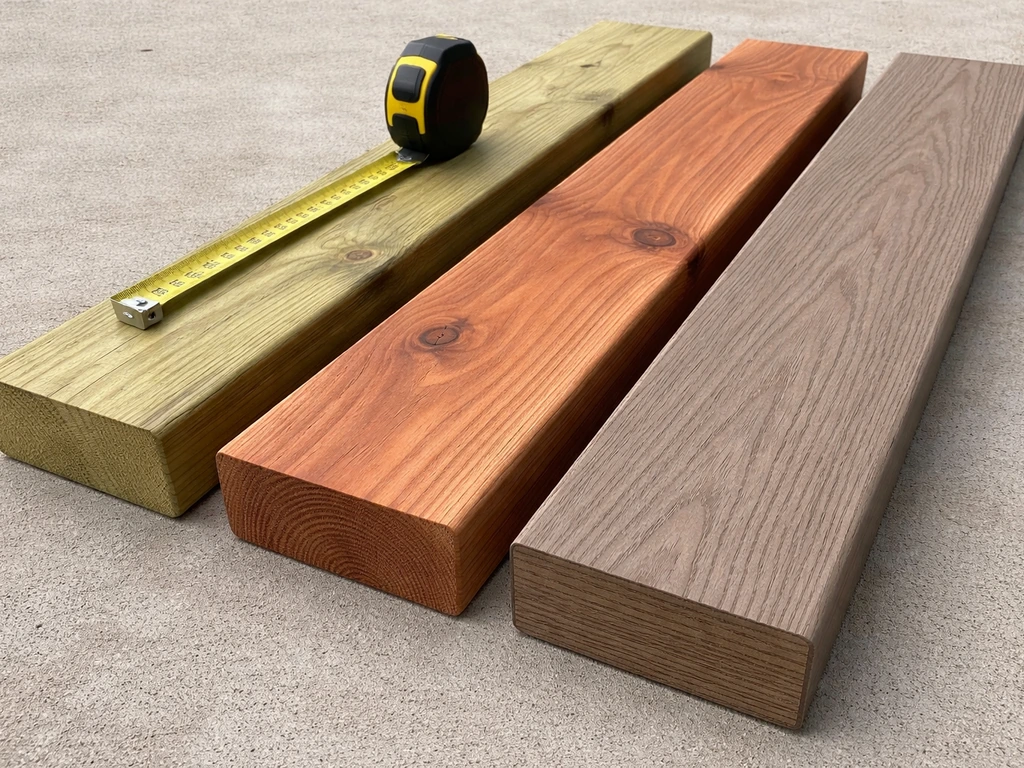
Best Lumber for Patio Cover: What to Use and Sizing Tips
Choose the best lumber for patio covers: species, sizing for joists and ledgers, plus weatherproofing and longevity tips
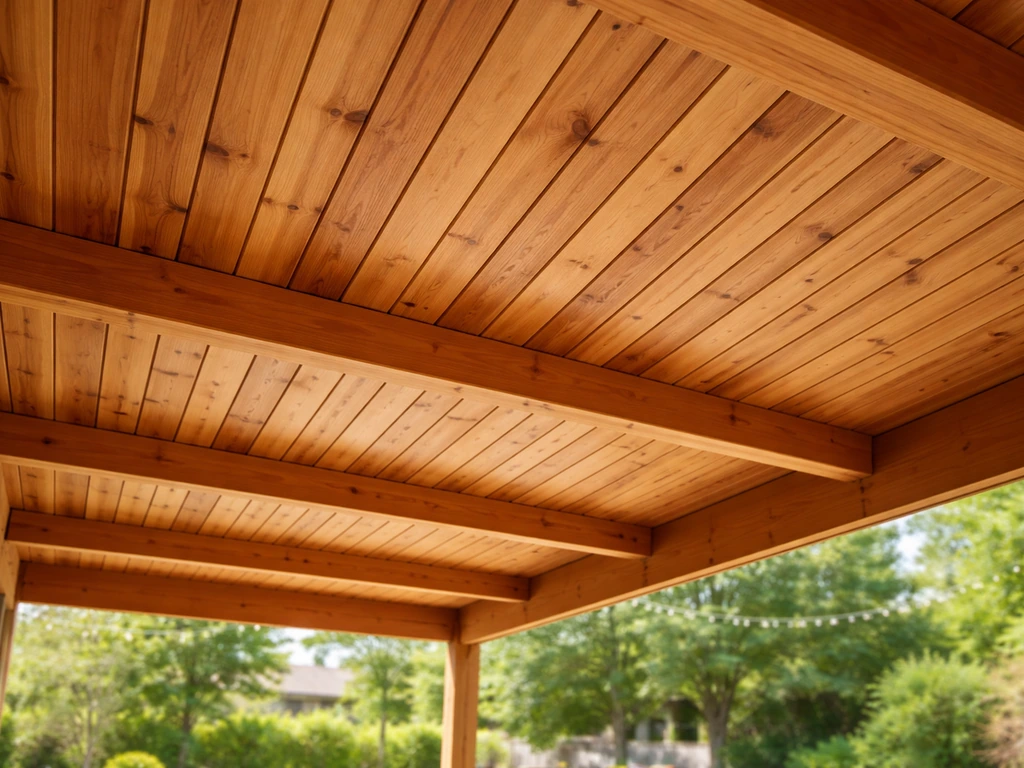
Best Wood for Outdoor Patio Ceiling: Picks, Pros, Installation
Best wood for outdoor patio ceiling by climate and coverage, with species picks, finishes, proper fastening, and mainten
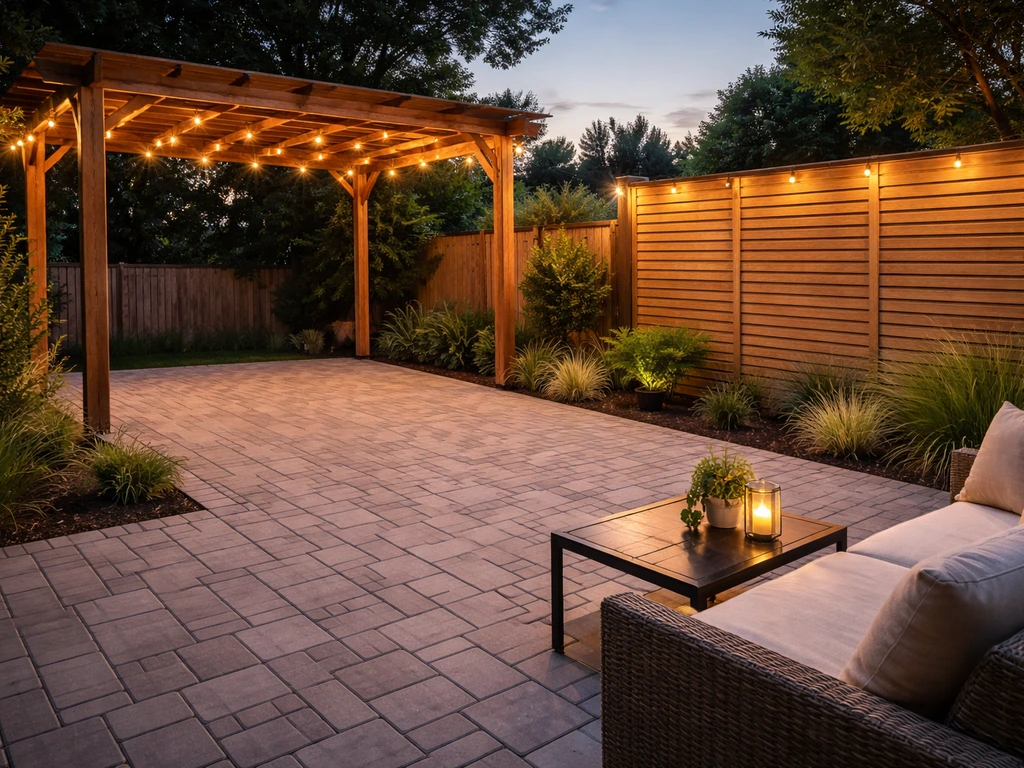
Do It Yourself Outdoor Patio Ideas: Build, Upgrade, Maintain
DIY outdoor patio ideas for planning, building, upgrading, and maintaining floors, shade, privacy, lighting, and decor.