
For most homeowners, pressure-treated pine hits the best balance of cost, availability, and durability, but if you live somewhere wet, freeze-prone, or you just want something that ages beautifully with less upkeep, cedar, ipe, or thermally modified wood will serve you better. There is no single "best" patio wood that wins in every situation, but there is almost always a clear winner for your specific climate, budget, and how much maintenance you're willing to do. If you want a quick shortcut, compare the top options by climate and maintenance tolerance to find the best wood for patio deck boards. This guide walks you through exactly how to figure that out.
Best Patio Wood: Choose Decking That Lasts

Phoebe Foster
29 Apr 2026
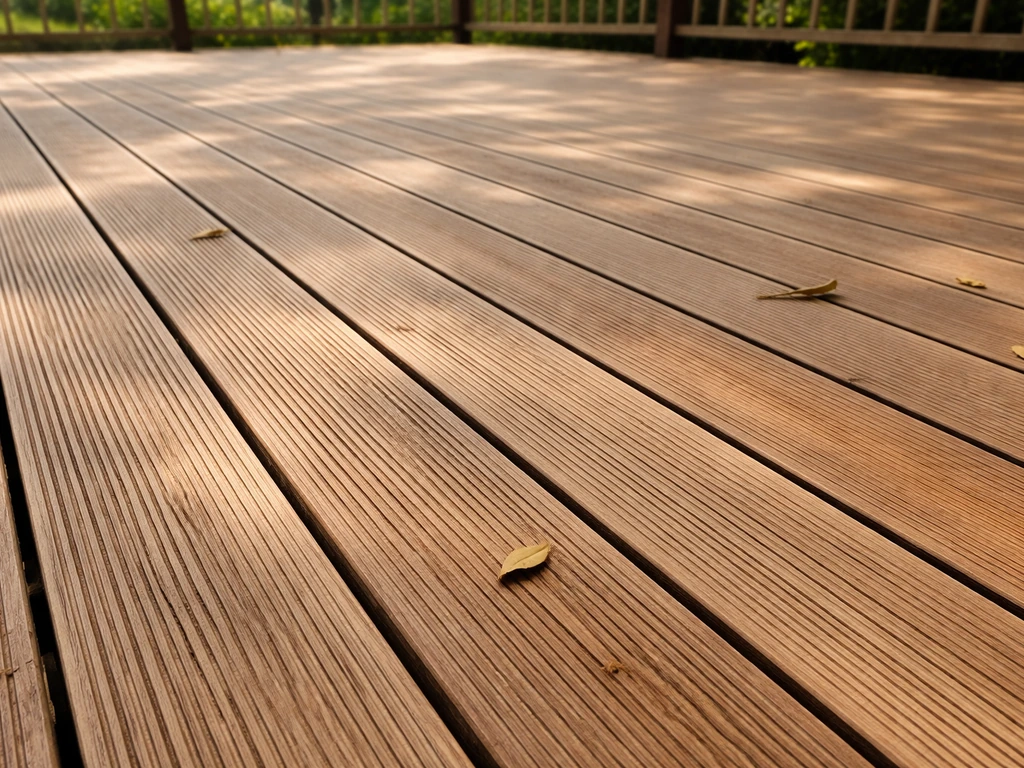
What "best patio wood" actually depends on
Before you pick a species, you need to think about three things: where you live, how exposed the wood will be, and how you plan to use the space. A shaded patio in Seattle deals with constant moisture and mildew risk. A sun-baked Texas deck faces UV degradation, cracking, and heat retention. A Midwest patio gets hit with both extremes, baking summers and hard freeze-thaw cycles that expand and contract the wood repeatedly. Each of those conditions punishes different wood weaknesses.
Exposure level matters just as much as location. Wood under a covered patio cover or pergola stays drier and cooler than an open deck in full sun, which changes everything about rot risk and finish life. Whether the wood is ground-adjacent, sitting directly on concrete, or elevated on a substructure also matters, the American Wood Protection Association (AWPA) classifies treated wood by Use Category (UC) based on exactly these conditions. Deck boards in above-ground, exposed applications fall under UC3B. AWPA’s Use Category (UC) system defines exterior-treated wood exposure categories, including UC3B as “Above Ground, Exposed” and UC4A as “Ground Contact, General Use.” blank" rel="noopener noreferrer">UC3B as “Above Ground, Exposed” and UC4A as “Ground Contact, General Use”. Ground-contact structural members need a higher rating. Matching the product to the use category is one of the most overlooked steps when buying patio lumber.
Your maintenance appetite is the third factor. Naturally durable hardwoods like ipe or teak can go years with minimal care, but they cost significantly more upfront. Pressure-treated pine is cheap and widely available but needs sealing, staining, and regular inspection to hit its potential lifespan. If you hate maintenance chores, spending more on a durable species or thermally modified wood often pays off in the long run.
Top wood choices and how they compare
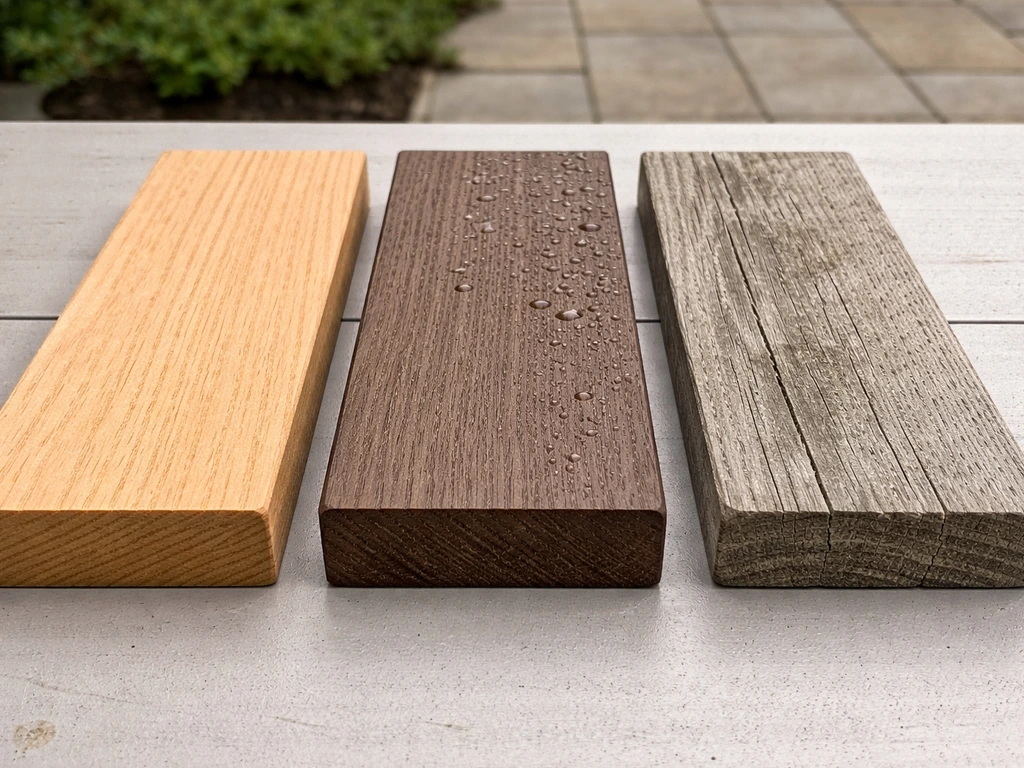
Here's an honest comparison of the most practical options for patio decking and surfaces. These are the ones that show up consistently in real projects and have a track record you can rely on.
| Wood Type | Rot Resistance | Durability / Lifespan | Maintenance Level | Relative Cost | Best For |
|---|---|---|---|---|---|
| Pressure-Treated Pine | Good (chemical treatment) | 15–25 years with maintenance | Medium-High | $ | Budget builds, DIY projects |
| Western Red Cedar | Good (natural) | 20–30 years with care | Medium | $$ | Moderate climates, covered patios |
| Redwood | Very Good (natural) | 25–30+ years | Medium | $$$ | Dry or moderate climates |
| Ipe (Brazilian Hardwood) | Excellent (natural) | 40–75+ years | Low-Medium | $$$$ | High-exposure, low-maintenance goals |
| Teak | Excellent (natural oils) | 30–50+ years | Low | $$$$ | Wet climates, premium installs |
| Thermally Modified Wood | Very Good (modified) | 25–30+ years | Low-Medium | $$$ | Freeze-thaw climates, eco-conscious buyers |
| Douglas Fir (treated) | Good (with treatment) | 15–20 years | Medium-High | $–$$ | Covered structures, drier climates |
Pressure-treated pine dominates the market for good reason, it's available at every lumberyard, comes in consistent dimensions, and the treatment process genuinely improves resistance to rot and warping versus untreated softwood. The downside is that modern preservatives (used since CCA was phased out) can be more corrosive to metal fasteners and connectors, so you can't use standard zinc-plated hardware. Always use hot-dipped galvanized, stainless steel, or fasteners specifically rated for treated lumber.
Cedar and redwood are the go-to naturally durable softwoods. Consumer Reports testing consistently places cedar, ipe, and redwood at the top for natural rot and decay resistance, which reduces reliance on chemical treatment. Cedar is more forgiving to work with, holds fasteners well, and smells great while you're cutting it. Redwood has a tighter grain and tends to be more dimensionally stable, but it's harder to find outside the western US.
Ipe is in a class of its own for longevity. A properly installed ipe deck can realistically last 40 to 75 years or more. The trade-off is density, ipe is extremely hard, which means it can be slippery when wet (look for grooved profiles for better grip), requires pre-drilling for every fastener, and the tight grain means penetrating finishes don't absorb as easily. Oiling is optional and mainly for keeping the color from going silver-gray.
Thermally modified wood is worth knowing about if you want a middle path. The heat treatment process (typically 180–215°C with steam, no chemicals) reduces the wood's ability to absorb water and significantly improves rot resistance. Sources like ThermoWood and Nova USA Wood cite 25 to 30+ year outdoor lifespans and EN Durability Class 1 ratings for products like thermally modified ash. It's a good option if you want something more eco-friendly than chemically treated wood but less expensive than tropical hardwoods.
Best options for different climates and conditions
Wet and humid climates
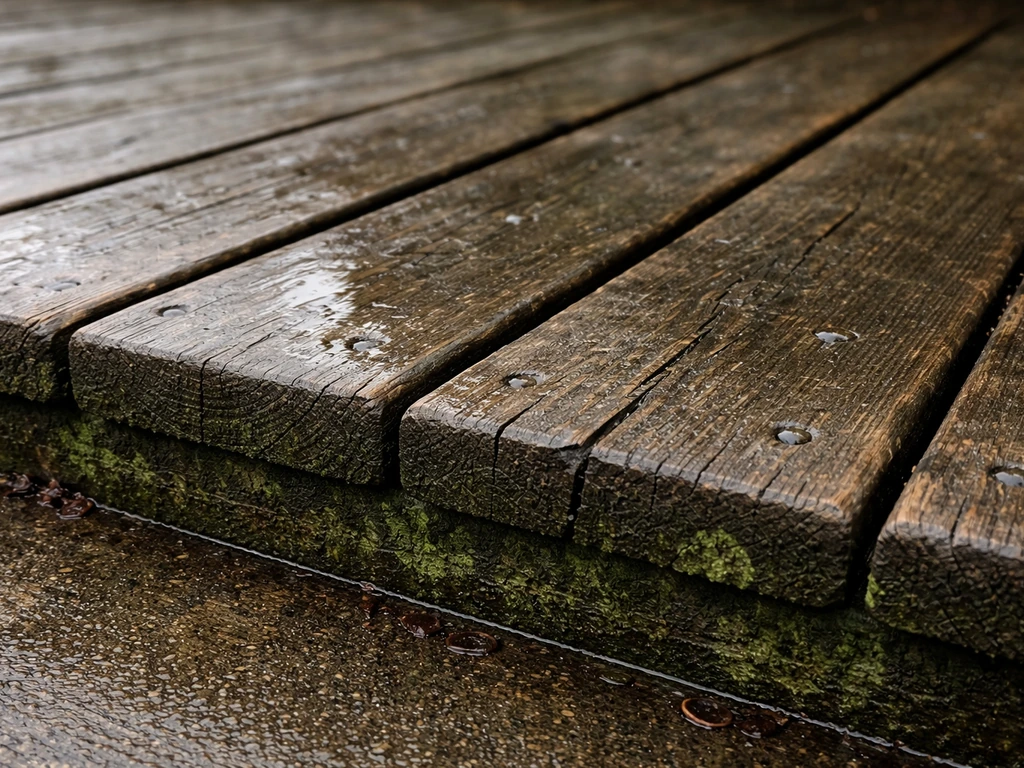
If you're in the Pacific Northwest, the Southeast, or anywhere with persistent rain and humidity, mildew is your biggest enemy. The USDA Forest Products Lab notes that blank" rel="noopener noreferrer">mildew thrives in warm, moist conditions with adequate oxygen, which describes most uncovered patios in those regions during summer. For wet climates, teak, ipe, or thermally modified wood are your best bets because they resist water absorption at the wood-fiber level. If budget pushes you toward cedar or treated pine, you'll need to stay on top of cleaning and resealing every one to two years.
Hot, sunny climates
Intense UV exposure bleaches and degrades wood surfaces faster than most people expect. In Texas, Arizona, or the desert Southwest, the combination of UV and dry heat causes checking (surface cracks along the grain) and splintering. Dense hardwoods like ipe handle UV stress better than softwoods because there's less surface area for light to penetrate. If you go with cedar or treated pine in a hot, sunny climate, a UV-protective finish is non-negotiable, and you should expect to recoat more frequently, possibly every year. A covered patio dramatically extends finish life, regardless of species.
Freeze-thaw climates
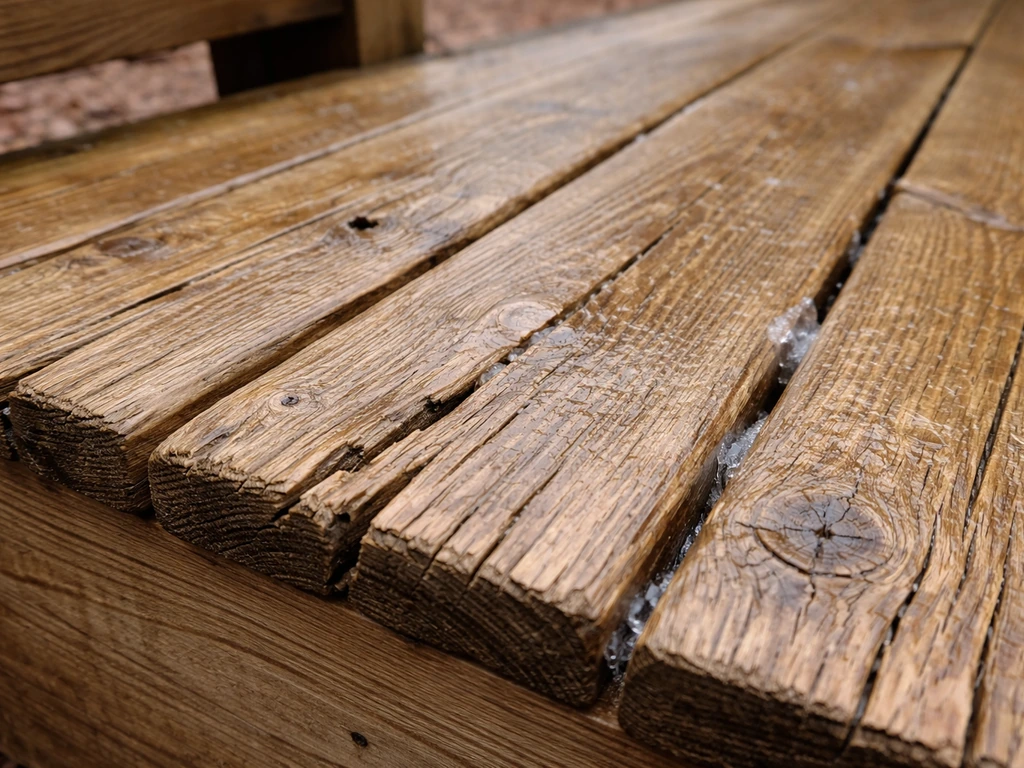
The Midwest, New England, and mountain climates present a specific challenge: wood that absorbs water and then freezes expands from the inside, causing splitting, cracking, and cupping over time. In a Reddit thread on r/BeginnerWoodWorking, users explain cupping using moisture equilibrium and moisture gradients, which aligns with the idea that timing between drying and finishing affects warping. The cycle repeats dozens of times each winter. Species that minimize water absorption, teak, ipe, thermally modified wood, handle this the best. If you use pressure-treated pine in these climates, sealing every year before the cold season is critical. Thermally modified wood is particularly well-suited here because the heat treatment substantially reduces the wood's moisture uptake, limiting how much freeze-thaw expansion actually occurs.
What to look for when buying patio wood
Picking the right species is only half the job. How you buy it matters almost as much. Here's what to check before you load boards into your truck.
- Treatment rating and use category: For pressure-treated lumber used as deck boards, look for UC3B on the tag. Ground-contact structural members (posts, beams close to soil) need UC4A or higher. Don't use UC3B-rated boards in ground contact — the treatment retention level isn't sufficient.
- Preservative type and fastener compatibility: Modern treated lumber uses copper-based preservatives that can corrode standard fasteners. Confirm the preservative type on the tag and buy hot-dipped galvanized or stainless steel fasteners and hardware to match.
- Moisture content and drying: Freshly treated lumber from a home center is often still wet. The Wood Handbook is clear that high moisture content drives warping, cupping, and finish failure later. Buy kiln-dried after treatment (KDAT) lumber when you can, or let wet boards acclimate in a stacked, ventilated pile for several weeks before installing.
- Grade: For decking, No. 2 and Better is the standard minimum — it limits knot size and defects that lead to early failure. Select or premium grades are worth it for visible, high-traffic surfaces.
- Thickness: Standard deck boards are 5/4 (actual ~1 inch) or 2x (actual ~1.5 inches). For longer joist spans (24 inches or more), go with 2x stock. Thinner boards flex, which stresses fastener holes and accelerates cracking.
- Visual inspection: Avoid boards with end checks (cracks at the tips), large loose knots, or significant twist. Sight down each board before buying — a banana-shaped board will never lay flat.
- End-grain treatment: Cut ends are the most porous part of any board and absorb water much faster than the face or edges. If boards are cut at the yard, apply a field preservative (copper naphthenate is the most widely recommended option from the American Wood Council) to every cut end before installation.
Installation basics that actually affect how long your patio lasts
Even great wood installed badly will fail prematurely. These are the installation details that make a real difference.
Substructure and drainage
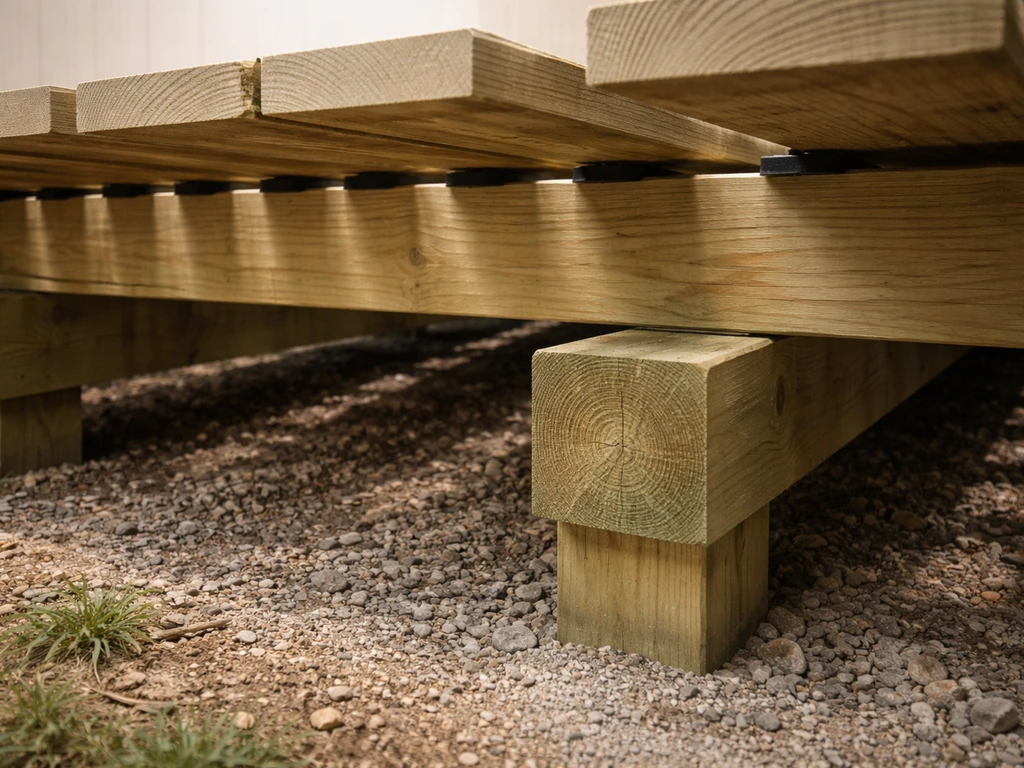
The framing under your deck boards needs as much attention as the surface. Use UC4A or UC4B treated lumber for anything in ground contact or close to grade. Posts should be set in code-compliant footings, not just buried in dirt. Make sure the whole structure pitches slightly away from the house for drainage, even a 1/8-inch-per-foot slope helps. Standing water under and around deck boards is the fastest path to rot, so clear debris regularly and don't let leaves and soil pile up against the framing.
Board spacing and ventilation
Gaps between deck boards are not just aesthetic, they're a ventilation and drainage system. Industry guidance consistently recommends gaps in the 1/8 to 1/4 inch range between boards. If you're installing wet or green lumber, start at the tighter end because the boards will shrink as they dry, widening the gap. If you're installing KDAT or dry boards, start at 1/4 inch. Gaps that are too narrow trap moisture, block airflow under the boards, and accelerate mildew growth. Gaps that are too wide create trip hazards and look sloppy. Getting this right from the start saves a lot of headaches.
Fasteners and connection hardware
Use corrosion-resistant fasteners throughout, not just for the deck boards but for every joist hanger, post cap, and structural connector. For treated lumber specifically, stainless steel or hot-dipped galvanized (HDG) hardware is the minimum. Electroplated zinc-coated fasteners corrode quickly in contact with copper-based preservatives and will fail long before the wood does. Hidden fastener systems (clips that attach to the board edge rather than face-screwing) eliminate surface screw holes that collect water and are worth the extra cost on premium wood species like ipe or cedar.
Treating every cut end
This step gets skipped constantly on job sites and it's one of the most common causes of early rot in pressure-treated decks. Every time you cut a board, you're exposing raw, untreated wood fiber at the end grain. Apply a liquid preservative (copper naphthenate works well and is widely available) to every fresh cut before it goes into the structure. This is especially critical for ledger boards, post bases, and any board that sits close to the ground or a water source.
Finishes and a realistic maintenance plan
Finishing patio wood is where a lot of homeowners either skip steps or over-invest in the wrong product. Here's how to think about it practically.
Penetrating vs. film-forming finishes
Penetrating (oil-based) stains soak into the wood fiber rather than sitting on top as a coating. The practical advantage is that they don't peel, crack, or flake the way film-forming finishes can when the wood moves seasonally. When a film-forming finish fails, it fails visibly and requires more aggressive prep (often stripping or sanding) before recoating. When a penetrating finish weathers, it just fades and you can clean and recoat without stripping. For most exterior patio wood, penetrating semi-transparent stains are the easier long-term choice. The depth of penetration depends on the species, dense hardwoods like ipe absorb less than open-grain softwoods like cedar, so match your finish to the wood.
Recoat timing and cleaning
A realistic maintenance schedule for most patio wood looks like this: clean the surface once or twice a year (a deck wash product and a stiff brush handles most mildew and tannin staining), inspect for loose fasteners, cracked boards, and soft spots, and recoat the finish as needed. Penetrating oil finishes on cedar or pine typically need reapplication every one to two years in high-exposure conditions. Film-forming products can need more frequent attention because once they start to fail, you need to recoat before water gets under the film. Ipe and teak can go several years between oil applications if you're okay with the wood going silver-gray naturally.
Before any recoat, the surface needs to be clean and dry. Applying stain over dirty or damp wood is the single biggest reason finishes fail early. Let the deck dry for at least 48 hours after washing before you apply anything. If the finish is film-forming and showing signs of peeling, strip it back to bare wood rather than adding another coat over a compromised film.
Quick maintenance checklist
- Every spring: sweep debris, scrub with a deck wash, rinse, and let dry completely.
- Every spring: walk the deck and probe any discolored or soft-looking boards with a screwdriver — soft spots indicate rot that needs immediate attention.
- Every 1–2 years (or when water stops beading): clean the surface and apply a fresh coat of penetrating stain or oil finish.
- Every few years: check all structural connections, tighten or replace loose fasteners, and re-treat any cut ends that look exposed or checked.
- Before winter in freeze-thaw climates: clear standing water paths, make sure gaps are free of debris, and ensure finishes are in good shape to resist ice expansion.
When to choose wood vs. other patio materials
Wood is genuinely excellent for patio surfaces when you want a natural look and feel, are willing to do periodic maintenance, and want a material that's easy to cut, customize, and repair. It's the right call for most DIYers because it uses standard tools and is forgiving of imperfect cuts. It's also the material of choice for patio covers, pergolas, and ceiling applications where composite products don't perform as well structurally, those wood-specific applications are worth exploring separately if that's part of your project. If you're deciding on the best wood for patio roof framing and coverings, focus on moisture exposure, rot resistance, and the maintenance you can realistically keep up with patio cover. Choosing the best wood for outdoor patio ceilings also comes down to exposure level, moisture risk, and how much maintenance you’re willing to handle ceiling applications. Some people also ask whether live edge wood patios are real, and the short answer is yes, with the right stabilization and support so the boards stay flat wood specifically applications. When you are building a patio cover, the best wood for the job depends on how much the cover shields the boards and how wet and freeze-prone your climate is patio covers.
That said, wood has real competition. Composite decking (wood fiber and plastic blends) eliminates most of the maintenance burden, no sealing, no staining, and far less splintering risk. The trade-off is that composites feel different underfoot, can get hot in direct sun, and can't be easily refinished if they fade unevenly. Concrete and porcelain tile patios are nearly maintenance-free and extremely durable, but they crack under severe freeze-thaw conditions and are harder to DIY. Natural stone is beautiful but expensive and can be slippery when wet.
If your honest answer to "how much maintenance will I actually do?" is "not much," consider composite decking or tile instead of wood. Both will outlast a neglected wood deck in almost any climate. But if you're willing to clean and reseal every year or two, a quality wood deck, especially in cedar, ipe, or thermally modified species, will reward you with a look and feel that composites still can't fully replicate.
The bottom line: pressure-treated pine for budget builds, cedar for a natural look with moderate maintenance, ipe or teak when you want the best longevity with minimal upkeep, and thermally modified wood when you want a chemical-free option that handles freeze-thaw well. Pick your species based on climate and maintenance tolerance, buy it right, install it with proper gaps and corrosion-resistant hardware, seal it before the first season, and you'll have a patio surface that holds up for decades.
FAQ
Can I use live edge wood for a patio surface?
Yes, but only if you match the stabilization and support approach to how “live” the edges move. Use boards that are kiln-dried or engineered for outdoor movement, install them so water can drain underneath, and plan for periodic checking, especially on sun-baked patios where the edges can lift or cup.
What if my patio wood will be near or touching the ground?
If the wood will sit directly on soil or contact standing moisture, treat it like a ground-contact application, not a typical above-ground deck. That means using the correct treated lumber use category and elevated, ventilated framing, otherwise even rot-resistant species can fail where they stay wet.
How soon after installing pressure-treated pine can I stain or seal it?
Newly installed pressure-treated pine often needs time before finishing, the wood still contains moisture. Let it dry and follow the specific product label for timing, then apply a penetrating semi-transparent stain rather than trapping moisture with a heavy film coating that can peel.
What fasteners should I use with pressure-treated pine?
Avoid mixing standard zinc-plated hardware with treated lumber and especially with fasteners near copper-based preservatives. Stick with hot-dipped galvanized or stainless steel, and when in doubt use fasteners explicitly labeled for treated wood to prevent early metal failure.
What’s the safest way to prep patio wood before re-staining?
Use a deck wash and a stiff brush, then rinse thoroughly and let it dry fully. Before recoating, check that the surface is clean and not slick, if it still feels slimy or dark with residue, rewash, then wait longer than 48 hours before applying stain.
Should I use the same cleaner for mildew and for gray tannin staining?
Choose the cleaner based on the problem, mildew needs mold/mildew action, while tannin stains and gray weathering often respond better to oxygen-based deck cleaners. If you see black mold or widespread mildew, do a deeper cleaning cycle before you ever recoat.
Can I switch from a film-forming finish to penetrating stain?
Yes, but expect discoloration and different wear, and some finishes will not bond well to certain previously-coated surfaces. If you want to switch from a film finish to a penetrating stain, you may need to remove the failed film first rather than trying to cover it.
What happens if my deck board spacing is wider than recommended?
For joints and drainage, keep gaps consistent across the whole surface. If you use wider spacing, secure boards so they do not twist, and make sure the underframing is straight, otherwise gaps can increase over time and trip over uneven boards.
Which finish type works best for patios in high-rain climates?
For very wet climates, avoid impermeable coatings that trap moisture in the wood. Penetrating finishes help the wood dry, and choosing a more water-resistant species like ipe or thermally modified wood reduces how often you have to recoat while still keeping the surface safer to walk on.
How do I know whether I should replace boards instead of re-staining?
If boards are cupped, separating at joints, or showing soft spots, you cannot “finish” your way out of structural or rot issues. Replace damaged boards and check the joists and ledger areas first, then finish once the wood is clean, dry, and firmly secured.
Next Articles
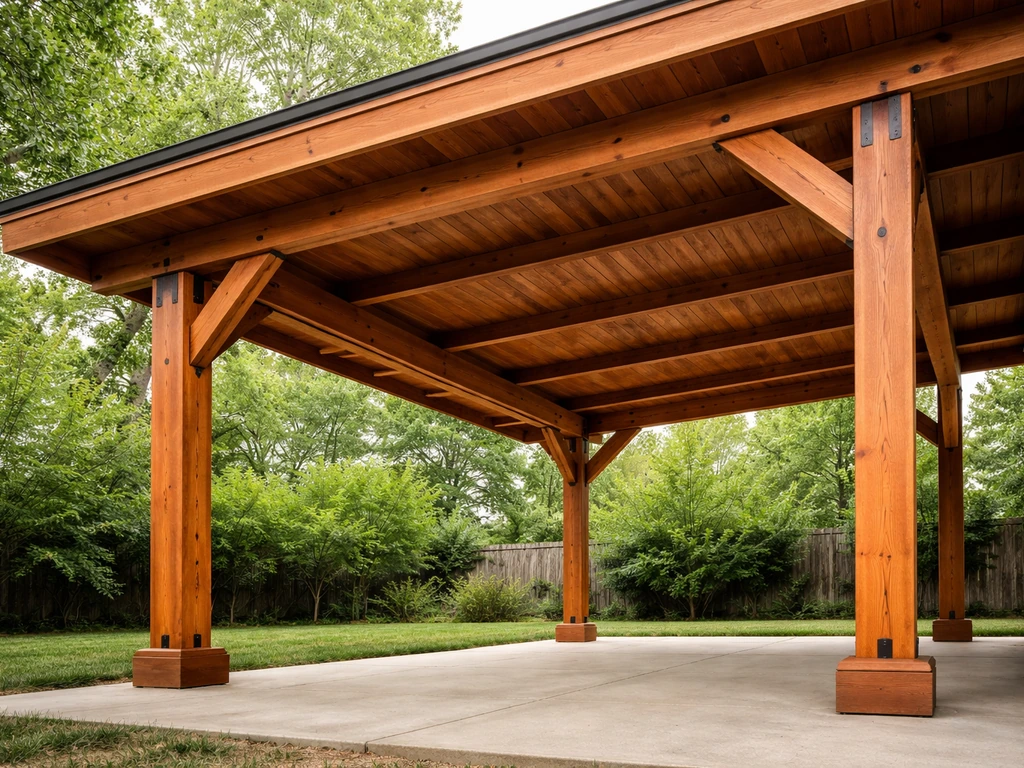
Best Wood for Patio Cover: Choices, Grades, and Tips
Compare cedar, redwood, and pressure-treated wood grades for patio covers, plus what to buy, finish, and maintain outdoo
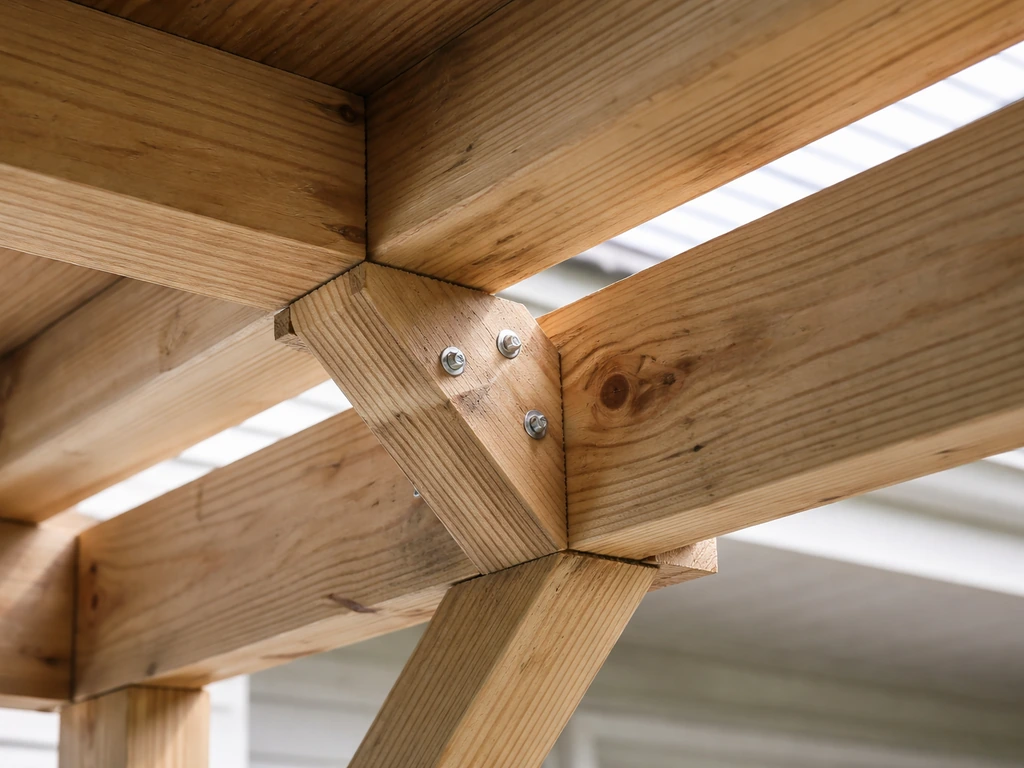
Best Wood for Patio Roof: Top Species, Grades, and Care
Choose the best wood for a patio roof with top species, grades, fasteners, finishing, and climate-based care tips.
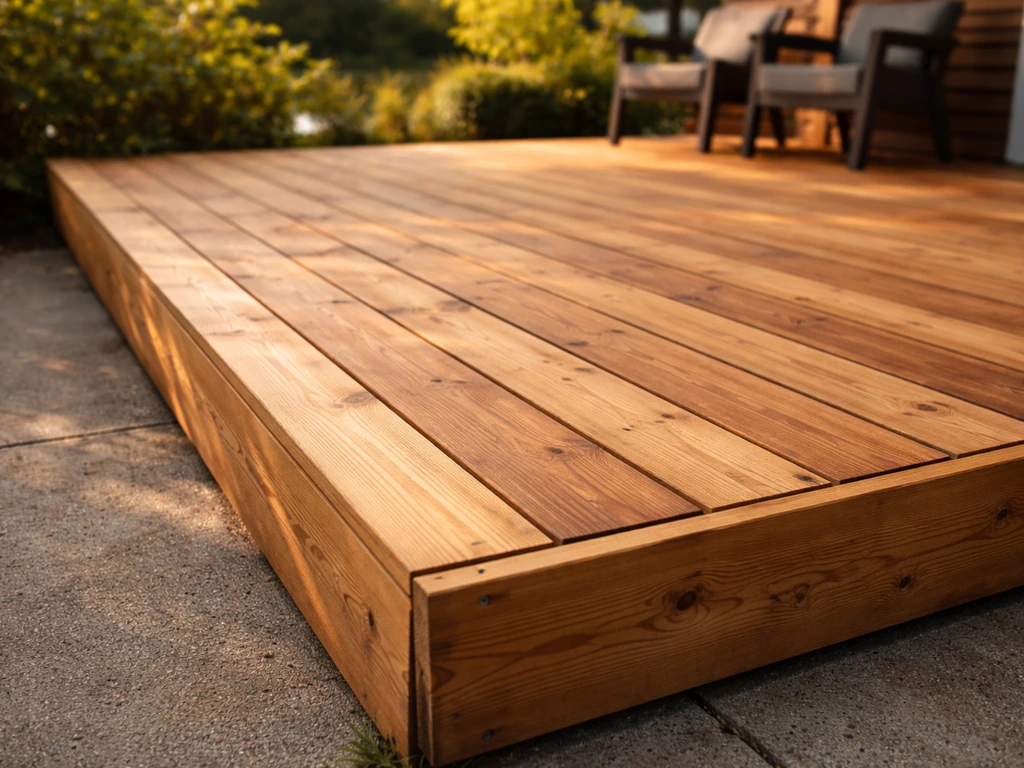
Best Wood for Patio Deck: Compare Options, Costs, Lifespan
Compare patio deck wood options for durability, cost, and lifespan. Includes maintenance plan, pros cons, and best choic