Decorating a backyard patio comes down to six moves: define what you want the space to do, divide it into zones, pick furniture that fits and flows, layer in weather-safe finishes and fabrics, add lighting for evenings, bring in plants for privacy and greenery, then finish with the small details that make it feel intentional. If you want inspiration for things to do on a patio, start with your top daily moments and plan the zones around them. Do those things in that order and you end up with a patio that looks great, holds up to your climate, and actually gets used.
How to Decorate Backyard Patio: Step-by-Step Guide

Phoebe Foster
27 May 2026
Start with style, function, and zones
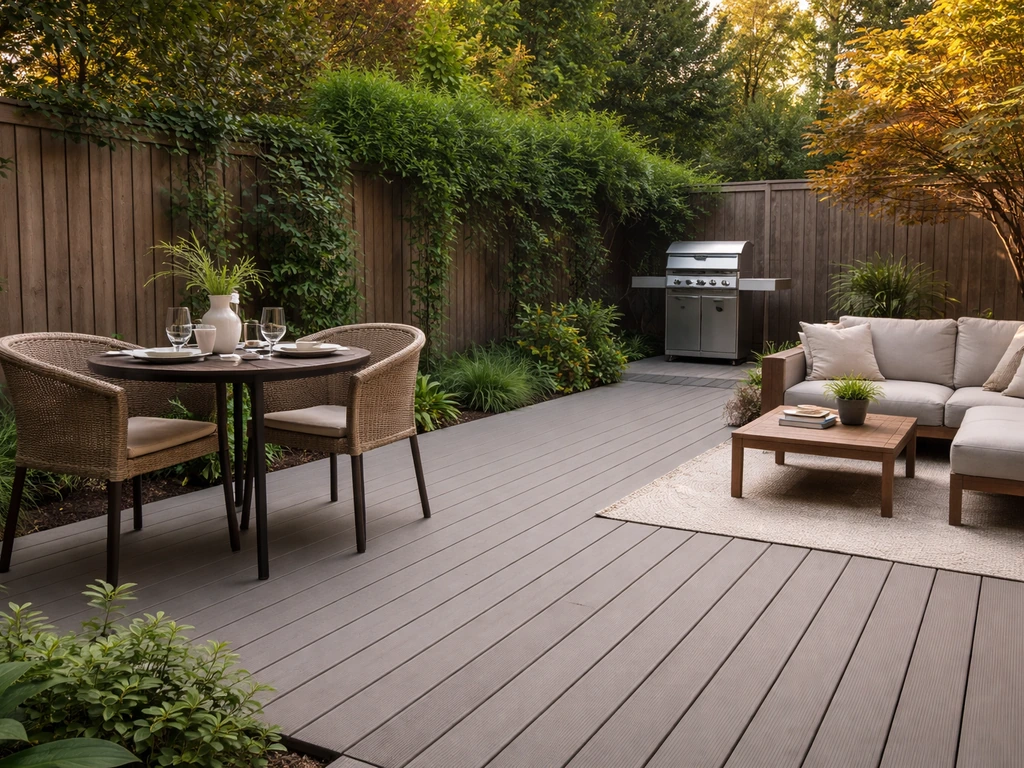
Before you buy anything, spend ten minutes answering two questions: how will you actually use this space, and what does it need to feel like? A family that grills every weekend and has kids running around needs a very different setup than a couple who mostly drinks coffee in the morning and hosts dinner parties on weekends. Knowing your primary use keeps you from buying a massive sectional when what you really need is a round dining table.
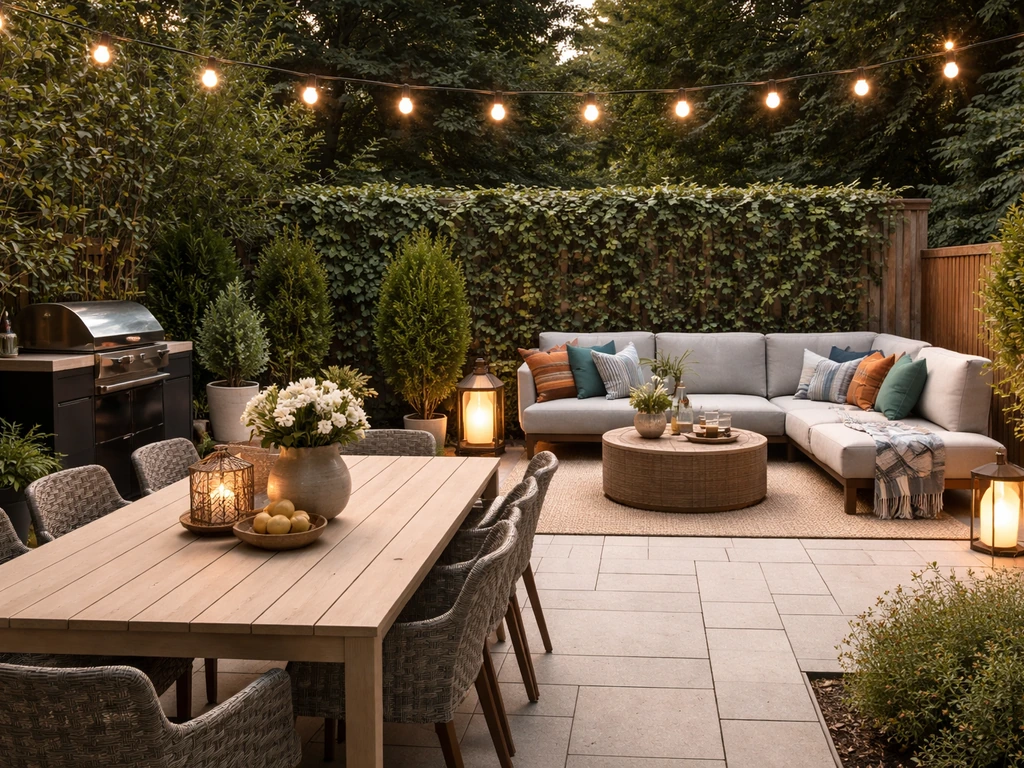
Once you know the function, break the patio into zones. The most useful framework is three zones: a dining area, a lounging or conversation area, and an ambient or late-night hosting zone (think fire pit, bar cart, or low seating). You don't need a huge patio to do this. Even a modest 12x16 space can hold a four-person dining set on one end and a pair of lounge chairs on the other, with good lighting bridging the two. The key is treating each zone as its own mini-room, with a defined edge (a rug, a change in furniture style, or a planter grouping) rather than letting everything blend together.
Style-wise, pick a direction and commit to it. Coastal, modern, Mediterranean, farmhouse, and tropical are all valid, but mixing too many aesthetics makes the space feel chaotic. Pull two or three colors from something you already love, whether it's the cushion you spotted online or the stain color on your fence, and let that anchor your material and decor choices throughout.
Outdoor furniture and layout for flow and seating
Furniture is where most people either nail it or waste money. The two biggest layout mistakes are buying pieces that are too big for the space and not leaving enough clearance for people to move around comfortably. For dining areas, you need at least 24 to 30 inches behind each chair for someone to pull it out and sit down, and at least 36 inches of clear walkway anywhere people regularly walk behind seated guests. If your patio has a sliding glass door, bump that clearance to 36 inches behind dining chairs near the door so you're not sidestepping every time someone goes inside.
For materials, the short version is: teak, powder-coated aluminum, and HDPE synthetic wicker are your most durable choices. Teak is beautiful and can last 25 to 50 years with proper care. Aluminum is rust-proof, lightweight, and works in any climate including coastal areas. HDPE synthetic wicker (sometimes sold as polyrattan or resin wicker) looks like natural wicker but is designed to resist fading and weather. Avoid natural rattan outdoors; it breaks down fast when fully exposed to the elements.
| Material | Best For | Maintenance Level | Climate Notes |
|---|---|---|---|
| Teak | Long-term investment pieces | Low to moderate (oiling optional) | Works almost anywhere; oil in dry climates |
| Powder-coated aluminum | Lightweight, low-fuss setups | Very low | Excellent for coastal and humid climates |
| HDPE/synthetic wicker | Traditional wicker look without the rot | Low | Good in humidity; check frame material too |
| Natural rattan/wicker | Indoor or covered porches only | High | Fails quickly with rain and UV exposure |
| Untreated iron/steel | Avoid outdoors | Very high | Corrodes without outdoor-rated coatings |
For cushion fabrics, Sunbrella is the benchmark. It's 100% solution-dyed acrylic, backed by a five-year UV fade warranty, and resists mold and mildew. It's not the cheapest option, but it genuinely outlasts budget fabrics by years. If you're working with a tighter budget, look for solution-dyed polypropylene fabrics, which offer solid UV and moisture resistance for less money. Either way, cover cushions when not in use and bring them inside or to a dry space off-season. That one habit will extend their life significantly.
Layout tip: arrange furniture to face inward toward a focal point, whether that's a fire table, a view, or a statement planter. Avoid lining chairs against the wall as if people are waiting in a dentist's office. Angle things slightly, float the seating away from the perimeter, and leave a clear 30-inch walking path through the main traffic areas.
Finishes, rugs, curtains, and weather-safe decor
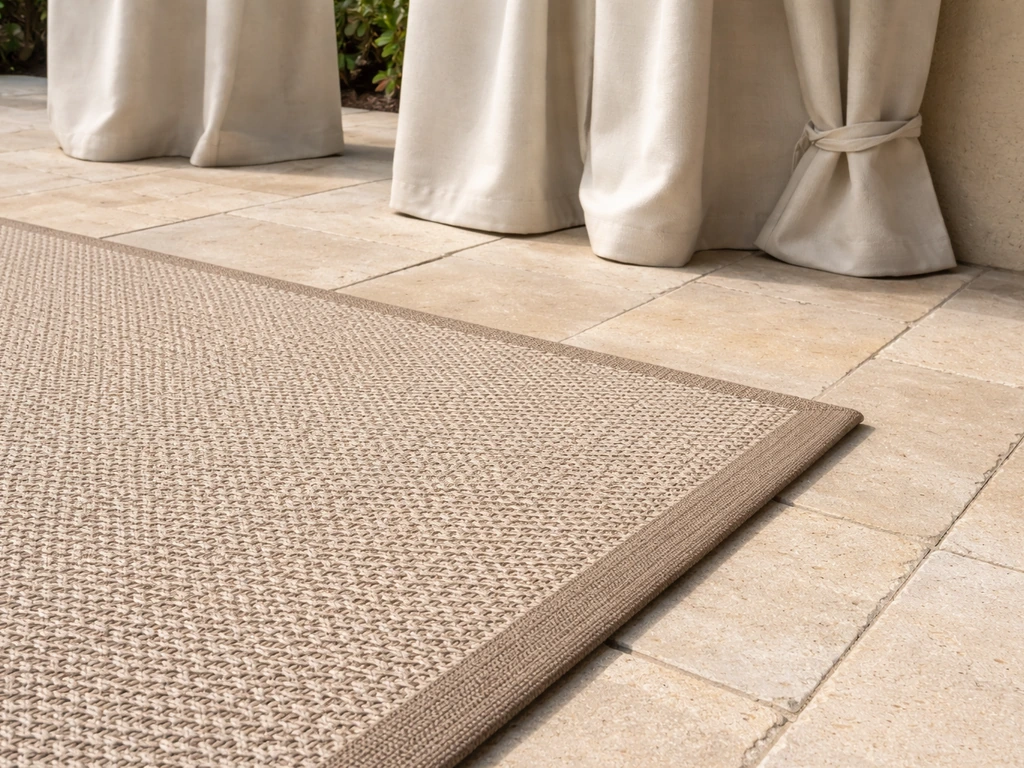
An outdoor rug is one of the fastest ways to define a zone and make the space feel finished. For material, polypropylene is the most practical all-around choice: it resists water, UV, and mold, and it dries quickly. Avoid natural fibers like jute, sisal, and seagrass outdoors. They absorb moisture, which creates the exact conditions mold needs to grow. If you live somewhere humid, like the Gulf Coast or the Southeast, that's especially important.
On sizing, don't go too small. An 8x10 rug works well under a standard conversation set or a four-to-six person dining setup. For larger patios where you want one rug to anchor both a dining area and a seating area, a 9x12 makes sense. A rug that's too small makes the furniture look like it's floating on an island. Always dry your rug completely before rolling and storing it, and keep it somewhere dry off-season. Even mold-resistant rugs can develop problems if you roll them up damp.
Outdoor curtains and shades are underused tools that do double duty: they add visual softness and privacy while also blocking sun and wind. Shade fabric like Coolaroo can block up to 90% of UV and is rated to resist mold, fading, and cracking. For curtains, look for solution-dyed acrylic or polyester panels rated for outdoor use. Avoid indoor fabric outdoors, it will degrade in one season. For wall decor, powder-coated or galvanized steel art is your safest bet. Bare untreated iron will rust quickly outdoors, especially near sprinklers or in humid climates.
Budget-friendly option: instead of custom shade sails or motorized pergola screens, start with a quality canvas drop cloth turned into DIY curtain panels (grommet kits cost a few dollars) and a basic tension rod or curtain wire between two posts. It looks intentional, costs under $50, and you can always upgrade later.
Patio lighting, ambiance, and evening comfort
Lighting is what separates a patio that gets used after 6pm from one that doesn't. The goal is layered light: overhead ambient light, task light near dining or cooking areas, and accent or path lighting that adds atmosphere without blinding anyone.
String lights are the easiest win. Hang them at about 8 to 10 feet overhead in a straight run or a loose grid, and space bulbs roughly 3 to 4 feet apart for consistent brightness without hot spots. Avoid letting them sag too low, both for aesthetics and to keep them out of face level. Café-style string lights on a dimmer or smart plug are cheap, flexible, and immediately change the feel of a space.
For path and step lighting, space path lights about 6 to 10 feet apart in an alternating pattern on each side of the walkway. Closer spacing (around 3 to 4 feet for solar options) gives more consistent coverage. Avoid aiming fixtures directly at eye level. Glare usually comes from overly bright, poorly shielded fixtures, so look for fixtures with hoods or optics that direct light downward. Low-voltage systems are the most practical for patios: they're easy to install, safe, and many now work with smart dimmers that let you set dusk-to-dawn schedules or adjust brightness by zone without needing a separate light sensor.
- String lights: hang at 8–10 ft, space bulbs 3–4 ft apart, use a dimmer for ambiance
- Path lights: alternate sides every 6–10 ft, aim downward to reduce glare
- Step lights: recess into risers or mount on sides to light the tread, not the face
- Lanterns and candles: use hurricane glass holders outdoors to prevent wind knockovers
- Smart/low-voltage transformers: set dusk-to-dawn schedules and dimming presets by zone
- Accent uplighting: use sparingly on a specimen plant or focal wall, aim away from seating
If you're renting or on a tight budget, plug-in string lights, solar path lights, and a handful of battery-powered lanterns can get you most of the way there with zero wiring. It won't be as seamless as a hardwired low-voltage system, but it works and it's completely reversible.
Plants, vertical greenery, and privacy screening
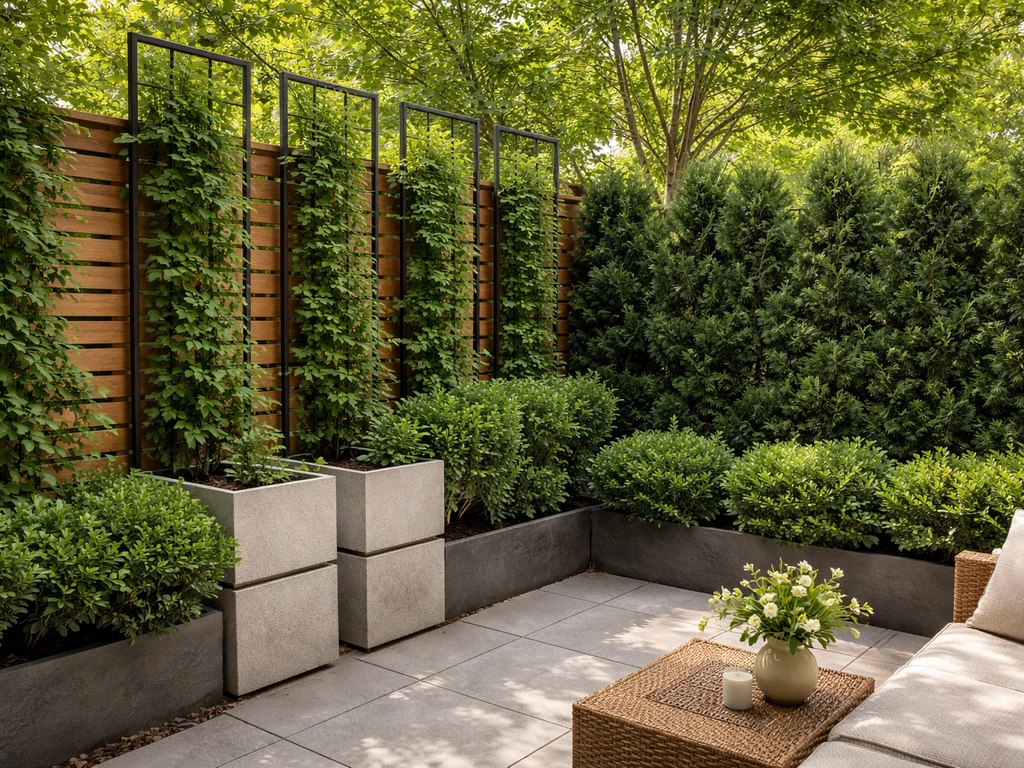
Plants are one of the best tools in patio decorating because they do three things at once: add color and texture, soften hard surfaces, and create privacy without requiring a fence permit. The question is what to plant and where.
For privacy screening, evergreen shrubs and trees are the most efficient long-term investment. Emerald Green Arborvitae is one of the most popular choices in North America. Plant them 2.5 to 3 feet apart (center to center) for a tight, gap-free hedge. Green Giant Arborvitae grows faster, reaching 8 to 10 feet in roughly three to four years from a 5-gallon nursery plant, which makes it a good choice if you need height quickly. Leyland Cypress is another fast-growing option for taller screens. For more distinct specimens rather than a solid wall, space them 8 to 10 feet apart.
Vertical greenery is great for small patios or renters who can't plant in the ground. Wall-mounted planter systems, freestanding trellis panels with climbing plants, or a simple ladder shelf with potted herbs and succulents can add a lot of life without taking up floor space. Trailing plants like pothos (in milder climates) or sweet potato vine fill in quickly and add a lush look.
For container plants near the patio, choose large pots in weather-rated materials like fiberglass, resin, or glazed ceramic. Terracotta looks great but cracks in freeze-thaw cycles, so if you're in the Midwest or anywhere with cold winters, either bring terracotta inside or switch to frost-proof alternatives. Group containers in odd numbers (three or five), vary the heights, and anchor the grouping with one larger statement plant.
Finishing touches: table styling, decor accessories, and maintenance
Once the furniture, lighting, and plants are in place, the finishing touches are what make a patio feel curated instead of just furnished. These are the details that photograph well and make guests feel like the space was thought through.
For table styling, keep it simple and functional. A low centerpiece (so people can see across the table), a hurricane candle holder rated for outdoor use, and a weather-safe tray or serving board are all you need. Skip anything delicate or porous outdoors. Outdoor-rated ceramic, concrete, galvanized metal, and treated wood all hold up well. Avoid untreated wood, paper, or anything with finishes that will bubble and peel.
Storage and organization matter more than most decorating guides admit. A patio that has nowhere to store throw blankets, citronella candles, and extra cushions quickly becomes cluttered. A deck box (double as extra seating), a small outdoor console or sideboard, or even a waterproof storage ottoman can solve this cleanly. Keep it near the seating zone so it's convenient to grab things without walking back inside.
Outdoor art is an easy way to add personality to a blank fence or wall. Powder-coated steel or galvanized metal pieces are the most durable choices. Keep the scale large enough to read from the seating area. One big piece usually looks better than a cluster of small ones on an exterior wall.
On maintenance: build a simple routine and your patio stays looking good with minimal effort. Cover cushions and upholstered pieces when not in use, or at minimum when rain is coming. Roll up and thoroughly dry rugs before storing them off-season. Wipe down metal and wood surfaces at least once a month during the season. Oil teak annually if you want to maintain its color, or let it gray naturally. These small habits prevent the compounding damage that makes patios look neglected by midsummer.
Your patio decorating checklist and next steps
Use this as your decision path when you're ready to start shopping or planning. If you want a quick starting point, these best outdoor patio ideas can help you choose a layout, materials, and finishing touches that work together. Work through it in order and you'll avoid the most common mistakes like buying furniture before knowing your layout, or choosing a rug that won't survive your climate.
- Define your primary use (dining, lounging, entertaining, cooking) and sketch a rough zone layout
- Measure your patio and mark clearance zones: 36 inches near doors and dining chairs, 30 inches for main walkways
- Choose your furniture material based on your climate (teak or aluminum for humid/coastal; all three work inland)
- Select cushion fabrics rated for outdoor use: Sunbrella for longevity, solution-dyed polypropylene for budget
- Pick an outdoor rug in polypropylene that's sized to anchor each zone (8x10 minimum for most seating groups)
- Plan your lighting in layers: overhead string lights, path/step lighting, and one or two accent pieces
- Add curtains, shade sails, or screens if you need sun or wind control
- Plant or position privacy screening: arborvitae hedges 2.5–3 ft apart, or vertical planters for renters
- Style tables and surfaces with weather-rated accessories: hurricane candle holders, concrete or galvanized trays
- Add a storage solution (deck box, storage ottoman) to keep things organized and protect soft goods
- Set up a simple maintenance routine: cover cushions when not in use, dry rugs before storage, wipe surfaces monthly
If you're starting from zero, focus on furniture and lighting first. After you nail furniture and lighting, use a backyard patio setup plan to tie everything together with zones, weather-safe materials, and finishing touches. Those two elements have the biggest impact on how the space feels. Decor and plants can be added gradually as your budget allows. If you already have furniture and want a refresh, an outdoor rug, new cushions in a performance fabric, and string lights will visibly transform the space for a few hundred dollars or less. The best patio setups aren't the most expensive ones. They're the ones where the size, layout, materials, and style all work together for how the space actually gets used.
FAQ
I have a small backyard patio. How do I avoid clutter while still making it feel decorated?
Start with your “must-use” items (dining table, grill zone, seating conversation). Then measure the clearances you need for moving behind chairs, especially near doors, and choose furniture sizes that still leave a 30 to 36 inch traffic lane. Decorative items come last, because the wrong scale forces you to shuffle everything and you end up with a space that looks nice but doesn’t work.
What’s the simplest way to divide my patio into zones without it looking like separate rooms?
Choose one anchor for each zone (for example, a rug under the seating conversation area, and the dining table as the anchor for the dining zone). Use rugs, planter groupings, and different lighting levels to create boundaries. If you skip the “edges,” everything reads as one large floating furniture set instead of distinct areas.
How many colors should I use when I decorate a patio, and how do I keep it from looking mismatched?
Avoid mixing too many colors by picking a tight palette of two to three colors from something you already have, then repeating them in cushions, outdoor pillows, and small accessories. For example, if your fence stain is warm brown and you like green cushions, bring in one more supporting color through planters or tabletop items instead of adding multiple new shades.
I get strong sun during the day. Should I choose shade before furniture and decor?
If you don’t have shade, treat the patio like a comfort problem first: use outdoor curtains or a shade fabric system, then add lighting for evenings, and only then add furniture and decor. Without shade, you may avoid using the space during peak sun, which also means your “decor” gets less use than you planned.
How do I set up lighting so it looks good but isn’t annoying at night?
Plan lighting so it supports the way people move. Put task light near where food lands (dining or grill) and use lower, shielded path or step lights along walkways. If string lights are your main source, keep them high enough and avoid placing glare directly toward seating or doorways.
What patio materials last longest, especially if I live in a humid or coastal area?
On durability, prioritize rust-proof and weather-resistant pieces. Aluminum frames resist coastal corrosion, HDPE resin wicker holds up to rain and sun, and teak can last decades but needs annual oil or it will naturally gray. If you’re near sprinklers or heavy humidity, skip untreated iron art and fasteners because they rust faster.
What outdoor rug size should I choose if I’m trying to anchor both the dining and lounge areas?
For rugs, the biggest mistake is going too small. Pick an 8x10 rug for a typical conversation set or smaller dining setup, and a 9x12 when you want the rug to support both dining and lounge areas. Also dry the rug completely before storing, damp storage is when mold issues start.
Can I use outdoor curtains on a patio where it’s windy?
Yes, but do it intentionally. Use outdoor-friendly curtains or shades for wind control, and install them where they can stack or tie back safely. If you use fabric panels near stairs or high-wind corners, leave enough gap so they don’t whip against furniture legs and create wear points.
What are the best lighting options for renters or anyone who can’t hardwire lights?
If you rent or can’t run wiring, keep it fully reversible: plug-in string lights, battery-powered lanterns, and solar path lights. For solar options, place fixtures where they get consistent sun charging, and know that output can vary on cloudy days.
How can I add privacy on a patio if I can’t install fencing?
Start with one privacy strategy: a small hedge in containers (or in-ground if possible) or a trellis with climbing plants. For container privacy, group pots in odd numbers (three or five) and vary heights, and choose frost-proof planters if you get freezing temperatures so they don’t crack.
How do I plan plants for year-round looks in containers?
Yes, but avoid common plant downtime. For container plants, use larger pots in weather-rated materials, and cluster them so you get visual fullness without spacing gaps. If you have winter freeze, plan for moving or protecting tender plants so the patio doesn’t look bare for months.
Where should I store outdoor items so my patio stays tidy?
Create an easy storage spot near the seating zone using a deck box, waterproof storage ottoman, or small sideboard. The key is convenience, if storage is far away, blankets and cushions stay out and clutter builds quickly.
What’s the safest way to choose wall or fence decor for an outdoor patio?
Pick outdoor art that can be read from the seating area, and keep it scaled rather than making a wall of small pieces. Powder-coated steel or galvanized art handles weather better, and it tends to look intentional when you choose one larger statement piece.
What’s a realistic patio maintenance routine if I don’t want to spend much time on upkeep?
Do a simple seasonal checklist: cover cushions and upholstered items during rain or storms, fully dry and roll rugs before off-season storage, and wipe metal and wood surfaces at least monthly. For teak, decide whether you want the natural gray shift or you want to keep the color, then oil annually to match that goal.
Next Articles
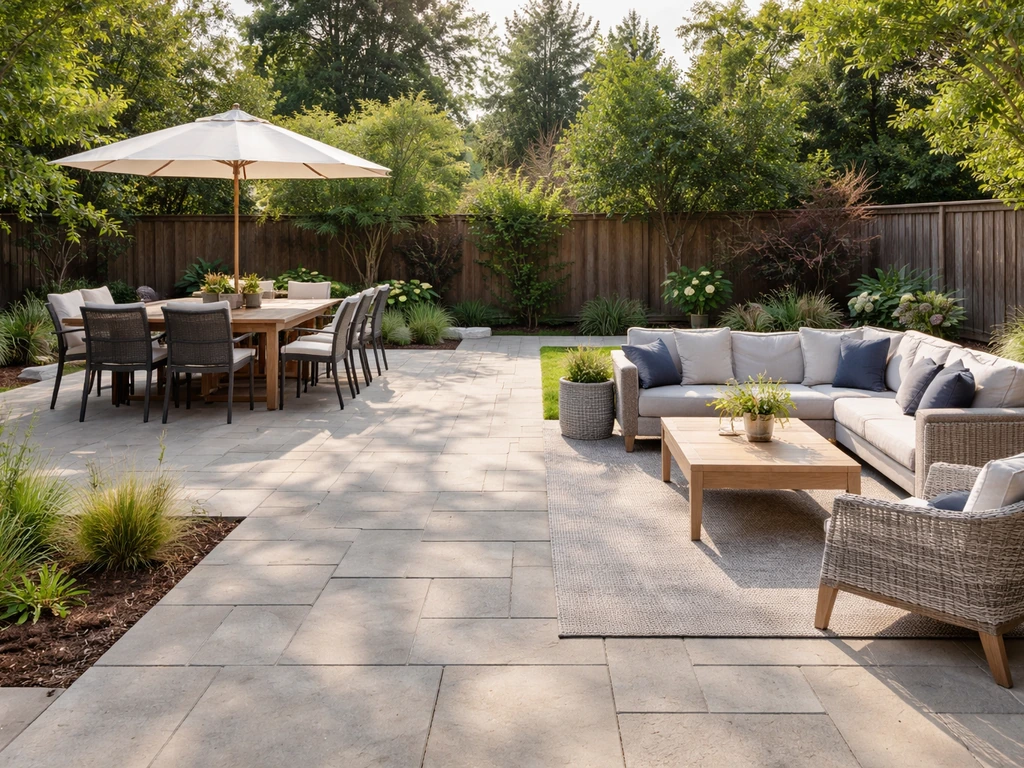
Backyard Patio Setup Ideas: Layout, Sizing, and Materials
Backyard patio setup ideas with layouts, sizing, traffic paths, and surface materials plus shade and hiring tips.
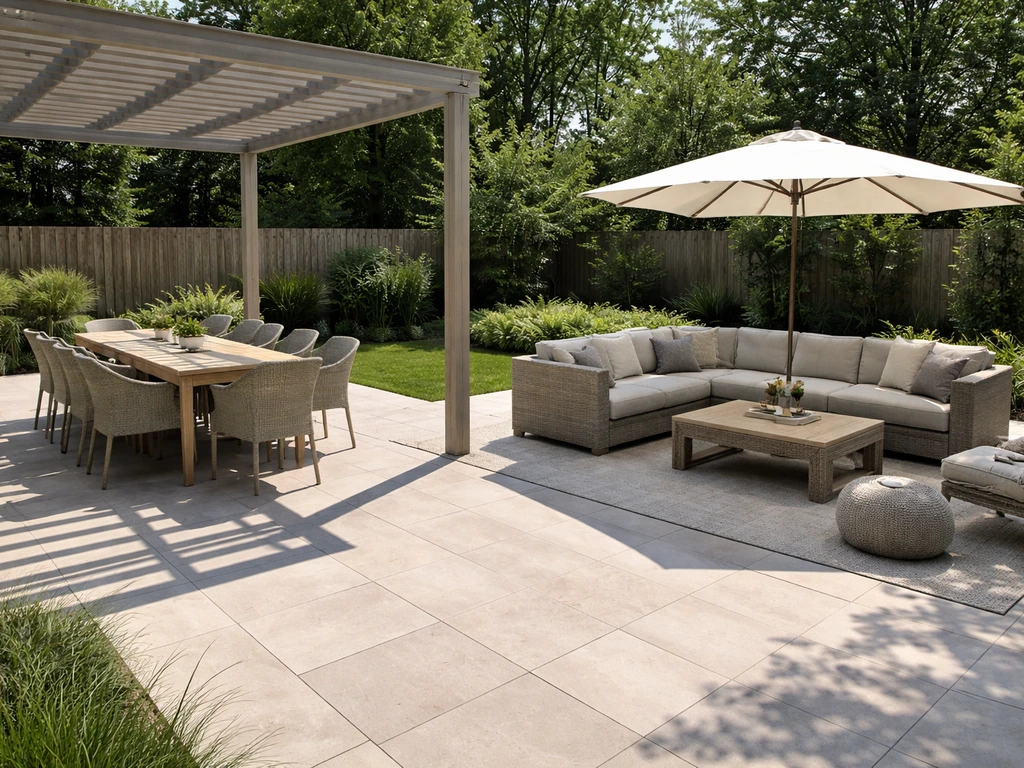
Good Patio Ideas: Layout, Materials, Shade, and Comfort Tips
Smart good patio ideas for layout, flooring, shade, and comfort upgrades with budget friendly tips and climate ready cho
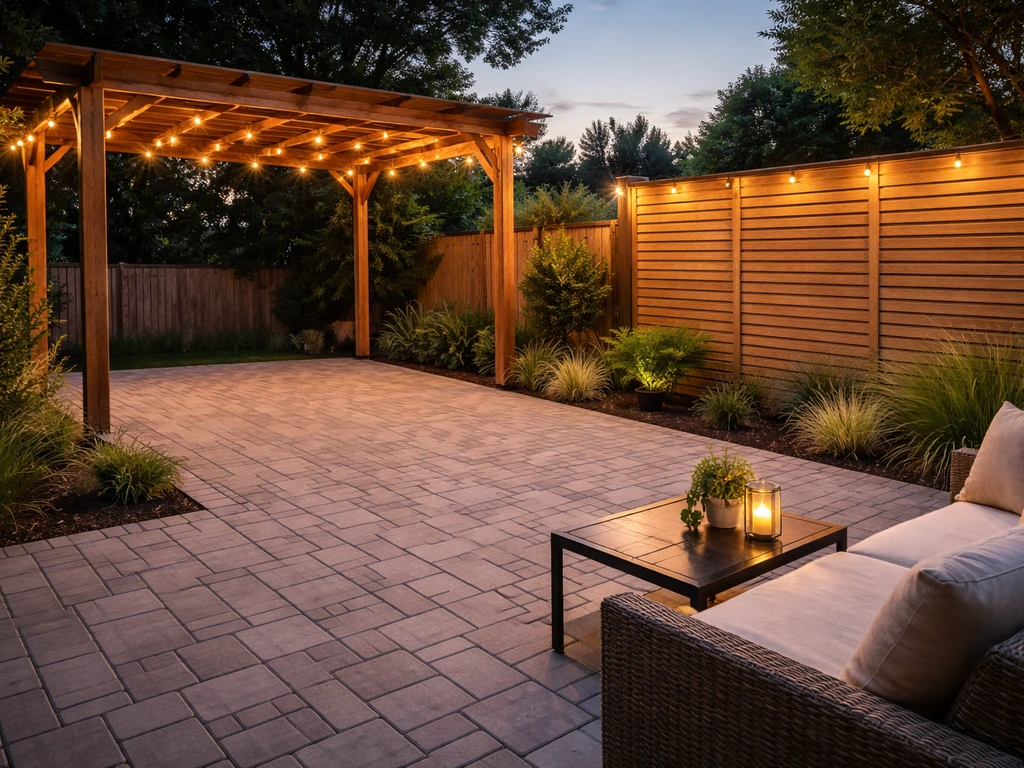
Do It Yourself Outdoor Patio Ideas: Build, Upgrade, Maintain
DIY outdoor patio ideas for planning, building, upgrading, and maintaining floors, shade, privacy, lighting, and decor.