
The best patio deck for your yard comes down to four things: your climate, your budget, how much maintenance you're willing to do, and what you actually want to use the space for. A well-designed bird-friendly deck porch patio also keeps the birds coming back without making maintenance harder than it needs to be better bird deck porch patio. If you want the lowest lifetime hassle and can spend more upfront, composite decking is hard to beat. If budget is tight and you're handy, pressure-treated wood still delivers a solid deck. And if you're dealing with a covered or low-moisture space, PVC synthetics are worth a look. This guide walks you through every decision point so you can stop guessing and start planning. For patios specifically, choosing the best bird feeders for patios can help you enjoy backyard birds without constantly changing feeder locations.
Best Patio Decks: How to Choose by Cost, Climate, and Needs

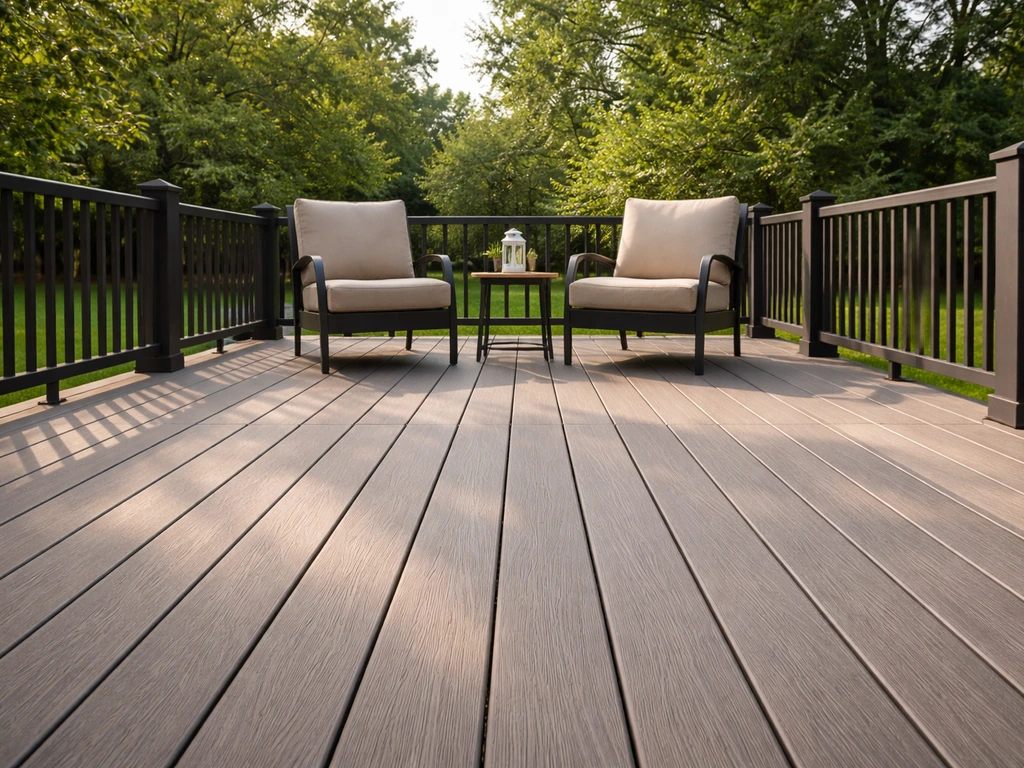
How to choose the best patio deck for your yard and budget
Before you pick a material or call a contractor, spend fifteen minutes mapping out your actual constraints. Yard layout matters more than most people realize. A flat, open backyard gives you maximum flexibility on size and shape. A sloped yard, a narrow side yard, or a space with tree roots means you're looking at elevated framing, angled cuts, or a floating deck design, all of which push up cost and complexity.
Ask yourself these questions before you do anything else: How do you want to use the deck? Entertaining a crowd means prioritizing square footage and traffic flow. Privacy from neighbors means incorporating screens or pergola elements into the plan. Accessibility for older family members or anyone with mobility needs means thinking about ramp-friendly grades, no-trip thresholds, and sturdy railings from the start, not as an afterthought. Small or awkward spaces call for modular or floating deck designs rather than attached structures.
Budget is the other big filter. A rough way to think about it: if you have $5,000 or less, you're in DIY territory with pressure-treated wood or a small modular kit. From $8,000 to $20,000, you can hire out a mid-size wood or composite deck. Over $20,000, you're looking at larger footprints, premium composite materials, built-in lighting, custom railings, or multi-level layouts. Get that number in your head before you start talking to contractors, because it determines which conversations are worth having.
Deck materials comparison: wood, composite, and PVC synthetics
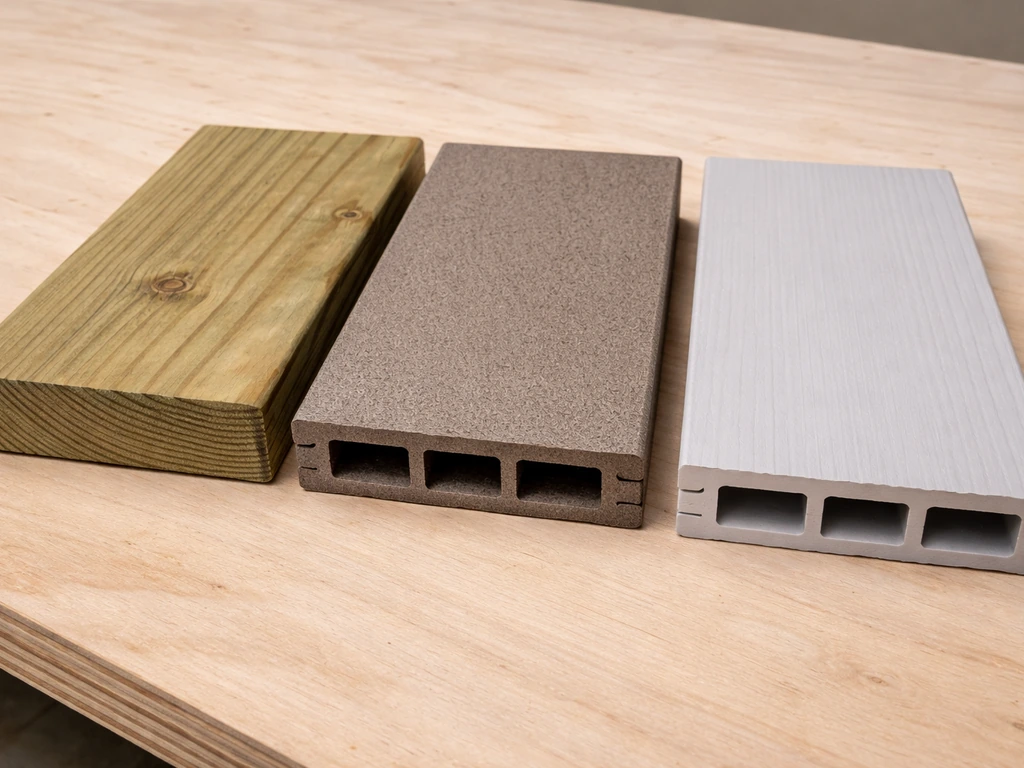
This is where most homeowners get stuck because there's a lot of marketing noise around each option. Here's the honest breakdown based on real-world performance.
Pressure-treated wood
Pressure-treated (PT) lumber is still the most widely used decking material in the U.S. and for good reason: it's cheap, widely available, and easy to work with. The downside is the maintenance. You need to clean and seal or stain PT wood every one to three years or it grays out, checks, splinters, and eventually rots. Lifespan ranges from about 10 to 40 years depending on your climate, the grade of lumber, and how consistently you maintain it. In a wet climate with freeze-thaw cycles, you're closer to the 10-to-15-year end. In a dry climate with regular sealing, a well-built PT deck can last 30-plus years.
Composite decking
Composite boards are made from a mix of wood fiber and plastic. Brands like Trex, TimberTech, and Fiberon dominate this category. The appeal is straightforward: far less maintenance than wood, better resistance to moisture and insects, and consistent appearance over time. You still need to clean composite decking periodically (a stiff brush and soapy water handles most of it), but you skip the annual sanding and sealing cycle entirely. Most premium composite products carry warranties of 25 to 30 years. The trade-off is upfront cost. Composite materials alone run roughly $16 to $32 per square foot, and when you factor in framing, fasteners, railings, and professional installation, full installed costs typically land in the $40 to $100-plus per square foot range.
PVC and other full synthetics
PVC decking contains no wood fiber at all, which makes it the most moisture-resistant option of the three. It won't rot, won't absorb water, and resists mold and mildew better than composite. It's a strong choice for pool decks, covered patios, and humid coastal climates. On the downside, PVC can get hot underfoot in direct sun (more so than composite), and it has a more plastic look that some homeowners don't love. Material costs vary widely depending on the brand and product line, but you can find entry-level synthetic decking in the $4 to $7 per square foot range for materials, with installation adding roughly $8 to $15 per square foot on top.
| Material | Approx. Material Cost (per sq ft) | Lifespan | Maintenance Level | Best For |
|---|---|---|---|---|
| Pressure-Treated Wood | $2–$8 | 10–40 years | High (seal/stain every 1–3 years) | Budget builds, DIY projects, dry climates |
| Composite | $16–$32 | 25–30+ years | Low (clean periodically) | Low maintenance, longevity, most climates |
| PVC / Full Synthetic | $4–$7 (entry) to $15+ | 25–50 years | Very low | Wet climates, pool surrounds, covered patios |
Best decking designs for different needs
Entertaining and gathering spaces
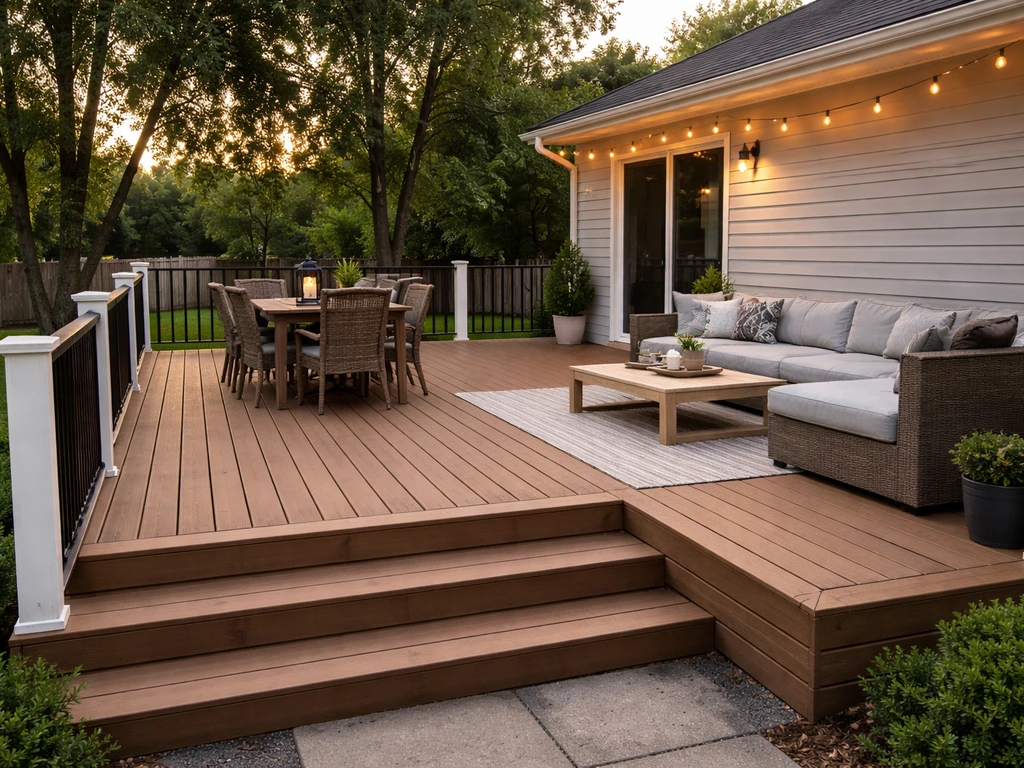
If your main goal is hosting, prioritize open square footage and traffic flow over fancy features. A single-level deck attached to the house (or a large ground-level floating deck) gives you the most usable space per dollar. Keep the shape rectangular unless you have a specific reason to go curved, because angles and curves add cost fast. Plan for built-in lighting early, because it's much cheaper to rough in wiring during the build than to retrofit it later. Leave room for a dedicated grill zone that doesn't block foot traffic.
Privacy-focused decks
Privacy screens, lattice panels, and pergola structures can be integrated directly into the deck's railing system or post structure. This works best when it's designed in from the start rather than bolted on later. If your yard is overlooked from above (second-story neighbors or a hillside), a pergola with a privacy roof panel is worth considering. Composite or PVC privacy screens are lower maintenance than wood lattice, which tends to warp and weather quickly.
Small spaces and uneven yards
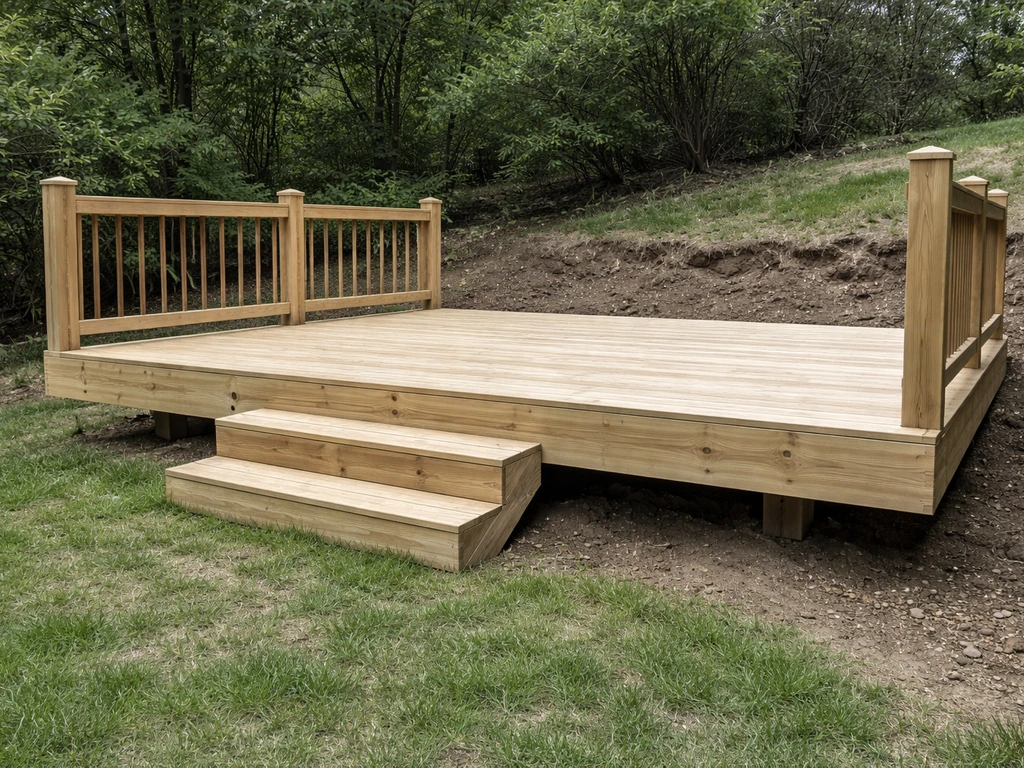
For small patios or yards with grade changes, a floating deck (not attached to the house) is often the most practical and cost-effective solution. Floating decks sit close to the ground on concrete blocks or adjustable pedestals, require no ledger attachment, and in many jurisdictions don't need a building permit if they stay under a certain height (usually 30 inches off the ground). Modular decking tiles are another strong option for small areas, patios with existing concrete slabs, or renters who need something removable. You won't get the same longevity, but the flexibility and low cost are hard to argue with.
Accessibility and aging-in-place
If accessibility matters, plan for a ramp or a very gradual step-down from the door threshold rather than a full stair run. Railing height and grip style matter here too. ADA guidelines recommend handrails on both sides of any ramp and a 1:12 slope ratio (one inch of rise for every twelve inches of run). These aren't hard to build in from the start, but they're expensive to retrofit.
Cost breakdown: what you're actually paying for
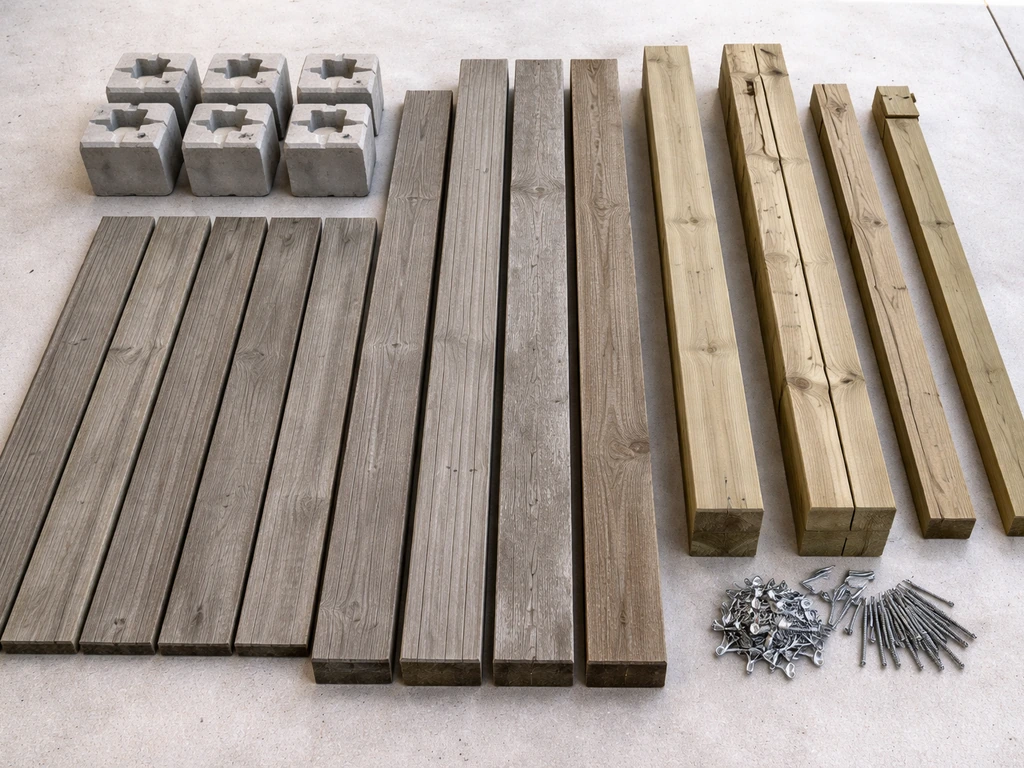
The sticker price of decking boards is usually the smallest part of the total bill, and that surprises a lot of homeowners. Here's where the money actually goes.
- Decking boards (the surface you walk on): typically 20–35% of total installed cost
- Substructure (joists, beams, posts, ledger board): often equals or exceeds the cost of the decking boards themselves
- Footings and concrete: $200–$600+ per footing depending on depth and diameter required by local code
- Fasteners and hardware: hidden fasteners for composite cost more than face-screwed wood but deliver a cleaner look
- Railings: a major cost variable, ranging from basic pressure-treated wood rails to cable, glass, or aluminum systems that run $150–$300+ per linear foot installed
- Stairs: each stair run adds $1,000–$3,000 or more depending on materials, width, and number of steps
- Permits: typically $500–$2,000 depending on your municipality and deck size, but skipping them is a serious liability risk
- Site prep and grading: clearing, leveling, and drainage work before a single board goes down
- Labor: typically $24–$48 per square foot for professional installation on composite projects
Trex's own cost estimates show that materials (including substructure, decking, hardware, and fasteners) typically run $10 to $27 per square foot, with a professionally installed deck for a mid-size project coming in between $12,000 and $24,000. That's a wide range, and it reflects how dramatically geography, design complexity, and contractor availability move the number. In high cost-of-living areas, add 20 to 40 percent to any national average you find online.
Hidden costs that bite people most often: drainage work when the yard doesn't slope away from the house, permit delays that push the project into a more expensive season, HOA approval processes that require specific materials or colors, and post-project landscaping to restore the area disturbed during construction. Budget a 10 to 15 percent contingency on top of your contractor quote.
DIY vs hiring a pro: where to draw the line
This is one of those decisions where being honest with yourself matters more than being optimistic. I've seen homeowners save real money doing parts of a deck project themselves. I've also seen DIY structural work that created expensive problems down the road. Here's how to think about it.
What's realistic to DIY
- Design, layout planning, and measuring: doing this yourself saves contractor time and helps you get more accurate quotes
- Permit application: you can file for a permit yourself in most jurisdictions, though the contractor often handles it
- Ground-level floating decks on adjustable pedestals or deck blocks: minimal structural risk, no ledger attachment, and often no permit required
- Decking board installation on a pre-built substructure: if a pro builds the frame and you lay the boards, you can cut labor costs significantly
- Painting, staining, and sealing a wood deck: straightforward annual or biannual maintenance task
- Minor repairs: replacing a cracked board, re-securing a loose railing post, filling fastener holes
What to leave to a licensed contractor
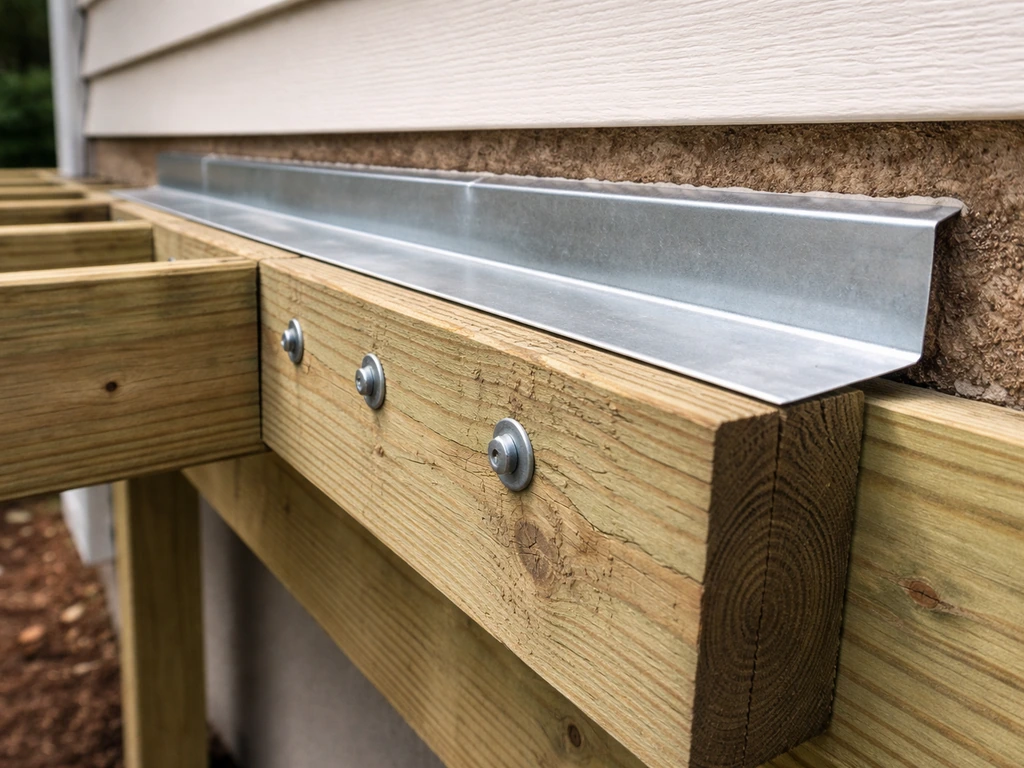
- Ledger board attachment to the house: improper ledger work is one of the top causes of deck collapses, and most codes require an inspector to sign off
- Footings below frost line: depth requirements vary by region and have to match local code, or your deck will heave and shift
- Any elevated deck over 30 inches: structural calculations, load ratings, and code compliance get serious at this height
- Electrical work for built-in lighting or outlets: licensed electrician required in virtually every jurisdiction
- Complex framing: multi-level decks, angled or curved designs, and heavy load-bearing structures
- HOA-required documentation and sign-off processes
A hybrid approach often delivers the best value: hire a contractor to build the substructure, pull permits, and handle any ledger or footing work, then finish the decking boards and railings yourself if you're comfortable with basic carpentry. This can save 20 to 30 percent on labor while keeping the structural work professional and code-compliant.
Maintenance and lifespan: what upkeep actually looks like
Wood decks
Pressure-treated wood needs real attention. In the first year, let the wood dry out fully before applying any sealer or stain (usually 6 to 12 months for new PT lumber). After that, clean and inspect annually, and reseal or restain every one to three years depending on sun exposure and rainfall in your area. Check for soft spots, popped fasteners, and checking (surface cracks along the grain) every spring. Boards showing deep rot or significant checking should be replaced before they become structural or safety issues. With consistent care, a quality PT deck can last well over 20 years. Skip maintenance for a few seasons and you'll be looking at a full replacement much sooner.
Composite and PVC decks
The maintenance pitch for composite is mostly true: you don't seal or stain it, and the color is much more stable over time than wood. What you do need to do is keep it clean. Dirt, pollen, and organic debris collect between boards and around fastener holes, and in humid climates that can lead to mildew staining on capped composite boards. A periodic cleaning with a composite-safe cleaner and a stiff brush handles it. Power washing at low pressure (under 3,100 PSI, fan tip only) is fine for most composite products. Avoid standing water on any deck surface. Check the manufacturer's warranty terms, because most require proof of regular cleaning to honor claims.
Substructure maintenance
Here's something that often gets overlooked: even if you have composite deck boards, your substructure is usually still pressure-treated wood or steel. Inspect the joists, beams, and ledger board every two to three years for moisture damage, insect activity, and rust at hardware points. Catching a rotted joist early is a minor repair. Catching it after it's compromised the whole frame is a major one.
Climate, safety, and durability: what your region actually demands
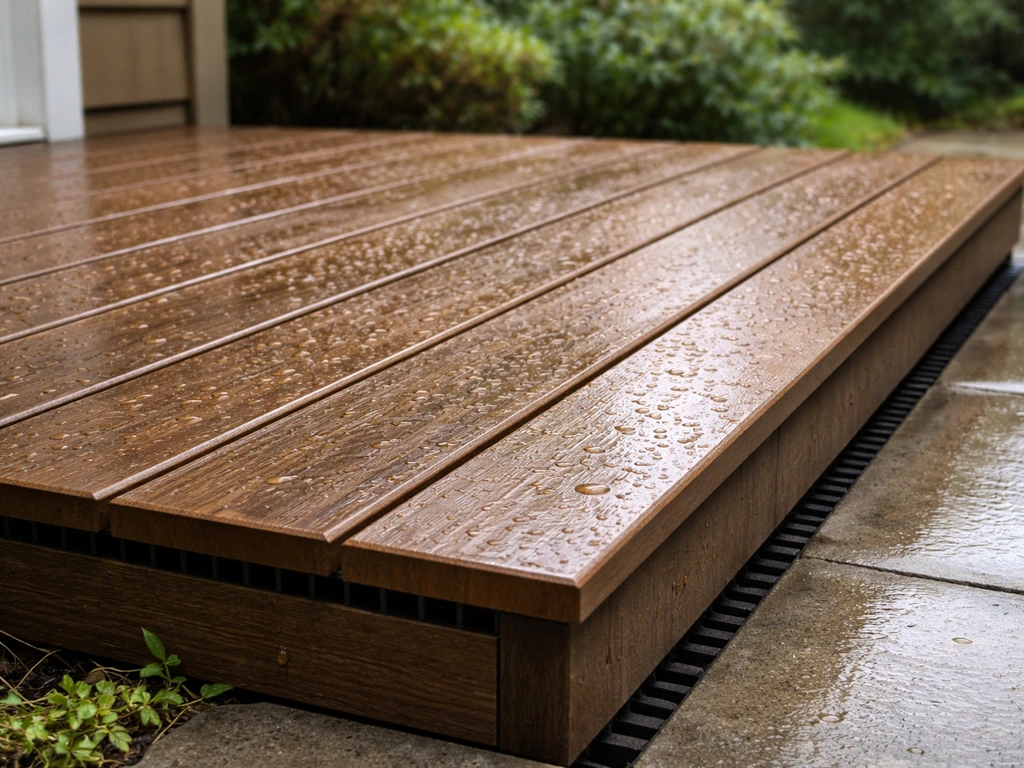
Where you live should heavily influence your material and design choices. What works in Phoenix doesn't automatically work in Minneapolis or coastal Florida.
Wet climates and high humidity
In the Southeast, Pacific Northwest, or anywhere with persistent moisture, mold, mildew, and wood rot are your primary enemies. Composite or PVC boards outperform wood significantly in these conditions. Make sure the deck design includes adequate drainage spacing between boards (typically 3/16 to 1/4 inch gaps) and that water drains away from the house foundation. Slip resistance becomes more important here too: textured composite surfaces and aluminum decking both perform well in wet conditions.
Freeze-thaw climates
In the Midwest and northern states, frost heave is the main structural threat. Footings must extend below the local frost line (which can be 36 to 48 inches in some areas). Wood decks in freeze-thaw climates age faster because repeated moisture cycling accelerates checking and splitting. Composite and PVC handle these conditions better at the board level, but the substructure still needs to be correctly engineered for frost.
Hot, sun-heavy climates
In Texas, Arizona, and other high-UV regions, heat and fading are the main concerns. Lighter-colored composite boards absorb less heat than dark ones, which matters if you're walking on the deck barefoot. Many composite products now include UV-resistant capping that holds color better than older first-generation composites, which were notorious for fading. Wood decks in intense sun need more frequent resealing to prevent drying and cracking. If you're in this category, look for composite products with documented heat and UV test data, not just warranty language.
Slip resistance and high foot traffic
For any deck that sees wet conditions, pool splash, or heavy foot traffic, surface texture matters. Most quality composite and PVC products have embossed or brushed textures that provide reasonable grip. For maximum traction around pools or in rainy climates, look for products with a Coefficient of Friction (CoF) rating above 0.5 when wet. Aluminum decking is another option here: it stays cool, drains well, and maintains grip even when wet. Wood decks can be treated with anti-slip additives in the finish coat, but this needs to be reapplied with each sealing cycle.
Narrowing your choices: a practical next-step checklist
After going through all of this, most homeowners find they can narrow their shortlist pretty quickly. Here's how to wrap up your planning and move toward action.
- Decide on your primary goal first (entertaining, privacy, accessibility, or small-space solution) because it drives layout more than any other factor
- Match material to climate: wet or freeze-thaw areas favor composite or PVC; dry climates make PT wood more viable long-term
- Set a realistic budget including a 10–15% contingency before talking to any contractor
- Check your local permit requirements and HOA rules before finalizing design or signing any contracts
- Get at least three quotes from licensed contractors; ask specifically what's included in the substructure, whether permits are included, and what the warranty on their work is
- Ask contractors for material samples and request references from projects using the same materials in similar climates
- If budget is tight, explore a hybrid approach: hire out the structure, DIY the surface and finishing
- Factor in long-term maintenance cost, not just upfront price: a $15,000 composite deck that needs no sealing often beats a $9,000 wood deck that requires $300 to $500 in materials and a weekend of work every two years
Once you've narrowed down your material and design, it's worth digging into specific product quality comparisons across composite brands and looking at how your decking surface choice interacts with the broader patio design, including flooring transitions, patio covers, and outdoor furniture layout. Focusing on top quality patios also means choosing durable materials and finishes that hold up to your local weather product quality comparisons. Once you have the right decking material picked, you can also focus on the best patio decking layout and surface choices for your yard. The deck itself is just one piece of the outdoor space puzzle, and the best outcomes come from thinking through the full picture before the first board goes down. If you want <a data-article-id="8E0D9B4C-DB0A-4085-AC9C-151542A0CD11">top notch decks and patios</a>, focus on durability, drainage, and a layout that matches how you actually use the space. If you want top notch decks and patios, focus on durability, drainage, and a layout that matches how you actually use the space.
FAQ
How do I decide the deck height if my patio door or existing concrete is already there?
If your deck will meet a door, sliding door, or garage threshold, plan the height so the walking surface doesn’t create a steep step. A practical approach is to measure from the finished patio or existing slab up to the lowest door sill, then subtract deck thickness plus joist height so you end up with a near-level transition (often the biggest comfort win for accessibility).
What are the most common drainage mistakes that ruin “best patio decks” over time?
Even with the right board material, decks fail from water management mistakes. Make sure you include flashing or water-shedding details at any ledger attachment (where the deck connects to the house), keep rim joists protected, and slope the surface away from the structure. If you live where gutters overflow or snow melts toward the house, those details matter more than board choice.
Do composite or PVC decks still need “real” maintenance for warranty and long-term appearance?
Composite and PVC look low-maintenance, but they still need basic upkeep for warranty and appearance. Avoid harsh chemicals, keep debris out of board grooves, and do cleaning on a consistent schedule (especially in humid climates where mildew staining can set in). Also confirm whether your warranty requires proof of routine cleaning and what cleaners are allowed.
Can a deck board material choice fix structural problems caused by frost heave?
Yes, and it affects both comfort and lifespan. In freeze-thaw areas, lightweight footings or incorrect framing can shift, which accelerates board gaps opening and fastener loosening. Use local code guidance for footing depth and spacing, and treat frost line requirements as a design constraint, not an optional upgrade.
What should I do if my deck gets slippery or mildewy after it rains?
If you see moldy areas, persistent slippery spots, or recurring mildew staining, don’t wait. Start with gentler composite-safe cleaning, then reassess ventilation and drainage spacing. If the deck surface stays damp because of clogged gaps, closed-in undersides, or poor slope, you may need to change the layout or add better drainage paths, not just clean more.
What changes when choosing the best patio decks for a pool area?
For a pool deck, prioritize boards and hardware that handle wet feet and chlorine exposure, then pay attention to traction. Look for products with a published wet CoF target, textured surfaces, and capped boards that resist staining. Also keep railings and fasteners from trapping water, because corrosion can start at hardware points even when the boards resist rot.
What items usually inflate the total cost compared with just the decking board price?
Look beyond the board price. The installed cost can swing based on railings, lighting, stairs, multi-level framing, and permit complexity. A quick decision aid is to build your budget line items in this order: surface area, then required railings, then any stairs, then add-ons like built-in grill space or wiring rough-in, and finally a 10 to 15 percent contingency.
How do I estimate square footage correctly if my deck includes stairs or angled sections?
Textbook square footage underestimates the real material needs when you add diagonal cuts, stairs, and angled corners. Before quoting, calculate decking area including unavoidable waste for your geometry, then add extra for stairs and transitions. If your yard has a sloped run or tree-root constraints, waste and framing complexity often increase more than homeowners expect.
When is a floating deck a bad idea, and what should I check before choosing it?
A floating deck can work great on small patios, but it still must be stable and properly supported. Confirm local rules on height and permits, plan for leveling over pedestals or blocks, and avoid designs that rock under load. If the patio surface drains poorly or retains water, fix that first because a floating deck can trap moisture underneath.
What parts of a deck project are safest to DIY versus hire out?
Most DIY-friendly projects are surface work, not structural connections. If you’re not comfortable with ledger installation, load calculations, footings, or permit requirements, hire the structural package and do boards and rail infill yourself. That “hybrid” approach reduces risk while still lowering labor cost.
Can I install new composite or PVC boards on an old deck framing?
If you’re redoing an existing deck, assess the framing before replacing boards. Composite boards can be more forgiving aesthetically, but they still need a solid, dry substructure. Check joists and beams for rot, rust, and insect damage, then confirm fasteners and spacing match the new product requirements.
How do I choose deck color if I need the best patio decks for bare-foot comfort in hot sun?
Use the “sun profile” in your yard. In intense UV areas, darker boards usually get hotter and fade sooner, while lighter colors tend to stay cooler. If you expect barefoot use, prioritize products with documented heat and UV performance rather than relying only on broad warranty claims.
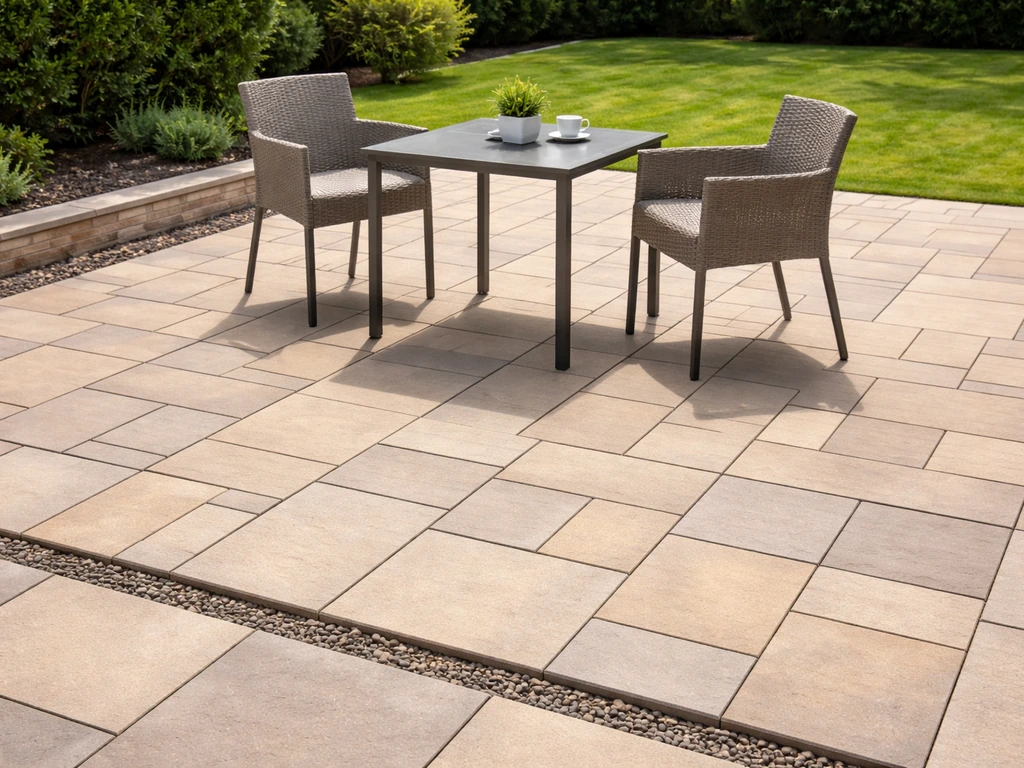
Compare top-quality patio materials, build methods, costs, climate fit, maintenance, and contractor checks for long-last

Choose the best patio bird feeders with placement, weatherproofing, capacity, and easy cleaning tips for your space.
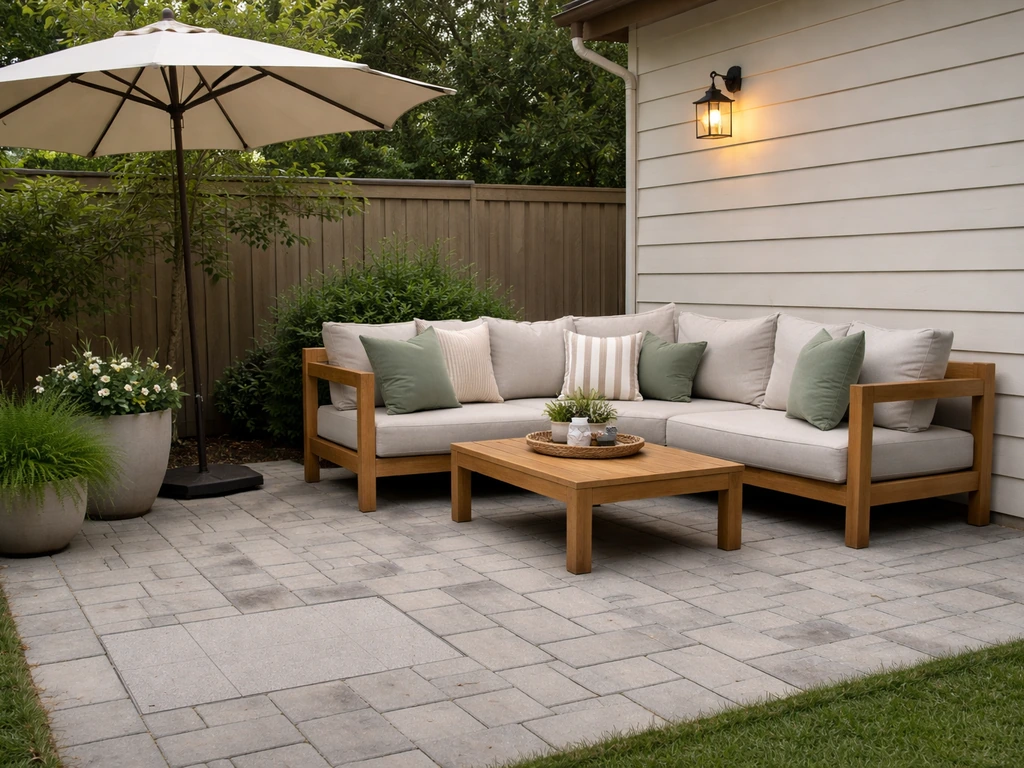
Quick fix patio ideas for fast comfort and style: cleanups, repairs, shade, flooring tweaks, and safe upgrades on any bu