
For most patios, a tube feeder or hopper feeder hung from a shepherd's hook or deck-mounted arm is the best starting point. They handle wind and rain better than open platform feeders, hold enough seed to skip daily refills, and fit comfortably in tight spaces. If you want woodpeckers and chickadees too, add a suet cage. The real decisions come down to your patio's size, how exposed it is to weather, how close your windows are, and whether squirrels are already a problem. Choosing top quality <a data-article-id="528C6D91-5E3E-4A9C-94BA-31027A46221A">patios</a> and placing the feeder correctly helps keep seed fresh, reduces pests, and brings more consistent visits. Get those four things sorted and picking the right feeder becomes straightforward.
Best Bird Feeders for Patios: Types, Placement, and Buying Guide

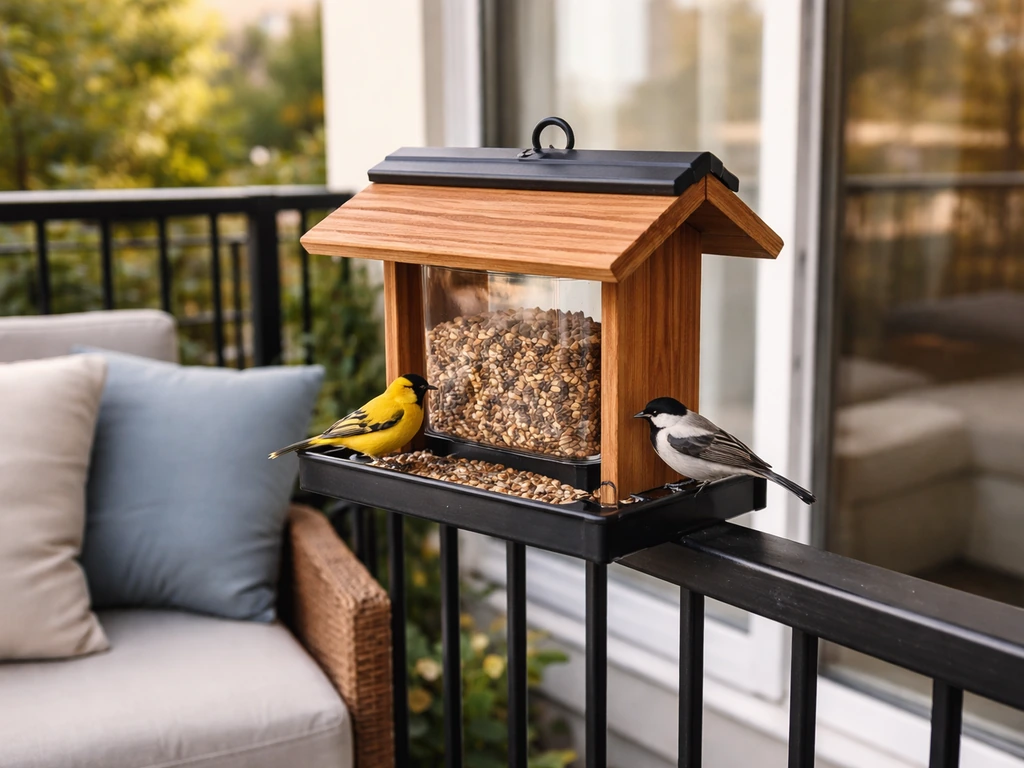
What to look for in a patio bird feeder
Patios are different from open yards. You're working with limited space, you're usually close to glass doors and windows, and the feeder is going to be more visible to you (and your guests) than something hanging in a tree 40 feet away. That means aesthetics matter a bit more, but so do practical features you might skip on a yard feeder.
- Capacity: Bigger isn't always better on a patio. A feeder that holds 1 to 3 lbs of seed is usually enough for a patio setup. Overfilling leads to seed sitting too long, getting wet, and molding before birds can eat it.
- Ports and perches: Tube feeders with 4 to 6 ports let multiple birds feed at once without crowding. Look for perches sized for the birds you want. Smaller perches discourage large bully birds like grackles.
- Seed vs. suet compatibility: Decide what you want to offer. Tube and hopper feeders work for sunflower seeds and mixed blends. Suet feeders use cakes or plugs and attract a completely different set of birds.
- Weatherproofing: On an exposed patio, look for feeders with a roof or seed ventilation to keep seed dry. Brome's Squirrel Buster Plus, for example, includes vents at the top that let moisture and hot air escape while drawing in fresh air.
- Materials: Metal and polycarbonate outlast cheap plastic on patios. UV exposure and heat (especially in Texas, Arizona, or anywhere with intense summer sun) will yellow and crack low-grade plastic within one season.
- Mounting options: Check whether the feeder can hang from a hook, mount to a pole, or clamp to a railing. On small balconies, a railing-mount or window-mount feeder might be your only real option.
- Ease of filling and cleaning: You'll do this every week or two. Feeders with wide fill openings and removable trays are worth the extra few dollars.
Best feeder types for patios
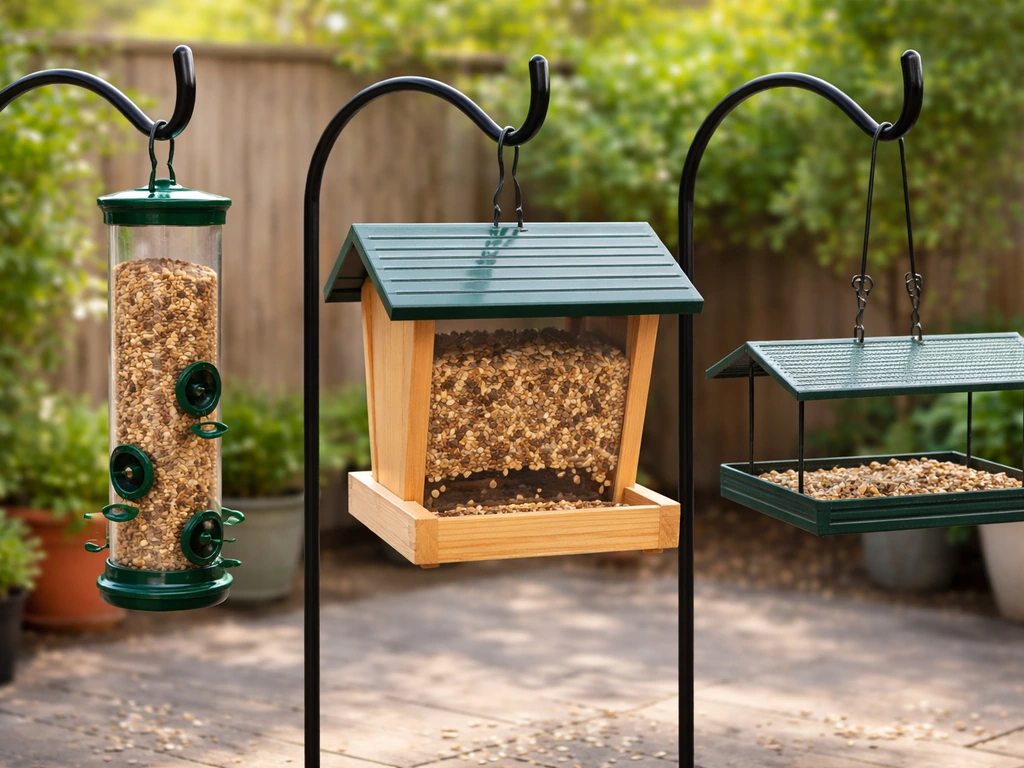
Not every feeder style works equally well on a patio. Here's how the main types stack up in a real patio context, not just a backyard.
Tube feeders
Tube feeders are the most practical all-around choice for patios. They're compact, hang easily from a single hook or pole arm, keep seed dry better than open feeders, and attract finches, chickadees, nuthatches, and sparrows. A caged tube feeder like the WoodLink Designer Caged 4-Port (roughly 9.75 x 9.75 x 14.5 inches and holding about 1.25 lbs of seed) is especially good on patios because the powder-coated metal cage keeps squirrels out and doubles as protection so small birds can feed without being harassed by larger species. For a squirrel-prone patio, a weight-activated tube feeder like Brome's Squirrel Buster Plus is worth the investment.
Hopper feeders
Hopper feeders have a central seed chamber with open slots that let seed flow down onto a base tray. They hold more seed than tube feeders, which cuts down on how often you refill, and they tend to attract a wider variety of birds including cardinals, which won't always use a tube feeder. The downside on a patio is size: most hopper feeders are bulkier, and the open seed tray can collect rainwater on an exposed patio. If you go this route, look for one with a good overhanging roof and a tray with drainage holes.
Platform and tray feeders
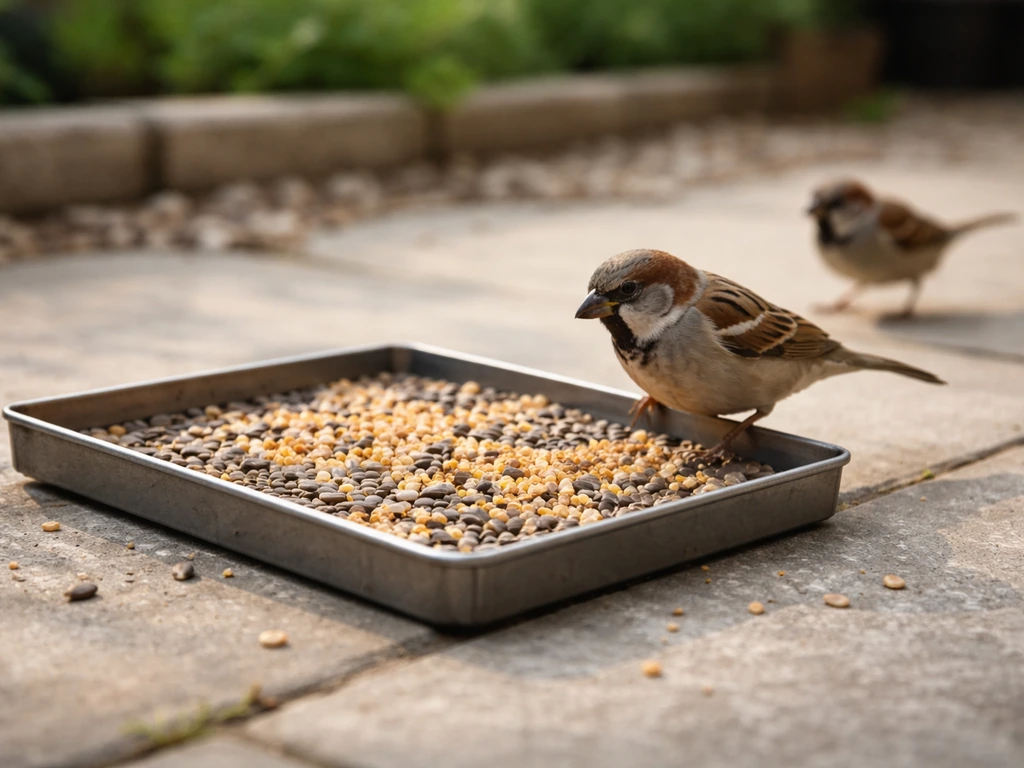
Platform feeders are flat, open surfaces that hold seed or mixed foods. Placed near ground level, they're great for attracting juncos, mourning doves, and sparrows. On a patio, a raised platform feeder (mounted on a post or hung at railing height) keeps things cleaner and reduces the rat-attraction problem of seed scattered on the ground. The trade-off is that open platforms are the most exposed to rain, so seed gets wet and spoils quickly. If you live somewhere with frequent rain, limit platform feeders to drier months or cover them with a roof baffle.
Suet feeders
Suet feeders are simple wire or mesh cages that hold a suet cake or plug. They're small, inexpensive, and attract birds you won't get with seed alone: woodpeckers, nuthatches, titmice, and chickadees all go for suet. On a patio, a suet feeder is an easy add-on to a tube or hopper setup. One thing to know: suet goes rancid fast in heat. In summer, especially in hot climates like the South or Southwest, switch to no-melt suet cakes formulated for high temperatures, or take the feeder down from May through September.
Window and railing feeders
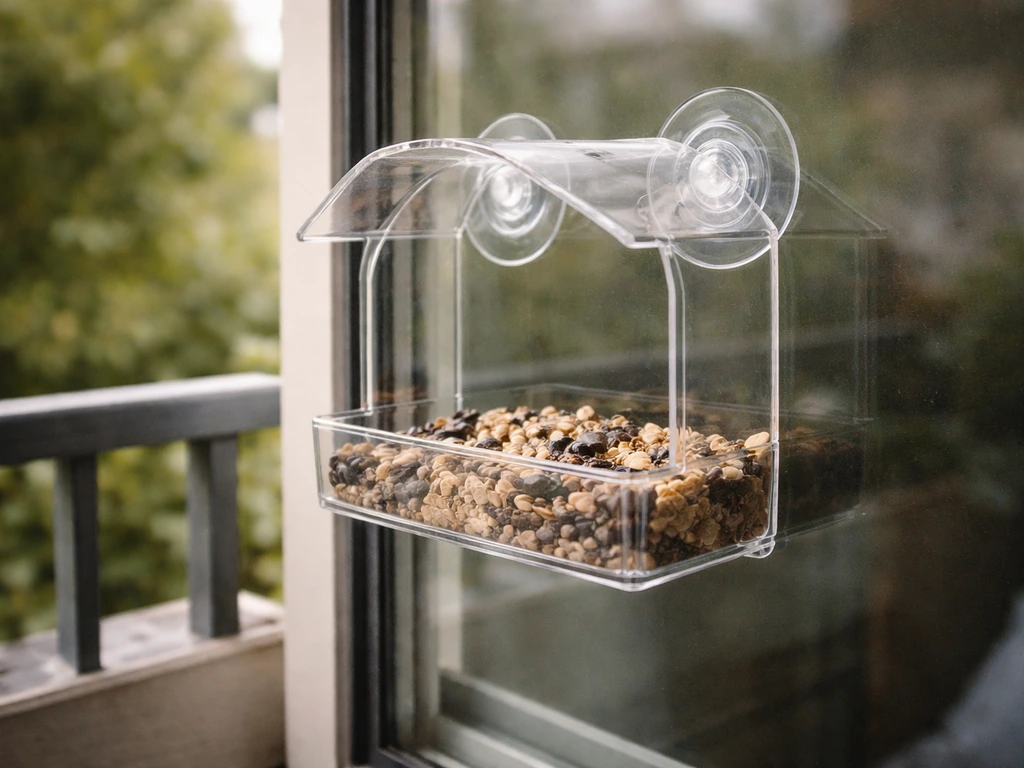
For a small balcony with no room for a pole or hook, a suction-cup window feeder or a railing-clamp feeder solves the space problem. Window feeders attach directly to glass, which actually reduces window-strike risk rather than increasing it (more on placement below). Railing feeders clamp to porch railings and can hold a small tube insert or tray. These are the most space-efficient option available and work surprisingly well for close-up bird watching from inside.
How to place feeders safely and get the most visits
Placement is where most patio bird feeders fail or succeed. Get this right and you'll have birds visiting within days. Get it wrong and you'll either have empty feeders or a window-strike problem.
The window distance rule
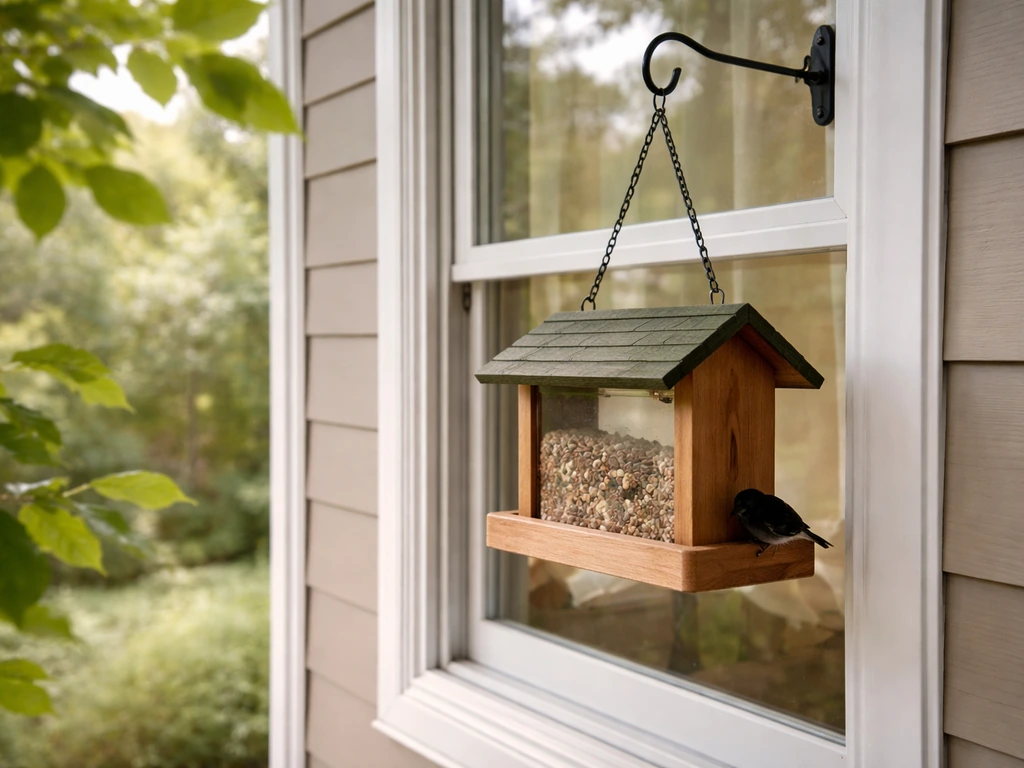
Place feeders either within 3 feet of the nearest window or more than 30 feet away. That sounds counterintuitive, but it's Audubon's guidance and it works. At under 3 feet, a bird that flushes from the feeder can't build up enough speed to injure itself on the glass. At over 30 feet, birds have time to recognize the glass and avoid it. The dangerous zone is the middle range (roughly 4 to 30 feet) where birds fly fast enough to hit the window but don't have time to react. On most patios, placing the feeder close to the house or directly on a window is the practical solution. If your setup puts the feeder in that risky middle zone and you can't move it, apply window decals or frosted film on the outside of the glass to break up the reflection. Make sure any decals are on the exterior surface to work correctly.
Sun, shade, and wind
Shade is better than full sun for two reasons: seed stays fresh longer and birds feel safer with overhead cover. A spot with morning sun and afternoon shade is ideal on most patios. For wind, hang feeders from a bracket or arm attached to the house wall or a fence post rather than from a long chain that lets the feeder swing wildly. A spinning or swinging feeder during gusty conditions will scare birds off and scatter seed. On open balconies or rooftop patios that get consistent wind, a weighted or baffled pole setup is more stable than a hanging feeder.
Height and clearance
Hang feeders at least 4 feet off the ground to keep them out of easy reach for cats and to deter rodents from jumping up. For pole-mounted feeders, that 4-foot minimum also helps baffle placement work correctly. Leave enough clearance below the feeder (at least 6 to 12 inches) so seed that drops or gets tossed out doesn't pile up on your patio furniture or floor, which creates a mess and attracts pests.
Weather resistance and durability on patios
A patio feeder takes more weather abuse than most people expect. On a covered porch it's mainly humidity and temperature swings. On an exposed deck or balcony it gets direct rain, UV, wind, and sometimes frost. Here's what to prioritize by material:
| Material | Pros | Cons | Best for |
|---|---|---|---|
| Polycarbonate (clear/tinted) | Lightweight, shatter-resistant, lets you see seed level | Can yellow with UV exposure over years | Covered patios, most tube feeders |
| Powder-coated steel/metal | Very durable, squirrel-resistant, long lifespan | Heavier, can rust at hardware joints if not quality-coated | Exposed patios, caged feeders |
| Recycled plastic/poly lumber | UV-stable, won't crack or rot, easy to clean | Heavier, more expensive upfront | Hot climates, coastal or humid areas |
| Untreated wood | Attractive, natural look | Rots, swells, and molds quickly when wet, hard to sanitize | Covered dry patios only, seasonal use |
| Galvanized or stainless hardware | Won't rust, holds up in rain and coastal salt air | Usually an add-on feature, not the whole feeder | Any feeder in wet or coastal climates |
In hot climates like Texas or Arizona, cheap plastic hoppers and tube feeders typically fail within a season. UV degrades the plastic and heat warps the seed ports. Spend a bit more on polycarbonate or metal-reinforced feeders and you'll replace them far less often. In cold climates, wood feeders are fine in summer but trap moisture in freeze-thaw cycles and start falling apart after a couple of winters. Metal or recycled poly feeders handle temperature swings better and stay structurally sound year-round.
Cleaning, maintenance, and refill routines
Bird feeders on patios get neglected more often than feeders in the yard, probably because they're so visible and guests notice a dirty feeder. A simple routine takes about 10 minutes and keeps birds healthy and coming back.
How often to clean
Clean feeders at least once every two weeks as a baseline. Bump that up to weekly during heavy use, wet weather, or if you notice birds acting lethargic or see signs of disease (like crusty eyes on finches, which can indicate house finch eye disease). After any rainy stretch, check tube feeders for clumped or moldy seed before refilling over it.
How to clean properly
- Empty any remaining seed. Compost it or dispose of it if it's wet or clumped.
- Rinse the feeder with warm water to remove loose debris.
- Soak in a bleach-water solution: either a 1:10 bleach-to-water ratio (Brome's recommendation) or a 1:9 ratio (Audubon/National Wildlife Health Center guidance). Both work. Soak for at least 15 minutes.
- Scrub all surfaces, ports, and perches with a bottle brush or old toothbrush.
- Rinse thoroughly until there's no bleach smell remaining.
- Let the feeder dry completely before refilling. Putting seed into a damp feeder is the fastest way to get mold.
Preventing mold between cleanings
On humid patios or during rainy seasons, seed can mold before you get to your next cleaning. A moisture absorber product like Brome's Feeder Fresh (added as a thin layer, about a quarter inch, on top of the seed each time you refill) helps keep the seed environment dry. It's not required, but it's a useful product if you live somewhere humid or tend to fill the feeder more than you can keep up with. Alternatively, just fill the feeder with smaller amounts more frequently so seed doesn't sit long enough to go bad.
Squirrel-proofing and keeping pests away
Squirrels are persistent and genuinely clever. On a patio, they have even more launch points than in a yard: railings, furniture, nearby walls, fences, and roof overhangs all become squirrel highways. The good news is that with the right setup, you can make a patio feeder effectively squirrel-proof.
Weight-activated feeders
Weight-activated feeders are the most reliable squirrel deterrent. Brome's Squirrel Buster Plus is the most well-known: when a squirrel climbs on, its weight forces a shroud down over the feeding ports, cutting off access to the seed. Birds are light enough that the ports stay open for them. Brome backs this design with a limited lifetime warranty covering manufacturing defects, which adds some confidence for the price. Other brands use similar weight-activated port-closure mechanisms and work on the same principle.
Baffles and pole placement
If you use a pole-mounted feeder, a squirrel baffle is essential. Mount the baffle 4 to 5 feet off the ground. The pole itself needs to be at least 8 to 15 feet away from any surface a squirrel can jump from: railings, furniture, walls, fences, and roof lines all count. On a patio, that distance can be hard to achieve, which is why weight-activated feeders are often the more practical solution than relying on baffle placement alone.
Caged feeders
A caged tube feeder uses a wire mesh cage around the feeder body. Small birds can fly through the cage openings to reach the ports, but squirrels can't fit through and can't get leverage to chew. The WoodLink caged 4-port design is a good example. As a bonus, caged feeders also block larger pest birds like grackles, starlings, and pigeons that can empty a feeder in one visit.
Dealing with rats, mice, and other pests
Seed on the ground is the main rodent attractant. Use a feeder with a tray that catches fallen seed, sweep or vacuum the patio surface every few days, and avoid putting out more seed than birds can eat in a day or two. Take feeders inside at night if rodents are already active in your area. Avoid ground-level platform feeders if rats or mice are a concern. The same goes for suet in warm weather: rancid suet on the ground is an invitation for all kinds of unwanted visitors.
Best picks by patio setup
The right feeder depends a lot on what you're actually working with. Here's how to think about it based on common patio setups.
Small balcony or tight patio corner
Space is the main constraint. A suction-cup window feeder or a railing-clamp tube feeder is the most practical choice. Both take up zero floor space. A small caged tube feeder with 4 ports holds enough seed for a few days and can hang from a single bracket mounted to the wall or railing. Skip the hopper or platform feeder here: they're bulkier and the open seed tray will collect rain in a space without much airflow or cover. If you want suet, one small suet cage clipped to the railing or hung from the same bracket is all you need.
Medium to large entertaining patio
You have room for a proper feeder station: a shepherd's hook or pole arm placed 8 to 10 feet from seating areas (so birds aren't buzzing overhead while guests are sitting there) with a tube or hopper feeder as the main unit and a suet cage as a secondary. A hopper feeder here makes sense because you have more space and the larger seed capacity means less frequent refilling. If the patio is your dedicated outdoor entertaining space (the kind that might need a quality deck and patio foundation), place the feeder toward the perimeter so it's visible but not directly above furniture. If you're also in the market for a solid outdoor surface, the best patio decks pair well with the right feeder setup for long-lasting, easy maintenance use. If you're also in the market for a solid outdoor surface, the best patio decks pair well with the right feeder setup for long-lasting, easy maintenance use best patio decking. For the top notch decks and patios experience, aim for durable, weather-resistant materials and feeder placement that stays sheltered and easy to maintain quality deck and patio. If you're planning a better bird deck porch patio setup, focus on the same basics: safe placement, durable materials, and easy cleaning.
Hot, sunny climates (Southwest, Southeast, Gulf Coast)
Heat is the enemy of both seed and feeders. Choose metal or polycarbonate construction over basic plastic. Avoid suet from late spring through early fall unless you're using no-melt formulas. Place feeders in shade or part-shade. Refill more frequently with smaller amounts so seed doesn't sit in the heat and go rancid. Tube feeders with ventilation (like Brome's seed tube ventilation design) help in humid Southern climates too.
Cold-weather and Midwest climates
Winter is actually the best time for patio bird feeders in cold climates because natural food sources are scarce and birds genuinely need the supplemental food. A hopper or tube feeder with high-fat seed like black oil sunflower or safflower holds up fine in cold temps. Suet is excellent in winter and won't go rancid the way it does in summer heat. Use metal or recycled poly feeders rather than wood, which absorbs moisture and becomes a freeze-thaw problem. Keep feeders accessible (close to the patio door) so you can refill them even during snow without a long trek.
Windy or exposed patios (rooftop, coastal, open deck)
A swinging feeder on a breezy rooftop patio is more deterrent than attractor. Mount feeders on a wall bracket or a freestanding weighted pole rather than hanging them from chains. A low-profile hopper or a window-mounted feeder is more wind-stable than a hanging tube. In coastal climates, prioritize rust-resistant hardware (stainless or galvanized) because salt air corrodes cheap metal quickly.
Budget vs. premium: what you actually get
You can spend anywhere from $8 to $80+ on a patio bird feeder. The difference is real, but it doesn't always matter depending on your situation.
| Price Range | What you get | Best for |
|---|---|---|
| Under $15 | Basic plastic tube or hopper, minimal weatherproofing, no squirrel resistance, limited warranty | Covered patios, low squirrel pressure, testing whether you'll actually maintain a feeder |
| $15 to $35 | Better construction, some weather resistance, mesh or cage options, decent ports and perches | Most patios with moderate squirrel activity, good starting point for most homeowners |
| $35 to $60 | Weight-activated squirrel resistance, polycarbonate or metal build, seed ventilation features, easier to clean | Exposed patios, areas with active squirrels, serious birders who want daily visits |
| $60 and up | Premium materials (recycled poly, heavy-gauge metal), multi-feeder stations, lifetime warranties, best durability | Long-term setups, large patios, anyone who wants to buy once and not replace it |
The honest advice: start at the $20 to $35 range with a caged tube feeder if squirrels are a known issue, or a basic hopper if they're not. Once you've confirmed your placement works and birds are visiting regularly, it's easy to upgrade to a better feeder without wasting money on a premium product placed somewhere birds never actually use. If squirrels are already raiding everything on your patio, go straight to a weight-activated feeder like the Squirrel Buster line and don't bother with cheaper options that won't hold up to them anyway.
One thing worth noting: a great feeder on a poorly designed patio setup (wrong placement, no cleaning routine, seed piling on the ground) will underperform a modest feeder installed and maintained correctly. The feeder itself is only part of the equation. Get the placement and maintenance right first, then invest in the feeder you want to look at every morning from your patio chair.
FAQ
Can I use multiple bird feeders on the same patio without causing overcrowding or aggression?
Yes, but separate food types and mounting heights. Keep a tube or hopper for smaller birds a bit farther from the windows, and place a suet cage where larger birds cannot dominate the ports (for example, with a caged tube or a suet feeder designed to restrict entry). Refill only what birds can clear in a day or two to prevent stale seed that encourages bullying and pests.
How do I know if my feeder placement is creating a window-strike risk?
Watch for the “middle range” symptoms: repeated sudden impacts, stunned birds, or birds hesitating at the glass instead of avoiding it. If you cannot move the feeder, place decals or frosted film on the outside of the glass and aim for a dense pattern rather than a single small sticker, because birds often rely on visual cues about reflections and gaps.
What should I do if rain keeps getting into the feeder and birds won’t use it?
First, reduce the chance of water pooling by choosing designs with overhang and drainage (especially for hopper trays). Then switch to smaller, more frequent refills so wet seed is not sitting for days. If the feeder is a tube, check for clumped seed and wipe out any damp residue before refilling.
Is a hopper feeder actually better than a tube feeder for patios if I hate refilling?
Usually, but it depends on your roof cover. A hopper’s larger capacity helps, but its open tray can become a rain and spoilage problem on exposed patios. If your feeder area is not consistently sheltered, a caged tube often wins because it stays drier and still reduces refills enough for many patios.
Do caged tube feeders really stop grackles and pigeons, or only squirrels?
They help with both. The cage openings can admit small birds while limiting the leverage and entry routes that larger birds use to empty ports quickly. If you still see large birds hanging around, you may need to move the feeder slightly farther from perches and ensure the cage is intact with no broken mesh.
What’s the best seed type for a patio feeder when I want reliable visits?
Match seed to the feeder and local birds. Tube feeders work well with smaller seeds like those used for finches, while high-fat options like black oil sunflower or safflower perform well in winter. Avoid mixing seeds that don’t fit the feeder design, because loose, irregular seed can bridge inside tubes or leave more waste that attracts rodents.
How often should I clean a patio bird feeder if it looks fine?
Clean on a schedule, not appearance. A baseline is every two weeks, and weekly during wet weather, heavy traffic, or if you notice disease signs in birds. Also clean after any stretch where seed may have clumped or molded, because residue inside ports can continue to spoil the next refill.
What does “no-melt suet” change, and is it still necessary in milder climates?
No-melt suet stays intact longer during hot spells, which reduces messy drips that attract pests and makes it easier for birds to keep feeding. In mild climates you may not need it constantly, but if you see soft, leaking suet or frequent feeder mess in summer, switch to high-temperature formulas and shorten the time the feeder stays out.
How can I keep rats or mice away if I have a feeder with a tray for fallen seed?
A tray helps, but you still need active control. Sweep or vacuum fallen seed every few days, remove excess seed promptly, and avoid keeping feeders overflowing. If rodents are already active, bring feeders inside at night and skip ground-level platforms entirely, since spilled seed becomes a reliable food source.
Should I bring my feeder inside during extreme weather?
If you get prolonged rain, heavy freezing, or strong wind exposure, bringing it in can extend lifespan and prevent seed spoilage. For winter, keep feeding going unless you cannot safely access the feeder, then consider switching to more cold-tolerant options. The key is avoiding long delays between cleaning and refilling.
What’s a good way to start if I’m unsure which feeder will work on my specific patio?
Start with a caged tube feeder (especially if squirrels are possible) or a basic hopper if squirrels are not an issue. Use correct placement and a consistent cleaning/refill routine for a couple of weeks before upgrading. Upgrading too early often wastes money if the feeder is simply placed in a non-ideal spot or getting wet.
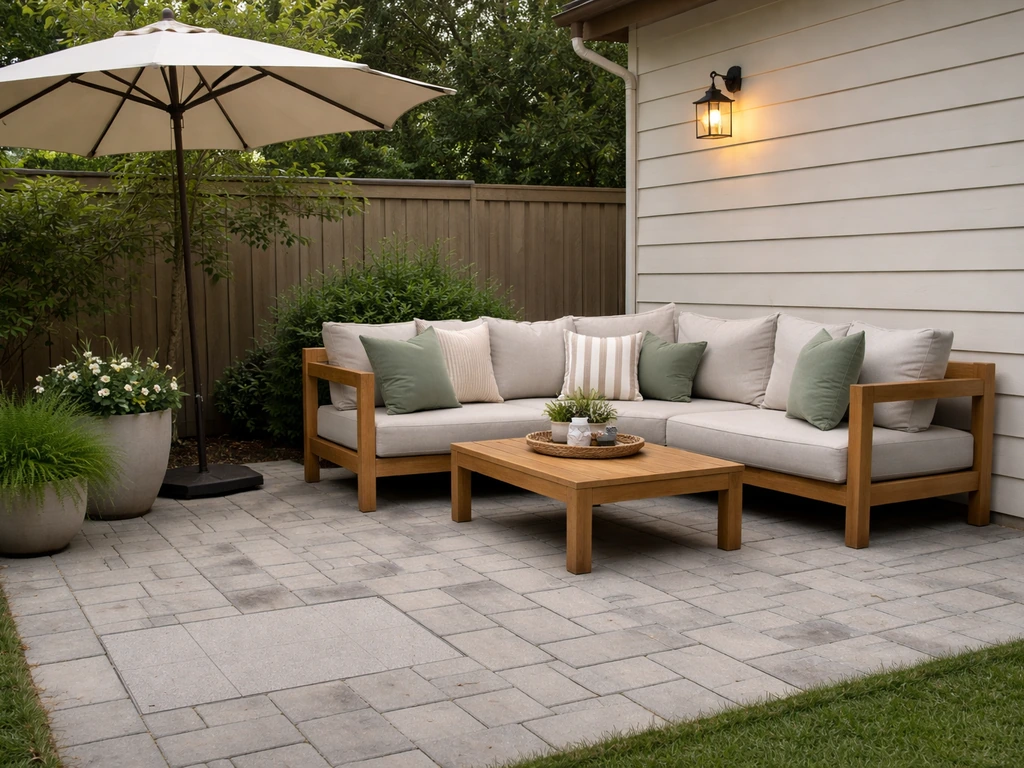
Quick fix patio ideas for fast comfort and style: cleanups, repairs, shade, flooring tweaks, and safe upgrades on any bu
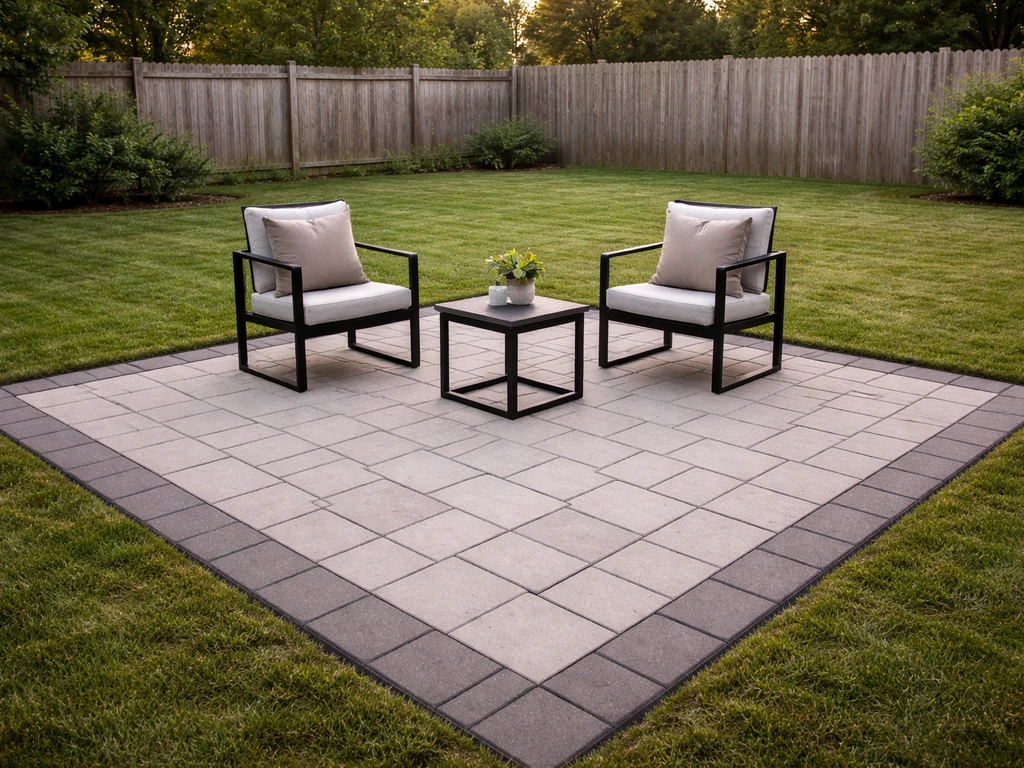
Budget DIY patio ideas with step-by-step flooring, prep tips, cost ranges, upgrades, and safety mistakes to avoid.
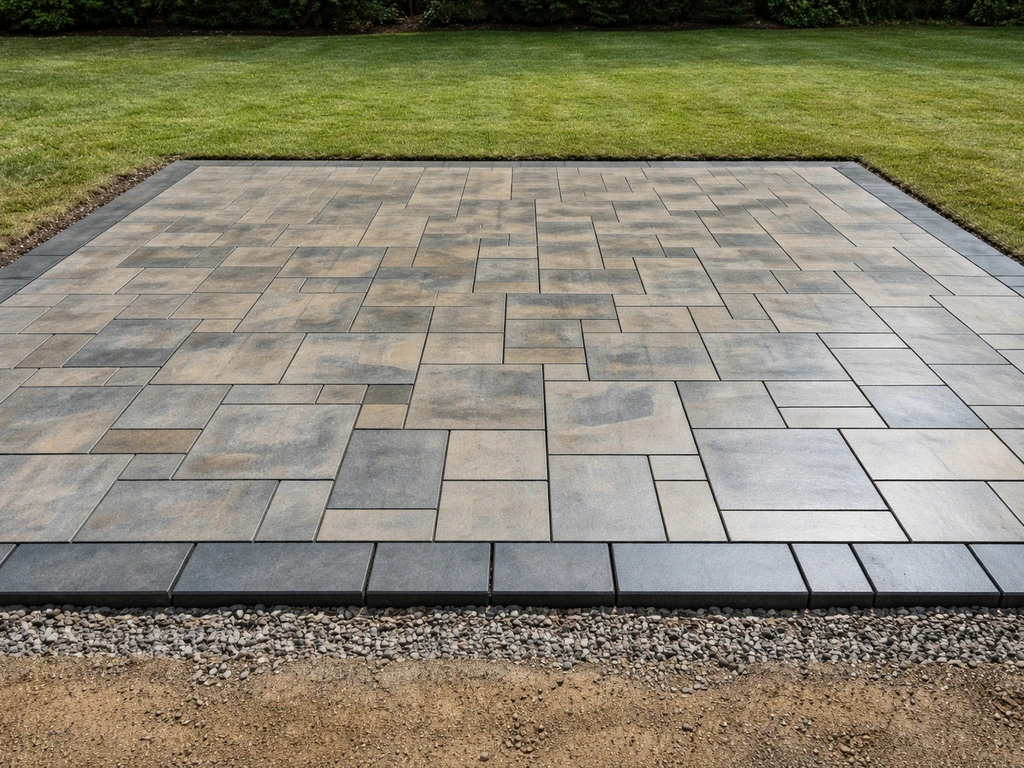
Best DIY patio ideas plus a step-by-step build guide: materials, subbase, drainage, costs, tools, and maintenance tips.