The best patio blinds for most homeowners are outdoor roller shades with a 1–3% openness solar fabric, mounted on a ceiling or overhead beam with side channels if wind is a concern. They block 80–95% of glare and UV, handle light rain, and cost anywhere from $50 for a basic off-the-shelf panel to $800+ per section for motorized, track-guided versions. That said, the "best" option really depends on whether your biggest problem is sun, privacy, wind, rain, or all four at once, and whether you want something you can retract or something permanently fixed. This guide will walk you through every factor so you can make the right call for your specific setup.
Best Patio Blinds: Types, Fit, Materials, and Buying Guide

Phoebe Foster
2 Jun 2026
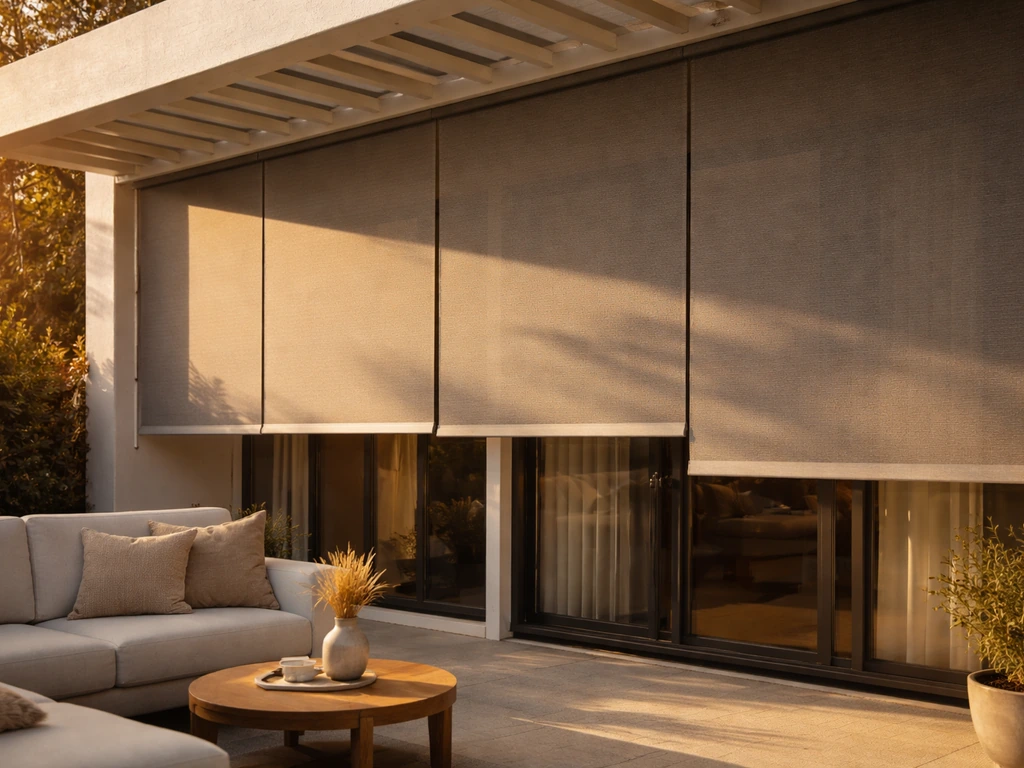
How to Pick the Right Patio Blind for Your Actual Problem
Before you look at a single product, figure out which problem you are actually solving. Most people search for patio blinds because of one or two specific pain points, and the answer changes a lot depending on which ones apply to you.
- Sun and heat: You need a solar shade with a low openness factor (1–3%) that blocks the majority of incoming light and infrared heat. A higher openness like 10% lets in a lot more light and warmth, which might be fine for mild climates but will leave you squinting in Texas or Arizona.
- Glare specifically: Even a 5–6% openness fabric cuts glare noticeably, but if you are trying to watch a TV outside or just keep your eyes comfortable, stick to 1–3%.
- Privacy: Openness factor matters here too. At 1%, you get minimal view-through from the outside. But be aware that solar fabrics are not true privacy fabrics, especially at night when interior light reverses the visibility equation. For full nighttime privacy, you need a denser or opaque material.
- Wind: Standard roller shades flap and wear out fast in sustained wind. If your patio gets regular gusts above 20–25 mph, you need either a side-track (zip track) roller system or a framed canopy-style solution rated for higher wind loads.
- Rain and water: Most outdoor blinds shed light rain reasonably well, but water pooling on horizontal or low-slope surfaces is a real durability problem. If your patio is exposed to heavy rain, look at framed canopy systems designed with a peaked center so rain runs to the sides rather than pooling in the fabric.
- Year-round or seasonal use: If you live somewhere with harsh winters, plan on rolling up or removing fabric blinds for the cold months. Motorized systems with sensors make this much easier to manage.
If you are dealing with multiple issues at once, rank them. Sun and glare can usually be solved with the same blind. Wind and rain together push you toward a more structural framed system. Privacy plus sun is doable with the right low-openness solar fabric. Once you know your priority, narrowing down the type and material is straightforward.
The Main Patio Blind Types and When to Use Each
Outdoor Roller Shades
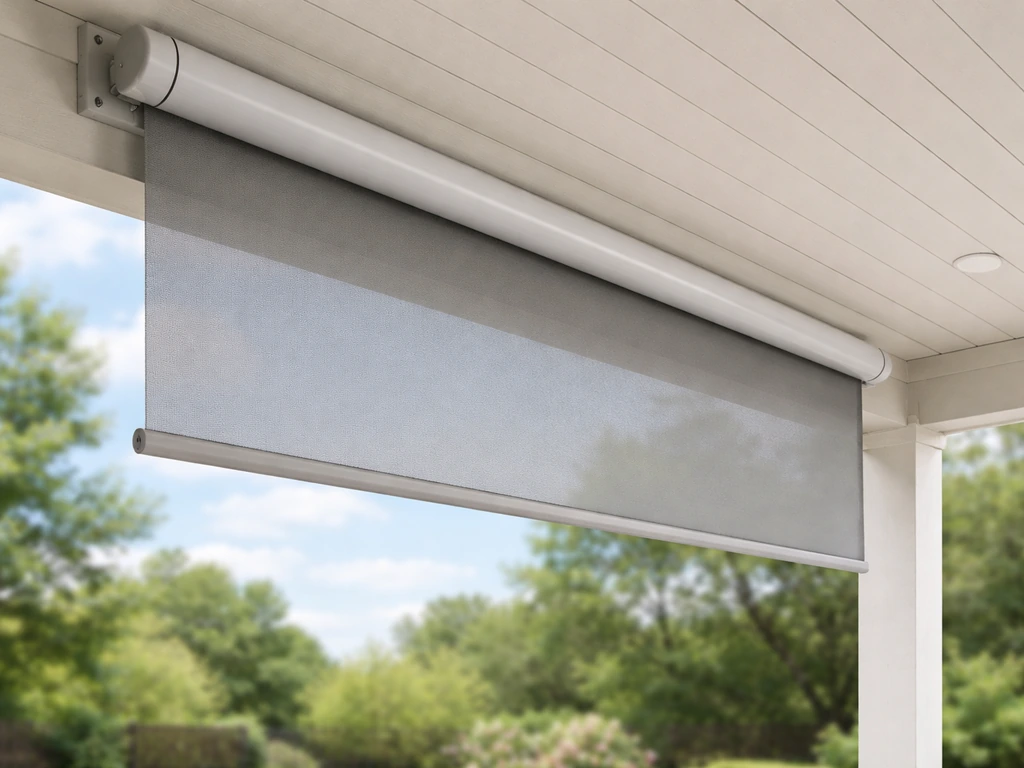
Roller shades are the workhorse of the patio blind world. A tube at the top holds the rolled fabric, and you pull it down manually or via a motor. They mount to a ceiling, overhead beam, or wall and drop vertically to block sun and create privacy on the sides of your patio. Standard versions are inexpensive and widely available at home improvement stores. The main weakness is wind, because an unsupported vertical panel flaps aggressively and wears out at the seams. The fix is a zip-track or channel-track system (sometimes called FlexShade ZIP style) where the edges of the fabric ride in side rails, locking the panel in place even in significant wind and also eliminating side light gaps. These track systems cost more but are genuinely worth it if wind is a regular issue.
Roman-Style Outdoor Awning Blinds
These fold up in horizontal pleats rather than rolling around a tube. They are less common outdoors than indoors, but you will find them used on pergolas and covered patios where the aesthetic is a priority. They handle light breeze decently because the fabric is stacked rather than hanging freely, but they are not a great choice for genuinely windy locations. They also require more careful sizing because the folds need to stack cleanly without bunching.
Vertical Panel or Strip Blinds
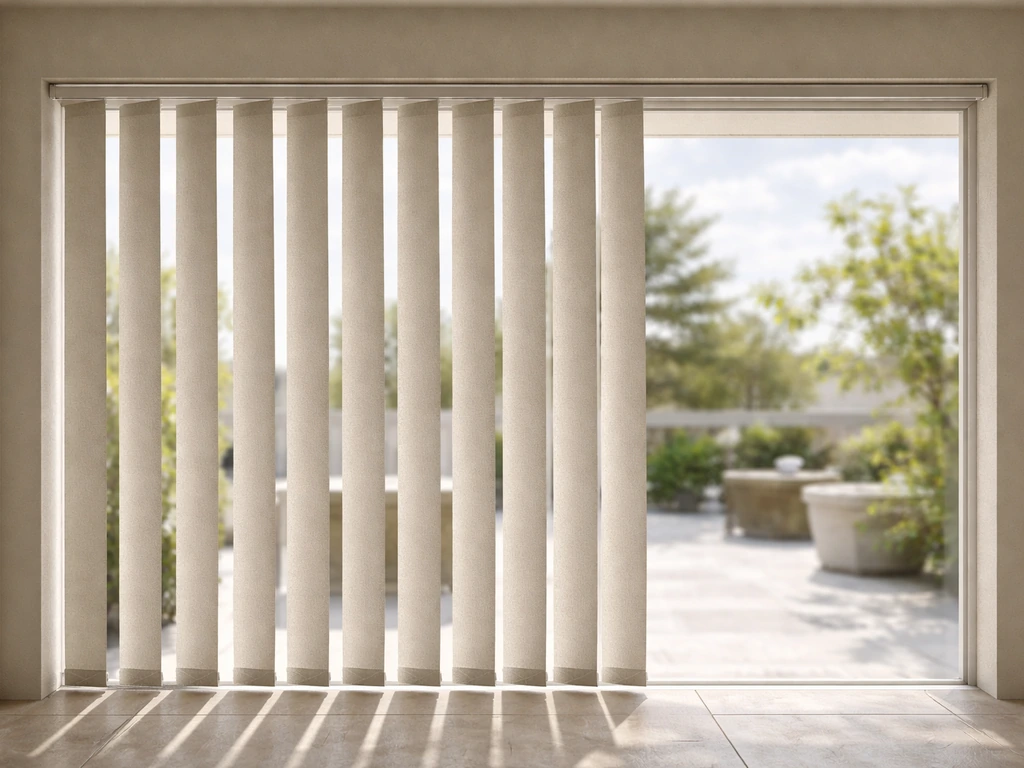
Vertical blinds, where individual slats or panels hang from a top track, are sometimes used on large patio openings. They allow you to angle the slats for partial light control, which is handy. But outdoors, individual vertical slats catch wind like sails and are the least durable option in exposed locations. They work fine on a fully sheltered porch or a covered lanai where they see minimal wind, and they can slide aside easily for access, which is a practical advantage.
Retractable Canopy-Style Systems
These are the premium tier. Instead of a vertical hanging panel, a retractable canopy deploys horizontally (or at a low slope) overhead, covering the top of your patio like a fabric roof. Framed canopy systems from manufacturers like ShadeFX are engineered with a center peak that sheds rain to the sides, so they can stay deployed in rain without water pooling. Some are rated for wind resistance of 80 mph or more when properly installed. Retractable awnings (the classic arm-extended awning style from brands like SunSetter) are a related but distinct category: they extend at a slope from the wall and provide overhead shade, and higher-end models have been lab-tested to withstand gusts up to 55–75 mph, though most manufacturers recommend retraction in sustained heavy wind. If wind exceeds the manufacturer’s threshold (often cited around the ~20, 35 mph range), AwningTown describes typical automatic retraction protection for motorized retractable awnings automatic retraction occurring when winds exceed a threshold (example range cited: ~20–35 mph). These systems cost significantly more than roller shades, but they handle the full combination of sun, glare, and rain in a way that a single hanging panel cannot.
| Type | Best For | Wind Resistance | Rain Handling | Price Range |
|---|---|---|---|---|
| Standard Roller Shade | Sun, glare, mild privacy | Low (flaps in wind) | Light rain only | $50–$400 per panel |
| Track/Zip Roller Shade | Sun, glare, privacy, moderate wind | Good with side tracks | Good with overlap | $300–$900+ per panel |
| Roman-Style Awning Blind | Aesthetics, light glare, mild breeze | Low to moderate | Light rain | $150–$600 per panel |
| Vertical Panel/Strip Blind | Sheltered porches, easy access | Poor outdoors | Poor outdoors | $80–$400 per opening |
| Retractable Canopy System | Full overhead coverage, rain, sun | Up to 80+ mph (framed) | Excellent (peaked design) | $2,000–$10,000+ |
| Retractable Awning | Overhead shade, moderate wind/rain | 25–75 mph depending on model | Moderate (slope-dependent) | $1,500–$6,000+ |
The Best Materials and Fabrics for Outdoor Blinds
Outdoor fabric is not the same as indoor fabric, and this is where a lot of cheap patio blinds fail within a season. The three things that destroy outdoor blinds are UV exposure (which fades and degrades fibers), moisture and mildew (which rot stitching and discolor fabric), and physical stress from wind. The good news is that a few fabric types handle all three reliably.
Solution-Dyed Acrylic
This is the gold standard for outdoor fabric. Sunbrella is the most recognized brand, and their fabrics are 100% solution-dyed acrylic, meaning the color goes all the way through the fiber rather than sitting on the surface as a coating or dye. That process gives exceptional UV and fade resistance, mildew resistance, and water repellency. It passes rigorous water repellency testing (ISO 4920 Level 5 in some spec sheets) and holds its color far longer than polyester-based alternatives. If you are spending real money on a motorized or custom system, insist on solution-dyed acrylic fabric.
Solution-Dyed Polyester
A solid mid-range option. Solution-dyed polyester uses the same pigment-in-the-fiber approach and resists fading and mildew well. Some manufacturers list UV resistance ratings of 2,000 hours or more for their solution-dyed polyester lines. It is generally less expensive than acrylic and is the dominant fabric in the mid-price roller shade market. For most residential patios, it performs well for 5–7 years with proper care. Coolaroo, for example, backs their custom roller shade fabrics with a seven-year warranty.
PVC and Vinyl Fabrics
PVC-coated or vinyl fabrics are waterproof rather than just water-repellent, which makes them popular for rain-heavy climates. The tradeoff is that they trap heat more than woven fabrics, they can crack in extreme cold, and they do not breathe at all. They are a reasonable choice for a covered porch in a wet climate where keeping rain out is more important than airflow.
What to Look For on the Spec Sheet
- Openness factor: 1–3% for strong glare/heat blocking and good privacy, 5–10% for lighter shade with more airflow and view-through
- UV resistance: Look for solution-dyed fibers (acrylic or polyester) rather than surface-coated fabrics
- Mildew resistance: Should be listed explicitly; solution-dyed fibers inherently resist mildew better than coated alternatives
- Water repellency: Look for a finish rated to ISO 4920 Level 4 or 5, or a PFAS-free DWR (durable water repellent) finish
- Warranty length: Seven to ten years is a realistic expectation for quality outdoor fabric
Measuring and Installing Patio Blinds Correctly
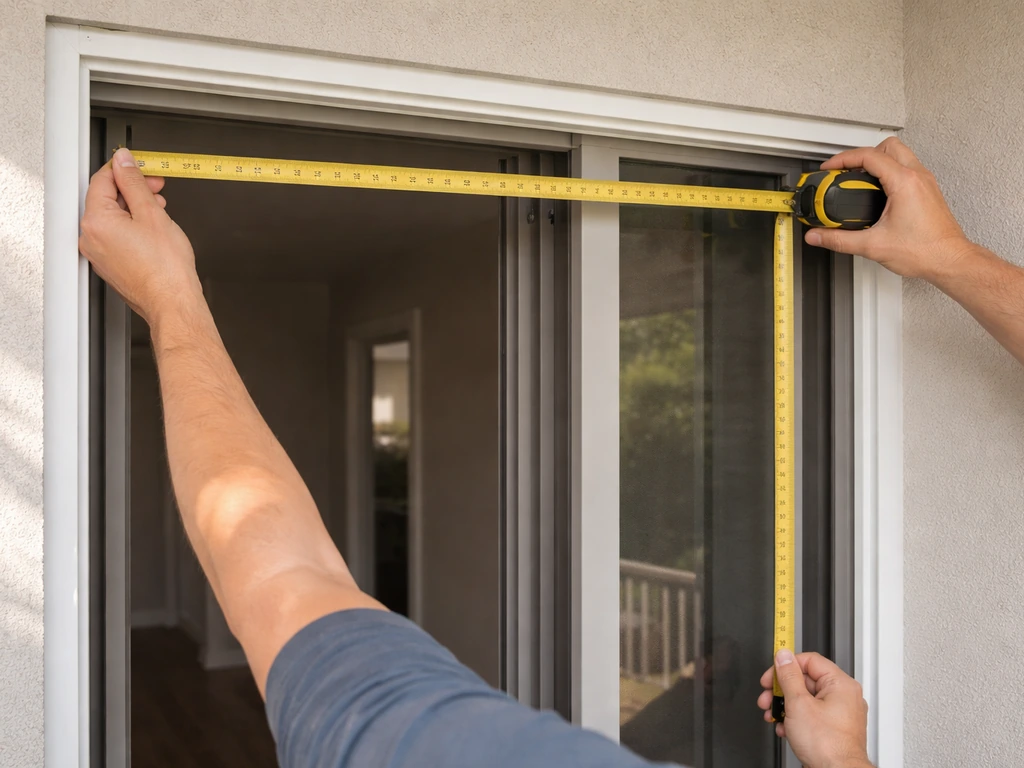
Getting the measurement wrong is one of the most common ways a patio blind project goes sideways. Here is the practical approach to doing it right.
Measuring for Width and Height
Measure the opening width at the top, middle, and bottom, and use the smallest measurement. For height, measure from the mounting surface (ceiling or beam) to where you want the bottom of the blind to fall, adding a few inches of overlap at the bottom if you want it to touch or slightly stack on a surface like a railing or deck floor. For outside-mount roller shades, add at least 3–4 inches of overlap on each side beyond the opening to minimize light gaps. When installing a zip-track or channel-track system, the track placement determines your panel width, so position the tracks first and measure the panel to fit the track spacing.
Mounting Options
- Ceiling mount: The most common and cleanest option for patio roller shades. Mount the bracket directly to a patio cover ceiling or beam. Lowe's installation guidance specifies at least 2 inches of clearance between the rolled tube and the mounting surface to allow the shade to operate without binding.
- Wall mount: Used when there is no overhead structure, or when you want the shade to deploy from a wall bracket outward. Requires a solid mounting surface (masonry anchors for stucco or concrete, lag screws into studs for wood-framed walls).
- Inside/recess mount: When your patio has a deep beam or header, a recessed mount hides the hardware completely. Requires enough depth in the recess to accommodate the roller tube.
- Post or column mount: For open patios with structural posts but no overhead surface, brackets can mount to the side of posts to hold vertical shade panels.
Drainage and Overlap
If your blind will see rain, think about where the water goes. A vertically-hung roller shade will let most rain run straight down and off the bottom edge, which is fine as long as the fabric is not sitting against a wall or rail where it can trap moisture and develop mildew. For framed canopy systems, the manufacturer's geometry handles water runoff, but you still need to make sure the perimeter drainage path is clear. Horizontal surfaces that collect water are the enemy of outdoor fabric: water pooling damages fabric seams, voids warranties, and creates mildew problems fast.
Motorized vs Manual: Which One Is Worth It
Manual patio blinds are less expensive upfront and have fewer things that can break. A good spring-assisted roller or a simple cord-and-cleat system works reliably for years with almost no maintenance. If you have a simple single-panel shade on a small covered porch, manual is probably all you need.
Motorized systems become genuinely valuable the moment any of these apply to your situation: you have multiple blinds to operate at once, the blinds are hard to reach manually (high ceilings, awkward angles), you want to set schedules or automate based on weather, or you have a large retractable awning that you need to retract quickly when a storm rolls in. Wind sensors (like the Soliris RTS from Draper or the wireless sensor options from SunSetter) automatically retract or close shades when wind exceeds a set threshold, which is a real durability and safety feature, not just a convenience. Rain sensors work similarly. Some systems use a "suspend" approach after a gust to avoid rapid cycling back and forth.
| Factor | Manual | Motorized |
|---|---|---|
| Upfront cost | Lower ($50–$400 per panel) | Higher ($300–$1,500+ per panel) |
| Operation convenience | Requires physical access | App, remote, voice, or schedule |
| Weather automation | None (you must act) | Wind/rain sensors available |
| Power requirement | None | Battery, solar, or hardwired |
| Maintenance complexity | Low | Moderate (motors, sensors, wiring) |
| Best for | Simple setups, low budgets | Multiple panels, hard-to-reach areas, large awnings |
Power options for motorized blinds include hardwired 110V (cleanest but requires an electrician), rechargeable battery-powered tubes (no wiring, recharge every few months), and solar-charged battery systems (works well in sunny climates). If you are in a sunny region and the shade faces south or west, a small solar panel on top of the housing will likely keep the battery topped up with no effort.
Keeping Your Patio Blinds in Good Shape Year-Round
Regular Cleaning
For solar fabric roller shades, a rinse with a garden hose every month or two removes dust, pollen, and grime before it can work into the fibers. For tougher spots or mildew, Sunbrella recommends brushing with a soft bristle brush using a diluted bleach and mild soap solution, then rinsing thoroughly. Coolaroo's care guidance follows a similar approach: hose rinse for routine cleaning, mild soap and water for stubborn spots. Avoid pressure washing directly on fabric since it can damage the weave and compromise water repellent finishes.
Winterizing
In harsh winter climates, the right move is to roll up and remove or cover roller shade panels before the cold season. Coolaroo explicitly recommends this in their FAQ. Freezing temperatures, ice, and heavy snow loads stress fabric and hardware in ways that warranty coverage typically does not protect against. For motorized systems on retractable awnings, retract fully and cover the housing. For permanent or semi-permanent canopy systems, follow the manufacturer's guidance, but most quality framed systems are designed to handle winter weather if the fabric is properly tensioned.
Reproofing Water Repellency
Over time, the DWR (durable water repellent) finish on outdoor fabrics wears down. You will notice water soaking in rather than beading off. This is normal and fixable: spray-on DWR products designed for outdoor fabrics (available at outdoor gear stores) restore the repellency after cleaning. Just make sure the fabric is fully clean and dry before applying.
What to Buy at Different Budgets
Entry Level: Under $150 per Panel
At this price point, you are looking at off-the-shelf manual roller shades in standard sizes from brands like Coolaroo or similar. The fabric quality is adequate for moderate sun exposure and light rain. Expect a 3–5 year lifespan with good care, less in very hot or wet climates. These work well for a covered porch that does not get direct weather or as a seasonal solution you plan to replace periodically. Buy the lowest openness factor (1–3%) you can find in this price range for the best glare control.
Mid Range: $150–$600 per Panel
This is where you get into custom-sized roller shades with better hardware, solution-dyed polyester or entry-level solution-dyed acrylic fabric, and more color and openness options. Many online retailers offer semi-custom sizing in this range. You can also start to find motorized options on the lower end, particularly battery-powered tube motors. Side cable guides or basic track systems become available here too, which meaningfully improve wind stability. This is the sweet spot for most homeowners with a standard covered patio.
Premium: $600+ per Panel, or $2,000+ for Canopy Systems
At the premium level you get zip-track systems with full side-channel enclosure, Sunbrella or equivalent solution-dyed acrylic fabric, integrated motorization with wind and rain sensors, and professional installation. Retractable awning systems and framed canopy systems (with ten-year fabric warranties from brands like ShadeFX, or SunSetter's up-to-ten-year limited warranty) live in this category. These are genuinely durable, handle serious weather, and can transform an open patio into a usable outdoor room. If you are putting real money into a patio renovation and plan to use the space heavily for years, this is the right investment tier.
Mistakes That Are Easy to Avoid (But People Make Anyway)
Wrong Fabric Weight or Openness for the Climate
A 10% openness shade looks great in the store and feels airy, but if you are in Phoenix or Houston dealing with intense afternoon sun, it will not do nearly enough. Meanwhile, someone in Seattle who just wants to cut glare on an overcast day might not need a dense 1% fabric at all. Match the openness to your actual sun intensity and privacy needs, not just what looks good.
Undersized Coverage and Light Gaps
If a shade panel does not extend at least 3–4 inches beyond the opening on each side, light wraps around the edges and the shade feels much less effective. The same applies at the bottom: if a shade stops 6 inches short of the floor or railing, a band of direct sun still hits you at low angles. Always over-size on overlap rather than cutting it tight.
Ignoring Wind Load
A standard roller shade with no side restraint in a gusty location will flap constantly, stress the seams, and fail at the corners within a season or two. If your patio is exposed to regular wind above 15–20 mph, either use a track system or size up to a more structural solution. If you are actively hunting the best patio wind blocker, prioritize a zip-track or channel-track setup over a basic unsupported panel. Wind damage is usually not covered under fabric warranties.
Water Pooling on Fabric
Any situation where water can pond on or against the fabric is bad. This happens most often when a blind is angled or forced against a wall, or when a horizontal canopy sags in the center. SunSetter's installation documentation specifically calls out water pooling as a durability concern with warranty implications. If you have a canopy-style system, make sure it has the slope or peak geometry to shed water, not collect it.
Mounting Into the Wrong Surface
Bracket screws pulling out of a stucco surface or a hollow ceiling panel are a common and frustrating failure. Always anchor into structural members: ceiling joists, solid beams, or masonry with appropriate anchors. The weight of a fully extended wet blind plus any wind load is more than people expect.
Skipping the Winterizing Step
Leaving fabric blinds deployed through a hard winter in the Midwest or Northeast shortens their life significantly. Ice accumulation, freeze-thaw cycling, and snow load stress both fabric and hardware. Rolling them up and storing or covering them adds years to the product's life and keeps you in warranty compliance.
Your Next Steps
Start by measuring your opening width and drop height, then decide on your top priority: sun blocking, privacy, wind resistance, or rain protection. If sun and glare are your main issue on a calm covered patio, a mid-range custom roller shade in 1–3% openness solution-dyed polyester fabric with a ceiling mount will solve it cleanly for $150–$400. If wind is a factor, add a side-track system or step up to a zip-track roller. If you want full overhead coverage that handles rain and you are willing to invest, a retractable canopy system or quality retractable awning with a wind sensor is the right move. If you are looking for an alternative that still delivers privacy and weather protection, compare the best patio curtains for your space and climate. If you want the best motorized screens for patio setups, focus on track-guided roller shades or motorized retractable canopy systems with wind and rain sensors. If you are also weighing other outdoor enclosure options, the comparison between blinds and full patio screens or motorized screen systems is worth a look depending on how enclosed you want the space to feel. Get the measurements right, choose solution-dyed fabric, mount into solid structure, and size for overlap rather than cutting it close. That combination will get you a patio blind that actually does the job for years.
FAQ
How do I decide between “outside mount” and “inside mount” patio blinds for best coverage?
Outside-mount usually gives better glare blocking because the fabric overlaps the opening (not just sits flush). Inside-mount can look cleaner but tends to leave more light gaps if the frame is out of square, and you may need to order narrower width or accept some edge light bleed.
What openness percentage should I choose if I also need daytime privacy?
For privacy plus sun, aim around the low end (roughly 1 to 3% openness) so you can reduce visibility without making the space feel dark. If you use the patio mainly at night or in well-lit evenings, consider that a very dark/low openness fabric can still look “see-through” from certain angles, so prioritize your viewing direction and street lighting.
Do patio roller shades block heat, or only glare and UV?
They primarily reduce glare and UV, but they can help with radiant heat by shading the surfaces that heat up. If cooling is your main goal, choose a lower openness fabric and ensure the blind blocks from ceiling height down enough to cover the sun path, otherwise the uncovered lower area can still heat floors and legs.
How much overlap is enough when I want the blind to seal against a railing or deck floor?
A common mistake is stopping too high or too short at the bottom. Plan for a few inches of overlap where you want coverage (especially if there is a railing or horizontal surface) so low-angle sun cannot slip under the hem.
Can I install patio blinds on drywall or a lightweight ceiling without problems?
Avoid mounting to hollow ceilings or drywall alone. You need anchors into structural members like joists or solid beams, because wind load plus the weight of a wet fabric can pull fasteners out and create misalignment that ruins the fit.
If my patio gets wind, will a heavier fabric alone solve the flapping issue?
Heavier fabric can reduce flutter but it does not replace side restraint. Wind failure usually starts at the edges and seams, so a zip-track or channel-track system (with the panel held down on the sides) is the reliable fix for gusty locations.
Are solution-dyed acrylic blinds “too hot” compared with polyester?
Typically not, since both are designed for outdoor UV and moisture performance. What matters more is openness and installation coverage, for example how much the fabric blocks sun at peak hours, plus whether the patio gets cross-breeze that helps cool surfaces.
What’s the right way to clean patio blinds without damaging the water repellency?
Use a hose rinse for routine dirt, and spot-clean with mild soap and a soft brush for tougher spots. Avoid pressure washing directly at the fabric because it can disturb the weave and reduce the durable water repellent performance over time.
My fabric stops beading and soaks water in after some seasons, do I need a new blind?
Not necessarily. It often means the durable water repellent finish has worn off. Clean thoroughly first, let it fully dry, then apply a spray-on DWR product made for outdoor fabrics to restore water repellency.
Should I leave patio blinds deployed during winter in snow states?
In most regions, you should roll up and remove or properly cover the panels before freezing conditions. Freeze-thaw cycling and snow load stress hardware and fabric, and warranty coverage often excludes damage from ice and heavy snow accumulation.
How do rain patterns affect where I mount the blind, especially near walls or rails?
If the blind fabric can sit against a wall, rail, or any surface where water can cling or pool, mildew risk rises. Aim for runoff paths that keep fabric edges from staying wet, and avoid horizontal sagging surfaces that trap water.
Do motorized patio blinds always need hardwiring?
No. Many systems use rechargeable battery tubes, or solar-charged battery setups when you have enough sun on the housing. Hardwired 110V is the cleanest power option but requires an electrician and is best when you are comfortable with permanent installation.
What wind sensor settings should I use if I want protection without constant retractions?
Set the threshold to match your local gust behavior, then avoid using an overly sensitive setting that triggers frequently. Many systems also include a “suspend” or delay behavior after a gust to prevent rapid cycling, which helps reduce wear on motors and fabrics.
How can I confirm my track system will actually fit and not bind after installation?
Dry-fit and re-check track spacing before ordering or finalizing the panel size. For zip-track or channel-track setups, the track placement determines the panel width, so measure the panel-to-track relationship carefully rather than relying only on the opening dimensions.
Next Articles
Best Motorized Screens for Patio: Choose, Measure, and Buy
Guide to choosing the best motorized patio screens: measure, compare motors and mesh, pick privacy, bugs, or shade, then
Best Patio Screen: How to Choose the Right One
Choose the best patio screen by type, material, bug barrier and privacy coverage, with sizing, installation and cost tip
Best Patio Wind Blocker: Choose, Size, and Install Fast
Pick the best patio wind blocker for your wind direction, size, and budget with DIY install steps and material compariso