The best motorized patio screens combine a wind-rated motor drive, a mesh suited to your main problem (bugs, sun, or privacy), and a mounting system that fits your opening size. For most homeowners, a side-guided retractable drop screen with a 18x14 fiberglass insect mesh, a wind rating of at least 20 mph, and a basic remote or app control hits the sweet spot between performance and cost. If you're covering large openings over 16 feet wide, or you live somewhere with serious wind exposure like coastal Texas or the Gulf Coast, you'll want to step up to a cable-guided or hurricane-rated track system. Read on for exactly how to choose.
Best Motorized Screens for Patio: Choose, Measure, and Buy

Phoebe Foster
31 May 2026
What motorized patio screens actually solve
Manual screens work fine until you have to deal with them constantly. The real pitch for motorized screens is convenience and consistency: you press a button (or set a schedule), and the screen drops or rises without you touching it. That sounds like a luxury, but it genuinely changes how you use your patio. Screens that are a hassle to deploy usually stay put in one position, which means you either bake in the sun or seal out the breeze. Motorized systems get used more, which means they actually do their job.
The three main problems motorized screens solve are insect control, shade and UV reduction, and privacy. Insect mesh screens (typically 18x14 or finer) create a physical barrier against mosquitoes, flies, and gnats while still letting airflow through.
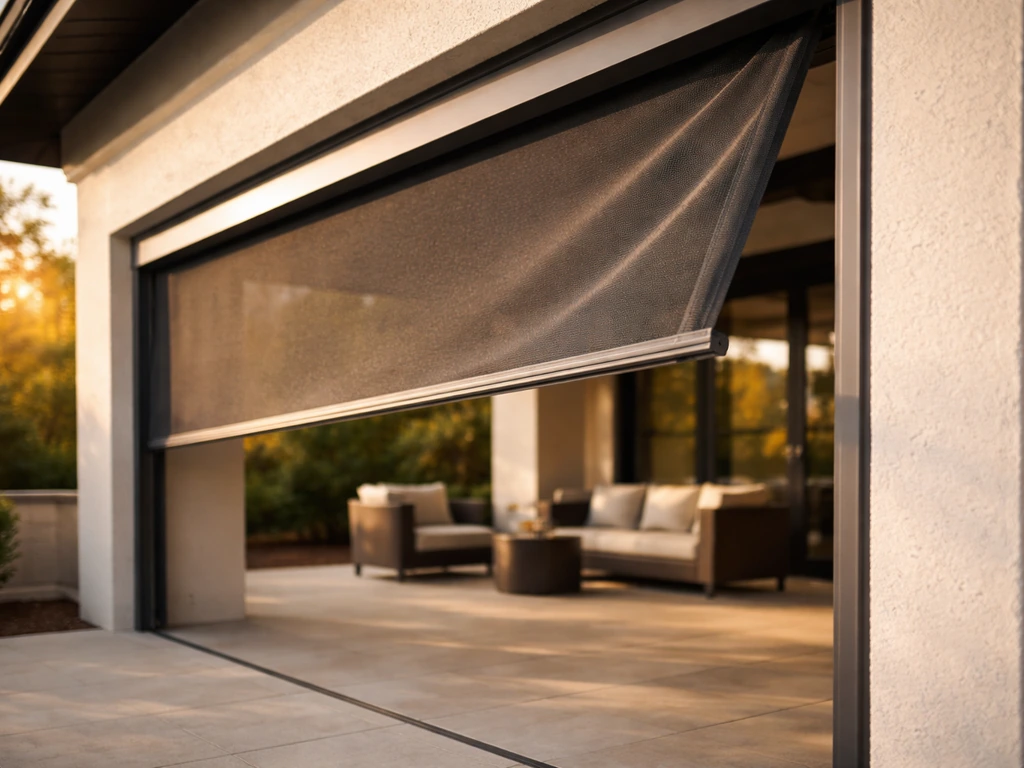
Motorized retractable patio screens can be lowered and raised with the touch of a button to help provide insect protection, privacy, and reduced UV or heat while still allowing fresh airflow, particularly when fully retracted a physical barrier against mosquitoes, flies, and gnats while still letting airflow through. Solar shade screens (with an openness factor between 3% and 14%) knock out direct sun glare and can reduce heat on the patio surface meaningfully without fully blocking the view.
Privacy screens (1% openness or blackout fabric) let you use your patio without feeling like you're on display from the street or neighboring yards. Many homeowners want all three things, which is why mesh selection matters so much.
One honest tradeoff worth knowing upfront: a fully deployed roll-down shade screen will reduce airflow and outward visibility compared to a retracted screen or an insect mesh configuration. You are trading open-air feel for the benefit you're getting. That's not a flaw, it's just physics. The motorized part means you can retract it the moment conditions change, which makes the tradeoff much easier to live with.
Types of motorized screen systems for patios
Not all motorized patio screens are built the same way, and the system type matters as much as the screen material. Here are the main configurations you'll encounter:
Side-guided retractable drop screens
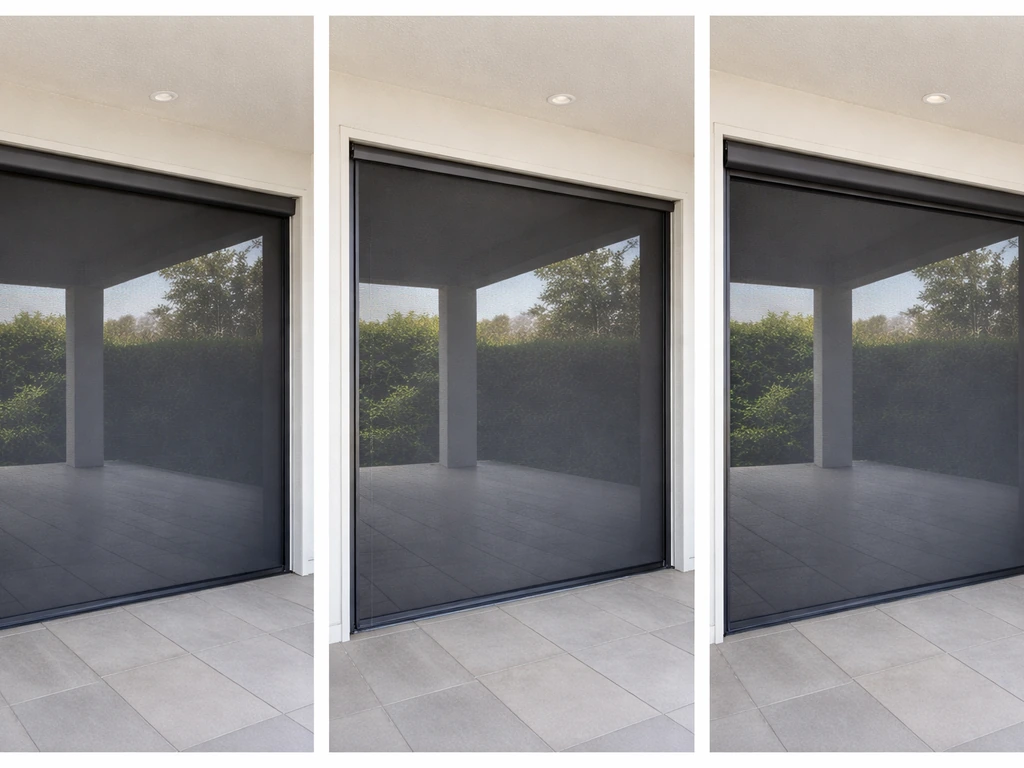
This is the most common residential setup. The screen rolls down from a cassette mounted at the top of your patio opening (on a beam, header, or wall) and is guided on each side by a track or zip-line cable. Side guides keep the screen taut and prevent wind from billowing it out of position. These work well for openings up to about 16 feet wide and are available in a wide range of meshes. Most DIY-friendly motorized screen kits use this configuration.
Cable-guided and zip-track systems
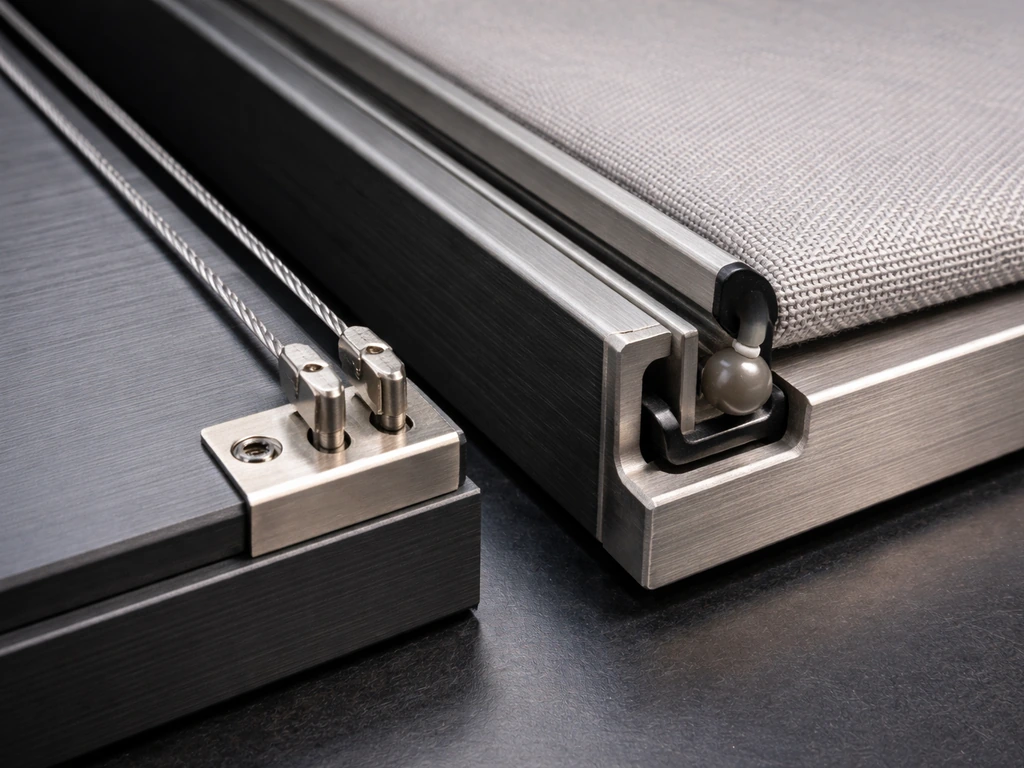
Cable-guided systems use tensioned stainless steel cables along each side instead of rigid tracks. Zip-track systems use a fabric bead that seats inside a track channel to create a tighter seal. Zip-track in particular is popular for screened porches and outdoor kitchens because the seal is nearly draft-free, which matters for insect control in humid climates. These systems handle wider openings and tend to have better wind resistance than basic side-guided setups.
Cassette-integrated and recessed systems
Some manufacturers, including Phantom Screens with their Sure Fit technology, design screens to recess into a pocket built into the structure during construction or renovation. When retracted, the screen is completely hidden inside the fascia or header. This is the cleanest look and the most protected cassette, but it requires planning at the build stage or a more involved retrofit. Surface-mounted cassette versions of the same systems are easier to add after the fact.
Hurricane-rated and high-wind systems
If you're on the Gulf Coast, in Florida, or anywhere that sees sustained winds above 30 mph regularly, standard retractable screens aren't enough. Hurricane-rated systems like those from MagnaTrack are engineered with reinforced tracks, heavier-gauge fabric, and motor systems that can handle conditions that would shred a standard screen. These systems cost significantly more and usually require professional installation, but they're the right tool for the environment.
Motorized screen enclosures and multi-panel systems
For large covered patios with multiple openings, you can run several motorized screens on a single control system. Each panel operates independently or as a group. This is common for outdoor living rooms, pergola enclosures, and commercial patios. The wiring and motor coordination adds cost and complexity, and professional installation becomes essentially mandatory at this scale.
How to choose the right screen for your patio
Measure your opening accurately
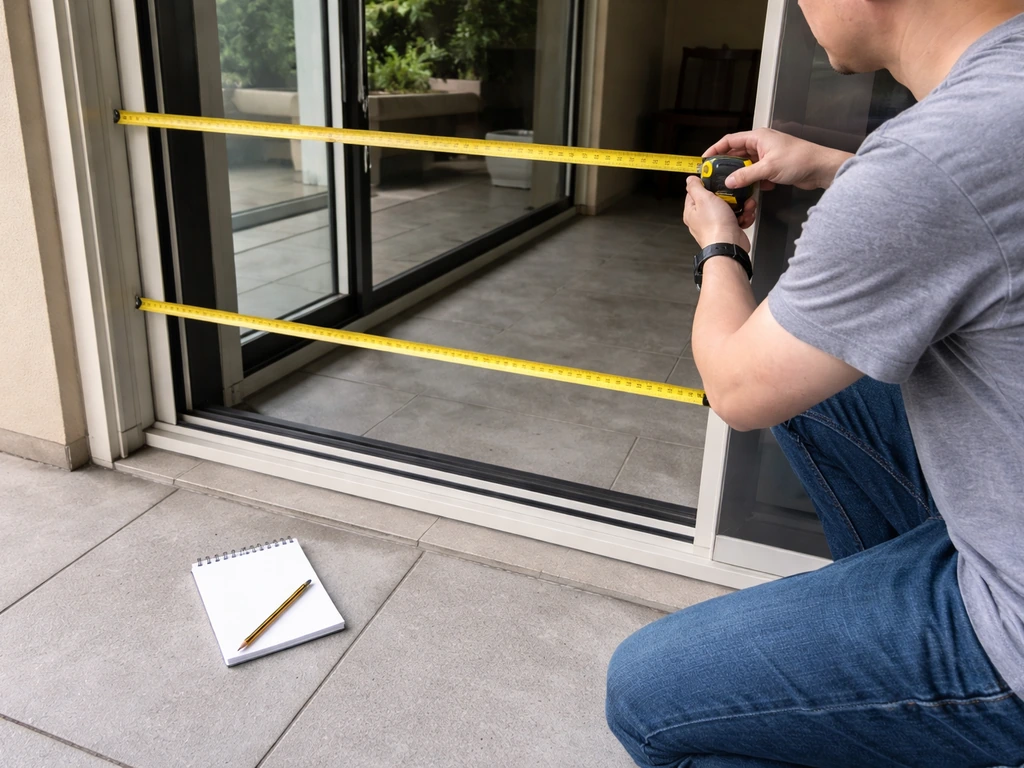
This is where most homeowners go wrong. Measure the width and height of each opening at multiple points (top, middle, and bottom for width; left, center, and right for height) because patio structures are rarely perfectly square. Use the smallest measurement in each dimension when ordering, not the largest. For drop screens, the drop height is measured from the underside of the header or beam down to the surface where the screen will land. Add a few inches of overlap at the bottom if you want a solid seal against insects.
Match the mounting approach to your structure
Surface mounting is the go-to for most existing patios: the cassette attaches to the face or underside of your header beam, and the side tracks fasten to existing posts or walls. Face mounting works when you have a solid beam at least 6 to 8 inches deep. Soffit mounting (attaching to the underside of the overhang) is cleaner but requires a structurally solid soffit. If your posts are wood, masonry anchors are your friend. If your patio has metal framing, check whether the screen manufacturer offers compatible hardware.
Think about sun exposure and prevailing wind
A west-facing patio in Phoenix or Dallas gets hammered by afternoon sun and dry heat, so a solar shade fabric with a 3% to 5% openness factor makes sense. A screened porch in Georgia or Louisiana is primarily a bug problem, so 18x14 fiberglass insect mesh is the priority. A rooftop deck in Chicago deals with wind gusts that would damage a standard cable-guided system, so you need either a hurricane-rated setup or an auto-retract wind sensor on your motor. Know your primary enemy and size the solution to it.
Operation: how you'll actually use it
Most motorized screens come with at minimum a handheld RF remote. Step up to a system with a hardwired wall switch if you want something family-friendly and durable. Smart home integration (Somfy, Lutron, or manufacturer-specific apps) lets you schedule screens to drop at sunset and rise at sunrise, or tie them to a wind sensor. The more people who need to use the screen, the simpler and more reliable the control system should be.
Features that actually matter when comparing products
| Feature | What to Look For | Why It Matters |
|---|---|---|
| Wind rating | At least 20 mph sustained; 30+ mph for exposed locations | Standard screens fail or get damaged in high gusts; auto-retract sensors help but don't eliminate the limit |
| Mesh type | 18x14 fiberglass for bugs; 3–10% openness solar for shade; 1% or blackout for privacy | Mesh determines airflow, visibility, UV block, and insect protection simultaneously |
| Openness factor | Lower % = more privacy and shade, less view and airflow | Match to your actual priority, not just what looks good in photos |
| Motor reliability | Look for DC tubular motors with overload protection and thermal cutoffs | AC motors are cheaper but louder and more prone to overheating in high-use applications |
| Track/guide system | Side channel, cable, or zip-track depending on opening size and wind exposure | Determines how well the screen stays in position and how well it seals edges |
| Cassette housing | UV-stabilized aluminum or powder-coated steel; look for a cover that protects the roll | Protects the fabric from UV degradation when retracted; extends screen life significantly |
| Smart integration | Somfy RTS/io, Lutron, or native app with scheduling and sensor input | Enables automation, wind-sensor auto-retract, and integration with existing smart home systems |
| Warranty | Fabric: 3–5 years minimum; motor: 2–5 years | Motors and fabric are the two failure points; short warranties on either are a red flag |
One feature that gets undersold is the cassette housing quality. The screen fabric degrades faster from UV exposure when it's in the retracted position and unprotected than it does when deployed. A well-sealed cassette with a UV-blocking bottom rail cover will meaningfully extend the life of your fabric investment.
Best options by how you use your patio
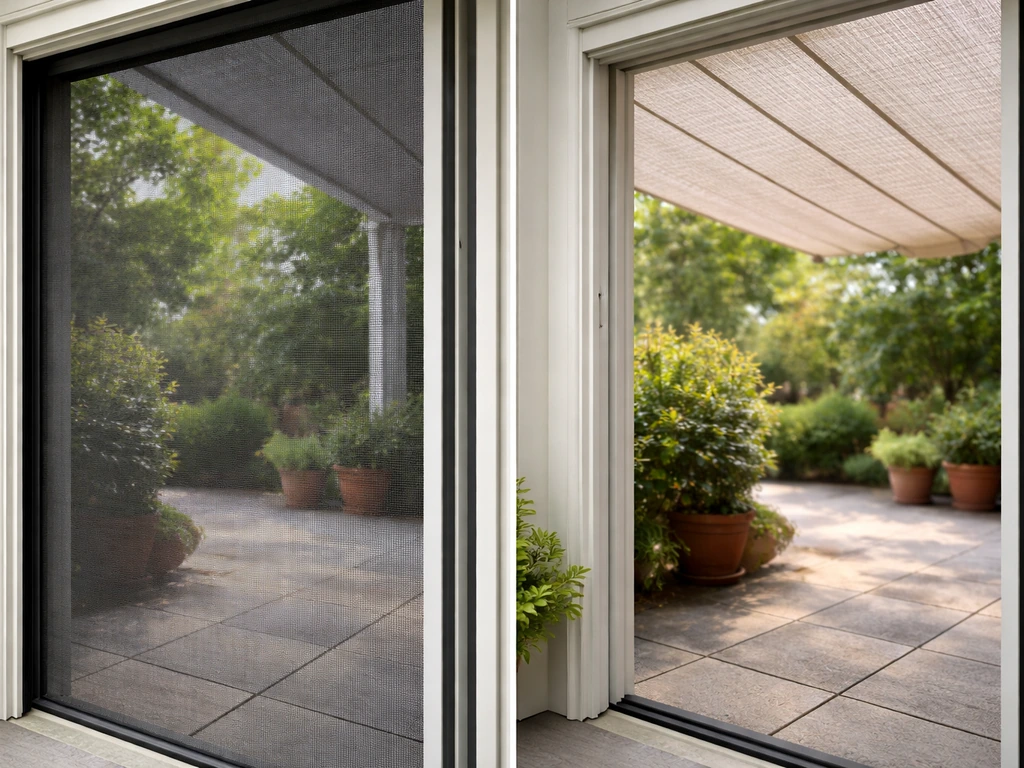
Bug control is your top priority
Go with a zip-track system or a tightly sealed side-channel retractable using 18x14 fiberglass mesh. The tight edge seal is critical: a screen that billows or leaves gaps at the bottom is useless against mosquitoes. For Southern and Southeastern climates where bugs are relentless from April through October, this setup effectively extends your usable outdoor season by months. Look for systems that include a weighted bottom rail that sits flat on the deck surface to eliminate the gap insects use to sneak in.
Sun and shade are your main concern
Choose a solar shade fabric with a 3% to 5% openness factor for serious western or southern exposure, or 10% if you want more airflow and your sun angle is less direct. These fabrics significantly cut glare and surface heat without making the patio feel closed in. Pair this with a well-sealed cassette and a west-or-south-facing drop screen on an automated schedule and you'll transform a patio that was unusable in the afternoon into a genuinely comfortable space. If you want the best patio blinds, you can compare motorized screen styles by wind rating, mesh type, and how well they seal when retracted or deployed west-or-south-facing drop screen.
Privacy from neighbors or the street
A 1% openness solar fabric or a privacy weave gives you a view block from outside while still letting you see out reasonably well. If you specifically want the best patio privacy screens, prioritize a low-opacity privacy weave or 1% openness fabric that blocks outside sight without turning the patio into a dark box. This is a better approach than solid outdoor curtains or static privacy screens, because you can retract it when privacy isn't needed and enjoy the open feel. If you're comparing this to manual patio privacy screens or fixed outdoor blinds, the motorized option wins on day-to-day usability. It's also a cleaner look than side-by-side panel screens for most patio configurations.
Covering a large opening (over 16 feet wide)
Single-panel motorized screens have practical width limits. Most standard residential systems top out around 16 to 18 feet wide before the fabric tension and motor load become a problem. For larger openings, use two or three adjacent panels with a shared control system rather than one oversized panel. You can program them to operate together so the effect is seamless. This is also true if you're enclosing a full pergola or covered outdoor room with multiple open sides.
Small patios and tight budgets
For a single opening under 10 feet wide, an entry-level motorized drop screen kit in the $300 to $800 range (materials only, DIY) is a realistic option. These typically come with a basic RF remote and surface-mount hardware. The fabric and motor quality at this price point are a step below professional-grade systems, but for a secondary patio or a budget-conscious first install, they're a reasonable starting point. Expect to replace the motor or fabric sooner than a premium system.
DIY vs. hiring a pro: cost and installation reality
Motorized screens occupy a middle ground in the DIY-vs-pro decision. The mechanical installation (mounting the cassette and tracks, running the wiring) is within reach for someone comfortable with power tools and basic electrical work. The harder parts are getting the measurements exactly right, making sure the mounting surface is structurally solid enough, and running low-voltage wiring cleanly without visible conduit. One bad measurement on a custom-sized screen means an expensive mistake with no easy fix.
Here's a realistic cost breakdown to help you plan:
| Scenario | Estimated Cost Range | Notes |
|---|---|---|
| DIY kit, single small opening (under 10 ft) | $300–$800 | Entry-level motor and fabric; basic RF remote; surface mount |
| DIY mid-grade, single opening (10–16 ft) | $800–$1,800 | Better motor, solar or insect mesh options, app or smart control possible |
| Pro-installed, single opening (standard system) | $1,500–$3,500 | Includes labor, warranty, and professional measurement |
| Pro-installed, hurricane-rated or zip-track | $3,000–$6,000+ | High-wind areas, larger openings, or complex mounting situations |
| Multi-panel patio enclosure (pro) | $6,000–$15,000+ | Full pergola or outdoor room enclosure with integrated controls |
If you're going the DIY route, order a sample of the fabric before committing to a full screen. Openness factors and colors look very different on a monitor than they do in real outdoor light. Most reputable screen fabric suppliers will send samples for a few dollars. Also budget for the mounting hardware, low-voltage wire, and a junction box if you're hardwiring the motor, as these are usually not included in kit prices.
Basic maintenance to keep your screen working
Motorized screens are low-maintenance but not no-maintenance. Clean the mesh with a soft brush and mild soapy water two to four times per year, more in dusty or pollen-heavy climates. Lubricate the side tracks with a silicone-based lubricant (not WD-40, which attracts dirt) once a year. Keep the motor cassette clear of debris and check that the bottom rail isn't dragging or catching on the deck surface. These small steps prevent 80% of the premature failures you'll read about in reviews.
Smart controls, safety, and what to expect when things go wrong
The smart control landscape for motorized screens has improved dramatically. Somfy is the dominant motor ecosystem and integrates with SmartThings, Google Home, Amazon Alexa, and Apple HomeKit through bridge devices. Lutron's Radio Ra and Caséta systems also support motorized shades and screens with native app control. Some manufacturers like MagnaTrack have their own proprietary apps with wind sensor integration built in. If you already have a smart home system, check compatibility before buying a motor that may not play nicely with your hub.
Wind sensors are worth every penny in exposed locations. Wind sensors are a key part of the best patio wind blocker setups, especially if you get sudden gusts or afternoon storms. These plug into the motor control system and automatically retract the screen when wind speeds exceed a set threshold, typically around 18 to 22 mph. They don't replace a proper wind rating on the system itself (a sensor can't help if a gust hits before the screen fully retracts), but they eliminate most of the damage that happens when people forget to retract a screen before a storm rolls in. If you live anywhere with unpredictable afternoon thunderstorms, consider a wind sensor non-negotiable.
On the safety side, all reputable motorized screens include obstruction detection: if something blocks the screen while it's descending (a chair, a dog, a person), the motor stops and reverses. Check that any system you buy explicitly lists this feature. Screens without it can damage the fabric or injure people or pets.
Common problems and what they usually mean
- Screen won't respond to remote: check the battery and the motor's radio receiver pairing; most systems have a reset/pair sequence in the manual
- Screen drifts to one side when deployed: the side tracks are out of plumb or the fabric tension is uneven; this usually requires re-squaring the cassette mount
- Motor hums but screen doesn't move: the thermal cutoff has triggered from overuse in heat; give it 15 minutes to cool and try again; if it happens repeatedly, the motor is undersized for the opening
- Bottom rail doesn't seal flat on the deck: the opening height measurement was off or the deck surface is uneven; a weighted bottom rail with an adjustable brush seal can compensate for minor gaps
- Fabric tears near the edge: the side track tension is too tight or the screen was operated in high wind; check the track guides for burrs and reduce tension slightly
- Remote range is poor: RF interference from other devices or a weak battery; most systems let you use a hardwired wall switch as a backup
The vast majority of motorized screen problems come down to three things: installation errors (misaligned tracks, improper cassette mounting), operating the screen in conditions beyond its rated wind speed, and skipping the basic annual maintenance. Fix those three and most screens will run for 10 or more years without significant issues.
Your next steps before you buy
- Measure every opening at three points each (width and height) and write down the smallest dimension in each direction
- Identify your primary problem: insects, sun, privacy, or some combination, and let that drive your mesh choice
- Check your wind exposure: look up your area's typical gust speeds in summer and decide whether you need a wind sensor, a hurricane-rated system, or a standard setup
- Determine your mounting surface: is there a solid header beam, masonry, or metal framing? Confirm it can carry the weight of a full cassette assembly
- Set a realistic budget including installation if you're going pro, and order fabric samples before committing to a color and openness factor
- If you're doing it yourself, watch installation videos specific to the system you're buying and have a second person available for the cassette mounting step
Motorized screens sit at the intersection of patio comfort and practical weather management. They're more capable and more useful than manual alternatives like static patio screens or outdoor blinds, and when matched correctly to your opening size, climate, and mesh type, they become one of those upgrades that genuinely changes how often you use your outdoor space. If you are comparing options, the best patio screen setup is the one that matches your openings, your climate, and the kind of problems you want to solve most. Get the measurements right, pick the mesh for your actual problem, and don't skip the wind rating check, and you'll be in good shape.
FAQ
How much clearance do I need above my patio opening for a motorized screen cassette?
Measure every point, but also confirm you have enough ceiling, fascia, or soffit clearance for the cassette to fully retract at maximum drop height. A screen can fit the opening perfectly and still fail to operate if the cassette or side tracks hit trim, ceiling fans, or structural beams when the fabric rolls up.
Can motorized patio screens be installed in a covered but rainy area, like under a pergola?
Yes, but only if the system is designed for wet locations and you use the correct rated power method. Look for sealed motor housings and outdoor-rated wiring conduit, and if you are hardwiring, use a weatherproof junction box with proper drip loops to prevent water from tracking into the motor.
What should I check if my patio screen shares space with a door or sliding glass panels?
If you have a sliding door or other moving opening nearby, choose a side-guided or zip-track system that can retract fully without leaving fabric or bottom rails protruding into the swing path. Also verify minimum clearance from the guide track to door hardware so the edge seal does not interfere when the door cycles.
Are motorized screens suitable for openings taller than typical patio headers?
Most kits are not ideal for very tall openings unless the track length and motor torque are sized for that height. Before ordering, ask what maximum height the motor is rated to lift and whether the system includes a weighted bottom rail for taller drops to reduce sag and bottom gaps.
Will the remote work reliably if my patio is far from the home’s interior or behind thick walls?
Not necessarily. RF remotes can work fine in open areas, but if you have thick stucco walls, metal framing, or long distances, you may need range extenders, a wired wall switch, or a hub bridge to stabilize control. Test remote reach before final mounting if possible, especially for multi-opening setups.
Can I run wiring however is convenient, or does it need to be in conduit and junction boxes?
Skip it. Many motor systems use low-voltage wiring to power the screen, but the transformer or controller still needs correct sizing and correct outdoor termination. If you do not have an electrical box available, plan for it, and do not run wiring where it will be pinched by siding or under doors.
Do I always add extra inches for bottom overlap to stop bugs, even on zip-track systems?
Measure and order based on the smallest width and height you recorded, but also account for overlap only if the system’s design supports a bottom landing overlap. Using extra overlap on a cassette style that is already optimized can cause rubbing, increased wear, or difficulty fully sealing.
How does fabric choice affect UV life, and will privacy fabric last as long as insect mesh?
Check the user environment. Solar and privacy fabrics reduce glare and heat, but their openness affects viewing and airflow, and darker privacy weaves absorb more UV. For sun-heavy patios, choose a fabric with UV-treated construction and prioritize cassette protection so the stored fabric does not bake while retracted.
If I buy a wind sensor, do I still need to match the screen’s wind rating to my location?
Wind sensors are protective, but they should not be treated as a substitute for wind rating. If your sensor threshold is lower than the system’s rated safe speed, the screen will retract earlier, which helps. Still confirm the rated deployment and retraction behavior, and place the sensor where it measures wind accurately for your patio zone.
What safety features should I confirm beyond “obstruction detection” to protect pets and kids?
Yes, but you need to choose the correct behavior for pets and children safety. Verify the obstruction detection is not just advertised, it is explicitly listed for descending travel, and confirm what happens after a blockage, does it stop and reverse, and does it resume automatically or require a button press.
What’s the fastest way to tell whether a motorized screen will truly block mosquitoes, not just reduce them?
For the best edge seal, confirm the system includes either a weighted bottom rail that sits flat on the surface, or a bottom landing design that prevents a crawling gap. A screen that seals well at the top but not the bottom will still let mosquitoes through, so look for a design intended specifically for insect control.
Next Articles
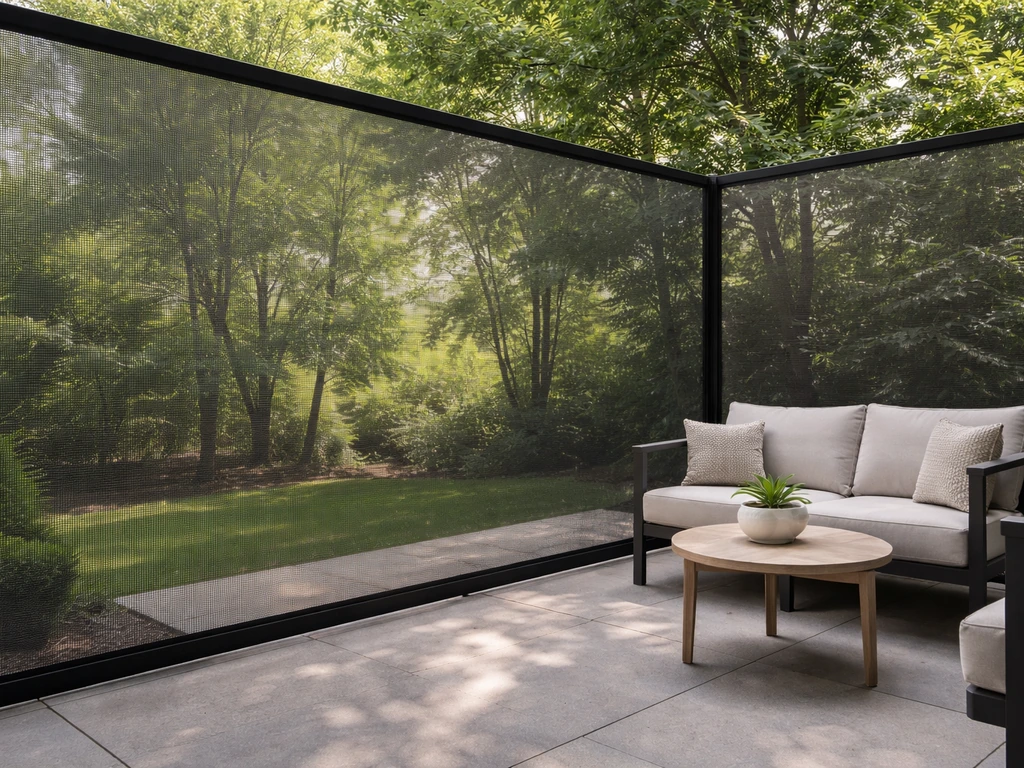
Best Patio Screen: How to Choose the Right One
Choose the best patio screen by type, material, bug barrier and privacy coverage, with sizing, installation and cost tip
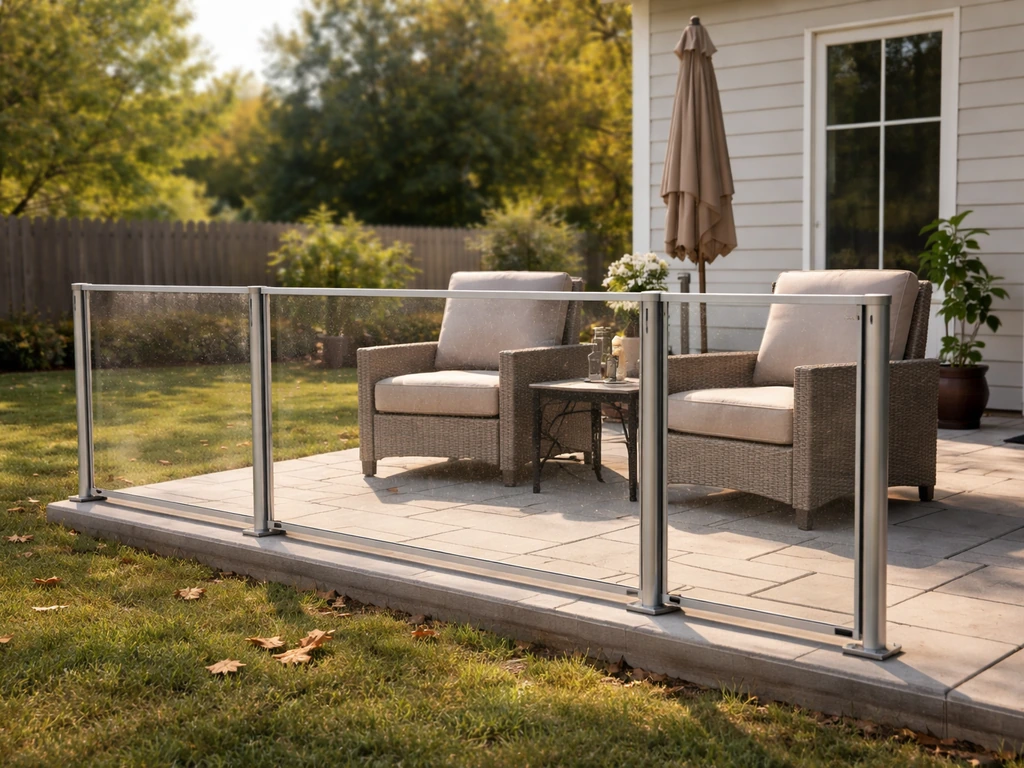
Best Patio Wind Blocker: Choose, Size, and Install Fast
Pick the best patio wind blocker for your wind direction, size, and budget with DIY install steps and material compariso
Do It Yourself Outdoor Patio Ideas: Build, Upgrade, Maintain
DIY outdoor patio ideas for planning, building, upgrading, and maintaining floors, shade, privacy, lighting, and decor.