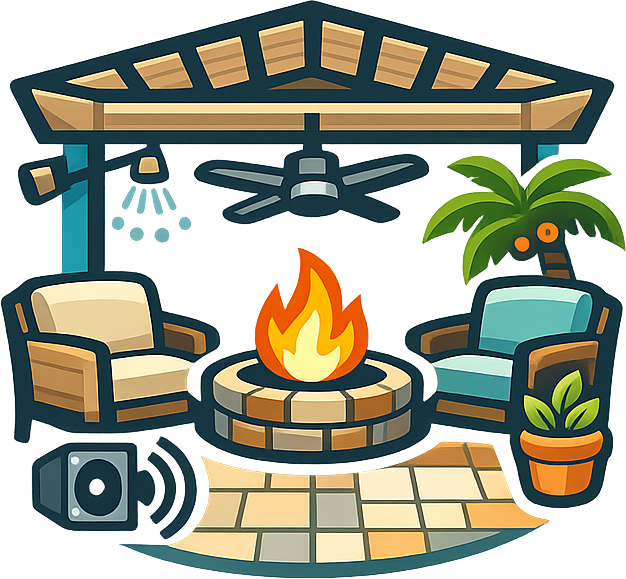
A pool patio needs to do five things well: keep people safe on wet surfaces, drain water away without creating puddles or damage, stay comfortable enough to actually use on hot days, hold up to years of splashing and weather, and flow logically so people can move around without chaos. If you want a quick checklist, this is what every patio needs: safety, drainage, comfort, durability, and good flow. Get those five things right and everything else is just choosing finishes you like. Skip one of them and you'll be fixing problems within a season or two.
Pool Patio Must Haves Checklist: Safe, Comfortable, Durable

Phoebe Foster
25 Jun 2026
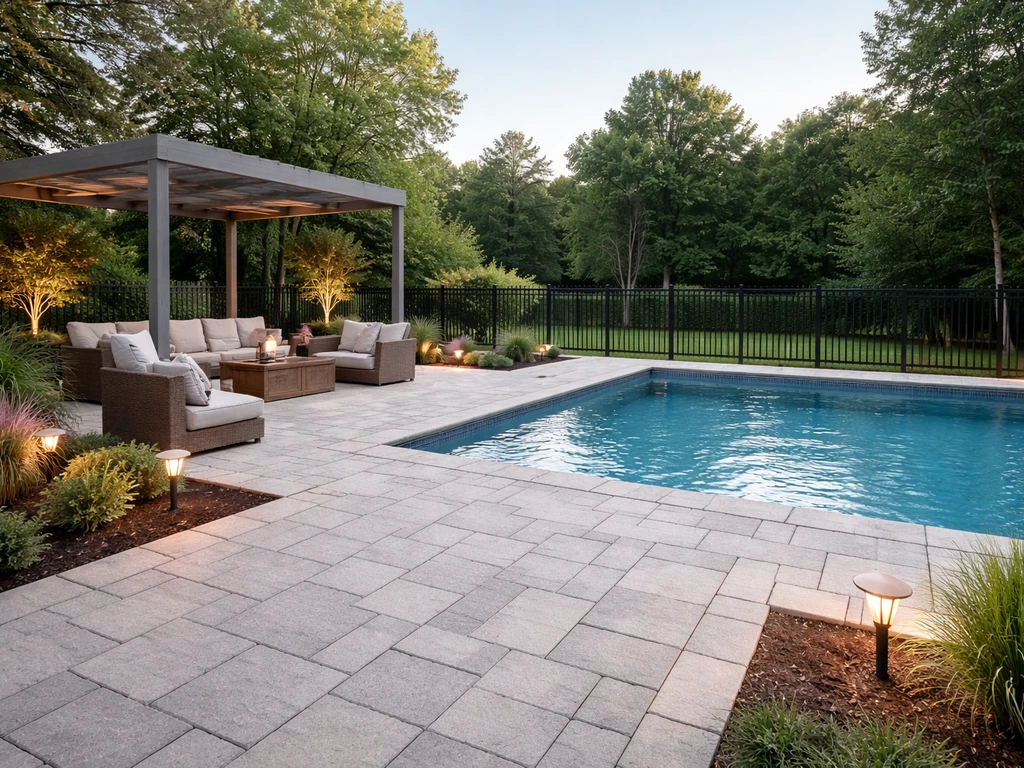
Circulation and core functionality around the pool
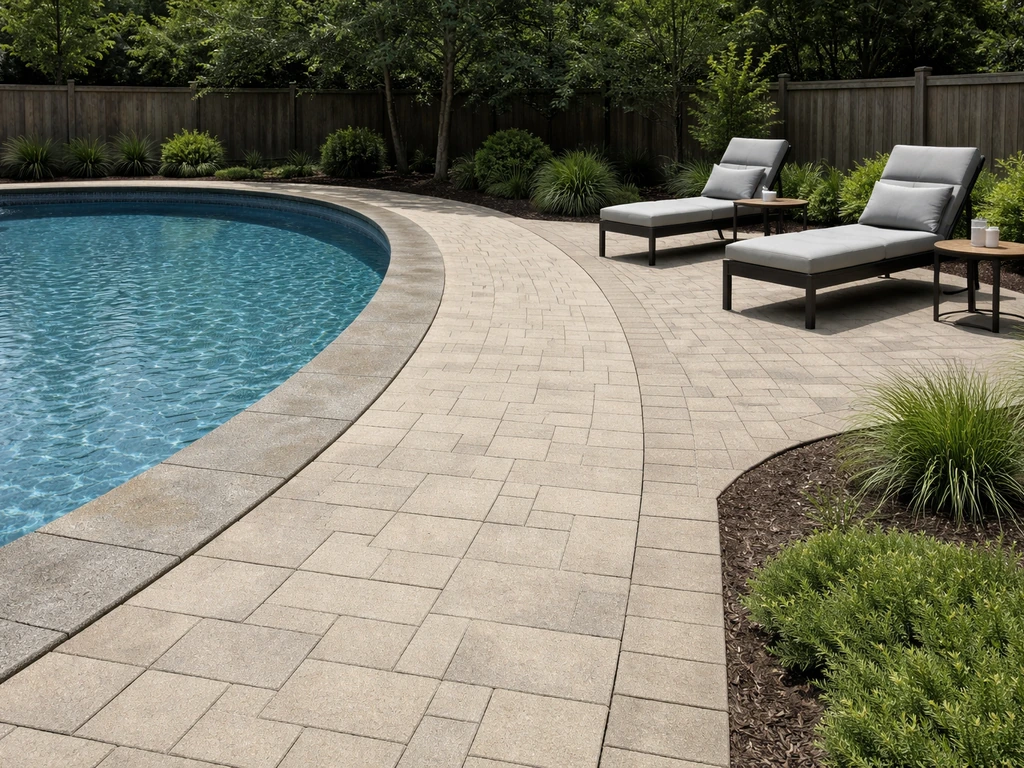
Before you pick a single paver or plant a single umbrella, think about how people actually move around your pool. Traffic flow is the most underestimated part of pool patio design, and it causes the most frustration once you're living with the space.
A good rule of thumb is at least 3 feet of clear walkway on all sides of the pool, with high-traffic areas ideally closer to 4 to 6 feet. North Carolina's pool deck code, for example, requires at least 6 feet of clear walking space at all points on a deck, and that's not unreasonable even for a private backyard. Angi's pool deck sizing guidance recommends 3 feet as a minimum and notes that seating areas need roughly 100 square feet to feel functional rather than cramped. If you're tight on space and trying to figure out where seating goes versus where people walk to the pool steps, measure it out before you commit to any layout.
The perimeter deck (the hardscape within about 4 feet of the pool edge) gets the most foot traffic and the most water. Plan this zone first. Everything else, including lounge areas, dining zones, and storage, should be arranged around it rather than squeezed into it. Treat the pool edge as your starting point and design outward.
If anyone in your household uses a wheelchair, walker, or has mobility challenges, accessibility planning is non-negotiable from day one. ADA standards call for accessible routes to maintain at least 36 inches of continuous clear width (with short 32-inch allowances), a maximum running slope of 1:20 (5%), and pool lift deck clearances of at least 36 inches wide by 48 inches forward. Even if ADA doesn't legally apply to your private home, building to those dimensions makes the space safer and more usable for everyone.
Safety features you can't skip
Slip-resistant surfaces
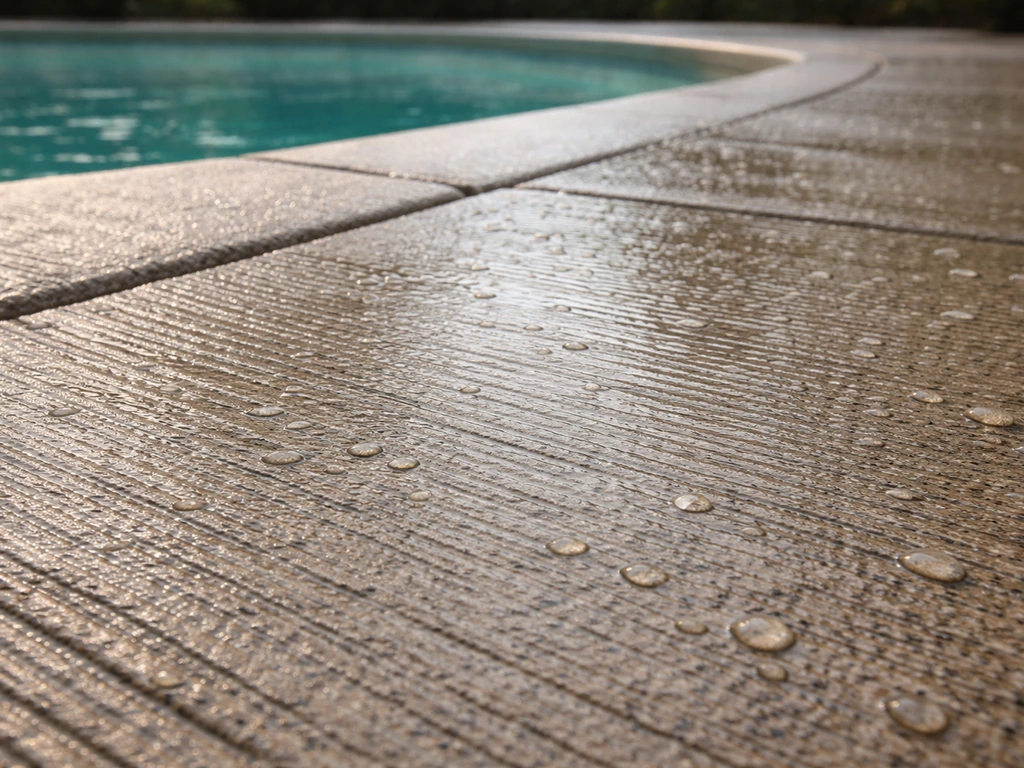
Wet feet on a pool deck are a given. The question is whether your surface handles it or turns into a hazard. Slip resistance is measured by dynamic coefficient of friction (DCOF), tested under the ANSI A326. 3 standard.
A minimum wet DCOF of 0. 42 is referenced as a threshold for wet interior surfaces, and for outdoor pool decks that standard is a starting floor, not a finish line. Weather, algae, sunscreen, and bare feet all change real-world performance. Look for materials labeled specifically for wet outdoor use and ask suppliers for their DCOF ratings before buying.
Brushed concrete, textured pavers, exposed aggregate, and certain porcelain tiles with surface texture all perform better than smooth or polished finishes. Avoid anything described as "smooth" or "polished" near water, full stop.
Barriers and gates
If you have young children or if local code requires it, pool barriers are a must. The 2024 International Swimming Pool and Spa Code (ISPSC) requires that barrier openings not allow passage of a 4-inch-diameter sphere, that pedestrian access doors and gates open outward (away from the pool), and that they be self-closing and self-latching. These aren't just suggestions, they're the code baseline in most jurisdictions. Check your local ordinances because some areas have additional requirements on top of the ISPSC. Even if you're not required to have a fence, if children visit your home at all, a compliant gate and barrier is one of the best investments you can make.
Lighting that actually works
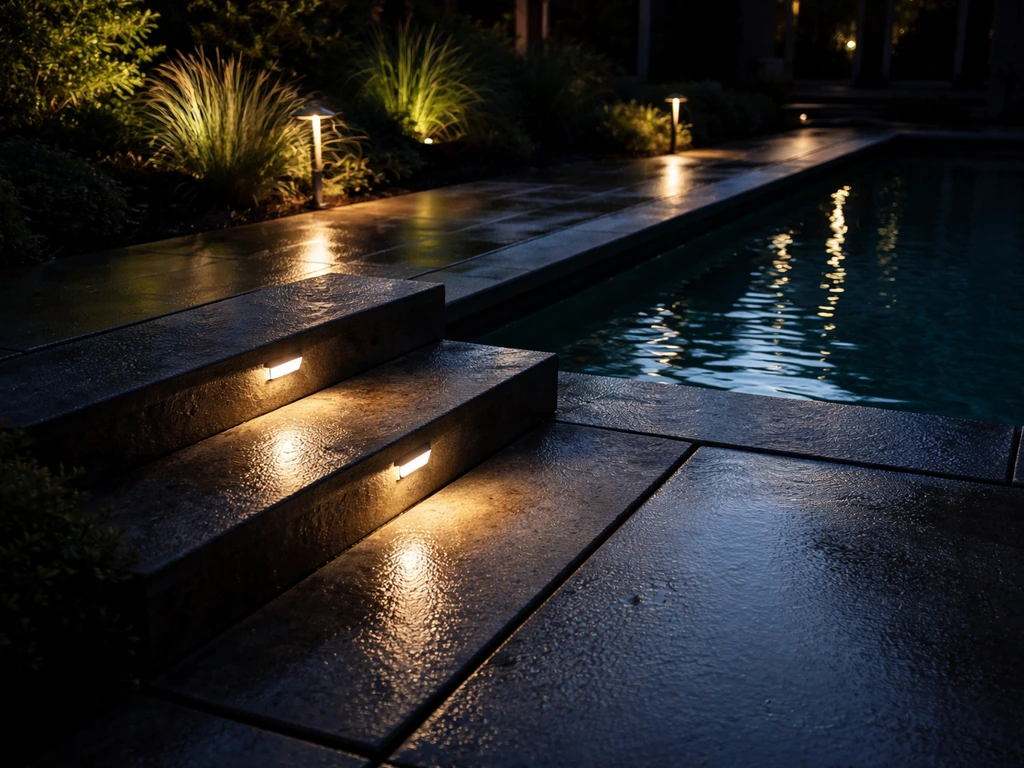
Pool area lighting has to meet electrical safety requirements and provide enough visibility to be genuinely functional at night. The 2024 IRC covers bonding, equipotential bonding, and GFCI protection for all pool-related electrical work. Luminaires within 5 feet horizontally of the pool wall must be at least 5 feet vertically above maximum water level, rigidly attached, and protected by a Class A GFCI device.
For general deck illumination, the MAHC (Model Aquatic Health Code) requires at least 15 foot-candles of maintained illumination at the pool water surface. Deck lighting should also be designed to reduce glare, because glare at water level prevents you from seeing the pool bottom, which is a safety issue. Pathway lights, step lights, and overhead fixtures all work together here. Don't rely on a single overhead fixture and call it done.
Comfort essentials: shade, seating, and temperature control
A pool patio that's too hot to sit on in July is a wasted investment. Shade is the single most impactful comfort upgrade you can make, and it doesn't have to be expensive. The options break down into permanent structures (pergolas, solid patio covers, sail shade frames), semi-permanent (large cantilever umbrellas, retractable awnings), and flexible (portable shade sails, freestanding umbrellas). Permanent structures add the most value and weather protection but cost the most and may require permits. A high-quality cantilever umbrella with a weighted base can shade a 10x10 seating area and costs a fraction of a pergola, making it a solid DIY choice while you save for something permanent.
Seating needs to be pool-friendly, meaning it can get wet, dry quickly, and resist UV fading. Powder-coated aluminum frames with sling or mesh fabric, all-weather wicker with quick-dry cushions, and resin/HDPE furniture all hold up well. Teak and other hardwoods work but require more maintenance. Buy seating with cushions rated for outdoor/UV use and store cushions during off-season if you're in a climate with hard winters. At minimum, plan for a lounge zone separate from a poolside perch area so people who want to sunbathe aren't blocking the path to the steps.
Temperature control matters more than most people realize before they build. In hot climates like Texas or Arizona, a ceiling fan under a pergola or patio cover drops the perceived temperature by 10 degrees or more. Misting systems are another option that work extremely well in dry heat but are less effective in humidity. If you're in the Southwest or Southeast, these aren't luxuries. They determine whether people actually use the space in peak summer. Portable fans are a budget-friendly way to test placement before committing to hardwired ceiling fans.
Drainage and weather resistance: what the deck has to handle
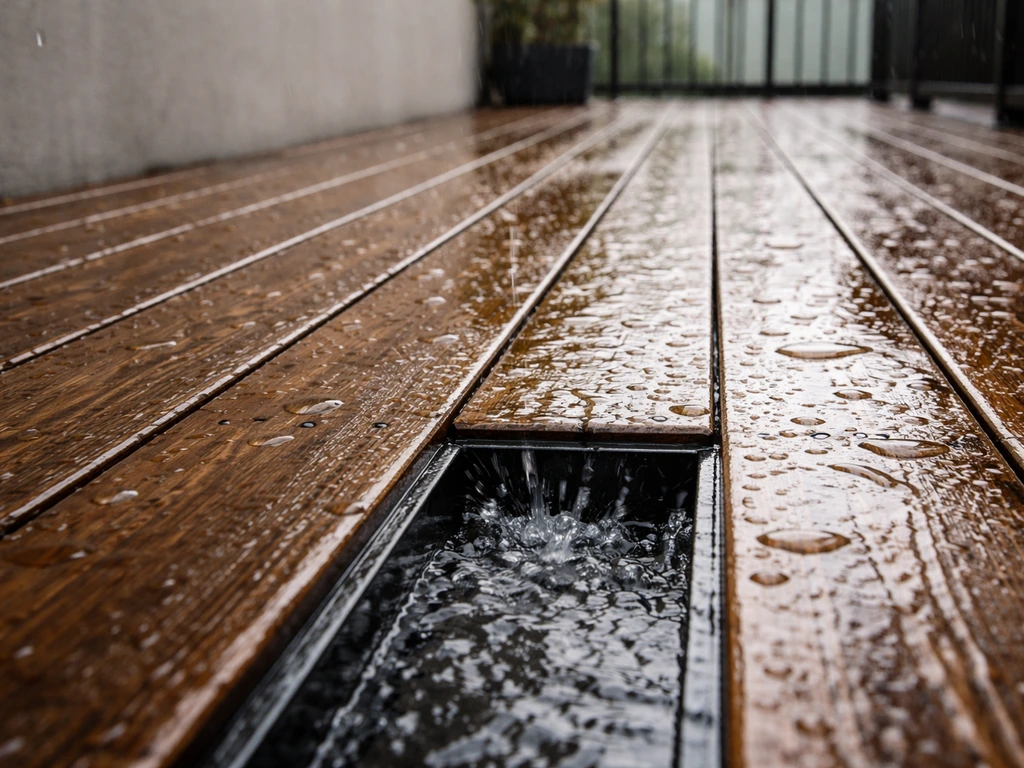
Water management is where pool patios either hold up or fall apart. Techniseal’s efflorescence prevention and cleaning guidance notes that efflorescence is driven by water movement through porous materials and soluble salts reaching the surface, so prevention depends on correct water management [efflorescence driven by water movement through porous materials and soluble salts](https://www. techniseal. com/pub/media/contentmanager/content/resource/brochure/CSprevention-cleaning-efflorescencetechnisealusen202203341-432.
pdf). Deck slope is the foundation of good drainage. The general standard you'll see across industry guidance is a slope of 1/8 to 1/4 inch per foot, pitched away from the pool. The AQUA Magazine benchmark for exposed aggregate decks is about 1/4 inch per foot.
The 2023 USPSHTC monograph sets the minimum at 1/8 inch per foot toward drains.
In practice, aim for 1/4 inch per foot away from the pool structure and toward a drain, channel drain, or permeable edge. Flat decks pool water (literally), and water that sits causes staining, algae, slippery surfaces, and long-term material damage.
If you're in a freeze-thaw climate (Midwest, Northeast, higher elevations), drainage under the deck is just as important as drainage on top of it. Saturated soil beneath pavers or concrete heaves when it freezes, cracking the surface and shifting paver joints. Proper base preparation with compacted gravel and good sub-grade drainage is what prevents this. Reddit threads from homeowners in colder climates are full of stories about decks that looked fine the first summer and were cracked and heaved by spring. The fix after the fact is expensive; the prevention during installation is not.
Materials also need to tolerate constant moisture exposure without degrading fast. Concrete, natural stone, and pavers all work, but each has maintenance requirements. Concrete can crack and stain; sealing every one to three years helps. Natural stone is beautiful but porous and requires sealing and careful joint management. Pavers with polymeric sand joints are popular, but the sand only performs correctly when the base is properly compacted and the joints are installed to spec. Skip the compaction step (a common DIY error) and the joints wash out within a season. Choose materials based on your climate, your willingness to maintain them, and your budget.
Layout, zones, privacy, and accessibility
A functional pool patio has distinct zones rather than one big open slab. Think of it in three areas: the wet zone (the perimeter deck right at the pool edge), the transition zone (where people dry off, leave towels, set drinks), and the dry zone (lounge furniture, dining, shade structures). These don't need to be architecturally separated, but they should be planned so that someone going from wet to dry doesn't have to walk through where someone is sitting in a chair with a plate of food.
Privacy is often an afterthought but makes a huge difference in how much people actually use the space. A few options: privacy screens (wood slat, metal, composite), tall planters with dense shrubs, fence extensions, or a pergola with curtain panels. Which one works depends on your lot layout and HOA rules. Even a partial privacy barrier on the side that faces neighbors tends to make people feel comfortable enough to spend real time outside rather than staying inside.
Accessibility planning should be baked into the layout from the start. If you're building new, consider a pool lift landing pad with the required 36x48 inch clearance built into the deck plan, even if you don't need a lift now. Ramp-style entry points should meet the 1:20 maximum slope. Accessible routes should stay clear of furniture zones and connect continuously from the home entry to the pool without obstacles. These choices cost almost nothing extra when planned upfront and can cost thousands to retrofit later.
Materials and products that actually earn their keep
Decking and paving options compared
| Material | Typical Installed Cost | Slip Resistance | Maintenance Level | Freeze-Thaw Performance | Best For |
|---|---|---|---|---|---|
| Brushed/Broom-Finish Concrete | $6–$18/sq ft | Good (textured) | Moderate (seal every 1–3 yrs) | Fair (can crack) | Budget-friendly, custom shapes |
| Concrete Pavers | $12–$30/sq ft | Good (textured surface) | Moderate (repoint joints, seal) | Good (individual units flex) | Classic look, repairability |
| Exposed Aggregate Concrete | $8–$20/sq ft | Very good | Low to moderate | Fair (can crack) | High traction, textured finish |
| Natural Stone (travertine, slate) | $15–$40/sq ft | Good (honed or textured) | High (seal frequently) | Variable by stone type | Upscale look, cooler surface |
| Porcelain Pavers | $15–$35/sq ft | Good (if rated for wet) | Low | Good (dense, low absorption) | Modern aesthetic, low upkeep |
| Composite/Wood Decking | $15–$40/sq ft | Good (if textured) | Low to moderate | Good (composite better than wood) | Warm look near above-ground pools |
For most homeowners, concrete pavers or brushed concrete hit the best balance of cost, durability, and slip resistance. Porcelain pavers are gaining ground because they're dense, nearly non-porous (which means less staining and less freeze-thaw damage), and come in a wide range of finishes, but they must be rated for wet outdoor use with a verified DCOF above 0.42. If you go with pavers, budget for polymeric sand in the joints and make sure whoever installs them uses mechanical compaction. That step is mandatory, not optional, and it's where most DIY paver jobs fail.
Covers, storage, and water-resistant add-ons
A pool cover isn't a nice-to-have; it reduces evaporation, cuts heating costs, keeps debris out, and adds a safety layer. Safety covers (the kind rated to support weight) are the gold standard if children are present. Standard solar covers save energy. Automatic covers cost more upfront but dramatically increase how often people actually use them because the barrier to uncovering and covering the pool is almost zero.
Outdoor storage is underrated. Pool toys, maintenance equipment, cleaning supplies, and towels all need a home that isn't your garage. A deck box or outdoor storage bench in a weather-resistant material (resin, HDPE, or sealed wood) placed in the transition zone keeps the deck organized and the space usable. Look for units with UV-stabilized materials and hinged lids that can support sitting on them, so the storage doubles as extra seating.
Other items that consistently earn their spot: a poolside towel rack (stainless steel or powder-coated aluminum to prevent rust), an outdoor shower or foot rinse station to keep deck grime from going into the pool, and a designated spot for sunscreen and gear near the entry point rather than scattered across the deck. These are small touches that make day-to-day pool use feel effortless rather than disorganized.
Budget, DIY vs. hiring help, and planning your next steps
Pool patio projects range from a few hundred dollars in targeted upgrades to $30,000 or more for a full build with pavers, shade structure, electrical, and landscaping. The key is knowing which parts of the project actually need a pro and which ones are genuinely DIY-able without creating expensive problems later.
Hire a professional for: any electrical work (bonding, GFCI installation, outdoor lighting circuits), drainage grading if your yard has existing slope challenges, barrier and fence installation that must meet code, and any structural work like a pergola footing. These are areas where a mistake isn't just cosmetic. An improperly wired pool area can be deadly, and a deck with bad drainage will fail regardless of how good the surface looks.
DIY-friendly tasks: furniture selection and arrangement, shade sail or umbrella installation, deck box and storage setup, adding towel racks and outdoor shower kits, painting or sealing existing concrete (with proper prep), and planting for privacy. If you're handy and patient, installing pavers over an already-prepared base is doable, but base preparation and proper compaction are where most DIYers underestimate the work involved. If in doubt, pay a landscaper to do the base and lay the first course yourself.
To prioritize spending, think in tiers. Safety first: slip-resistant surface, code-compliant barrier and lighting, and proper drainage. Comfort second: shade and seating that actually work in your climate. Aesthetics third: the finishes, decor, and extras that make the space feel like yours. Once the layout and essentials are handled, you can take inspiration from the best patio garden ideas to bring color and privacy into the space. This order protects you from the mistake of spending on beautiful furniture before you've fixed the drainage slope that makes the whole deck slippery and stained.
When you're ready to move from planning to doing, start with these concrete steps:
- Measure your current deck or planned deck footprint and mark the zones (wet perimeter, transition, lounge/dining) on paper or a simple app like Planner 5D or RoomSketcher.
- Check your local building department for permit requirements on pool barriers, electrical, and any covered structures. This takes one phone call and saves weeks of confusion later.
- Get at least three quotes from licensed contractors for any electrical, drainage grading, or structural work. Ask specifically about GFCI compliance, deck slope, and base compaction methods.
- Choose your primary decking material based on your climate (freeze-thaw vs. hot-dry vs. humid), your maintenance tolerance, and your realistic budget using the installed cost ranges above.
- Address drainage slope and base prep before any surface material goes down. This is the step most homeowners skip when rushing and the one they regret most.
- Layer in comfort additions (shade, fans, seating) after the hardscape is done, starting with whatever your climate demands most urgently.
If you're upgrading an existing patio rather than building from scratch, do a quick audit first: walk the deck wet and check for slippery spots, look for areas where water pools after rain, check that gate latches work and self-close, and note where people actually stand and walk versus where you assumed they would. The real usage patterns are almost always different from the original plan, and a targeted upgrade based on how people actually use the space gets you more value than a cosmetic overhaul that ignores the functional gaps. The goal is a patio that works hard every day, not just one that photographs well.
FAQ
Do I need a full pool fence if I already have a backyard gate or playset area?
Not always. Even if you fence the yard, you still need pool barrier openings to meet the “no 4-inch sphere passage” rule and ensure pedestrian doors and gates self-close and self-latch. Test the gate by checking the latch engagement from multiple angles and after the door closes from the “worst” position.
How do I choose slip-resistant outdoor materials if I am comparing tiles, pavers, and concrete?
Ask for a verified wet DCOF number for the exact finish you plan to buy, not just the product line. Avoid any finish described as polished or smooth near the pool and request samples that you can test under wet conditions, since algae buildup and sunscreen film can reduce traction over time.
What is the minimum slope I should plan for to prevent puddles on my pool patio?
Plan toward drainage at about 1/4 inch per foot away from the pool, and do not accept a “pretty flat” deck. If you cannot hit that slope due to existing structure, you may need a drainage channel or revised grading plan, since flat decks are where staining and algae typically start.
Where should drains or channel drains be placed for best drainage?
Route water toward a drain in the same zone that gets the most wet-foot traffic, usually within about 4 feet of the pool edge (the wet zone). Then keep the path clear so water does not flow through lounge seating areas, which creates slip hazards and forces you to constantly move furniture.
Can I use the same walkway width for both pool access and lounging areas?
You can, but you must separate “movement” space from “furniture” space in practice. Keep a continuous clear route for walking, then place chairs and side tables so they do not encroach when people sit down. For accessibility, maintain the continuous clear width requirements and keep the route free of storage bins, umbrellas, and towel racks.
What should I do if my yard is in a freeze-thaw climate and I am using pavers?
Make sub-grade drainage a priority, not just the surface. Use properly compacted base material, ensure water does not collect under the deck, and confirm the installer is following mechanical compaction specs. This prevents heaving that can lift pavers out of alignment after the first few freeze cycles.
Is a pool cover worth it if I already use a solar cover sometimes?
Often yes, but choose based on your goals. Solar covers help with heat retention and debris, safety covers add structural strength for child safety, and automatic covers remove the usage barrier that causes many owners to stop covering. If children are present or visit, safety-rated is the decision point.
How can I reduce glare at night beyond just adding more lights?
Use layered lighting (path, step, and ambient) so you are not relying on one bright fixture at pool height. Keep luminaires aimed to reduce direct reflection on water, and consider lower-glare pathway fixtures near the edges to improve visibility without washing out the bottom.
Do ceiling fans and misting systems work together, and when should I pick one?
They can work together, but misting effectiveness depends on humidity. In dry heat, misting can be very noticeable, while a fan can still provide comfort even when misting is limited. If you deal with humid summers, prioritize shade plus fans, then evaluate misting only where it will not create slippery overspray.
What is the most common DIY mistake on pool patios?
Skipping the base and compaction requirements, especially with pavers using polymeric sand joints. Even if the surface looks fine at first, inadequate compaction and joint setup lead to washout, movement, and uneven drainage within a season.
If I do not need a pool lift now, should I still plan for accessibility during new construction?
Yes, it is usually easiest to incorporate early. Planning a 36x48 inch lift landing clearance and ensuring accessible routes connect continuously can prevent expensive retrofits later if mobility needs change. Even without legal requirements, these dimensions generally improve overall usability.
What features make outdoor storage actually usable near the pool?
Place storage in the transition zone, so towels, toys, and maintenance items are within reach without crossing the walking route to the pool steps. Choose UV-stabilized materials and lids that can handle sitting, since many owners end up using the storage box as an extra seat whether they planned to or not.
Next Articles
Best Patio Additions: Comfort, Shade, Privacy, and More
Best patio additions ranked by comfort, shade, privacy, cooling, lighting, and weatherproofing with DIY, costs, and trad
Do It Yourself Outdoor Patio Ideas: Build, Upgrade, Maintain
DIY outdoor patio ideas for planning, building, upgrading, and maintaining floors, shade, privacy, lighting, and decor.
Quick Fix Patio Ideas for Instant Comfort and Style
Quick fix patio ideas for fast comfort and style: cleanups, repairs, shade, flooring tweaks, and safe upgrades on any bu