The best small patio ideas share one thing in common: they treat the space like a floor plan, not a leftover patch of concrete. Even a 48-square-foot balcony or a 10x12 ft backyard slab can feel like a real outdoor room when you match the layout to your actual dimensions, pick furniture at the right scale, add one or two comfort features, and keep circulation clear. This guide walks through exactly how to do that, from measuring and layout through materials, lighting, privacy, and whether to DIY or call a contractor.
Best Small Patio Ideas: Layouts, Materials, and Upgrades

Phoebe Foster
9 Jul 2026
How to choose a small-patio layout that fits your space
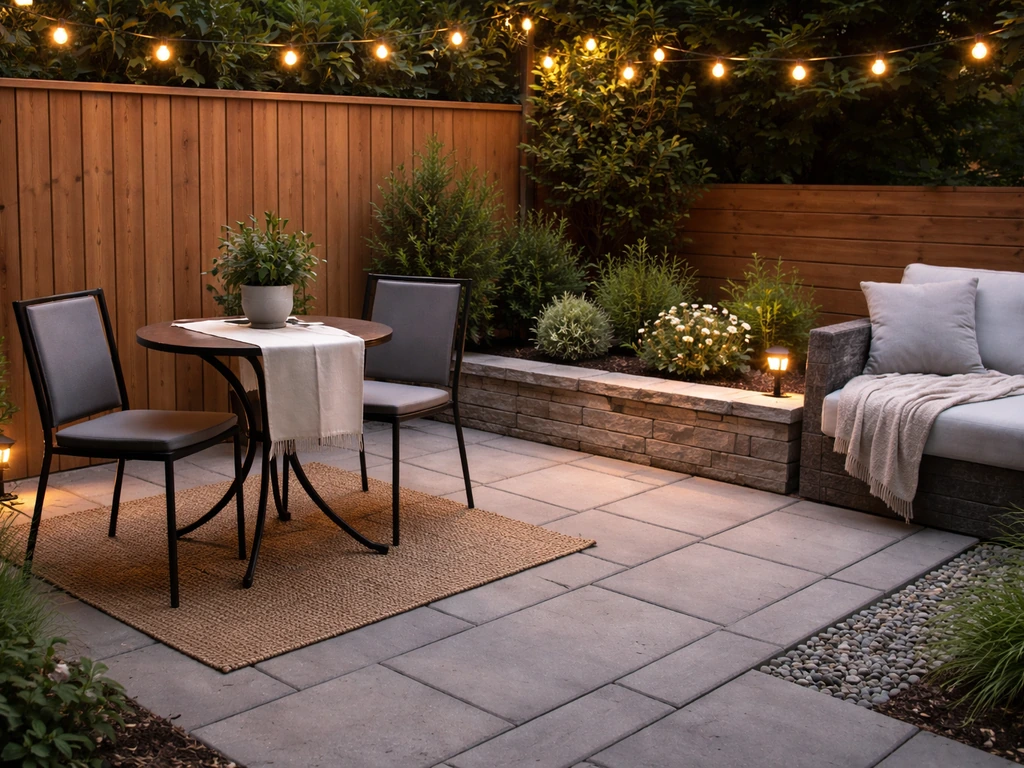
Before you buy a single piece of furniture or order pavers, measure everything. I mean everything: the full slab or usable area, door swings, window sill heights, any steps or grade changes, and where the sun hits at the time of day you'll actually use the space. Then sketch it on paper or mock it up with cardboard boxes at real scale. This sounds tedious but it takes about 20 minutes and saves you from hauling back a table that's 6 inches too wide.
Here are the sizing benchmarks worth keeping in your back pocket. A 2-person bistro setup needs roughly 6x6 to 7x7 ft. A 4-person dining set needs about 9x9 to 10x10 ft. A 6-person rectangular set wants 10x12 to 11x14 ft. On a tight patio, you're almost certainly working in that first or second tier, which means a bistro layout or a compact lounge zone, not a full dining set.
Traffic flow is the piece most people get wrong. The goal is to keep your main circulation path outside the seating area entirely. Leave at least 30 to 36 inches of walkway clearance around any coffee table or seating cluster. If a path cuts through the middle of your furniture arrangement, every person moving through the space will interrupt the whole zone. On a small rectangular patio especially, it's worth pushing seating to one corner or against a wall to free up a clean walkway along the opposite side.
Also think about sunlight and drainage before you finalize anything. If your patio bakes in afternoon sun, you'll want a shade feature built into the layout from day one rather than wedged in later. And the patio surface should slope very slightly away from the house, about a 1/8 to 1/4 inch drop per foot, so water doesn't pool near your foundation or under furniture.
Best small patio design ideas
There's no single layout that works for every small patio, so here are the concepts that consistently deliver the most usable, comfortable results in tight spaces. If you want the best patio ideas UK, start by matching a layout to your space and then build from there with the right materials and comfort features. Pick the one that matches how you actually use outdoor space.
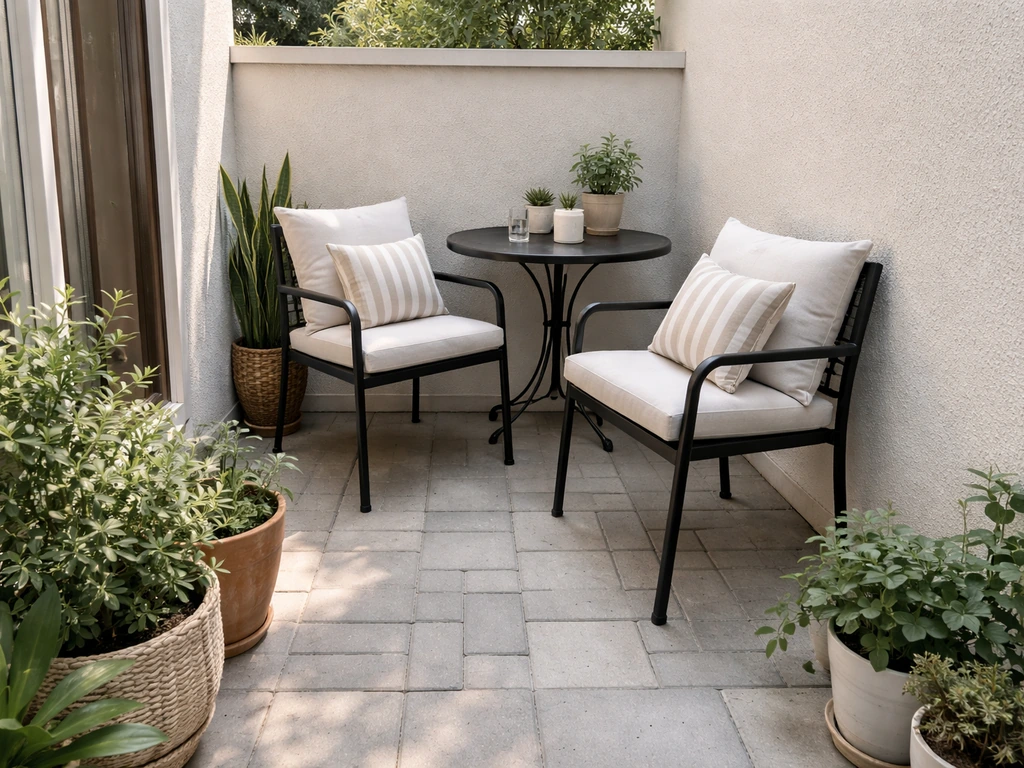
Bistro layout
Two chairs and a small round table, tucked against a wall or corner. This is the workhorse of small patio design. A round table is more flexible than rectangular because you can squeeze a third chair around it when needed. Keep the table diameter at 24 to 30 inches and the chairs slim-profile. This setup works beautifully on a 6x8 ft slab and still leaves a usable walkway.
Built-in bench with a small center table
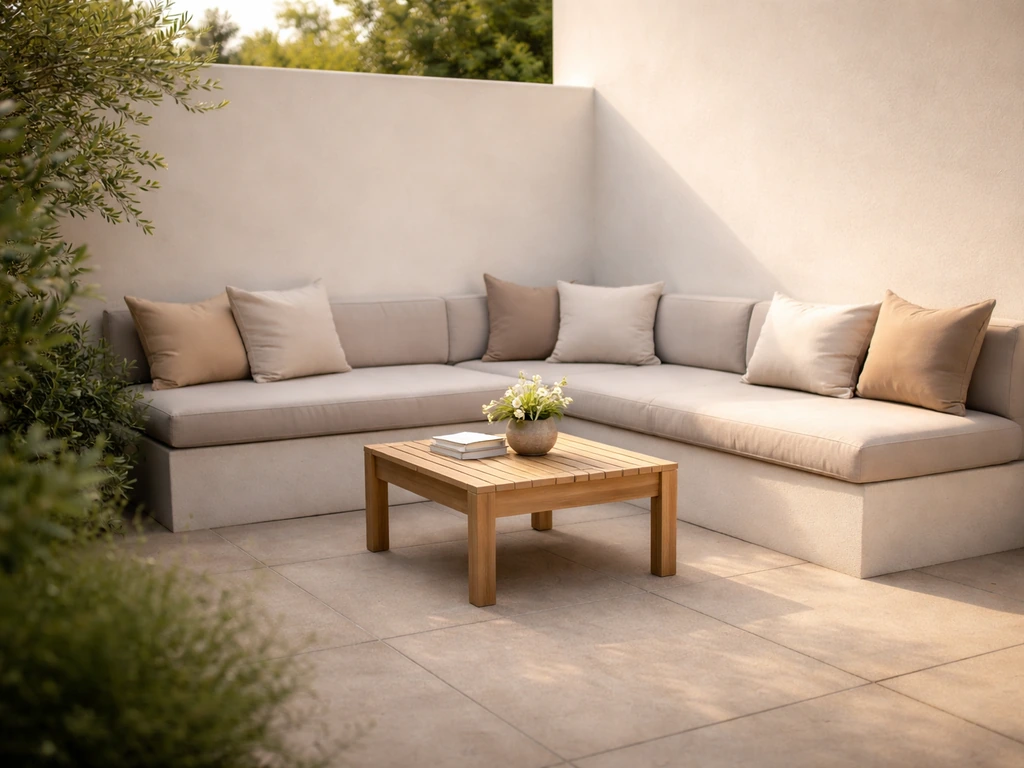
If you have a wall, fence, or pergola post to attach to, a built-in bench along one or two sides of the patio frees up a huge amount of floor space compared to individual chairs. Pair it with a low center table, add seat cushions and throw pillows, and you've created a lounge zone that seats four or five people in the footprint that a standard 4-chair dining set would struggle to fit. Built-ins also eliminate the clutter of chairs getting pulled out and left at odd angles.
Vertical garden wall
Going vertical is one of the smartest moves on a small patio. A wall-mounted planter system, a trellis with climbing plants, or a tiered shelf of potted herbs gives you greenery and texture without eating floor space. This works especially well on a concrete or brick wall that would otherwise feel harsh and enclosed. It also creates a natural visual backdrop that makes the space feel designed rather than just functional.
Cozy lounge or fire zone
On a patio where you're more interested in relaxing than dining, replace the table-and-chairs default with a small loveseat or two low lounge chairs arranged around a compact fire pit table or a small gas fire bowl. This layout works well on roughly 8x10 ft and up. A fire feature anchors the space and makes it feel intentional, not accidental. In cooler climates like the Midwest or Pacific Northwest, this setup extends your outdoor season significantly.
L-shaped or corner layout
If your small patio is accessed from one corner, an L-shaped seating arrangement (either an L-shaped sectional or two benches meeting at a corner) uses that geometry to your advantage. The open end of the L faces out toward the yard or view, which makes the patio feel more open than a centered arrangement would. It also makes traffic flow obvious: everyone enters and moves along the open side.
Best small patio materials and flooring choices
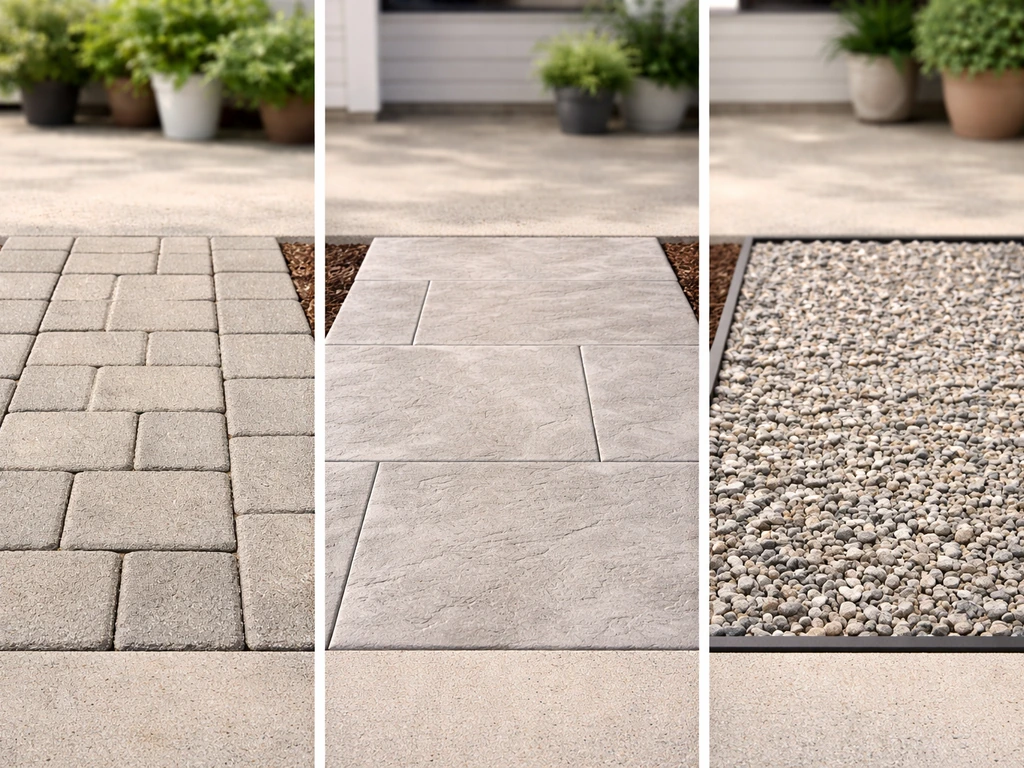
The material you put underfoot has a bigger effect on how large and finished a small patio feels than almost anything else. Here's how the main options compare for small patios specifically.
| Material | Best for | Cost (installed) | Maintenance | Slip resistance | Visual effect |
|---|---|---|---|---|---|
| Concrete pavers | Durability, versatility, DIY-friendly | $20–$27/sq ft pro, $12–$17 DIY | Seal every 2–3 years, occasional weed removal | Good when textured; check for μs ≥ 0.50 | Larger format tiles visually expand space |
| Porcelain pavers | Clean modern look, low maintenance | $25–$40/sq ft installed | Low: rinse and wipe | Manufactured to DCOF standards; specify outdoor-rated | Large-format slabs make small patios feel bigger |
| Natural stone (flagstone/bluestone) | Character, premium appearance | $25–$50/sq ft installed | Seal periodically; some staining risk | Varies by finish; textured finishes preferred | Natural variation adds depth but can feel busy |
| Gravel/decomposed granite | Budget, drainage, casual look | $1–$4/sq ft DIY materials | Rake periodically, top off annually | Good grip when compacted | Works best with borders; can feel unfinished alone |
| Composite/wood decking | Warmth, comfort underfoot | $15–$35/sq ft installed | Composite: minimal; wood: annual sealing | Composite textured boards meet slip standards | Warm tone makes small spaces feel inviting |
| Outdoor rug over existing slab | Budget refresh, instant style update | $50–$300 for the rug | Rinse, hang dry; mold-resistant materials | Moderate; keep rug flat and secured | Defines a zone and adds color without cost |
A few practical notes. For slip resistance, look for products with a static coefficient of friction at or above 0.50, or an outdoor-rated DCOF value if you're buying porcelain. Both concrete and porcelain pavers can meet this when specified correctly. If you're in an area with freeze-thaw cycles like the Midwest or Northeast, porcelain pavers hold up better than many natural stones because they're nearly non-porous. For drainage, pavers need a proper base: typically around 5 inches of compacted gravel, 1.5 inches of sand, then the paver itself. If your area drains poorly, a perforated pipe under the base layer is worth adding. The surface should slope away from the house at roughly 1/8 to 1/4 inch per foot.
On a small patio, bigger format tiles and pavers (18x18 or 24x24 inches) typically make the space feel larger because you see fewer grout lines and fewer interruptions to the eye. Smaller tiles or a busy pattern work against you in a tight space.
Clever privacy, lighting, and decor for small patios
Privacy without feeling boxed in
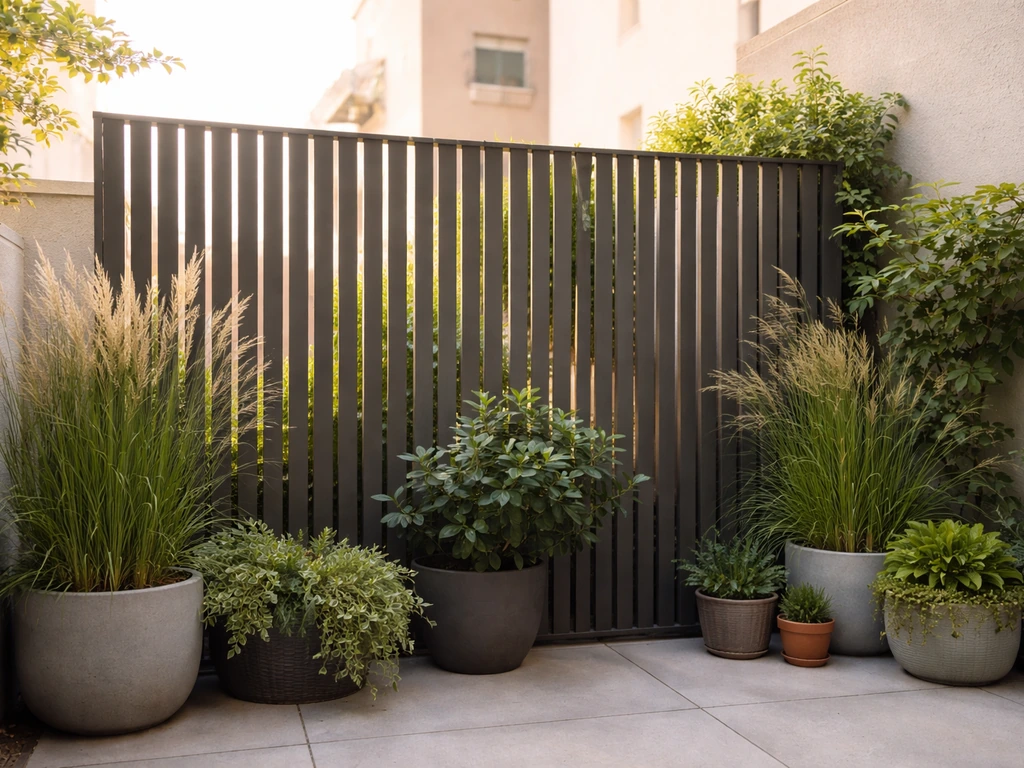
Privacy screens are almost always necessary on small patios, especially in urban and suburban settings. The trick is getting coverage at eye level without making the space feel like a box. Lattice panels, slatted wood screens, or metal privacy panels with a tighter gap near sitting height (4 to 6 feet) and a more open or planted top section above that keep the sense of enclosure from becoming oppressive. Tall narrow shrubs like bamboo (if contained), arborvitae, or ornamental grasses work well along a fence line. For renters or those who want flexibility, freestanding privacy panels or outdoor curtain panels on a tension rod or pergola frame are easy to adjust and remove. Privacy can also come from smart layout choices, like pushing seating to one corner or against a wall so fewer sides of the patio feel exposed best patio privacy ideas.
Lighting that actually works
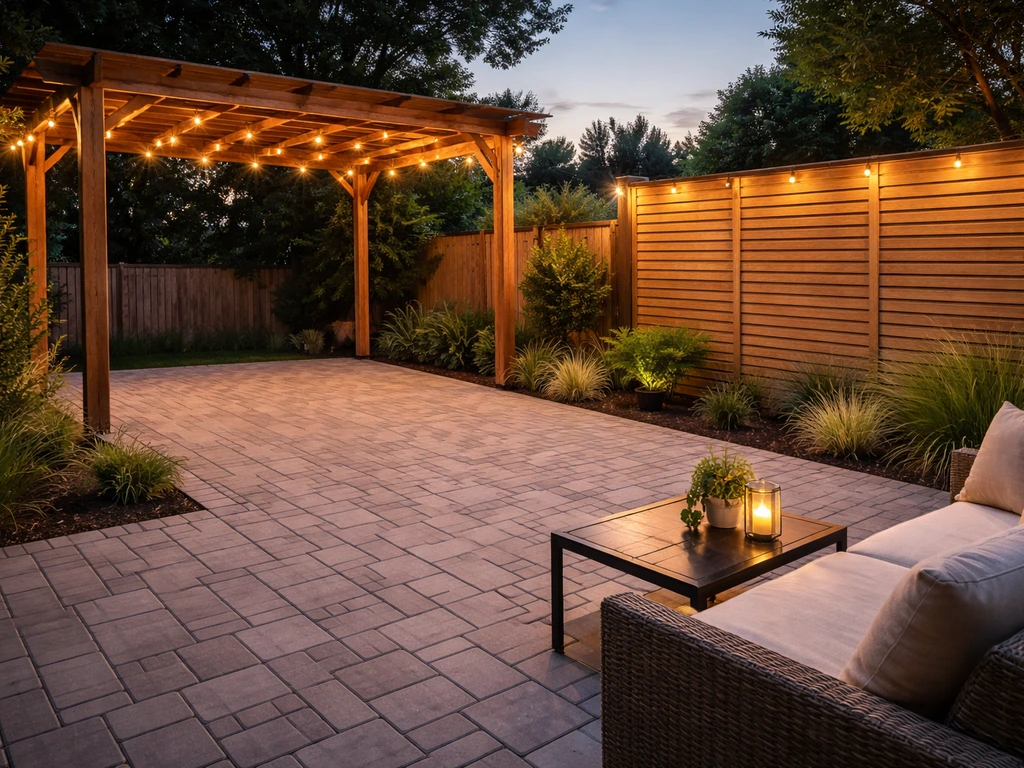
Good lighting on a small patio makes it usable after dark and dramatically improves the atmosphere. The basics: string lights hung at a minimum height of 8 feet so they're above head level, path or step lights spaced about 6 to 8 feet apart at 100 lumens each, and a task light or wall-mounted fixture near any cooking or dining area. If you're hanging a pendant or lantern over a table, keep about 30 to 36 inches of clearance between the tabletop and the bottom of the fixture. For string lights, add about 2 feet of slack for every 10 feet of run so they drape naturally instead of pulling tight. Always check local HOA or code requirements before installing permanent lighting fixtures.
Decor that helps, not hurts
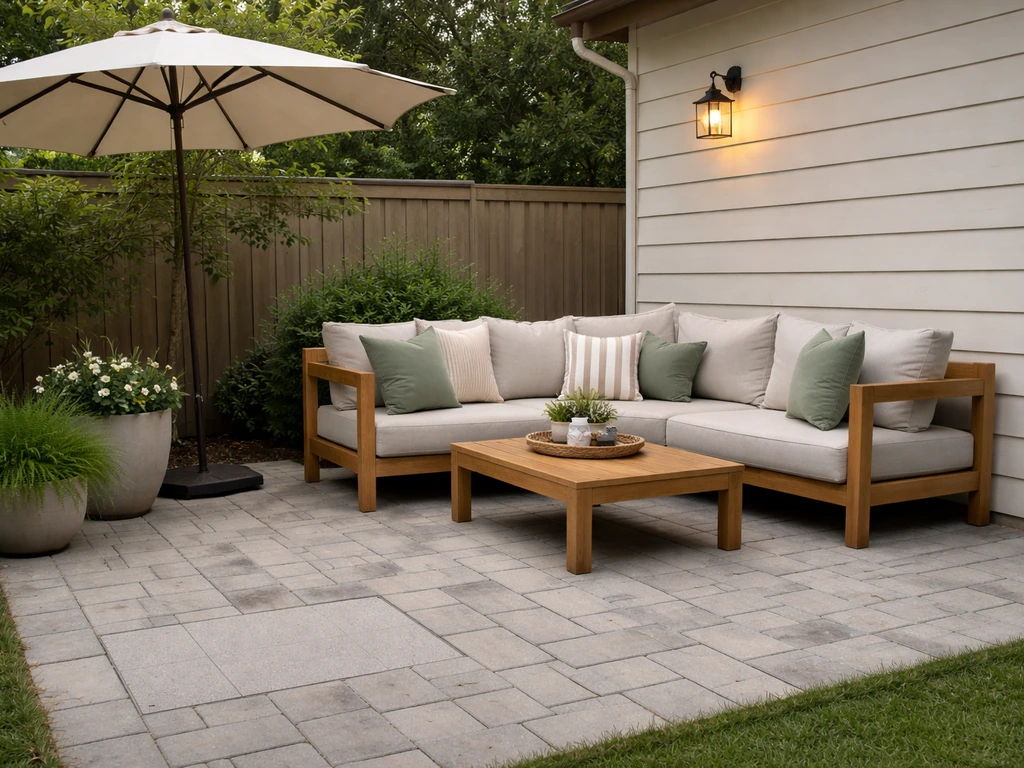
On a small patio, less is genuinely more. One outdoor rug to define the zone, a couple of weather-resistant throw pillows in a cohesive color, and one focal point (a potted tree, a lantern, a wall planter) give you a finished look without crowding. Avoid matching sets of decorative items lined up along a railing, clusters of mismatched pots at every corner, or anything that makes you feel like you're navigating an obstacle course. The goal is to make the space feel curated, not collected.
Small patio features that add comfort
Shade options
A large patio umbrella is the most budget-friendly shade option and works on any surface. For something more permanent, a pergola (wood, aluminum, or composite) frames the space beautifully and can support string lights, curtains, or a retractable canopy. Retractable awnings are another strong option, but they need about 7.5 to 8 feet of clearance from the patio surface to operate fully when extended. If you're in a hot climate like Texas or the desert Southwest, a shade sail or solid roof structure may be worth the investment because even an umbrella doesn't block enough radiant heat on a 100-degree afternoon.
Heating for cooler climates
A propane or electric infrared heater extends your small patio season significantly in the Midwest, Pacific Northwest, or anywhere with cool evenings. Tabletop propane heaters are easy and portable. Wall-mounted or ceiling-mounted electric infrared heaters are cleaner and more space-efficient for small patios but require clearance from combustibles as specified in the installation manual, typically several feet in all directions. If you're mounting one on a pergola or overhead structure, confirm the structure material qualifies as non-combustible or meets the required clearance distance.
Seating and storage
Storage ottomans and bench seats with lift-top lids are some of the best small-patio investments because they serve two functions in one footprint. A storage bench along one wall can seat two people and hold outdoor cushions, tools, and accessories. Folding chairs that hang on wall hooks when not in use are another smart move for occasional-use patios. The less stuff you store on the patio surface, the larger it feels.
Budget-friendly DIY vs contractor upgrades
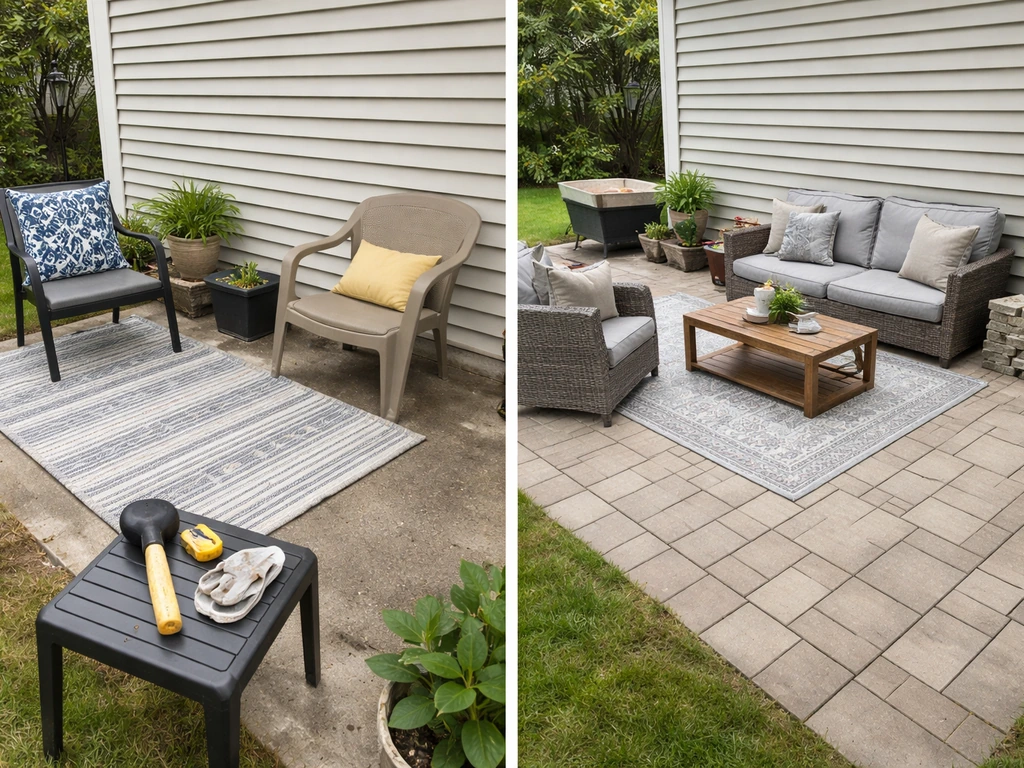
Not every small patio project needs a contractor, but some absolutely do. Here's a clear breakdown of what to DIY, what to hire out, and what it costs.
| Project | DIY or Pro? | Estimated Cost | Notes |
|---|---|---|---|
| Outdoor rug + furniture refresh | DIY | $100–$600 total | Zero skill required; biggest bang for buck on an existing slab |
| String lights + path lighting | DIY (low-voltage) / Pro (hardwired) | $50–$300 DIY; $500–$1,500+ hardwired | Low-voltage solar or plug-in lights are fully DIY; hardwired circuits need an electrician |
| Privacy screens/panels (freestanding) | DIY | $100–$400 | Freestanding panels require no installation; lattice on a fence is a simple DIY |
| Paver patio installation | Both options work | DIY $12–$17/sq ft; Pro $20–$27/sq ft | A 300 sq ft patio takes 40–50 hrs DIY vs 35–40 hrs for a pro crew; base prep is the hardest part |
| Pergola installation | Pro recommended for permanent structures | $10–$40/sq ft installed (kit assembly) | Kit pergolas can be DIY if you're handy; freestanding is easier than attached |
| Retractable awning | Pro strongly recommended | $1,500–$4,500 installed | Mounting into the home structure and ensuring clearance requires precision |
| Built-in bench or planters | DIY-friendly for basic carpentry | $200–$800 in materials | Simple box benches are beginner-level; complex built-ins with drainage need more skill |
| Patio leveling/drainage correction | Pro recommended | $500–$3,000+ | Poor drainage causes long-term damage; not worth cutting corners here |
When you do hire a contractor, vet them properly. Ask for proof of license, insurance, and bonding before signing anything. Request at least two or three references from similar projects and actually call them. Ask for a written warranty on both materials and labor. Get multiple quotes, especially for paver work or structural projects, because pricing varies widely by region and contractor. A legitimate contractor won't pressure you to sign the same day.
Common mistakes to avoid and what to do next
Mistakes that consistently ruin small patios
- Furniture that's too large for the space: always measure first and mock up with cardboard or tape on the ground before buying anything
- Cutting the traffic path through the middle of the seating zone: keep at least 30 to 36 inches of clear walkway outside the seating footprint
- Skipping proper base preparation for pavers: no base gravel or sand leads to shifting, settling, and drainage problems that cost more to fix later
- Ignoring slope and drainage: the surface must drain away from the house; standing water damages foundations and makes the space unusable
- Cluttering the patio with too many pieces: each item should earn its place; fewer, better-chosen pieces always look and feel better
- String lights hung too low: anything below 8 feet becomes an obstacle and a safety hazard
- Mismatched materials that fight each other: pick a flooring material and stick with one complementary palette for furniture and decor
- No defined zone: without an outdoor rug or built-in structure to anchor the seating area, even a nice collection of furniture looks random
Your next steps right now
- Measure your patio: record length, width, door swing, window heights, and any grade changes
- Decide your primary use: dining, lounging, entertaining, or a mix, then match to a layout concept from this guide
- Tape out furniture placement on the existing surface using painter's tape, or mock it up with cardboard boxes at real scale
- Choose your flooring upgrade if needed: for a simple refresh, an outdoor rug over an existing slab is free of hassle; for a full install, get two to three contractor quotes if your patio needs base work or drainage correction
- Pick one comfort feature to prioritize: shade, privacy, or heating, based on your climate and how you use the space
- Shortlist three to four specific products or materials, check dimensions against your measurements, and order samples before committing
- If hiring out any structural work, collect license and insurance information from at least two contractors and ask for written quotes with warranty terms included
A small patio done well beats a large patio done carelessly every time. The principles are consistent whether you're working with a 48-square-foot urban balcony or a modest 10x14 ft backyard slab: right-sized furniture, clear circulation, good lighting, and one or two intentional comfort features. After you nail the right layout and comfort details, explore our best outdoor small patio ideas to compare styles that fit your space. If you're looking at specific regional conditions, privacy layouts, or want to browse visual examples of finished patios, the related guides on outdoor small patio ideas, patio privacy ideas, and patio design pictures go deeper on each of those angles.
FAQ
What’s the best way to choose between a dining layout and a lounge layout on a small patio?
Base the decision on your “most-used moment.” If you’ll eat outdoors most days, prioritize a compact dining set and keep the table tight to a wall. If you’ll primarily relax, skip the full dining footprint and plan for a conversation cluster (low chairs or a loveseat) plus a single anchor like a fire bowl or side table to avoid a scattered look.
How much empty walkway should I preserve if my patio is too narrow for a full 30 to 36 inches?
Use your doors and traffic pattern as the rule. If you cannot maintain 30 inches around the seating cluster, push the seating fully to one side and leave a continuous clear lane along the opposite side. Avoid creating a pinch point where two people cannot pass, especially near steps or the door swing.
Should I prioritize big-format pavers or smaller tiles for a very small patio with curves or irregular edges?
Big-format surfaces usually look cleaner on rectangular patios because grout lines are minimized. For curved edges, step transitions, or complex cutouts, smaller units can reduce tricky cuts and uneven seams. If you go large, plan for more precise layout and allow extra waste for cutting around corners.
What drainage mistakes cause puddles or water stains on small patios?
The two common errors are insufficient slope and skipping the base thickness. Even a 1/8 to 1/4 inch per foot drop can be wasted if the base is undersized or poorly compacted. Also check that water can move away from the foundation, not toward it through low spots created by furniture placement.
How do I make sure privacy screens don’t block airflow or make the patio feel hotter?
Choose a design with a denser lower section at sitting height but ventilation above (slatted, planted, or lattice with open portions). If you add shrubs, keep them trimmed so they do not fully enclose the top half, and consider movable panels for seasonal airflow changes.
Where should I place electrical lighting if my patio doesn’t have an exterior outlet nearby?
Plan first for power source location, then light placement. If there’s no nearby exterior outlet, you may need a permitted exterior circuit or a dedicated weatherproof outlet, plus low-voltage options where feasible. Keep path lights off the main walkway line if they cast glare into doors or windows.
What’s the safest way to add a fire feature on a small patio?
Confirm clearance to combustibles and keep seating far enough that people can reach the chairs without leaning into radiant heat. Also think about smoke direction, especially if the patio is near bedrooms or prevailing wind. Use a stable, level surface plan, and ensure the base setup does not interfere with drainage paths.
Can I add a pergola or awning if the patio surface is pavers or tiles?
Yes, but anchor planning matters. Footing or post bases should be designed to avoid compromising the drainage slope and base layers, especially with pavers where cut sections can trap water. For freestanding structures, ensure post placement does not force you to remove too many pieces in one area, and plan cable or curtain routes before final installation.
How do I reduce slip risk without sacrificing style on outdoor flooring?
Look for traction-focused surfaces (porcelain with the right outdoor rating, textured pavers, or a finish designed for exterior use) and avoid overly smooth coatings. If you live where algae forms, prioritize materials that don’t hold moisture and keep expansion joints free of debris so water can flow off instead of forming a slick film.
What’s the best storage approach for small patios so they don’t look cluttered?
Choose “closed storage” at least for bulky items. Storage ottomans and lift-top benches keep cushions and tools hidden, while folding chairs on wall hooks reduce foot traffic obstacles. If you use outdoor bins, pick one color and one lid style so the storage reads as intentional decor, not mismatched equipment.
When should I hire a contractor instead of doing a small patio DIY?
Hire out if you need structural changes (re-leveling for drainage, major base rebuilds, steps, or any work that affects foundations) or if utility lines are near the build area. DIY is usually best for straightforward furniture layout, surface refreshes, and non-structural upgrades like lighting placement or planters.
How do I vet a contractor for patio paver or slab work beyond just price?
Ask for a written scope that explicitly includes base prep thickness, compaction method, edging plan, and slope targets. Get details on warranty coverage for settlement or surface cracking, and request samples or photos of similar patios in your region so you can compare how they handled freezes, drainage, and cut patterns around doors.
Next Articles
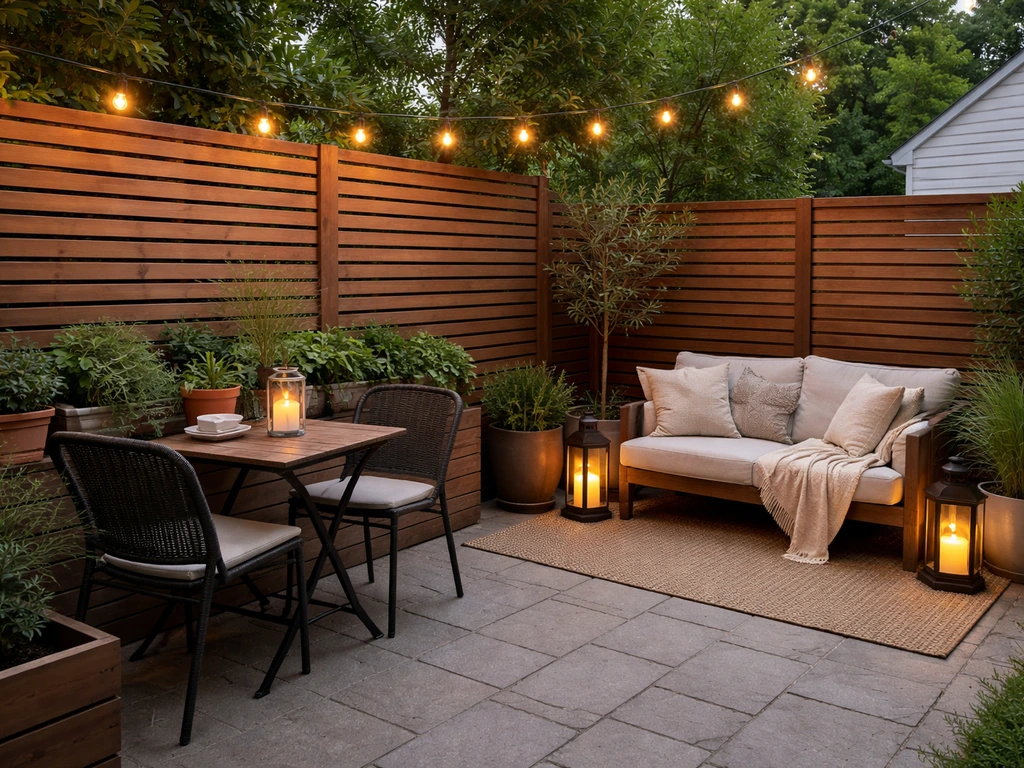
Best Outdoor Small Patio Ideas: Layouts, Upgrades, Tips
Best small patio ideas with layouts, upgrade comparisons, and placement tips for privacy, shade, lighting, and comfort.
Do It Yourself Outdoor Patio Ideas: Build, Upgrade, Maintain
DIY outdoor patio ideas for planning, building, upgrading, and maintaining floors, shade, privacy, lighting, and decor.
Quick Fix Patio Ideas for Instant Comfort and Style
Quick fix patio ideas for fast comfort and style: cleanups, repairs, shade, flooring tweaks, and safe upgrades on any bu