The best small outdoor patio ideas work because they treat the space as a room, not a leftover corner. A 10x10 or 12x14 patio can hold a dining set for four, a lounge chair or two, some greenery, and decent shade, as long as you plan the layout before you buy a single piece of furniture. Most small patios feel cramped because the furniture is too big, placed randomly, or competing with itself. Fix the layout first, then layer in flooring, lighting, and comfort upgrades, and even the tightest patio starts to feel like somewhere you actually want to be.
Best Outdoor Small Patio Ideas: Layouts, Upgrades, Tips

Phoebe Foster
11 May 2026
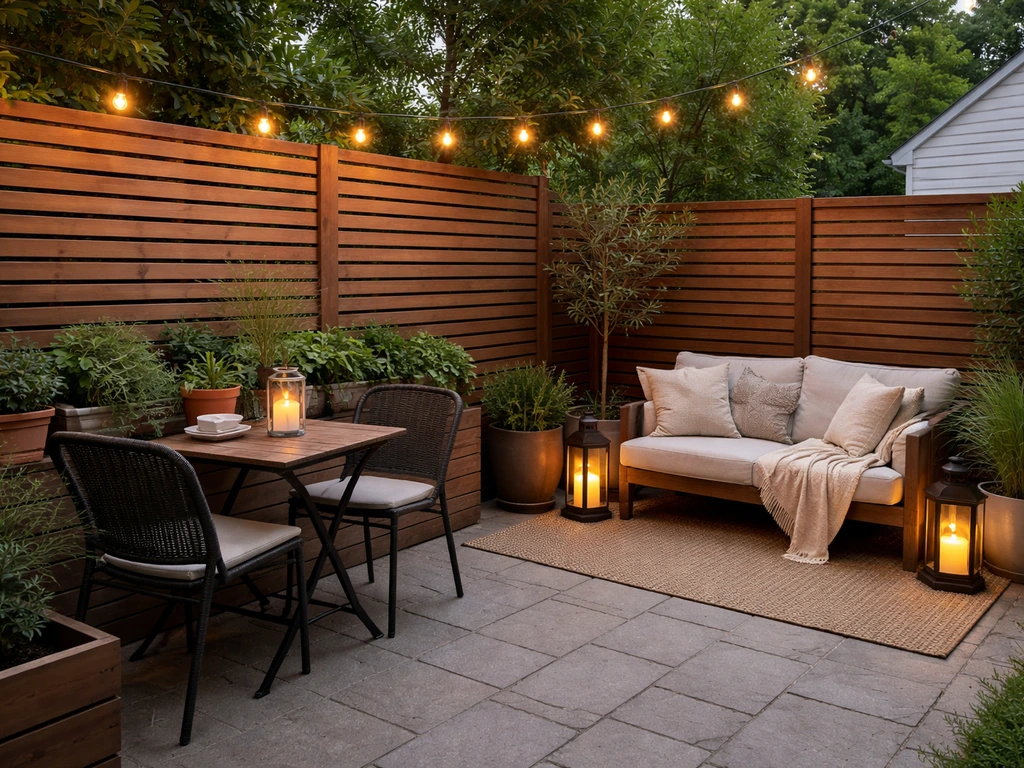
Small patio sizing and layout rules
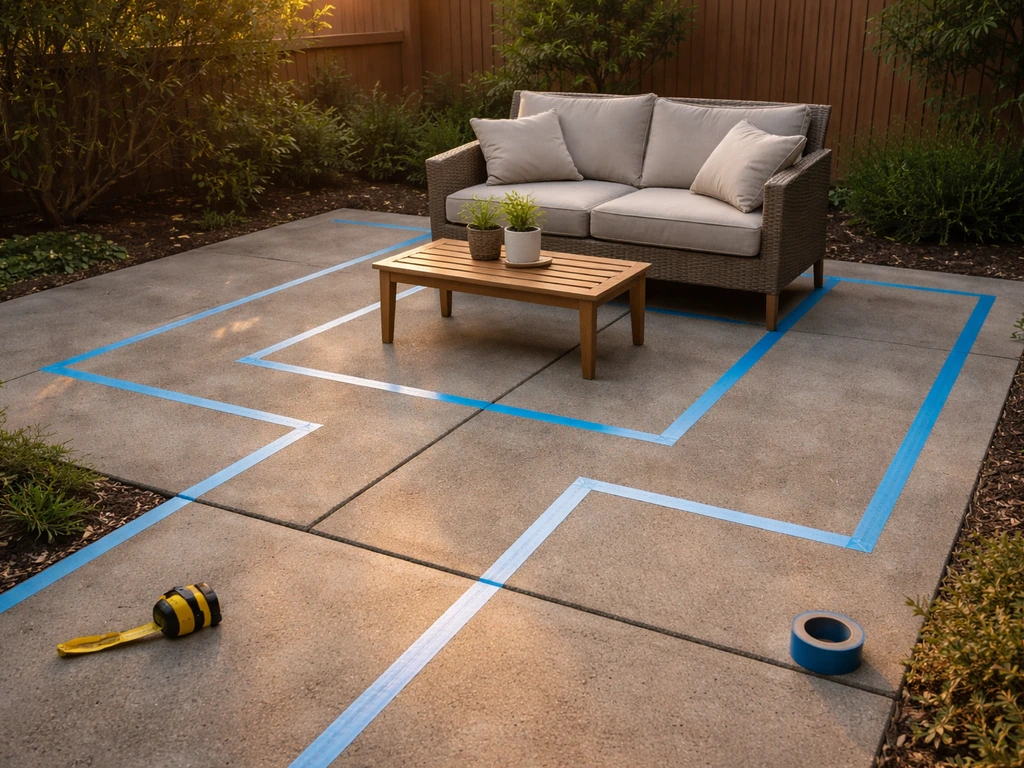
Before anything else, measure your patio and mark it out with tape or chalk. This sounds basic, but most people skip it and end up with furniture that doesn't fit. A 10x10 foot slab is about the minimum for a usable outdoor space. A 12x14 or 12x16 gives you real flexibility. Anything smaller than 8x8 should be treated as a single-purpose zone: just a bistro corner, just a lounge chair, or just a container garden.
The single most important layout rule for small patios: keep at least 36 inches of clear walkway through your main circulation path. If you have a back door, the path from that door to the yard needs to stay open. Lowe's planning guidance actually pegs 36 inches as the functional minimum for a main walkway, and if you ever need to move a grill, carry furniture, or navigate with a stroller or wheelchair, you'll thank yourself for keeping that lane clear. A 60-inch-wide area is ideal if you need a turnaround point.
For small patios, layout alignment matters more than it does on large ones. HGTV's patio design guidance recommends using different shapes and angles when the space is tight, a round or oval coffee table paired with an L-shaped bench, for example, uses corners efficiently and avoids the boxy feel that rectangular furniture creates in a rectangular space. Push seating toward the perimeter so the center stays open. Put dining on one dedicated side of the patio, lounging on the other, and keep the grill out of the main seating footprint entirely, ideally along a side wall where it's accessible without crossing through the seating zone.
| Patio Size | What Fits Comfortably | Best Layout Approach |
|---|---|---|
| 8x8 ft | Bistro table for 2, 2 chairs, small planter | Single zone, centered table, chairs facing out |
| 10x10 ft | Small dining set (4 seats) OR lounge set, not both | One dedicated use zone, clear perimeter path |
| 10x12 ft | Dining set + 1 lounge chair or side table | Dining on one wall, lounge in far corner |
| 12x14 ft | Dining + lounge zone, small side table, fire element | Two zones split by use, 36-in path between them |
| 12x16 ft | Dining + lounge + grill station or fire pit | Full multi-zone layout, grill along side wall |
Avoid dead-ends. If someone sitting at the table has to climb over furniture to get back inside, the layout is already wrong. HGTV flags this specifically: dead-ends make small patios feel cramped and awkward. Arrange furniture so there's always an easy exit path from every seat.
Top small patio ideas that actually work
The bistro corner
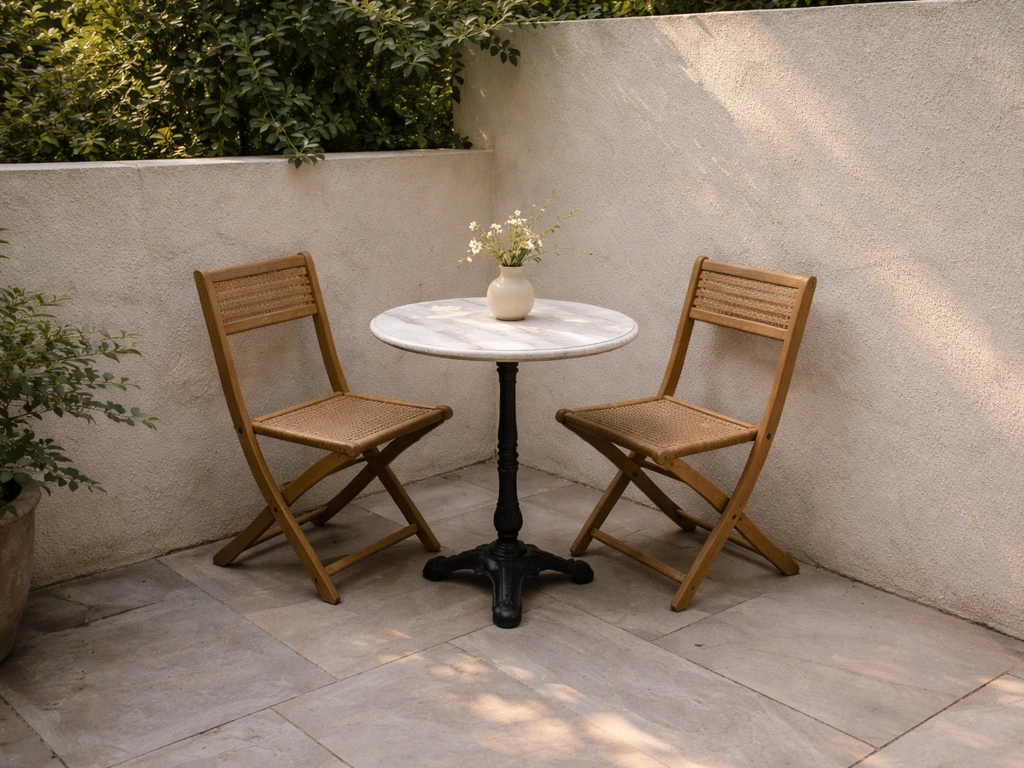
A bistro table and two chairs in a corner is the classic small patio move for good reason. It uses the two walls to anchor the arrangement, keeps the center open, and gives you a dedicated spot for morning coffee or a quiet dinner for two. Keep the table no larger than 24 inches round or square. Add one wall-mounted planter or a tall narrow planter beside the table to add vertical interest without eating floor space.
Dining for two or four
For dining, place your table against one wall or along one side of the patio rather than centering it. This frees up the rest of the space for movement and a second zone. A 36-inch round table seats four without crowding. Folding or stackable chairs are worth considering on tight patios because they let you reconfigure on the fly. If you want a bench, a built-in bench along one wall is far more space-efficient than freestanding chairs on all sides.
Lounge and conversation nook
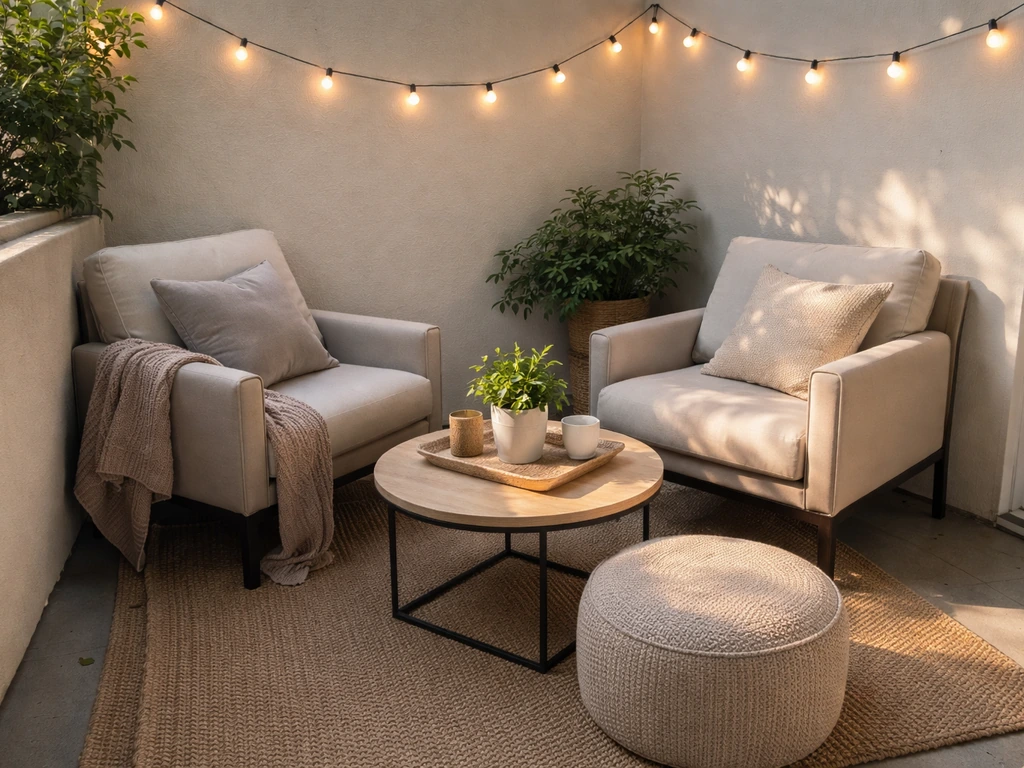
A lounge setup on a small patio works best with a loveseat or two chairs facing each other with a small coffee table or ottoman between them. Scale is everything here: furniture marketed as 'patio sectionals' is almost always too large for a compact space. Look for pieces that measure no more than 60 inches wide. A centered round or oval coffee table (as HGTV suggests) creates better flow than a rectangular one in a tight space.
Fire pit or cozy evening zone
A small tabletop fire bowl or a compact propane fire pit table can anchor a lounge zone without taking up much space. On a 10x12 or larger patio, a 28-to-30-inch round fire pit table at the center of a conversation circle works well. Keep at least 3 feet of clearance between the fire element and any furniture, and never place a fire pit directly against a wall or under a low overhead structure. Stick with propane or gel fuel on tight patios rather than wood-burning fire pits, which produce too much smoke and ash in confined spaces.
Vertical and multi-use designs for very small patios
When floor space is genuinely limited, go vertical. Wall-mounted planters, fold-down wall tables (also called Murphy-style patio tables), mounted string lights, and vertical trellis panels all add function and visual interest without touching the floor. A fold-down table screwed into an exterior wall gives you a dining surface that disappears when not in use. Pair it with two folding chairs that hang on wall hooks when stored.
Space-saving shade, privacy, and weather comfort
Shade options compared
| Shade Option | Best For | Space Required | Rough Cost | Considerations |
|---|---|---|---|---|
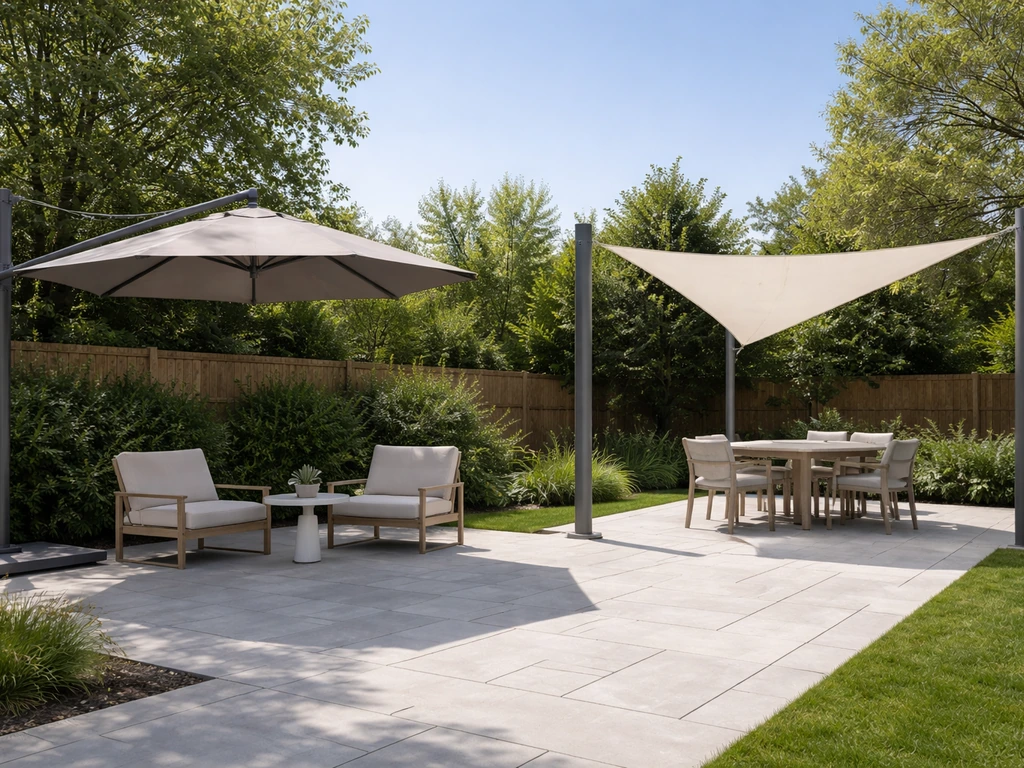
| Offset cantilever umbrella | Dining or lounge zone, max flexibility | Base footprint ~24 in, arm reaches 8-10 ft | $80–$400 | Adjustable angle, no center pole in table; base takes floor space |
| Sail shade (triangle/rectangle) | Open patios with anchor points on walls or posts | Minimal floor footprint if wall-anchored | $30–$150 | Needs attachment points; great for irregular shapes |
| Pergola or overhead structure | Permanent shade with visual anchor | Matches patio footprint | $800–$5,000+ | Adds structure and privacy overhead; can support string lights |
| Pop-up canopy / removable cover | Temporary or rental situations | Matches footprint of canopy | $60–$300 | Min. 7.5 ft clearance height recommended for walking surfaces |
| Patio umbrella (center pole) | Dining tables with umbrella hole | Requires table cutout | $50–$250 | Most affordable, least flexible positioning |
For most small patios, a cantilever umbrella or sail shade is the practical move. They give you shade without a center pole eating table space, and they're easy to adjust or take down in bad weather. If you're adding a pergola, that's where a contractor conversation makes sense, pergola footings and attachment to a house structure often require permits depending on your municipality.
Privacy without a full fence
Privacy on a small patio is one of the most common design goals, and the good news is you don't need a full fence or wall to get it. A 6-foot privacy screen panel or trellis with climbing plants on one or two sides blocks sightlines from neighbors without requiring permits in most areas. Lattice panels, bamboo screens, and pre-built cedar privacy panels are all decent options in the $40–$120 range per panel.
Tall planters (24 inches or taller) filled with ornamental grasses, bamboo, or tall shrubs add greenery and visual separation. For a dedicated deep dive on privacy-specific layouts and materials, there's a whole section of this site on patio privacy ideas worth exploring. There are also more best patio privacy ideas you can mix and match depending on your yard layout and how much privacy you need.
Weather comfort: heat, humidity, wind, and cold
Shade handles heat, but humidity requires airflow. On a small covered patio, an outdoor ceiling fan or a pedestal fan rated for outdoor use makes a real difference. Look for fans with a UL Wet or Damp rating, 'Dry' rated fans are not appropriate for outdoor use. In hot, humid climates like the Gulf Coast or Southeast, an outdoor misting fan or misting line strung along a pergola can drop the perceived temperature by 10–20 degrees. For cool evenings or shoulder-season use, a wall-mounted infrared heater or a small freestanding propane heater adds months of usability. On a tight patio, wall-mounted heaters are the better choice because they don't occupy floor space.
Flooring and surface choices that work on small patios
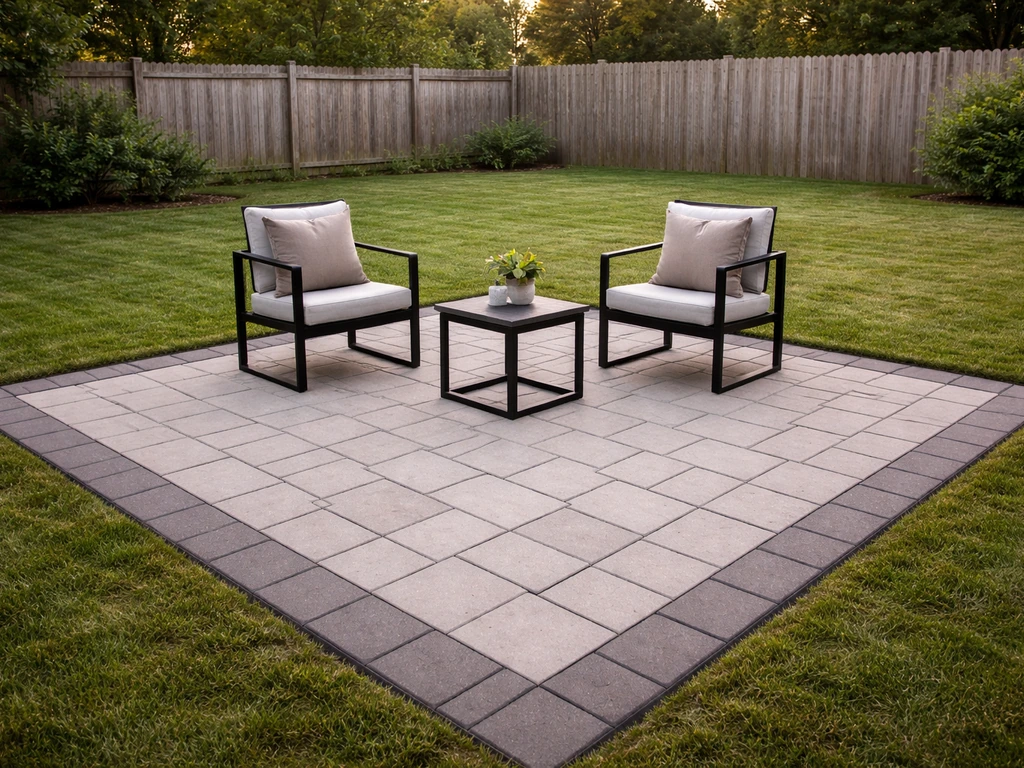
The surface material affects how the patio looks, how it ages, what it costs, and how much work it is to install. On small patios, material choice also affects how big the space feels: large-format pavers (18x18 or 24x24) make a small patio look more expansive, while small brick or tile can feel busy and shrink the visual space.
| Material | Best For | DIY-Friendly? | Cost (installed) | Pros / Cons |
|---|---|---|---|---|
| Concrete pavers | Most situations, clean look, durability | Yes (with prep) | $8–$20/sq ft | Durable, replaceable; requires proper base and drainage |
| Natural stone (flagstone, bluestone) | High-end look, irregular charm | Possible but harder | $15–$30/sq ft | Beautiful, unique; uneven surface needs leveling |
| Poured concrete | Budget-friendly, seamless look | No (hire out) | $6–$12/sq ft | Low cost; cracks over time, hard to repair sections |
| Gravel / decomposed granite | Low-budget, drainage-friendly | Yes | $2–$6/sq ft | Cheapest option; not ideal for furniture stability |
| Composite decking tiles (snap-together) | Renters, budget refreshes, quick installs | Yes | $3–$8/sq ft | Easy to install over existing slab; can get hot in full sun |
| Outdoor porcelain tile | Modern aesthetic, easy to clean | Possible on flat surface | $10–$25/sq ft | Looks great; slippery when wet unless textured |
| Brick | Traditional look, good durability | Yes (with prep) | $10–$20/sq ft | Classic appeal; mortar joints require maintenance |
For a small patio refresh on a budget, snap-together composite deck tiles are the easiest DIY move. They go directly over an existing concrete slab in an afternoon and cost $3–$8 per square foot. They won't last as long as proper pavers, but they transform the look of an ugly slab without any digging or mixing. If you're doing a full patio build or replacing a cracked slab, concrete pavers are the best balance of durability, appearance, and DIY-ability, just don't skip the gravel base and compaction step, or you'll have uneven pavers within a year.
Drainage matters more on small patios than people expect. If your patio slopes toward the house or sits in a low spot, water will pool under furniture and against your foundation. Any patio surface should slope away from the house at a minimum 1/8 inch per foot, and ideally 1/4 inch per foot. If you have a drainage problem, this is the one case where hiring a pro is genuinely worth the cost, regrading or adding a French drain is not a fun DIY job and can be expensive to redo if done wrong.
Lighting and ambiance upgrades
Lighting is one of the highest-return upgrades on a small patio. Done right, it makes the space feel larger, warmer, and usable after dark. Done wrong (one overhead floodlight pointed straight down), it makes your patio look like a parking lot.
The best approach for small patios is to layer multiple light sources at different heights rather than relying on one fixture. String lights strung overhead or along a pergola give ambient glow. Low-voltage path lights or step lights at the perimeter define the edges of the space without harsh glare. A small tabletop lantern or candles provide intimate task-level light for dining. For pathway and perimeter lighting, space fixtures roughly 6–10 feet apart depending on the beam spread, and stagger them rather than lining them up in a straight runway, which Homes & Gardens specifically flags as a common mistake that makes outdoor lighting look institutional.
- String lights (cafe or Edison bulb style): hang overhead in a grid or catenary pattern between a pergola, fence, or posts — warm white (2700K) gives the most inviting glow
- Solar lanterns or solar stake lights: no wiring needed, great for renters or quick installs; quality varies widely, so stick with reputable brands
- Low-voltage LED path lights: plug into a transformer on a timer; waterproof, long-lasting, and dimmable with the right system
- Wall sconces: mount beside a back door or on a fence wall for functional light that doubles as a design element
- Tabletop lanterns or battery candles: create intimate light at eye level when seated; battery or rechargeable options skip the extension cord issue
- Uplighting into a tree or tall planter: creates drama and depth; one or two well-placed spotlights go a long way
If your patio doesn't have a nearby outdoor outlet, solar lighting and rechargeable tabletop fixtures are the practical no-wire solution. For a more permanent setup, a licensed electrician adding one weatherproof GFCI outlet to an exterior wall typically runs $150–$300 and opens up a lot of options.
Budget vs DIY vs hiring a pro: what to do next
Here's an honest breakdown of where to spend, where to DIY, and where to hire out, based on what actually matters for small patio upgrades.
| Task | DIY-Friendly? | Hire a Pro? | Budget Range | Notes |
|---|---|---|---|---|
| Snap-together deck tiles over existing slab | Yes | No | $150–$500 | Weekend project, no tools needed beyond a utility knife |
| Laying concrete pavers (new patio or replacement) | Yes (with prep knowledge) | Consider if large area or drainage issues | $500–$2,500 DIY materials | Requires compacted gravel base, level work; mistakes are costly to undo |
| Pergola or shade structure installation | Yes for freestanding kits | Yes if attached to house or requires footing permits | $600–$4,000+ | Attached structures often need permits; freestanding kits are manageable DIY |
| Electrical outlet or lighting wiring | No | Yes | $150–$400 per outlet | GFCI exterior outlets require licensed electrician in most areas |
| Privacy fence or screen panels | Yes | Only for concrete footings or structural posts | $100–$600 DIY | Panel screens need no permit in most jurisdictions; check HOA rules |
| Drainage regrading or French drain | Not recommended | Yes | $400–$1,500 | Improper drainage is expensive to fix later |
| Built-in bench or planter boxes | Yes (basic carpentry) | Yes for masonry built-ins | $100–$600 DIY lumber | Cedar or pressure-treated lumber holds up outdoors well |
For most homeowners with a tight budget, the highest-return DIY moves are snap-together deck tiles, string lights, a cantilever umbrella, and some privacy screen panels. These four upgrades alone can transform a bare concrete slab into a genuinely inviting outdoor room for under $600–$800 in materials. If you have more budget and want something permanent, concrete pavers and a pergola are the next tier, doable DIY if you're handy, but better with a contractor if your soil is soft, your ground is uneven, or your patio is over 200 square feet.
Climate-specific choices and common patio constraints
Hot and sunny climates (Southwest, Texas, Southern California)
Heat is the enemy of patio comfort in these regions. Prioritize shade first: a pergola with a solid or slatted roof, or a large sail shade, makes a bigger difference than any furniture upgrade. Light-colored paver surfaces (natural limestone, light grey concrete) reflect heat better than dark stone or brick, which can become uncomfortably hot underfoot. Misters and outdoor fans are near-essential for summer use. Stick with fade-resistant, all-weather fabrics (solution-dyed acrylic is the standard) and avoid dark cushion colors that absorb heat.
Humid climates (Gulf Coast, Southeast, Mid-Atlantic)
Humidity and mold are the main challenges. Teak, aluminum, and powder-coated steel hold up better than wicker or untreated wood. Composite decking tiles and porcelain surfaces resist mold growth better than natural wood. Airflow matters more than shade alone: elevated patio fans move air and reduce the sticky feeling. Avoid fully enclosed privacy setups that trap humid air; leave gaps in screens and trellises for ventilation.
Rainy and wet climates (Pacific Northwest, Midwest, Northeast)
Drainage is the primary concern. Make sure your patio surface slopes properly away from the house. A covered patio or pergola with a polycarbonate roof panel insert extends usability through rainy months without making the space feel like a cave. Quick-dry foam cushions or removable cushion storage becomes important, without them, you're either constantly hauling cushions inside or dealing with mildew. In freeze-thaw climates, avoid unsealed natural stone or poured concrete that can crack; concrete pavers and porcelain tile hold up better through winter cycles.
Wind-prone areas and exposed yards
High-wind patios need weighted or anchored umbrellas (look for a base rated at 50 lbs or more), and sail shades need to be installed with proper tension hardware rather than simple hooks. Privacy screens and lattice panels that catch wind need to be properly secured, a panel that blows over in a storm becomes a liability. Solid-bottom planters filled with soil act as natural windbreaks and anchors at the same time.
HOA rules, setbacks, and other constraints
Before you build or install anything structural, check your HOA rules and local zoning setbacks. Most areas require a minimum setback from property lines for permanent structures (sheds, pergolas, fences), typically 3–10 feet depending on the municipality. HOA rules often restrict fence heights, colors, and materials visible from the street. Temporary and freestanding structures like screen panels, free-standing pergola kits, and patio furniture generally don't require permits, but attached pergolas and anything with concrete footings usually do. When in doubt, a quick call to your local building department takes 10 minutes and can save you from having to tear something down later.
Pets, kids, and other practical considerations
If you have dogs or kids, surface texture and material durability matter more than aesthetics. Avoid gravel (dogs track it, kids fall on it), skip light-colored unsealed stone that stains easily, and think about how furniture legs sit on the surface, thin legs punch through outdoor rugs and sink into soft gravel. An outdoor rug on a patio is a great look, but it needs to sit on a hard, flat surface to stay in place and resist mold. Polypropylene outdoor rugs are the most practical: they're UV-stable, easy to hose off, and don't trap moisture underneath the way natural fiber rugs can.
The bottom line is that a small outdoor patio can be genuinely great, it just requires more intentional planning than a large one. Measure before you buy, pick one or two zones rather than trying to cram everything in, choose materials that fit your climate, and layer in lighting and shade once the layout is solid.
Whether you're starting from a bare concrete slab or upgrading an existing setup, the ideas above give you a real framework to work from today. If you want inspiration fast, look through the best patio ideas pictures for layouts and details you can copy. If you are looking for the best patio ideas in the UK, focus on layout, smart shade, and space-saving zones that work in smaller gardens.
FAQ
What’s the best way to handle entertaining on a very small patio without overcrowding?
If you need dining for more than four, keep the main table size small and plan for “overflow storage.” For example, use a 36-inch round table as the everyday setup, then store two folding chairs on hooks or in a nearby cabinet, and add a small second bistro-side table when you have guests. This preserves clear circulation when chairs are in use.
Where should I put outdoor cushions and small patio items on a small patio?
Aim to keep storage and movement out of the main path. A practical approach is to use a narrow storage box or deck box along the perimeter near the lounge zone, then keep cushions in removable covers inside the box. If your patio is under shade, still choose breathable or quick-dry fabric covers to reduce mildew risk during humid stretches.
Can I use string lights as the main lighting on a small patio?
Yes, but treat it like a lighting plan, not just decoration. Use dimmable string lights or warm bulbs (about 2700K) and combine them with low perimeter or step lights. Position the brightest lights so they wash walls or plants, not so they shine directly toward seating, which is a common cause of harsh, unflattering “parking lot” lighting.
What are safety do’s and don’ts when adding a small fire pit to a patio?
For fire features, the article covers clearance from furniture, but also check clearance from overhead structures and nearby finishes. Don’t run it under pergola beams or low overhangs unless the unit is specifically designed for that location, and keep any nearby planters or umbrellas away from radiant heat. In tight spaces, propane or gel is usually easier to manage safely than wood-burning options.
How do I plan for doors and gate swings so my patio layout still feels open?
Most people overestimate how much space one piece needs, especially with swinging doors or gate access. Measure the “door swing corridor” and subtract it from usable walkway width, then place the seating perimeter so you never have to pass behind chair backs to reach the yard. If you can’t maintain the main 36-inch lane after doors swing, switch to a corner bistro layout or swap to folding chairs.
What if my patio is slightly sloped toward the house, will furniture pads and rugs fix it?
If your patio is on a slope, the goal is not only avoiding puddles, it is preventing uneven materials that shift over time. Use a leveling approach that matches your surface system, for example a proper base and compaction for pavers, or confirm deck tiles are installed with the right leveling support over the slab. If drainage is a known issue, regrading or a French drain will usually solve the root problem better than changing furniture placement alone.
How should I divide lighting between the dining and lounge zones on a small patio?
Tie lighting to the zones you actually use. For dining, add a small overhead or wall-washed light at dining height, for lounging add lower ambient lights near the seating, and for wayfinding use step or low path lights. You should be able to sit and talk without looking into glare, even if the brightest lights are outdoors.
Is it a good idea to enclose a small patio for privacy and weather protection?
You can, but keep it breathable and prevent “condensation traps.” Choose an open or slatted canopy style (or a pergola with ventilation), and if you add privacy screens, avoid boxing in every side. Use gap spacing or staggered screens and rely on ceiling fans for air movement, especially in humid climates.
Can I put an outdoor rug on a small patio, and how do I keep it from slipping or molding?
Yes, but you want stable, non-shifting surfaces and a rug that won’t trap moisture. Use an outdoor rug on top of deck boards or pavers, add a non-slip rug pad made for outdoor use, and consider polypropylene for quick rinsing. Avoid placing rugs directly over gravel or uneven surfaces, because furniture legs and foot traffic will create bunching and sliding.
What should I verify before installing a pergola, sail shade, or wall-mounted screens in windy areas?
Start with structural checks first. If you are considering a pergola or any attachment, confirm setback rules and whether your patio area requires permits, but also check your siding or masonry attachment points and whether the roofline can handle loads. In high-wind areas, it is especially important to use proper tension hardware for shades and secure privacy panels so they cannot lift in gusts.
How do I winterize a small patio so materials and furniture last through freeze-thaw weather?
Treat winterization as part of the material plan. Bring or protect cushions and any fabric items with quick-dry storage, and cover or store smaller electronics. For surface durability, porcelain tile and properly installed pavers typically handle freeze-thaw better than unsealed natural stone, and unsealed finishes can fail faster in cold, wet cycles.
Next Articles
Do It Yourself Outdoor Patio Ideas: Build, Upgrade, Maintain
DIY outdoor patio ideas for planning, building, upgrading, and maintaining floors, shade, privacy, lighting, and decor.
Quick Fix Patio Ideas for Instant Comfort and Style
Quick fix patio ideas for fast comfort and style: cleanups, repairs, shade, flooring tweaks, and safe upgrades on any bu
Cheap Do It Yourself Patio Ideas: Budget Build Guide
Budget DIY patio ideas with step-by-step flooring, prep tips, cost ranges, upgrades, and safety mistakes to avoid.