
For a north-facing patio, your best all-around flooring material is a textured porcelain paver rated for exterior wet use with a DCOF of at least 0.42. It absorbs almost no water (0.5% or less by ANSI A137.1 standards), handles freeze-thaw cycles without spalling, resists moss and algae far better than natural stone or brick, and barely needs sealing. If porcelain feels too cold or hard for your taste, concrete pavers are a close second and cost noticeably less. Natural stone looks great but needs consistent sealing and more aggressive maintenance on a shaded, slow-drying surface. Wood and composite decking work if you prioritize warmth underfoot, but you'll fight mildew and slip resistance more than you would with pavers.
Best Material for North Facing Patio: Top Choices

Phoebe Foster
7 Jul 2026
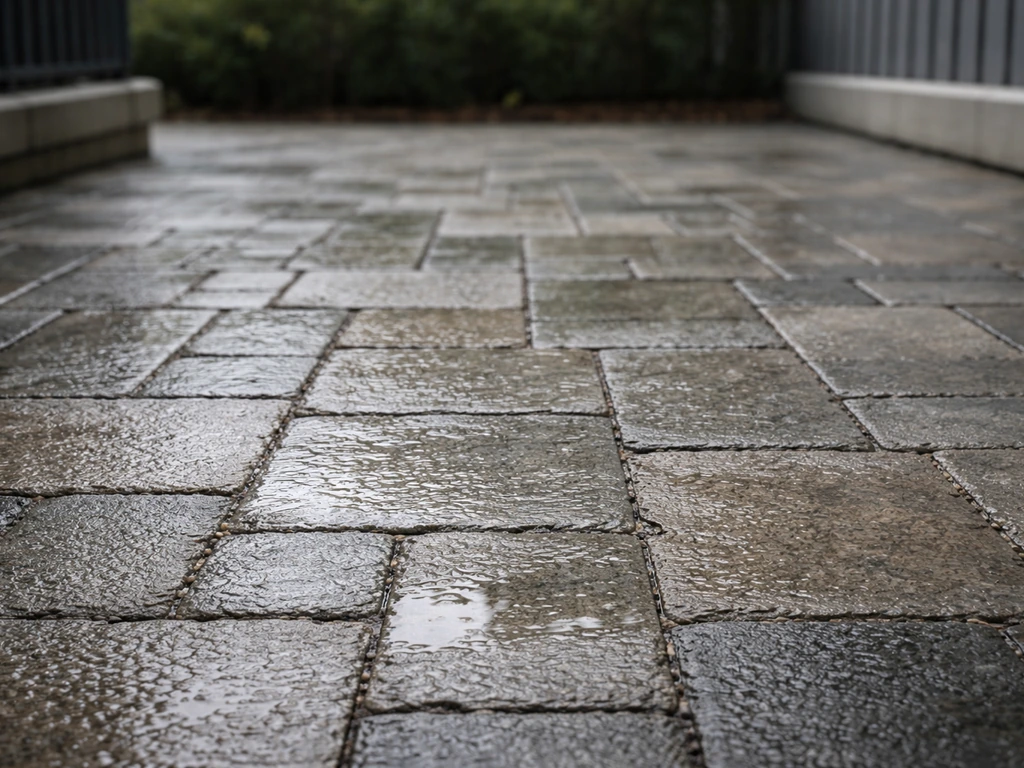
Why a north-facing patio plays by different rules
A north-facing patio sits in shade for most or all of the day depending on your latitude and what's overhead. That sounds like a minor detail, but it changes almost every performance factor you care about in a patio surface. The sun is the single biggest natural drying agent your patio has, and when it's mostly absent, moisture lingers. Surfaces stay damp for hours longer than a south- or west-facing patio would after the same rainstorm. In wooded or densely landscaped yards, airflow is also reduced, which makes things worse.
That persistent dampness is why algae and moss become serious problems on north-facing surfaces. Algae forms those green, slick films that make a patio genuinely dangerous. Moss follows in cooler, shadier spots and can work into grout joints and crack surfaces over time if left unchecked. Neither of these is much of an issue on a sunny south-facing patio that bakes dry by noon, but on a north-facing one they can show up within a single season if you pick the wrong material or skip sealing.
Freeze-thaw is the other major variable if you live anywhere that gets hard winters. Water soaks into porous surfaces, freezes, expands, and physically breaks apart the material from the inside out. Repeat that a few dozen times per season and you get spalling, flaking, and cracked surfaces. The slower a north-facing patio dries, the more water it carries into each freeze cycle. That's why material porosity matters so much more here than it would on a sunny patio that dries out between cold snaps. Efflorescence (those white salt deposits) is also more common on shaded masonry because wetting and drying cycles pull soluble salts to the surface repeatedly.
Quick recommendations: the right material for your situation
Before the deeper breakdown, here's the shortlist. These are the choices I'd make or recommend based on the specific conditions you're dealing with.
| Your Situation | Best Choice | Runner-Up |
|---|---|---|
| Fully shaded, rainy/coastal climate | Textured porcelain pavers | Brushed concrete pavers |
| Partially shaded, cold/freeze-thaw winters | Textured porcelain pavers | Concrete pavers with polymeric sand joints |
| Fully shaded, near trees/lots of debris | Concrete pavers | Porcelain pavers |
| Shaded, mild climate, barefoot comfort priority | Composite decking (PVC/WPC) | Brushed concrete pavers |
| Shaded, tight budget, DIY-friendly | Concrete pavers | Stamped/brushed poured concrete |
| Shaded, natural look is the priority | Slate or basalt (dense natural stone) | Tumbled travertine (sealed religiously) |
How each material actually performs on a shaded, damp patio
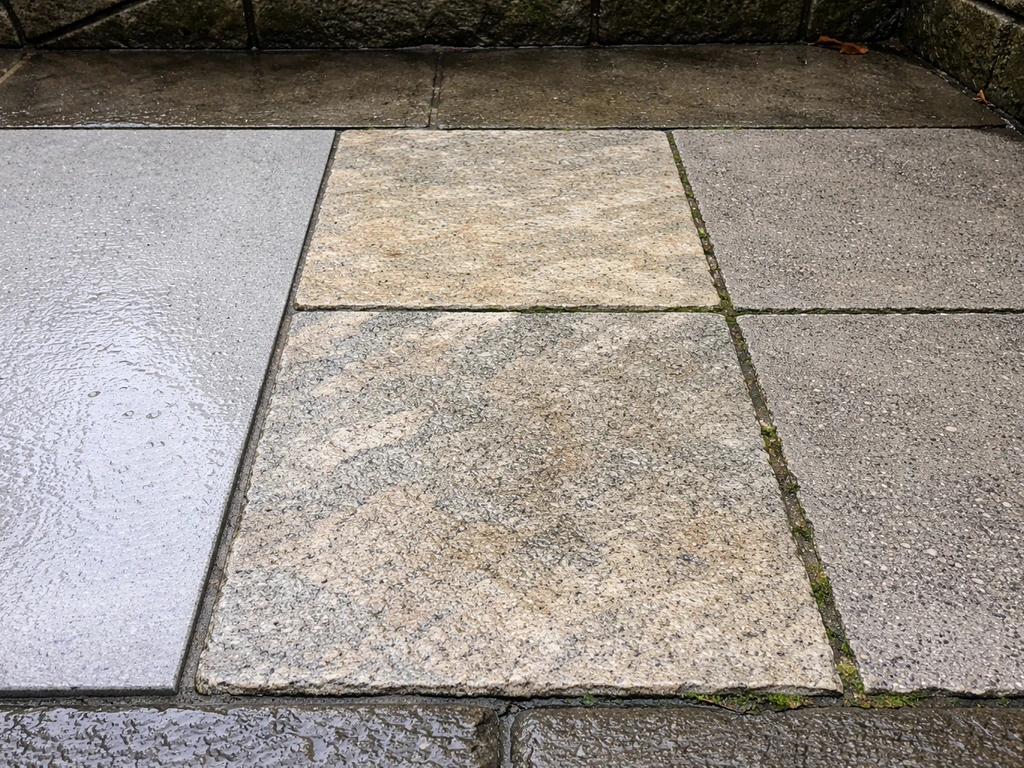
Let's go through the main contenders honestly, covering what matters most in a north-facing context: water absorption, slip resistance, moss/algae resistance, freeze-thaw durability, and maintenance load.
Porcelain pavers
Porcelain is the strongest performer on a north-facing patio across nearly every metric that matters. Water absorption of 0. 5% or less (per ANSI A137. 1 and tested via ASTM C373) means water sits on top rather than soaking in, which directly limits moss and algae colonization, prevents freeze-thaw spalling, and virtually eliminates efflorescence.
Exterior-rated porcelain pavers are also tested for freeze-thaw resistance via ASTM C1026, so you can verify that spec when shopping. Slip resistance is where you need to pay attention: look for a wet DCOF of at least 0. 42 per ANSI A137. 1 on any porcelain you consider for a wet exterior surface.
Avoid polished or lightly textured finishes; stick with matte, sand-blasted, or structured surfaces. On the downside, porcelain gets cold in winter, can feel hard underfoot, and installed costs run higher than concrete pavers, typically in the $15-$30+ per square foot range installed depending on region and complexity.
Concrete pavers
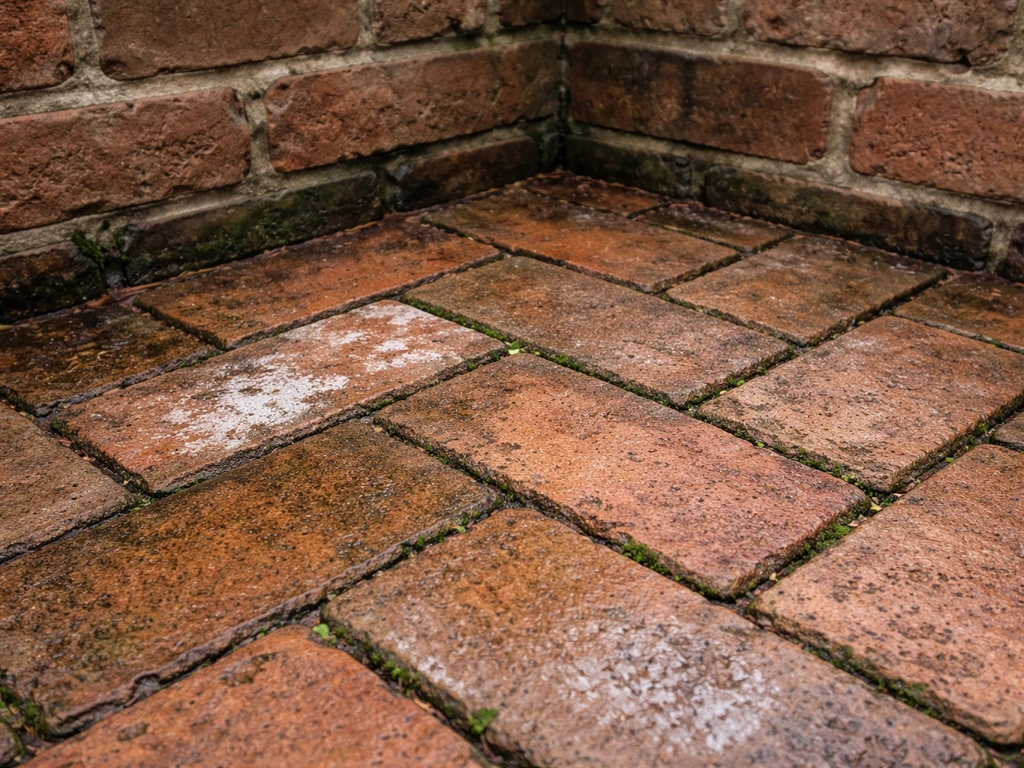
Concrete pavers are the practical workhorse and a genuinely good choice for north-facing patios. They're more porous than porcelain, so you'll want to seal them every two to three years and use polymeric sand in the joints to limit water infiltration. The jointing material matters a lot here: standard sand washes out and creates an open highway for water, moss roots, and weeds. Polymeric sand locks up and dramatically reduces those problems.
Concrete pavers handle freeze-thaw reasonably well when installed correctly with a proper compacted aggregate base and correctly sized joints, but they're more susceptible than porcelain. Efflorescence shows up more often on concrete pavers, especially in the first year or two, but it's mostly cosmetic and treatable. Installed cost is typically $10-$20 per square foot, making them one of the more budget-friendly hardscape options. They're also forgiving for DIYers compared to tile-format porcelain.
Brick
Brick looks classic and performs decently in mild climates, but on a north-facing patio in a cold region it's a real risk. Brick is porous and absorbs water readily, which means serious freeze-thaw spalling over time if you're in a climate that gets hard winters. On the moss and algae front, brick is harder to clean than porcelain or even concrete because the surface texture gives organic growth more to grip.
That said, a good tumbled or wire-cut brick has decent traction when wet. If you're in a mild, damp climate like the Pacific Northwest and you love the look, brick can work with diligent sealing and annual cleaning. In the Midwest or Northeast with real freeze-thaw cycles, I'd steer you toward concrete or porcelain instead.
Natural stone (slate, flagstone, travertine, limestone)
Natural stone is the material people fall in love with at the showroom and then fight with in the backyard. On a sunny patio, the maintenance burden is manageable. On a north-facing, slow-drying patio, it goes up significantly. The core problem is porosity.
Travertine, limestone, and most sandstones absorb water readily, making them vulnerable to freeze-thaw spalling and very hospitable to moss and algae. Dense stones like slate, basalt, and quartzite are meaningfully better because their porosity is much lower, and they're worth considering if natural stone is important to you. Any natural stone on a north-facing patio needs a penetrating sealer applied before use and re-sealed on a regular schedule (usually every one to two years depending on the stone and climate).
Unsealed porous stone in a shaded, wet environment will stain, spall in cold winters, and green up with algae within a season or two.
Poured concrete
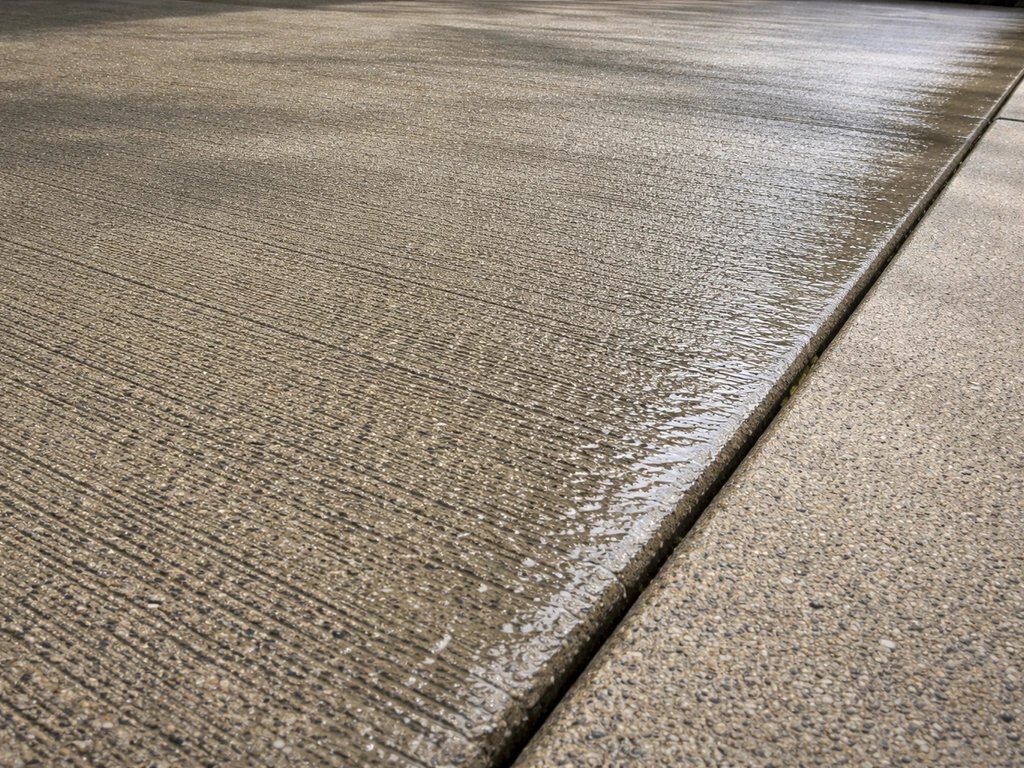
Poured concrete is affordable and adaptable but comes with real tradeoffs on a north-facing surface. A broom-finished or exposed aggregate concrete has decent traction. The bigger issue is that as concrete ages and gets hit repeatedly with moisture, freeze-thaw, and organic growth in a shaded environment, it can develop surface crazing, staining, and algae films that are genuinely hard to remove and ugly fast. Sealing helps, but concrete sealer needs periodic reapplication to maintain protection.
If you go the poured concrete route, a brushed or exposed aggregate finish is far better than smooth for traction, and proper slope for drainage is non-negotiable. Cost-wise, it's one of the lowest installed options, often $6-$12 per square foot, which is why it remains popular despite the maintenance profile.
Wood and composite decking
Natural wood decking on a north-facing, shaded surface is a high-maintenance commitment. It stays wet longer, encourages mold and mildew under the boards, and can warp or rot faster in persistently damp conditions without diligent sealing and staining. Cedar and redwood perform better than pressure-treated pine in damp conditions, but none of them are low maintenance on a shady patio. Composite and PVC/WPC decking is a significantly better option if you want the wood aesthetic without the annual maintenance.
Good-quality composite is moisture-resistant, doesn't need sealing or staining, and carries wet slip-resistance ratings you can check against ASTM F1679 test data. It's softer and warmer underfoot than any stone option, which matters if barefoot use is a priority.
The downsides: higher installed cost than concrete pavers (often $20-$35+ per square foot for premium composite), it can get hot on partially sunny days (though on a north-facing patio this is less of an issue), and it doesn't feel like stone or concrete if that aesthetic matters to you.
| Material | Water Absorption | Freeze-Thaw Risk | Moss/Algae Risk | Traction (Wet) | Sealing Required | Relative Cost Installed |
|---|---|---|---|---|---|---|
| Porcelain pavers | Very low (<0.5%) | Very low (if rated) | Low | High (textured) | No | $$$ |
| Concrete pavers | Moderate | Low-moderate | Moderate | Good | Yes (every 2-3 yrs) | $$ |
| Brick | High | High (cold climates) | High | Moderate | Yes | $$ |
| Slate/basalt | Low-moderate | Low-moderate | Moderate | Good (cleft face) | Yes (1-2 yrs) | $$$ |
| Travertine/limestone | High | High | High | Moderate | Yes (annually) | $$$ |
| Poured concrete | Moderate | Moderate | Moderate-high | Good (brushed) | Yes (every 1-3 yrs) | $ |
| Composite decking | Very low | Very low | Low-moderate | Good (textured) | No | $$$-$$$$ |
| Natural wood decking | High | Moderate | High | Moderate | Yes (annually) | $$-$$$ |
Keeping it clean: maintenance on a shaded patio
Maintenance on a north-facing patio isn't optional the way it might be on a sunny one. The lack of UV and the persistent dampness mean organic growth and surface degradation move faster. Here's how to stay ahead of it by material.
Sealing: what to seal, when, and how often
Porcelain doesn't need sealing, which is a genuine advantage. Everything else on the list benefits from it. For natural stone, use a penetrating (impregnating) sealer designed for the specific stone type. Surface sealers on stone can trap moisture underneath and make freeze-thaw damage worse, so avoid them for exterior use.
For concrete pavers and poured concrete, a good penetrating concrete sealer reduces water intrusion and significantly cuts efflorescence. Porous Pro Plus is marketed as helping prevent efflorescence and improving water and salt protection for concrete and porous stone surfaces.
Reapplication is typically needed every one to three years depending on the product and exposure. Do a water bead test annually: if water no longer beads on the surface, it's time to reseal. For brick, penetrating masonry sealers work similarly. Apply to clean, dry surfaces and follow the manufacturer's drying instructions before the next rain.
Dealing with moss, algae, and mildew
On a shaded patio, plan to do an active annual cleaning regardless of material. A diluted bleach solution (roughly 1 part bleach to 9 parts water) kills algae and moss effectively on most hardscape surfaces. Let it sit for 10-15 minutes before scrubbing and rinsing. For a more environmentally friendly option, white vinegar works on lighter growth.
Pressure washing works well too, but use a fan tip and keep the pressure under 2,000 PSI on porous surfaces to avoid widening joints or damaging the surface. For composite decking, follow the manufacturer's guidelines since high-pressure washing can damage some finishes. The real key is not letting growth establish: a single annual clean is far easier than removing entrenched moss that's had a year or two to work into joints.
Joints and grout on stone and tile installations
Grout and joint material on a north-facing patio is a maintenance lever that homeowners often overlook. Open or crumbling joints let water and organic matter in, which accelerates moss growth, freeze-thaw damage, and efflorescence. For paver systems, polymeric sand is worth the extra cost over regular jointing sand. It locks up when properly activated, dramatically reducing weed growth and water infiltration. Check joints every spring and reapply polymeric sand anywhere it has eroded. For mortar-set tile and stone, use a sanded exterior grout rated for outdoor use and check it annually for cracks or gaps that need regrouting.
The installation details that determine whether any material holds up
I've seen great materials fail on north-facing patios because of bad installation, and mediocre materials hold up for decades because the base was done right. Here's what actually matters.
Base and drainage
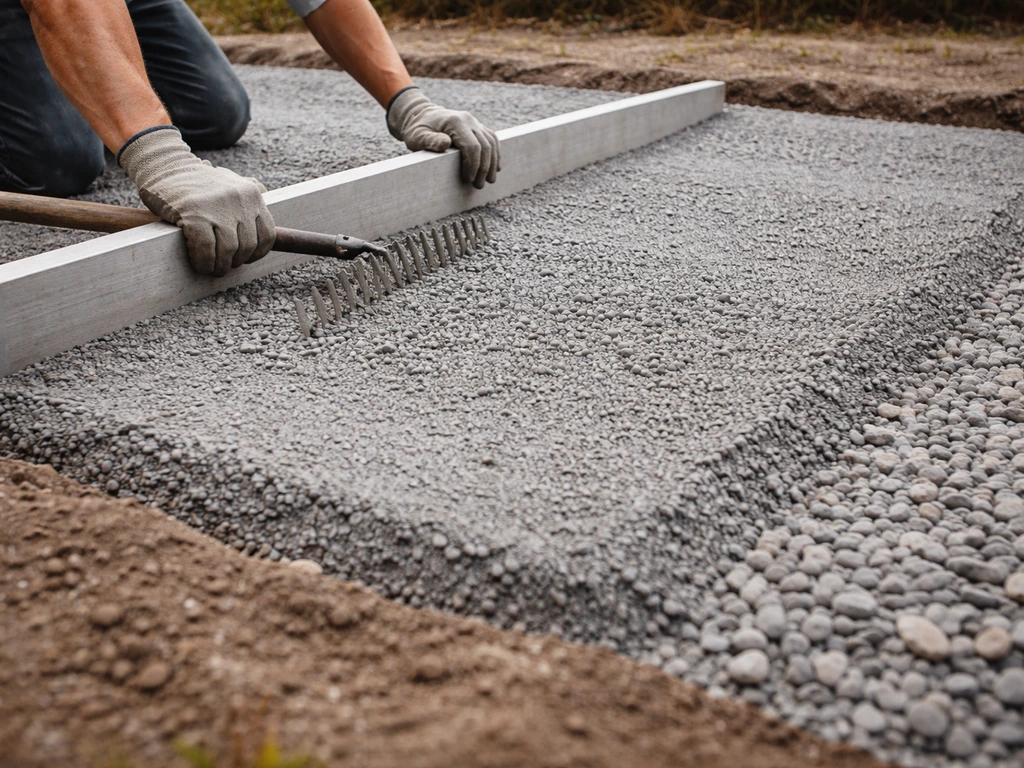
Every patio on a shaded, slower-drying site needs a properly engineered base. For interlocking concrete or porcelain pavers, the standard system is: compacted aggregate base (typically 4-6 inches for pedestrian use, more for heavier loads or frost-prone areas), a screeded bedding sand layer of roughly 1 inch, then the pavers, then jointing material. The subgrade should be [compacted to around 98% standard Proctor density per ASTM D698 for pedestrian applications](https://www. interlock-concrete.
com/resources/cmha-tech-notes/PAV-TEC-009-13. pdf). Skimping on base depth or skipping proper compaction is how you get settling, cracking, and pooling water. For mortar-set installations like porcelain tile over a concrete slab, the slab needs a minimum 95% mortar contact area (vs.
the 80% minimum acceptable for dry interior use), and it needs to slope correctly for drainage.
Slope and drainage
Surface slope is not optional on a shaded patio. Standing water is the enemy, and it doesn't evaporate quickly when there's no direct sun. A standard minimum slope for patio drainage is 1/8 inch per foot, and 1/4 inch per foot is better in wet climates or fully shaded spots. Slope should direct water away from the house foundation. If your patio is surrounded by planting beds or structures that limit runoff, you may need a French drain or channel drain along one edge.
Movement joints for tile and stone
If you're installing porcelain or natural stone tile over a concrete slab, movement joints are mandatory for long-term performance. The general exterior guidance is to place movement joints every 8-12 feet in each direction. On a north-facing patio with significant temperature swings (cold nights, warmer days), thermal expansion and contraction in the slab and tile system will crack a job that doesn't have proper relief joints, regardless of how good the tile is. This is one area where DIY installs frequently fail and why a qualified tile setter matters for these applications.
Underlayment and membrane options
For any elevated deck situation or tile-over-concrete in a wet climate, an uncoupling membrane or waterproofing membrane under the tile layer adds meaningful protection. These systems allow the tile assembly to move slightly independently from the substrate, reducing crack transmission. They also provide a waterproof layer that protects the structure below. They add cost (and require a contractor familiar with them), but on a persistently wet north-facing exposure they're a worthwhile investment.
Cost, comfort, and the tradeoffs you'll actually feel
Beyond durability and maintenance, how a patio actually feels to use matters. Here's how the main materials stack up on comfort and practical usability for a shaded space.
Barefoot comfort and surface temperature
On a south-facing patio, stone and porcelain get blazing hot in summer. On a north-facing patio this is much less of an issue, which actually expands your options if barefoot comfort is a concern. Stone and porcelain stay cooler and more comfortable for longer on shaded surfaces. Choosing the best ceiling for outdoor patio materials starts with matching the surface to your local shade, moisture, and freeze-thaw conditions.
Composite decking is the warmest underfoot, which can be a real comfort advantage on a cool, shaded patio in shoulder seasons. Poured concrete and pavers fall in the middle. In terms of hard-surface comfort, concrete pavers and porcelain pavers both have some give at the joints that makes them easier to stand on than a solid poured concrete slab.
Traction in wet conditions and winter
This is a safety issue, not just a preference. Algae-covered smooth stone is genuinely hazardous, and a north-facing patio in a rainy climate can get slippery enough to cause falls. When you're shopping for porcelain or tile, ask for the wet DCOF value and verify it's 0. 42 or higher.
For natural stone, a cleft or brushed finish gives far better traction than a polished or honed surface. Broom-finished concrete and exposed aggregate are good performers when clean. The critical caveat: algae growth will degrade traction on any surface, which is why the maintenance routine isn't just cosmetic.
For winter traction in snow and ice conditions, textured surfaces help, but you'll still likely need sand or a patio-safe ice melt (avoid standard rock salt on concrete and natural stone, as it accelerates spalling and staining).
Cost realities for 2026
Rough installed cost ranges vary by region, labor market, and specific product tier, but here's a realistic frame for budgeting in 2026. Poured concrete runs approximately $6-$12 per square foot installed for a basic broom-finished slab. Concrete pavers typically fall in the $10-$20 range installed, depending on pattern complexity and paver type. Porcelain pavers and natural stone are generally $15-$35+ per square foot installed, with larger-format or premium materials at the high end.
Composite decking typically runs $20-$40+ per square foot installed for a fully built deck structure. DIY on pavers (dry-laid interlocking systems) is genuinely achievable for homeowners willing to rent a plate compactor and spend a weekend, which can cut labor costs significantly. Mortar-set tile and poured concrete are harder to DIY well and easier to get wrong in ways that are expensive to fix.
How to choose: a practical checklist and questions for your contractor
Pull this checklist together before you make a final material decision or call a contractor.
Decision checklist for homeowners
- Does your patio get any direct sun, or is it fully shaded all day? Full shade pushes you harder toward low-absorption materials like porcelain or dense concrete pavers.
- What's your climate? Hard freeze-thaw winters eliminate porous materials (travertine, limestone, standard brick) unless you're committed to intensive sealing maintenance.
- Are you in a rainy or coastal climate? High annual rainfall means moss and algae will be an ongoing battle. Low-porosity materials and a sealed surface are your best defense.
- Are there trees or heavy plantings nearby? Leaf debris, organic matter, and root pressure make debris-shedding surfaces and robust joint material more important.
- What's your maintenance tolerance? If annual sealing and cleaning isn't realistic for you, porcelain or composite are the low-maintenance picks. Natural stone and brick require real upkeep.
- Do you have barefoot comfort or traction needs? Textured surfaces for wet traction are non-negotiable if the space is used by kids or older adults.
- Do you want to DIY or hire out? Dry-laid pavers are DIY-friendly. Mortar-set tile, poured concrete, and composite decking structures benefit significantly from professional installation.
- What's your budget per square foot, fully installed? Set a realistic number before you fall in love with a material at the showroom.
Questions to ask your contractor before signing
- What base depth and compaction standard are you using, and how do you verify compaction?
- For tile or porcelain: what mortar coverage percentage are you targeting, and how do you achieve 95% contact for exterior/wet areas?
- Where are you placing movement joints, and what material are you using in them?
- What slope are you building into the surface, and where is the water going when it drains?
- For natural stone: do you recommend sealing, what product, and how often will it need to be reapplied?
- For pavers: are you using polymeric sand, and what brand/type?
- What freeze-thaw testing standard (if any) does the specific tile or paver you're proposing meet?
- What's the wet DCOF rating of the tile or paver surface you're recommending?
- Do you warranty your installation separately from the material manufacturer's warranty, and what does it cover?
One last thing worth noting: the material on your patio floor is just one part of the overall system. How the patio is covered, what the overhead structure is made of, and whether you have a roof or pergola overhead all affect how much moisture and debris land on the surface in the first place. Choosing the best patio roof material for your climate can help keep the surface drier and reduce algae, moss, and freeze-thaw problems roof or pergola. If you're making decisions about roofing or ceiling materials for your patio structure alongside flooring, those choices work together with your surface material to determine how your whole patio performs over time.
Bottom line: pick textured exterior porcelain pavers if you want the lowest long-term maintenance, best freeze-thaw and moisture performance, and you're comfortable with the hard underfoot feel and higher upfront cost. The same logic applies when you're trying to pick the best roof for patio setups, since rain handling and weather resistance drive the choice. Pick concrete pavers if you want a reliable performer with a friendlier budget and don't mind sealing every couple of years.
Pick dense natural stone (slate, basalt) if the aesthetic matters and you'll commit to annual sealing. And if comfort and warmth underfoot are the priority on your cool, shaded patio, quality composite decking is a legitimate choice as long as you budget accordingly and choose a product with verified wet slip-resistance data.
FAQ
Is porcelain still the best material for a north-facing patio if it’s mostly covered by a roof or pergola?
Often yes, but the decision can shift toward lower-cost options if the surface stays mostly dry. If rain rarely hits the floor, the algae and freeze-thaw pressure drops, so concrete pavers can become competitive, especially if you use polymeric sand and keep joints tight.
What happens if I install porcelain pavers with a slightly lower wet DCOF than 0.42?
You can end up with traction issues specifically during dew, fog, or after rain when the patio does not dry quickly. For north-facing patios, even small reductions in slip rating matter because algae growth can start before the surface fully dries.
Do I need to seal porcelain pavers on a north-facing patio?
Typically no, exterior-rated porcelain pavers are designed for very low water absorption. If the product requires sealing in its spec, follow that, but in most exterior porcelain systems the larger maintenance focus is cleaning and keeping joints intact.
How can I tell whether my concrete pavers need re-sealing?
Use a simple water-bead test after a dry period. If water stops beading and instead spreads or darkens the pavers quickly, the sealer has likely worn off, and you should reseal to slow water uptake and reduce efflorescence.
Is efflorescence on concrete pavers a structural problem?
Usually it is not. It’s commonly a surface salt deposit from salts migrating with moisture, and it tends to be cosmetic in the first one to two years. If it keeps escalating rapidly after resealing, that points to drainage or base issues rather than just surface cleaning.
What’s the biggest mistake people make with polymeric sand on paver patios?
Under-activating it. If you don’t add the right amount of water to fully activate polymeric sand, it can wash out or stay partially loose, leaving joints porous and inviting weeds, moss roots, and water infiltration.
Can I use regular sand in the joints if I’m planning to clean often?
It’s risky for north-facing patios. Regular sand washes out more easily, leaving a cycle of open joints that collect moisture and organic matter. Frequent cleaning helps algae, but it cannot fully prevent freeze-thaw water intrusion through eroded joints.
What finish should I avoid for natural stone on a north-facing patio?
Avoid polished or lightly honed surfaces because they can become dangerously slick when shaded and damp. If you love natural stone, choose cleft, brushed, or tumbled textures and pair that with the correct penetrating sealer schedule.
How often should I clean a north-facing patio to prevent moss and algae from taking over?
A good baseline is one thorough annual cleaning on top of spot treatments as soon as you see growth. If your patio is near trees or shaded by landscaping, consider an extra mid-season clean, because early growth is much easier to remove before it establishes in joints.
Is pressure washing always safe for pavers and grout on a north-facing patio?
Not always. High pressure can widen joints, especially on older paver beds, and that increases water infiltration and future moss growth. Use a fan tip and keep pressure conservative, and avoid directing the stream into grout lines.
Do freeze-thaw issues depend more on the material or the installation?
Installation is often the multiplier. Even a good material can fail sooner if the base is shallow, poorly compacted, drainage is inadequate, or joints are too open. Proper slope and compacted base reduce how much water remains to freeze repeatedly.
If I’m building a mortar-set tile patio over a slab, what’s the key failure point to watch?
Movement joints and slab preparation. Without proper relief joints and correct exterior mortar coverage, thermal expansion and slab movement can crack the tile system, even when the tile itself is high quality.
When do I need an uncoupling or waterproofing membrane under tile on a north-facing patio?
Consider it when you have a wet climate, persistent shade, or a concrete slab exposed to frequent moisture. It helps reduce crack transmission and protects the layer below, which can be costly to repair after failure.
What’s the best way to reduce slipping in winter on a north-facing patio?
Prioritize textured finishes and keep algae from establishing, then use patio-safe ice melt if needed. Avoid standard rock salt on concrete and many natural stones because it can accelerate surface damage, staining, and spalling over time.
Is composite decking a good choice for a north-facing patio if it will be wet much of the year?
Yes, if you choose a composite product with verified wet slip-resistance data and a system designed for exterior exposure. Composite still benefits from periodic cleaning, but it typically avoids the sealing and warping issues associated with natural wood on persistently damp surfaces.
How do I decide between porcelain pavers and concrete pavers for a north-facing patio on a budget?
Compare total maintenance and expected lifespan, not just installed cost. Porcelain costs more upfront but usually reduces sealing labor and lowers algae and efflorescence risk, while concrete pavers can be cheaper if you commit to correct base prep, polymeric sand, and resealing on a schedule.
Next Articles
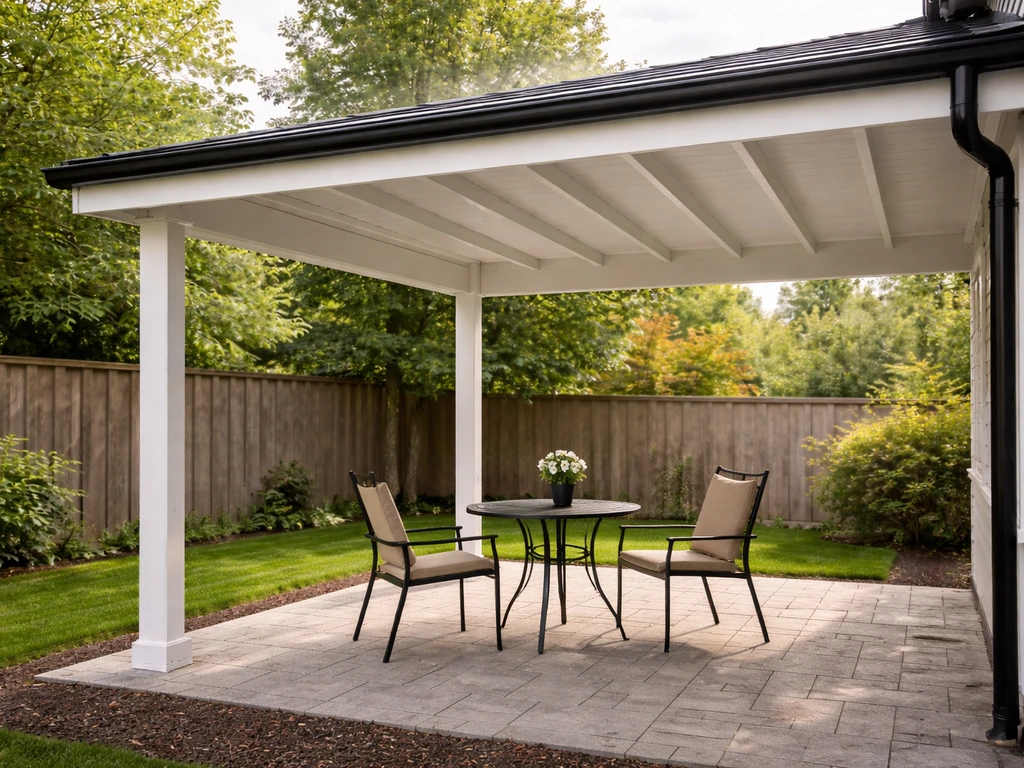
Best Roof for Patio: Materials, Costs, and Choosing Guide
Compare patio roof materials with costs and lifespans, plus structure, drainage, wind loads, and regional picks.
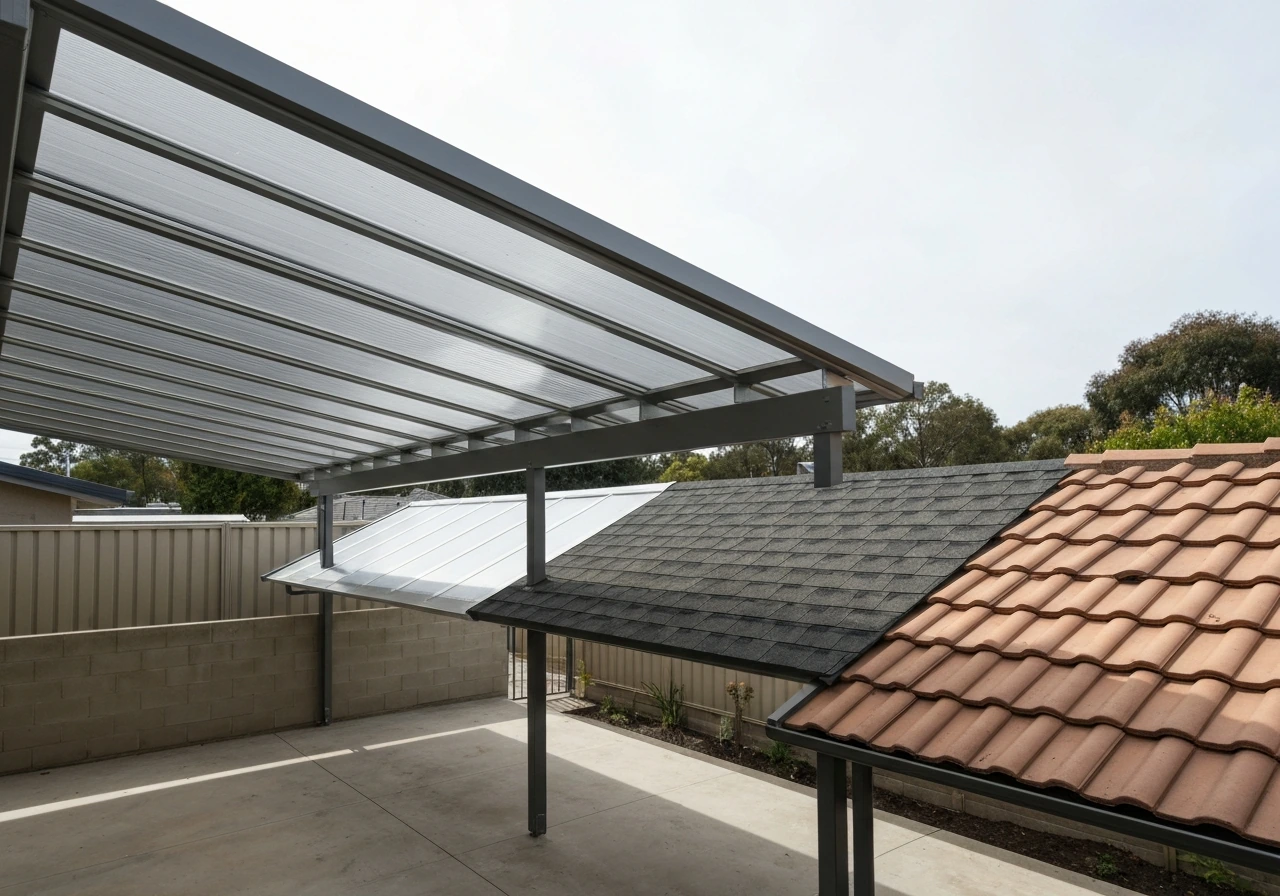
Best Patio Roof Material: How to Choose the Right One
Compare best patio roof material options by climate, durability, maintenance, insulation, cost, and drainage to pick rig
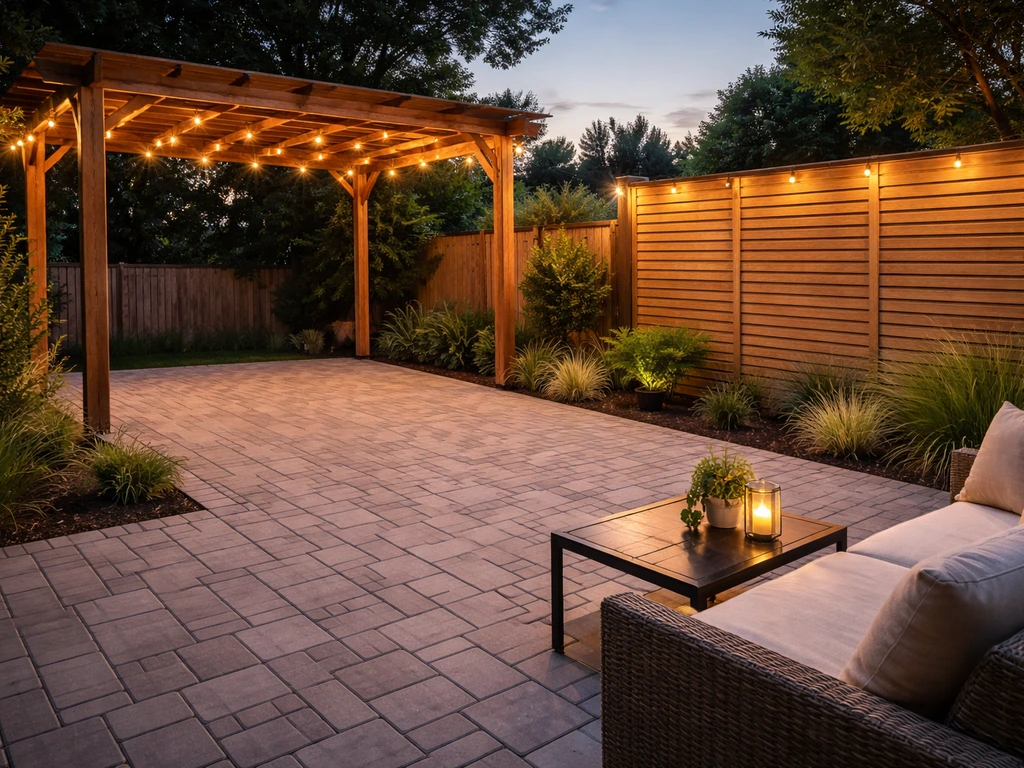
Do It Yourself Outdoor Patio Ideas: Build, Upgrade, Maintain
DIY outdoor patio ideas for planning, building, upgrading, and maintaining floors, shade, privacy, lighting, and decor.